The cryptocurrency market has grown rapidly, and buying digital assets has become easier than ever. One of the most convenient ways to enter the crypto market is to buy crypto with a credit card. This method allows instant transactions, making it ideal for beginners and experienced investors alike. However, many platforms charge high fees for credit card purchases, which can reduce profits.
This guide explores the best platforms to buy crypto with a credit card with no fees, how the process works, and what to consider before making a purchase.
Why Buy Crypto with a Credit Card?
Buying crypto with a credit card offers several advantages. It’s fast, secure, and accessible to almost anyone with a valid card. Here are the main reasons why many investors prefer this method:
1. Instant Transactions
When you buy crypto with a credit card, the transaction is processed almost instantly. Unlike bank transfers, which can take days, credit card payments provide immediate access to digital assets.
2. Convenience
Credit cards are widely accepted, making it simple to purchase crypto anytime, anywhere. This convenience is especially useful for those who want to take advantage of sudden market opportunities.
3. Security
Most credit card companies offer fraud protection and chargeback options, adding an extra layer of security when buying crypto online.
4. Rewards and Cashback
Some credit cards offer rewards or cashback on purchases. When you buy crypto with a credit card, you might earn points or cashback, depending on your card’s policy.
Understanding Fees When Buying Crypto with a Credit Card

While buying crypto with a credit card is convenient, it often comes with fees. These can include:
- Transaction Fees: Charged by the exchange or payment processor.
- Cash Advance Fees: Some banks treat crypto purchases as cash advances.
- Foreign Exchange Fees: If the transaction involves currency conversion.
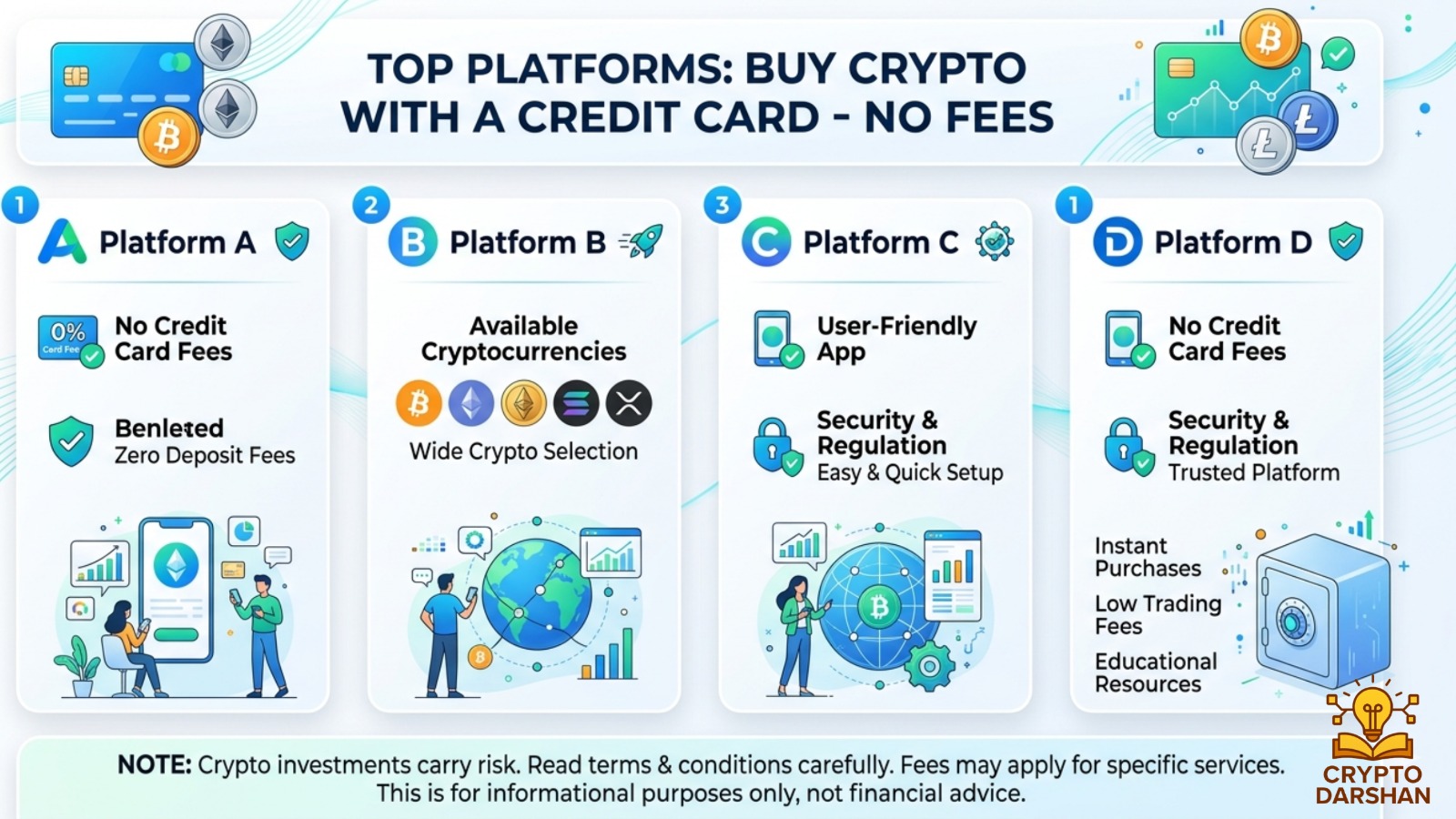
To maximize profits, it’s best to use platforms that allow you to buy crypto with a credit card with no fees or minimal charges. After purchasing crypto, choosing the right storage is crucial, learn the difference between Custodial and Non-Custodial Wallets.
Top Platforms to Buy crypto with a credit card, No Fees
1. Binance
Binance is one of the world’s largest and most popular cryptocurrency exchanges, offering a platform to buy, sell, trade, and stake a wide variety of cryptocurrencies. Founded in 2017 by Changpeng Zhao (CZ). It allows users to easily buy crypto with a credit card and supports a wide range of digital assets.
Key Features:
- Supports Visa and Mastercard.
- Low or zero fees during promotional periods.
- Instant purchase and transfer to wallet.
- High security and global availability.
Pros:
- Trusted by millions of users.
- Competitive exchange rates.
- User-friendly interface.
Cons:
- Some regions may have restrictions.
- Verification required for large purchases.
2. Crypto.com
Crypto.com is a popular platform that allows users to buy crypto with a credit card with no fees for the first 30 days. It supports over 250 cryptocurrencies and offers a mobile app for easy access.
Key Features:
- No fees for new users.
- Cashback rewards on purchases.
- Integrated crypto wallet and Visa card.
- Advanced security features.
Pros:
- Beginner-friendly.
- Multiple payment options.
- Strong reputation in the crypto community.
Cons:
- Fees apply after the promotional period.
- Some features limited by region.
3. Coinbase
Coinbase is one of the most trusted names in the crypto industry. It allows users to buy crypto with a credit card instantly, though fees may vary depending on location.
Key Features:
- Supports major credit cards.
- Simple interface for beginners.
- High liquidity and reliability.
Pros:
- Regulated and secure.
- Educational resources for new investors.
- Instant transactions.
Cons:
- Fees can be higher than competitors.
- Limited no-fee options.
4. Bitpanda

Bitpanda is a European exchange that allows users to buy crypto with a credit card with low or no fees during special promotions. It supports multiple fiat currencies and offers a sleek interface. Interested in privacy-focused assets? Explore Privacy Coins 2026: Monero and Zcash Lead the Charge Against Surveillance.
Key Features:
- Supports Visa, Mastercard, and other payment methods.
- Transparent pricing.
- Integrated wallet and savings options.
Pros:
- Easy to use.
- Supports multiple assets.
- Strong security measures.
Cons:
- Limited availability outside Europe.
- Verification required.
5. eToro
eToro is a social trading platform that allows users to buy crypto with a credit card and also copy trades from experienced investors. It’s ideal for beginners who want to learn from others.
Key Features:
- No deposit fees.
- Supports major credit cards.
- Copy trading and portfolio management tools.
Pros:
- Regulated platform.
- User-friendly interface.
- Educational resources.
Cons:
- Withdrawal fees apply.
- Limited crypto selection compared to dedicated exchanges.
6. Changelly
Changelly is a non-custodial exchange that allows users to buy crypto with a credit card instantly. It connects to multiple exchanges to find the best rates.
Key Features:
- Instant transactions.
- Supports Visa and Mastercard.
- Transparent fee structure.
Pros:
- No need to store funds on the platform.
- Wide range of supported coins.
- Fast and secure.
Cons:
- Fees vary depending on provider.
- Limited customer support options.
7. CEX.IO
CEX.IO is a long-standing exchange that allows users to buy crypto with a credit card easily. It supports multiple fiat currencies and offers advanced trading tools.
Key Features:
- Supports Visa and Mastercard.
- Instant purchase options.
- High liquidity.
Pros:
- Reliable and secure.
- Supports multiple payment methods.
- Mobile app available.
Cons:
- Fees can vary by region.
- Verification required for large transactions.
8. KuCoin
KuCoin is known for its wide selection of cryptocurrencies and competitive rates. It allows users to buy crypto with a credit card through third-party providers.
Key Features:
- Supports over 700 cryptocurrencies.
- Multiple payment gateways.
- Low trading fees.
Pros:
- Global availability.
- Advanced trading features.
- Strong community support.
Cons:
- Third-party fees may apply.
- Not fully regulated in all regions.
9. Bitstamp
Bitstamp is one of the oldest crypto exchanges, offering a secure way to buy crypto with a credit card It’s known for its transparency and reliability.
Key Features:
- Supports Visa and Mastercard.
- Regulated in the EU.
- High liquidity and fast transactions.
Pros:
- Trusted platform.
- Transparent fees.
- Excellent customer support.
Cons:
- Limited crypto selection.
- Fees may apply for small purchases.
10. Paybis
Paybis is a global exchange that allows users to buy crypto with a credit card instantly. It supports multiple payment methods and offers a simple interface.
Key Features:
- Instant verification.
- Supports Visa, Mastercard, and bank transfers.
- Transparent pricing.
Pros:
- Fast transactions.
- Global availability.
- Excellent user experience.
Cons:
- Fees vary by region.
- Limited trading features.
How to Buy Crypto with a Credit Card Step-by-Step

- Choose a Platform: Select a trusted exchange that allows you to buy crypto with a credit card with no fees.
- Create an Account: Register and verify your identity.
- Add a Credit Card: Link your Visa or Mastercard to your account.
- Select Cryptocurrency: Choose the crypto you want to buy.
- Enter Amount: Specify how much you want to purchase.
- Confirm Transaction: Review details and confirm the purchase.
- Receive Crypto: The crypto will appear in your wallet instantly or within minutes.
Before buying new tokens, understand their fundamentals in The Hidden Economics Behind Token Launches.
Tips for Buying Crypto with a Credit Card Safely

Buying cryptocurrency with a credit card is one of the fastest and most convenient ways to enter the crypto market. However, it also carries risks if not done carefully. To protect your funds and personal information, it’s important to follow safe practices. Below are detailed explanations of the key tips for safely buying crypto with a credit card.
1. Use Reputable Platforms
Always choose well-known and trusted cryptocurrency exchanges or platforms when buying crypto with a credit card. Reputable platforms have strong security systems, transparent policies, and a proven track record of protecting user data.
Why it matters:
Unverified or unknown websites may appear legitimate but may be scams designed to steal your credit card details or cryptocurrency. Trusted exchanges like Binance, Coinbase, or Crypto.com use encryption, two-factor authentication, and regulatory compliance to ensure your transactions are safe.
How to check:
- Look for HTTPS in the website URL.
- Read user reviews and ratings.
- Verify that the platform is licensed or regulated in your region.
2. Enable Two-Factor Authentication (2FA)
Two-factor authentication adds an extra layer of security to your account. It requires you to verify your identity using a second method, such as a code sent to your phone or generated by an authentication app.
Why it matters:
Even if someone gets your password, they won’t be able to access your account without the second verification step. This significantly reduces the risk of unauthorized access.
How to set it up:
- Go to your account’s security settings.
- Enable 2FA using Google Authenticator or Authy.
- Store backup codes safely in case you lose access to your device.
3. Avoid Public Wi-Fi
Never buy crypto with a credit card while connected to public Wi-Fi networks, such as those in cafes, airports, or hotels. These networks are often unsecured and can be easily exploited by hackers.
Why it matters:
Hackers can intercept your data, including login credentials and credit card information, when you use public Wi-Fi.
What to do instead:
- Use a private, password-protected network.
- If you must use public Wi-Fi, connect through a trusted VPN (Virtual Private Network) to encrypt your data.
4. Check Fees and Limits

Before making a purchase, always review the platform’s fee structure and transaction limits. Some exchanges advertise “no fees” but may include hidden costs in the exchange rate or processing charges.
Why it matters:
Understanding fees helps you avoid unexpected costs and ensures you get the best value for your money.
What to check:
- Transaction or processing fees.
- Cash advance fees from your credit card issuer.
- Daily or monthly purchase limits.
- Exchange rate differences.
5. Monitor Credit Card Statements
After buying crypto with a credit card, regularly review your credit card statements for any unauthorized or suspicious transactions.
Why it matters:
Fraudulent charges can occur if your card details are compromised. Detecting them early allows you to report and resolve issues quickly.
What to do:
- Check your statements weekly or enable transaction alerts.
- Report any suspicious activity to your bank immediately.
- Consider using a separate credit card for online crypto purchases.
6. Avoid Overusing Credit
While buying crypto with a credit card is convenient, it’s important not to overspend or rely on borrowed money for investments.
Why it matters:
Cryptocurrency prices are volatile. If the market drops, you could end up owing more on your credit card than your crypto is worth.
Best practices:
- Only invest what you can afford to lose.
- Pay off your credit card balance quickly to avoid interest charges.
- Treat crypto purchases as investments, not quick profits.
7. Verify Platform Security Features
Before entering your credit card details, check the platform’s security measures. Reliable exchanges use encryption, cold storage for funds, and compliance with data protection laws.
Why it matters:
Strong security features protect your personal and financial information from hackers.
What to look for:
- SSL encryption (the padlock icon in the browser).
- KYC (Know Your Customer) verification process.
- Insurance coverage for digital assets.
Advantages of Buying Crypto with a Credit Card: No Fees

- Cost Savings: No fees mean more value for your money.
- Instant Access: Get crypto immediately after purchase.
- Flexibility: Buy anytime without waiting for bank transfers.
- Rewards: Some cards offer cashback or points.
- Ease of Use: Simple process suitable for beginners.
Disadvantages of Buying Crypto with a Credit Card

- Potential Debt: Using credit can lead to overspending.
- Cash Advance Fees: Some banks treat crypto purchases as cash advances.
- Limited Availability: Not all platforms support credit cards.
- Security Risks: Using unverified platforms can expose card details.
Best Practices for Managing Crypto Purchases

Managing your crypto purchases effectively is essential for long-term success and security in the digital asset market. Whether you’re a beginner or an experienced investor, following best practices helps you protect your investments, minimize risks, and make informed decisions. Below are the most important best practices for managing crypto purchases.
1. Set a Budget
Before buying any cryptocurrency, decide how much money you can afford to invest. The crypto market is highly volatile, and prices can fluctuate dramatically over short periods.
Why it matters:
Setting a budget helps prevent emotional decisions and protects you from financial stress if the market declines.
How to do it:
- Only invest disposable income, not essential funds.
- Divide your budget across multiple purchases instead of investing all at once.
- Reassess your budget regularly based on market conditions and personal finances.
2. Diversify Your Investments
Avoid putting all your money into one cryptocurrency. Diversification spreads risk and increases your chances of earning consistent returns.
Why it matters:
If one asset underperforms, others in your portfolio may offset the loss.
How to diversify:
- Invest in a mix of established coins (like Bitcoin and Ethereum) and promising altcoins.
- Include stablecoins to reduce volatility.
- Explore different sectors such as DeFi, NFTs, and blockchain infrastructure.
3. Use Secure Wallets
After purchasing crypto, transfer it from the exchange to a secure wallet that you control. Leaving funds on an exchange exposes them to potential hacks or technical failures.
Types of wallets:
- Hardware wallets: Physical devices like Ledger or Trezor that store crypto offline.
- Software wallets: Mobile or desktop apps with encryption.
- Paper wallets: Printed keys stored securely offline.
Best practice:
Always back up your wallet’s recovery phrase and store it in a safe, offline location.
4. Keep Track of Transactions
Maintain detailed records of all your crypto purchases, sales, and transfers. This helps with portfolio management, tax reporting, and financial planning.
Why it matters:
Accurate records make it easier to calculate profits, losses, and tax obligations.
How to track:
- Use portfolio tracking apps like CoinStats or CoinMarketCap.
- Record transaction dates, amounts, and wallet addresses.
- Export transaction history from exchanges regularly.
5. Stay Informed About Market Trends
The crypto market evolves quickly. Staying updated on news, regulations, and technological developments helps you make better investment decisions.
Why it matters:
Market sentiment and global events can significantly impact crypto prices.
How to stay informed:
- Follow reputable crypto news sites and analysts.
- Join online communities and forums.
- Subscribe to newsletters from trusted exchanges.
6. Understand Tax Obligations

Cryptocurrency transactions are taxable in many countries. Failing to report them correctly can lead to penalties.
Why it matters:
Proper tax reporting ensures compliance with local laws and avoids legal issues.
What to do:
- Keep records of all transactions.
- Use crypto tax software to calculate gains and losses.
- Consult a tax professional familiar with digital assets.
7. Avoid Emotional Trading
Crypto markets can be unpredictable, and emotional decisions often lead to losses. Avoid panic selling during dips or buying impulsively during price surges.
Why it matters:
Emotional trading can lead to buying high and selling low, reducing profits.
How to manage emotions:
- Set clear entry and exit strategies.
- Use stop-loss and take-profit orders.
- Stick to your investment plan regardless of short-term volatility.
8. Review Platform Policies
Before buying or selling crypto, read the platform’s terms and conditions carefully. Understand their policies on fees, withdrawals, and security.
Why it matters:
Each exchange has different rules that can affect your transactions and access to funds.
What to check:
- Withdrawal limits and processing times.
- Fee structures for trading and deposits.
- Security measures and insurance coverage.
Future of Buying Crypto with Credit Card

As crypto adoption grows, more platforms are offering credit card purchases of crypto with no fees. Financial institutions are also becoming more open to digital assets, leading to better integration between traditional banking and crypto markets. In the future, expect faster transactions, lower fees, and more secure payment options.
FAQ: Buy Crypto with a Credit Card (No Fees Platforms)

1. Can you really buy crypto with a credit card without fees?
Yes, some crypto platforms advertise zero credit-card fees, but there may still be small spreads or charges from payment providers or card issuers. Even when the exchange doesn’t charge a fee, the payment processor or network fees may apply.
2. Which platforms allow buying crypto with a credit card and no fees?
Some popular platforms often mentioned for low- or zero-fee card purchases include exchanges like MEXC, OKX, Bitpanda, and others that support Visa or Mastercard payments through partners like MoonPay or Simplex. However, actual costs can vary depending on region and provider.
3. Is buying crypto with a credit card instant?
In most cases, yes. Once your identity verification is completed, credit card purchases can be processed within minutes, making it one of the fastest ways to buy cryptocurrency.
4. Do I need KYC verification to buy crypto with a credit card?
Yes. Most regulated platforms require identity verification (KYC) before allowing credit-card purchases to comply with anti-money-laundering regulations.
5. Are credit card purchases the cheapest way to buy crypto?
Not always. Credit cards are convenient but can sometimes include higher fees or interest charges compared to bank transfers or ACH deposits, which may be cheaper but slower.
6. What are the risks of buying crypto with a credit card?
Some credit card issuers treat crypto purchases as cash advances, which can lead to higher fees and immediate interest charges. It can also increase your credit utilization if not paid off quickly.
7. What cryptocurrencies can I buy using a credit card?
Most platforms allow buying major cryptocurrencies such as Bitcoin (BTC), Ethereum (ETH), and stablecoins like USDT or USDC, though available assets vary by exchange.
Conclusion
Buying crypto has never been easier. With the ability to buy crypto with a credit card, investors can access digital assets instantly and securely. Choosing platforms that offer no fees ensures maximum value and convenience. Whether using Binance, Crypto.com, or other trusted exchanges, this method offers a fast, efficient way to enter the crypto market. Always prioritize security, verify platforms, and manage credit responsibly to make the most of every purchase.