
In the digital age, privacy has become one of the most valuable and contested assets. As governments, corporations, and hackers gain increasing access to personal data, the demand for financial privacy has surged. Cryptocurrencies were originally designed to provide decentralized and anonymous transactions, but the most popular coins like Bitcoin and Ethereum offer only partial privacy. This gap has given rise to a new class of digital assets known as Privacy Coins, cryptocurrencies designed to protect user identities and transaction details from public scrutiny.
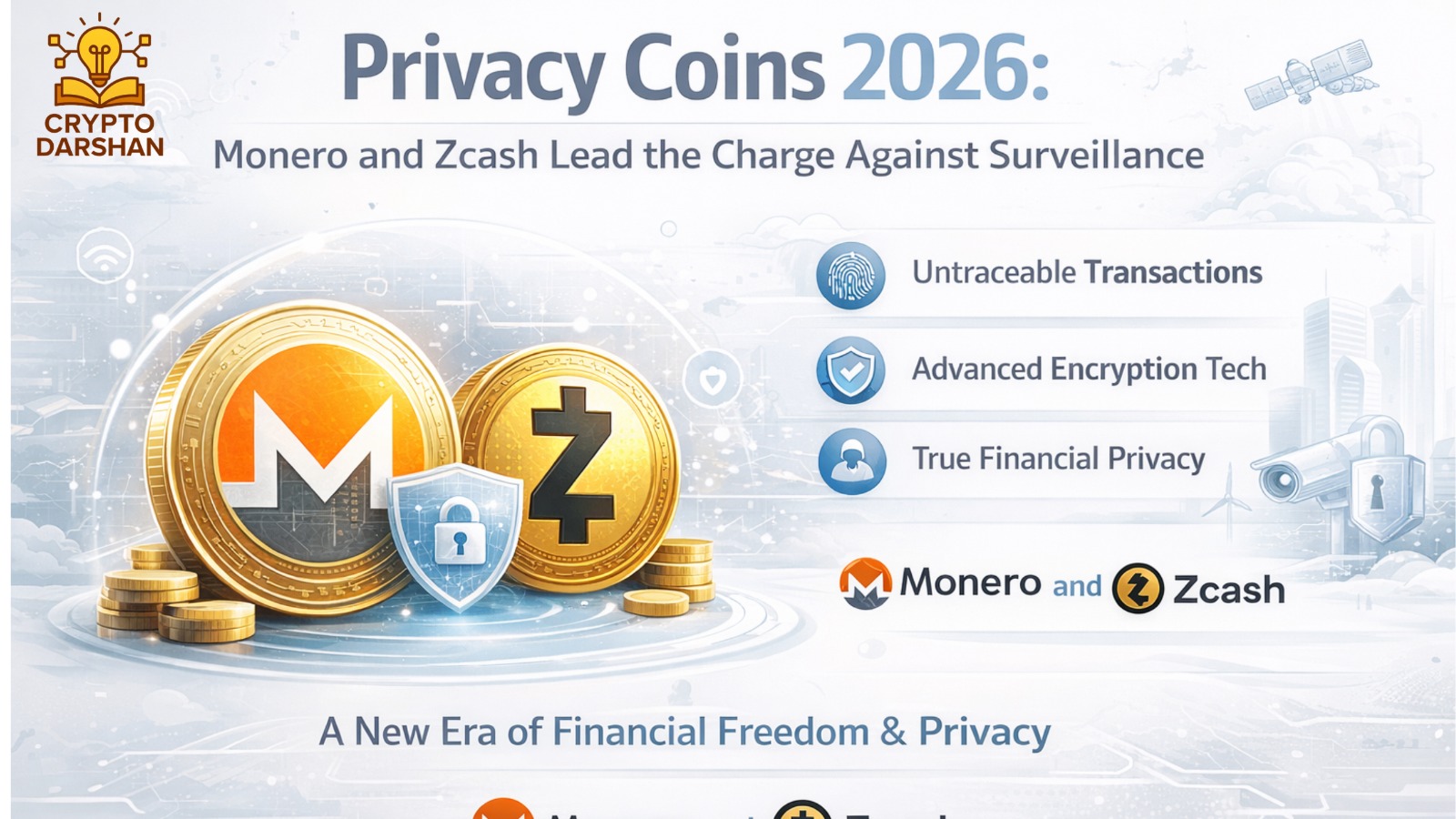
By 2026, Privacy Coins such as Monero (XMR) and Zcash (ZEC) will have become central to the debate over financial freedom, surveillance, and regulation. These coins are not just tools for anonymity; they represent a movement toward digital sovereignty and resistance against mass surveillance. As global governments tighten regulations on crypto transactions, Privacy Coins are leading the charge to preserve the original ethos of cryptocurrency freedom, decentralization, and privacy.
This article explores the evolution of Privacy Coins, their technology, the role of Monero and Zcash, the regulatory challenges they face, and their future in a world increasingly dominated by surveillance and digital control.
Understanding Privacy Coins

What Are Privacy Coins?
Privacy coins, or Anonymity Enhanced Coins (AECs), are cryptocurrencies designed to enhance user privacy and transaction anonymity. Unlike traditional cryptocurrencies, they obscure transaction details through cryptographic techniques, making them difficult to trace. Unlike Bitcoin, where all transactions are recorded on a public ledger visible to anyone, Privacy Coins ensure that financial data remains confidential while maintaining the integrity of the blockchain.
The goal of Privacy Coins is to provide users with true financial anonymity. They allow individuals to transact without revealing their identity or transaction history, protecting them from tracking, profiling, and censorship.
Why Privacy Matters in Cryptocurrency
While blockchain technology offers transparency, it also exposes users to potential privacy risks. Every Bitcoin transaction is traceable, and with enough data, it’s possible to link wallet addresses to real-world identities. This transparency, while useful for auditing, undermines personal privacy.While privacy coins hide identity, other innovations aim to verify it, learn more in Soulbound Tokens: Non-Transferable NFTs for Identity and Credentials.
Privacy Coins solve this problem by masking transaction data. They ensure that financial activity remains private, protecting users from surveillance by governments, corporations, and malicious actors. In a world where data is the new oil, Privacy Coins empower individuals to reclaim control over their financial information.
The Rise of Monero and Zcash

The emergence of Monero and Zcash marked a turning point in the evolution of cryptocurrencies. While Bitcoin introduced the world to decentralized digital money, it did not provide true privacy. Every Bitcoin transaction is recorded on a public ledger, meaning anyone can trace the flow of funds between addresses.
1. The Need for Privacy in Cryptocurrency
As cryptocurrencies gained popularity, users began to realize that blockchain transparency could be a double-edged sword. While transparency ensures trust and prevents fraud, it also exposes personal financial data to anyone who knows how to analyze blockchain records. Businesses, activists, and ordinary users wanted a way to transact without revealing sensitive information. This growing concern for privacy created the perfect environment for the rise of Monero and Zcash.
2. The Birth of Monero
Monero (XMR) was launched in 2014 as a fork of Bytecoin, one of the first privacy-focused cryptocurrencies. It was built on the CryptoNote protocol, which introduced advanced privacy features such as ring signatures and stealth addresses. These technologies made it impossible to trace transactions or link them to specific users.
Monero’s developers had a clear vision: to create a cryptocurrency that offered complete privacy by default. Unlike Bitcoin, where transactions are public, every Monero transaction is automatically private.
3. The Emergence of Zcash
Zcash (ZEC) entered the scene in 2016, offering a different approach to privacy. It was developed by the Electric Coin Company (ECC) and based on Bitcoin’s code but enhanced with cutting-edge cryptography. Zcash introduced zk-SNARKs (Zero-Knowledge Succinct Non-Interactive Arguments of Knowledge), a revolutionary technology that allows transactions to be verified without revealing any details about them.
Unlike Monero, Zcash offered optional privacy. Users could choose between transparent transactions (similar to Bitcoin) and shielded transactions (fully private). This flexibility appealed to both privacy enthusiasts and institutions that needed to comply with regulations. Zcash’s ability to balance privacy and transparency made it a unique and influential player in the crypto space.
4. Community Growth and Adoption

Both Monero and Zcash quickly gained traction among users who valued privacy. Monero’s community grew organically, driven by volunteers and open-source contributors. It became a symbol of decentralization and resistance to surveillance. Zcash, on the other hand, attracted attention from academics, investors, and organizations interested in advanced cryptography and compliant privacy solutions.
5. Technological Advancements
The rise of Monero and Zcash was fueled by continuous innovation.
- Monero improved its privacy mechanisms with RingCT and Bulletproofs, making transactions smaller and faster.
- Zcash advanced its zk-SNARK technology, reducing computational costs and improving scalability.
Both projects contributed significantly to the broader field of cryptography, influencing other blockchain projects and privacy research.
8. The Symbolism of Their Rise
The rise of Monero and Zcash represents more than just technological progress—it symbolizes a movement toward digital freedom. In an era where data collection and surveillance are widespread, these coins stand as a defense of personal autonomy. They embody the belief that privacy is a fundamental human right, not a privilege.
How Privacy Coins Work

Key Technologies Behind Privacy Coins
Privacy Coins rely on advanced cryptographic methods to ensure anonymity and confidentiality. Privacy coins align with a broader shift toward user control. See how this plays out in Decentralized Social Media: Can Web3 Finally Replace Big Tech? The most common technologies include:
- Ring Signatures
Used by Monero, ring signatures mix a user’s transaction with others, making it impossible to determine who initiated the transaction. - Stealth Addresses
These create one-time addresses for each transaction, preventing the linking of multiple transactions to a single user. - Confidential Transactions (CTs)
CTs hide the transaction amount while still allowing the network to verify that no coins are created or destroyed. - Zero-Knowledge Proofs (zk-SNARKs)
Used by Zcash, these proofs allow one party to prove that a transaction is valid without revealing any details about it. - Dandelion++ Protocol
Some Privacy Coins use this protocol to obscure the origin of transactions by routing them through multiple nodes before broadcasting.
Balancing Privacy and Transparency
While Privacy Coins prioritize anonymity, they also maintain the integrity of the blockchain. Transactions are still verified by the network, ensuring that no double-spending or fraud occurs. This balance between privacy and transparency is what makes Privacy Coins both powerful and controversial.
Monero: The King of Privacy Coins

Overview
Monero (XMR) is widely regarded as the most private and secure cryptocurrency. It was designed from the ground up to ensure complete anonymity for users. Unlike Bitcoin, where transactions are traceable, Monero’s blockchain conceals all transaction details by default.
Key Features
- Ring Signatures
Monero uses ring signatures to mix a user’s transaction with others, making it impossible to identify the sender. - Stealth Addresses
Each transaction generates a unique one-time address, ensuring that only the recipient can access the funds. - Ring Confidential Transactions (RingCT)
Introduced in 2017, RingCT hides the transaction amount, adding another layer of privacy. - Bulletproofs
A cryptographic improvement that reduces transaction size and verification time while maintaining privacy.
Why Monero Leads the Privacy Movement
Monero’s commitment to privacy is absolute. Every transaction is private by default, unlike Zcash, where users can choose between transparent and shielded transactions. This default privacy has made Monero the preferred choice for users who value anonymity above all else.
Monero in 2026
By 2026, Monero continues to dominate the Privacy Coins market. Its community-driven development, strong privacy features, and resistance to surveillance have made it a symbol of financial freedom. Despite regulatory pressure, Monero remains resilient, supported by a global network of privacy advocates.
Zcash: The Cryptographic Pioneer

Overview
Zcash (ZEC) is another leading Privacy Coin, known for its use of zero-knowledge proofs (zk-SNARKs). It was created to offer users the choice between transparent and private transactions, giving them flexibility in how they manage their privacy.
Key Features
- zk-SNARKs (Zero-Knowledge Succinct Non-Interactive Arguments of Knowledge)
This technology allows transactions to be verified without revealing any details about the sender, receiver, or amount. - Selective Disclosure
Zcash allows users to share transaction details with auditors or regulators if needed, providing a balance between privacy and compliance. - Shielded and Transparent Addresses
Users can choose between shielded (private) and transparent (public) transactions, depending on their needs.
Zcash in 2026
By 2026, Zcash has evolved significantly, integrating advanced zk-SNARKs and scalability improvements. It has become a bridge between privacy and regulation, offering a model for compliant privacy in the crypto space. Zcash’s selective disclosure feature has made it more acceptable to regulators while maintaining strong privacy for users.
comparison between Monero and Zcash

| Feature | Monero (XMR) | Zcash (ZEC) |
| Launch Year | 2014 | 2016 |
| Privacy by Default | Yes (all transactions are private) | Optional (users choose privacy) |
| Technology Used | Ring signatures, stealth addresses, RingCT | zk-SNARKs (zero-knowledge proofs) |
| Transaction Transparency | Fully hidden (sender, receiver, amount) | Can be transparent or shielded |
| Ease of Use | Simple (privacy is automatic) | Slightly complex (must choose shielded transactions) |
| Adoption for Privacy | High (always private) | Lower (many use transparent mode) |
| Regulatory Attention | Higher (due to full anonymity) | Moderate (optional privacy helps compliance) |
| Transaction Size | Larger (due to privacy features) | Smaller (especially transparent tx) |
| Speed & Fees | Slightly slower, higher fees | Faster, generally lower fees |
| Mining Algorithm | RandomX (CPU-friendly) | Equihash (ASIC-resistant initially) |
| Fungibility | Very high (coins are indistinguishable) | Moderate (depends on transaction type) |
Simple Explanation
- Monero → Fully private by default, best for maximum anonymity.
- Zcash → Flexible privacy, lets users choose between transparency and privacy.
The Role of Privacy Coins in a Surveillance Economy

The Rise of Digital Surveillance
Governments and corporations are increasingly using digital tools to monitor financial transactions. Central Bank Digital Currencies (CBDCs) and Know Your Customer (KYC) regulations have expanded state control over money. In this environment, Privacy Coins serve as a counterbalance, offering individuals a way to transact freely without constant oversight.
Financial Freedom and Human Rights
Access to private financial systems is not just a technical issue—it’s a human rights issue. In authoritarian regimes, financial surveillance can be used to suppress dissent and control citizens. Privacy Coins empower individuals to maintain autonomy over their finances, protecting them from censorship and discrimination.
Privacy Coins as a Form of Resistance
By 2026, Privacy Coins have become symbols of resistance against financial surveillance. They represent a movement toward digital freedom, where individuals can transact without fear of being tracked or profiled. Monero and Zcash lead this movement, proving that privacy and transparency can coexist in the digital economy.
Regulatory Challenges Facing Privacy Coins

Global Crackdowns
Governments around the world have expressed concern that Privacy Coins could be used for illicit activities such as money laundering or tax evasion. As a result, some exchanges have delisted Monero and Zcash to comply with regulations.
Balancing Privacy and Compliance
The challenge for Privacy Coins is to balance user privacy with regulatory compliance. Projects like Zcash have introduced selective disclosure features to allow audits without compromising privacy. This approach could pave the way for broader acceptance of Privacy Coins in regulated markets.
The Future of Regulation
By 2026, regulators are beginning to recognize that privacy is not inherently criminal. New frameworks are emerging that allow Privacy Coins to coexist with compliance requirements. The focus is shifting from banning privacy to ensuring responsible use.
The Technology Behind Privacy Coins in 2026

Advancements in Cryptography
The cryptographic foundations of Privacy Coins continue to evolve. Innovations such as zk-STARKs, Bulletproofs+, and Mimblewimble are improving scalability, efficiency, and privacy. These advancements make Privacy Coins faster, cheaper, and more secure.
Integration with Decentralized Finance (DeFi)
By 2026, Privacy Coins are being integrated into DeFi platforms, allowing users to trade, lend, and borrow privately. Privacy-preserving smart contracts are enabling new forms of decentralized finance that protect user data.
Cross-Chain Privacy Solutions
Interoperability is a major focus for Privacy Coins in 2026. Projects are developing cross-chain bridges that allow private transactions across multiple blockchains, expanding the reach and utility of privacy technology.
The Economic Impact of Privacy Coins

Market Growth
The market capitalization of Privacy Coins has grown steadily, driven by increasing demand for financial privacy. As surveillance intensifies, more users are turning to Monero, Zcash, and other privacy-focused assets.
Institutional Interest
While institutions have been cautious about Privacy Coins, some are beginning to explore their potential for secure and confidential transactions. Privacy-preserving technologies are being studied for use in enterprise blockchain solutions.
Adoption in Emerging Markets
In countries with unstable economies or oppressive regimes, Privacy Coins provide a lifeline for citizens seeking financial freedom. They enable cross-border transactions and protect users from inflation and government control.
The Ethical Debate Around Privacy Coins

Privacy vs. Security
Critics argue that Privacy Coins can be used for illegal activities, while supporters emphasize that privacy is a fundamental right. The debate centers on whether privacy should be sacrificed for security or whether both can coexist.
Transparency and Accountability
Some believe that complete anonymity undermines accountability, while others argue that transparency should be voluntary, not enforced. Privacy Coins like Zcash offer a middle ground by allowing selective transparency when needed.
The Moral Imperative of Privacy
In an era of mass data collection, the right to privacy is more important than ever. Privacy Coins uphold this right, ensuring that individuals can control their financial information without interference.
The Future of Privacy Coins

Mainstream Adoption
By 2026, Privacy Coins are gaining mainstream recognition. As people become more aware of digital surveillance, demand for private financial tools continues to grow. Monero and Zcash remain at the forefront, setting standards for privacy and innovation.
Integration with Web3
Privacy Coins are becoming integral to the Web3 ecosystem, enabling private interactions, decentralized identity systems, and confidential smart contracts. Privacy is becoming a core feature of the next generation of the internet.
The Rise of Privacy DAOs
Decentralized Autonomous Organizations (DAOs) focused on privacy are emerging, funding research and development of new privacy technologies. These DAOs are driving innovation and ensuring that Privacy Coins remain decentralized and community-driven.
The Role of AI and Machine Learning
AI is being used to enhance privacy by detecting potential vulnerabilities and improving cryptographic algorithms. At the same time, Privacy Coins are being designed to resist AI-driven surveillance, ensuring long-term resilience.
Case Studies

Monero’s Resilience Against Regulation
Despite being delisted from several exchanges, Monero’s decentralized nature has allowed it to thrive. Peer-to-peer trading and decentralized exchanges have ensured that Monero remains accessible to users worldwide.
Zcash’s Path to Compliance
Zcash’s selective disclosure feature has made it more acceptable to regulators. By allowing optional transparency, Zcash demonstrates that privacy and compliance can coexist.
The Growth of New Privacy Projects
New Privacy Coins such as Secret Network, Beam, and Firo are expanding the ecosystem. Each brings unique innovations, contributing to the evolution of privacy technology.
How to Use Privacy Coins Safely
- Use Official Wallets: Always use wallets recommended by the project to ensure security.
- Avoid Centralized Exchanges: Use decentralized exchanges to maintain privacy.
- Stay Updated on Regulations: Understand the legal status of Privacy Coins in your country.
- Practice Good Security Hygiene: Protect private keys and use secure networks.
- Support Privacy Projects: Participate in communities and contribute to privacy-focused initiatives.
Frequently Asked Question

1. What are privacy coins in cryptocurrency?
Privacy coins are cryptocurrencies designed to protect user identity and transaction details by hiding information like sender, receiver, and amount.
2. Why are privacy coins important in 2026?
With increasing digital surveillance and stricter regulations, privacy coins are gaining attention as tools for financial freedom and confidential transactions.
3. How does Monero ensure privacy?
Monero uses advanced technologies like ring signatures, stealth addresses, and RingCT to make all transactions private and untraceable by default.
4. What makes Zcash different from Monero?
Zcash offers optional privacy using zk-SNARKs, allowing users to choose between transparent and shielded transactions, unlike Monero’s always-private approach.
5. Are privacy coins legal to use?
Privacy coins are legal in many countries, but some governments have imposed restrictions due to concerns about misuse and lack of traceability.
6. Can privacy coins be tracked?
Monero transactions are extremely difficult to trace, while Zcash transactions can be tracked if users opt for transparent addresses instead of shielded ones.
7. Why are regulators concerned about privacy coins?
Regulators worry that privacy coins could be used for illegal activities, making it harder to monitor financial transactions and enforce laws.
Conclusion
By 2026, Privacy Coins have become more than just digital assets—they are symbols of freedom in a world increasingly dominated by surveillance. Monero and Zcash lead the charge, proving that privacy and innovation can coexist. As technology evolves, Privacy Coins will continue to play a vital role in protecting financial autonomy and human rights.
The future of Privacy Coins is not just about hiding transactions; it’s about redefining the relationship between individuals, technology, and power. In the battle between privacy and surveillance, Privacy Coins stand as the last line of defense for digital freedom.