
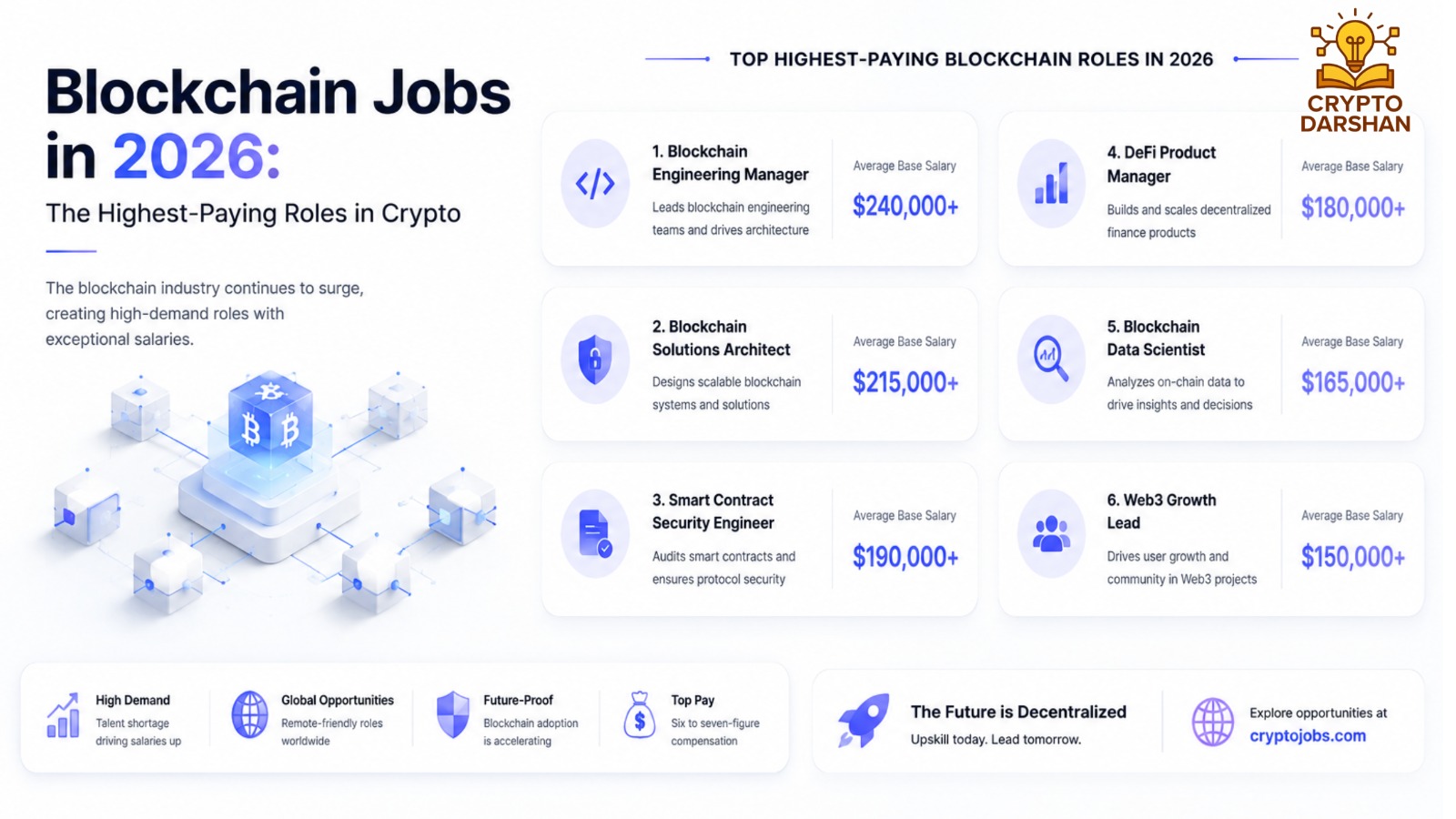
The blockchain industry has evolved from a niche technology into a global economic force. As digital currencies, decentralized finance (DeFi), and Web3 applications continue to expand, Blockchain Jobs have become some of the most sought-after and highest-paying roles in the tech world. In 2026, the demand for blockchain professionals is expected to surge even further, driven by the growing adoption of blockchain across industries such as finance, healthcare, logistics, and entertainment.
This guide explores the top Blockchain Jobs in 2026, their salary ranges, required skills, and the future outlook of the blockchain job market. It also provides insights into how professionals can prepare for a career in blockchain and what trends are shaping the industry.
What Are Blockchain Jobs?

Blockchain Jobs refer to roles that involve working with blockchain technology, a decentralized digital ledger that records transactions securely and transparently. These jobs can range from technical roles such as blockchain developers and engineers to non-technical roles such as project managers, legal consultants, and marketing specialists at blockchain-based companies.
Blockchain professionals are responsible for designing, developing, and maintaining blockchain systems, smart contracts, and decentralized applications (dApps). They also ensure the security, scalability, and efficiency of blockchain networks.
Why Blockchain Jobs Are in High Demand in 2026
The demand for Blockchain Jobs in 2026 is driven by several key factors:
- Mainstream Adoption of Blockchain Technology
Governments, banks, and corporations are integrating blockchain into their operations for transparency, security, and efficiency. - Growth of Decentralized Finance (DeFi)
DeFi platforms are revolutionizing traditional banking by offering decentralized lending, borrowing, and trading services. - Rise of Web3 and the Metaverse
Web3 applications and metaverse projects rely heavily on blockchain for digital ownership, identity, and asset management. - Increased Use of Smart Contracts
Smart contracts automate transactions and agreements, reducing the need for intermediaries. - Blockchain in Supply Chain and Healthcare
Blockchain ensures traceability and authenticity in supply chains and secures patient data in healthcare systems.
As a result, companies are offering competitive salaries and benefits to attract skilled blockchain professionals.
Top 10 Highest-Paying Blockchain Jobs in 2026

1. Blockchain Developer
Average Salary: $120,000 – $200,000 per year
Role Overview:
Blockchain developers design and implement blockchain protocols, build smart contracts, and develop decentralized applications. They work with programming languages such as Solidity, Rust, and Go.
Key Responsibilities:
- Develop and test blockchain-based applications
- Create and deploy smart contracts
- Integrate blockchain with existing systems
- Ensure network security and scalability
Required Skills:
- Proficiency in Solidity, JavaScript, Python, or Rust
- Understanding of cryptography and consensus algorithms
- Experience with Ethereum, Hyperledger, or Solana
Why It’s High-Paying Blockchain Jobs :
Blockchain developers are the backbone of the industry, and their technical expertise is in short supply, driving up salaries.
2. Blockchain Architect
Average Salary: $150,000 – $250,000 per year
Role Overview:
Blockchain architects design the overall structure of blockchain systems. They define how different components interact and ensure the system meets business and technical requirements.
Key Responsibilities:
- Design blockchain architecture and infrastructure
- Choose appropriate blockchain platforms
- Collaborate with developers and stakeholders
- Ensure scalability and interoperability
Required Skills:
- Deep understanding of blockchain frameworks
- Knowledge of cloud computing and distributed systems
- Strong problem-solving and analytical skills
Why It’s High-Paying:
Architects play a strategic role in shaping blockchain solutions, making them essential for large-scale projects.
3. Smart Contract Engineer

Average Salary: $130,000 – $220,000 per year
Role Overview:
Smart contract engineers specialize in writing and auditing smart contracts that automate transactions on blockchain networks.
Key Responsibilities:
- Develop secure and efficient smart contracts
- Conduct audits to identify vulnerabilities
- Optimize gas usage and transaction efficiency
Required Skills:
- Expertise in Solidity and Vyper
- Knowledge of Ethereum Virtual Machine (EVM)
- Familiarity with DeFi protocols
Why It’s High-Paying:
Smart contracts handle millions in digital assets, so companies pay top dollar for engineers who can ensure their security.
4. Blockchain Project Manager
Average Salary: $100,000 – $180,000 per year
Role Overview:
Blockchain project managers oversee blockchain initiatives from conception to deployment. They coordinate teams, manage budgets, and ensure timely delivery.
Key Responsibilities:
- Plan and execute blockchain projects
- Manage cross-functional teams
- Communicate with stakeholders
- Ensure compliance with regulations
Required Skills:
- Strong leadership and communication skills
- Understanding of blockchain fundamentals
- Experience with Agile or Scrum methodologies
Why It’s High-Paying:
Project managers bridge the gap between technical teams and business goals, making them vital for successful blockchain implementations.
5. Blockchain Security Engineer

Average Salary: $140,000 – $230,000 per year
Role Overview:
Security engineers protect blockchain networks from cyber threats, vulnerabilities, and attacks.
Key Responsibilities:
- Conduct security audits and penetration testing
- Implement encryption and authentication protocols
- Monitor networks for suspicious activity
Required Skills:
- Knowledge of cryptography and cybersecurity
- Experience with blockchain security tools
- Understanding of consensus mechanisms
Why It’s High-Paying:
Security is critical in blockchain, especially with the rise of hacks and exploits in DeFi and NFTs.
6. Blockchain Legal Consultant
Average Salary: $110,000 – $190,000 per year
Role Overview:
Legal consultants help blockchain companies navigate complex regulatory environments and ensure compliance with laws.
Key Responsibilities:
- Advise on crypto regulations and compliance
- Draft legal documents for token sales and partnerships
- Represent clients in legal matters
Required Skills:
- Knowledge of blockchain and cryptocurrency laws
- Strong legal research and writing skills
- Understanding of international regulations
Why It’s High-Paying:
The evolving legal landscape of blockchain requires specialized legal expertise, making this role highly valuable.
7. Blockchain Data Analyst

Average Salary: $90,000 – $160,000 per year
Role Overview:
Data analysts interpret blockchain data to provide insights into transactions, user behavior, and market trends.
Key Responsibilities:
- Analyze blockchain transaction data
- Create dashboards and reports
- Identify patterns and anomalies
Required Skills:
- Proficiency in SQL, Python, and data visualization tools
- Understanding of blockchain data structures
- Analytical and problem-solving skills
Why It’s High-Paying:
Data-driven decision-making is crucial for blockchain companies, especially in DeFi and NFT analytics.
8. Blockchain UX/UI Designer
Average Salary: $85,000 – $150,000 per year
Role Overview:
UX/UI designers create user-friendly interfaces for blockchain applications, ensuring seamless user experiences.
Key Responsibilities:
- Design intuitive interfaces for dApps and wallets
- Conduct user research and testing
- Collaborate with developers and product teams
Required Skills:
- Proficiency in design tools like Figma and Sketch
- Understanding of blockchain user flows
- Creativity and attention to detail
Why It’s High-Paying:
User experience is a major factor in blockchain adoption, making skilled designers highly valuable.
9. Blockchain Marketing Specialist

Average Salary: $80,000 – $140,000 per year
Role Overview:
Marketing specialists promote blockchain products and build brand awareness through digital campaigns.
Key Responsibilities:
- Develop marketing strategies for blockchain projects
- Manage social media and community engagement
- Create content and PR campaigns
Required Skills:
- Knowledge of blockchain and crypto trends
- Experience in digital marketing and SEO
- Strong communication skills
Why It’s High-Paying:
Effective marketing drives adoption and investment, especially in competitive blockchain markets.
10. Blockchain Product Manager
Average Salary: $120,000 – $210,000 per year
Role Overview:
Product managers define the vision and roadmap for blockchain products, ensuring they meet user needs and business goals.
Key Responsibilities:
- Define product strategy and features
- Collaborate with developers and designers
- Analyze market trends and user feedback
Required Skills:
- Understanding of blockchain technology
- Strong leadership and analytical skills
- Experience in product lifecycle management
Why It’s High-Paying:
Product managers align technical innovation with business strategy, making them key players in blockchain success.
Emerging Blockchain Job Roles in 2026

1. NFT Strategist
An NFT Strategist develops business strategies around Non-Fungible Tokens for brands and creators. They analyze market trends, design NFT collections, and create community engagement strategies. The role requires understanding blockchain technology, digital markets, and Web3 consumer behavior. As NFTs expand into gaming, music, and real estate, these strategists help organizations maximize digital asset value and build sustainable NFT-based business models.
2. DeFi Analyst
A DeFi Analyst evaluates decentralized finance protocols and investment opportunities. They assess tokenomics, analyze smart contract security, and monitor liquidity pools. Using on-chain data, they track transaction volumes and identify risks. The role requires strong analytical skills, financial market knowledge, and blockchain expertise. Their insights help investors and institutions navigate the high-risk DeFi landscape effectively.
3. Web3 Developer

Web3 Developers build decentralized applications on blockchain networks. They integrate smart contracts and decentralized storage to create dApps that give users control over their data. Working with technologies like IPFS, Ethereum, and Web3.js, they build interfaces connecting to crypto wallets. This role requires proficiency in JavaScript, React, and Solidity. They’re building the foundation for a user-owned internet.
4. Token Economist
A Token Economist designs economic models for blockchain tokens. They create distribution mechanisms, staking rewards, and governance models ensuring project sustainability. Using game theory and economics, they model inflation rates and liquidity provisions to maintain token value. The role requires expertise in economics, mathematics, and blockchain technology. They’re essential for launching sustainable crypto projects and DeFi protocols.
5. DAO Manager
A DAO Manager oversees Decentralized Autonomous Organizations governed by smart contracts and community voting. They facilitate proposals, coordinate discussions, and manage treasury allocations. Using platforms like Snapshot, they monitor voting and maintain transparency. The role requires strong communication, blockchain governance knowledge, and diplomatic skills to ensure effective decentralized operations.
6. Blockchain Game Developer
Blockchain Game Developers create games integrating cryptocurrency, NFTs, and play-to-earn mechanics. They build experiences where players own in-game assets and earn through gameplay. Working with Unity and blockchain platforms like Ethereum, they integrate wallets and implement smart contracts. The role requires game development and blockchain skills to balance entertainment with sustainable economics.
Skills Required for Blockchain Jobs

To succeed in Blockchain Jobs, professionals need a mix of technical and soft skills:
Technical Skills
- Programming (Solidity, Rust, Python, JavaScript)
- Cryptography and security principles
- Smart contract development
- Blockchain frameworks (Ethereum, Hyperledger, Solana)
- Data analysis and visualization
Soft Skills
- Problem-solving and critical thinking
- Communication and teamwork
- Adaptability and continuous learning
- Project management
Professionals who combine these skills are well-positioned for high-paying blockchain careers.
Education and Certifications for Blockchain Careers

While formal degrees in computer science or engineering are beneficial, many blockchain professionals come from diverse backgrounds. Certifications can enhance credibility and demonstrate expertise.
Recommended Certifications
- Certified Blockchain Developer (CBD)
- Blockchain Council Certifications
- IBM Blockchain Foundation Developer
- Ethereum Developer Certification
- Certified Blockchain Expert (CBE)
These certifications validate technical knowledge and improve job prospects in the blockchain industry.
Industries Hiring for Blockchain Jobs in 2026

Blockchain is no longer limited to cryptocurrency. In 2026, multiple industries are hiring blockchain professionals:
- Finance and Banking: For secure transactions and digital currencies.
- Healthcare: For patient data management and drug traceability.
- Supply Chain: For transparency and logistics tracking.
- Real Estate: For property tokenization and smart contracts.
- Gaming: For play-to-earn models and NFT integration.
- Government: For identity verification and voting systems.
- Energy: For decentralized energy trading platforms.
This cross-industry adoption ensures a steady demand for Blockchain Jobs.
Salary Trends for Blockchain Jobs in 2026

Salaries for Blockchain Jobs vary based on experience, location, and specialization. However, blockchain professionals consistently earn above-average pay compared to other tech roles.
| Role | Average Salary (USD) | Experience Level |
| Blockchain Developer | $120,000 – $200,000 | Mid to Senior |
| Blockchain Architect | $150,000 – $250,000 | Senior |
| Smart Contract Engineer | $130,000 – $220,000 | Mid to Senior |
| Blockchain Project Manager | $100,000 – $180,000 | Mid |
| Blockchain Security Engineer | $140,000 – $230,000 | Senior |
| Blockchain Legal Consultant | $110,000 – $190,000 | Mid to Senior |
| Blockchain Data Analyst | $90,000 – $160,000 | Mid |
| Blockchain UX/UI Designer | $85,000 – $150,000 | Mid |
| Blockchain Marketing Specialist | $80,000 – $140,000 | Mid |
| Blockchain Product Manager | $120,000 – $210,000 | Senior |
These figures highlight the lucrative nature of blockchain careers in 2026.
Future Outlook of Blockchain Jobs

The future of Blockchain Jobs looks promising, with continuous innovation and adoption across sectors. Key trends shaping the future include:
- Integration with Artificial Intelligence (AI):
AI and blockchain will combine to enhance automation and data security. - Expansion of Web3 Ecosystems:
Web3 will create new opportunities for developers and entrepreneurs. - Government and Enterprise Adoption:
More governments and corporations will implement blockchain for transparency and efficiency. - Sustainability and Green Blockchain:
Energy-efficient blockchain solutions will gain traction. - Increased Regulation:
Clearer regulations will attract institutional investors and create more stable job opportunities.
As blockchain becomes a foundational technology, professionals with blockchain expertise will remain in high demand.
How to Start a Career in Blockchain

1. Learn the Basics
Understanding blockchain fundamentals is essential for entering this field. Learn what blockchain is—a decentralized digital ledger recording transactions across multiple computers. Study core concepts like blocks, chains, nodes, and consensus mechanisms (Proof of Work, Proof of Stake). Understand cryptographic principles such as hashing and key pairs. Explore blockchain types: public, private, and hybrid. Use resources like Coursera, Udemy, YouTube, and books like “Mastering Bitcoin.” This foundation prepares you for advanced roles.
2. Develop Technical Skills
Learn programming languages like Solidity (Ethereum smart contracts), JavaScript, Python, Rust, and Go. Practice writing and deploying smart contracts on test networks. Understand platforms like Ethereum, Hyperledger, and Solana. Learn tools like Truffle, Hardhat, and MetaMask. Study Web3 libraries and IPFS. Build small projects and contribute to GitHub repositories for hands-on experience.
3. Build Projects
Create practical projects to demonstrate your skills. Build a basic cryptocurrency, simple dApps, smart contracts, NFT platforms, or DeFi applications. Document projects with clear README files and host code on GitHub. Write blog posts explaining your work. These projects become your portfolio and provide interview talking points.
4. Earn Certifications
Get certifications to validate your knowledge. Consider Certified Blockchain Developer (CBD), Blockchain Council certifications, IBM Blockchain Foundation Developer, or Certified Blockchain Solution Architect (CBSA). For non-technical roles, try Certified Blockchain Business Foundations (CBBF). Certifications differentiate you from other candidates and demonstrate professional commitment.
5. Network in the Community
Join online communities on Discord, Telegram, and Reddit. Attend conferences like Consensus and ETHDenver. Follow blockchain influencers on Twitter and LinkedIn. Contribute to open-source projects and participate in hackathons. Join DAO communities and connect with professionals for informational interviews. Networking opens job opportunities and accelerates learning.
6. Stay Updated
Follow news sources like CoinDesk and Cointelegraph. Subscribe to newsletters like Bankless. Listen to podcasts like Unchained. Read technical blogs and whitepapers. Monitor GitHub repositories. Take courses on emerging topics like zero-knowledge proofs. Stay informed about regulations and security practices. Continuous learning keeps your skills relevant.
FAQ: Blockchain Jobs in 2026: The Highest-Paying Roles in Crypto

1. What are the highest-paying blockchain jobs in 2026?
Some of the highest-paying blockchain jobs include blockchain developers, smart contract engineers, Web3 security auditors, crypto quantitative analysts, blockchain architects, and DeFi protocol developers. Senior professionals in these roles can earn six-figure salaries.
2. Do blockchain jobs require coding skills?
Not all blockchain jobs require coding. While developer and engineering roles need programming knowledge, careers in marketing, community management, content writing, business development, and project management are also growing rapidly in Web3.
3. Which programming languages are most important for blockchain careers?
Popular languages include Solidity, Rust, Python, JavaScript, Go, and C++. Solidity is widely used for Ethereum-based smart contracts, while Rust is increasingly important for newer blockchain ecosystems.
4. Can beginners get blockchain jobs without experience?
Yes. Many beginners start through internships, open-source contributions, freelancing, crypto communities, or by building small blockchain projects and portfolios.
5. Are remote blockchain jobs common?
Yes. The blockchain industry is heavily remote-friendly, allowing professionals to work for global companies and decentralized organizations from anywhere in the world.
6. What industries are hiring blockchain professionals?
Blockchain talent is being hired in finance, gaming, healthcare, supply chain, cybersecurity, NFTs, DeFi, AI integration, and enterprise technology sectors.
7. How much do blockchain developers earn in 2026?
Blockchain developers can earn anywhere from $80,000 to over $250,000 annually depending on experience, specialization, and the company or protocol they work for.
Conclusion
The blockchain revolution is reshaping the global job market, creating high-paying opportunities for skilled professionals. From developers and architects to legal consultants and marketers, Blockchain Jobs in 2026 offer diverse career paths with exceptional growth potential.
As blockchain technology continues to evolve, those who invest in learning, innovation, and adaptability will thrive in this dynamic industry. The future belongs to those who understand the power of decentralization — and the world of Blockchain Jobs is where that future begins.