
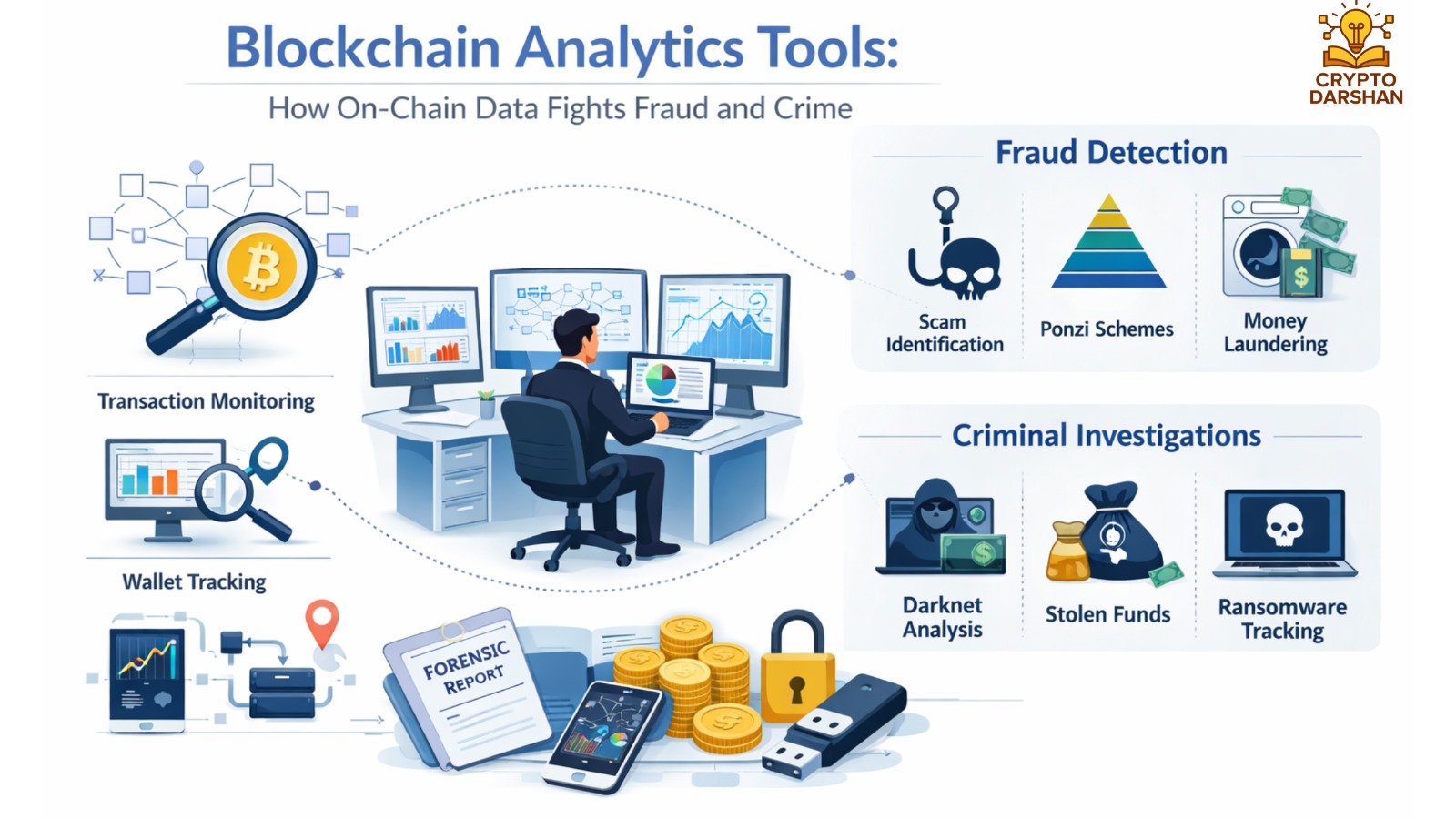
The rise of blockchain technology has transformed how digital transactions are recorded, verified, and shared. With its decentralized and transparent nature, blockchain offers immense potential for innovation across industries. However, this same openness also attracts malicious actors who exploit vulnerabilities for fraud, money laundering, and other illicit activities. To counter these threats, Blockchain Analytics Tools have become essential. These tools analyze on‑chain data to detect suspicious patterns, trace transactions, and support law enforcement in combating financial crimes.
This article explores how Blockchain Analytics Tools work, their importance in fighting fraud and crime, and how organizations use them to ensure compliance and security. It also examines the leading tools in the market, their features, and the future of blockchain analytics.
Understanding Blockchain and On‑Chain Data

What Is Blockchain?
Blockchain is a distributed ledger technology that records transactions across multiple computers in a network. Each transaction is stored in a block, and these blocks are linked together in chronological order, forming a chain. Once recorded, data on the blockchain cannot be altered without altering all subsequent blocks, making it highly secure and tamper‑resistant.
What Is On‑Chain Data?
On‑chain data refers to all information recorded directly on the blockchain. This includes transaction details, wallet addresses, timestamps, and smart contract interactions. On-chain data comes from a public ledger system that allows people to look into all transactions that are recorded on it. Because blockchain networks are public, anyone can view this data. However, interpreting it requires specialized tools capable of analyzing large volumes of complex information. This is where Blockchain Analytics Tools come into play.
The Role of Blockchain Analytics Tools

Blockchain Analytics Tools are software platforms designed to collect, process, and interpret blockchain data. They help identify patterns, track funds, and detect anomalies that may indicate fraudulent or criminal activity. These tools are used by financial institutions, cryptocurrency exchanges, regulators, and law enforcement agencies to ensure transparency and compliance.
Key Functions of Blockchain Analytics Tools
- Transaction Tracking
These tools trace the movement of digital assets across wallets and exchanges. By mapping transaction flows, analysts can identify the origin and destination of funds. - Address Clustering
Blockchain Analytics Tools group related wallet addresses that likely belong to the same entity. This helps uncover hidden relationships between users and organizations. - Risk Scoring
Each wallet or transaction is assigned a risk score based on its behavior and connections. High‑risk scores may indicate involvement in illicit activities such as money laundering or ransomware payments. - Entity Attribution
Tools can link blockchain addresses to known entities, such as exchanges, darknet markets, or sanctioned individuals. This attribution helps investigators identify real‑world actors behind transactions. - Compliance Monitoring
Financial institutions use Blockchain Analytics Tools to comply with Anti‑Money Laundering (AML) and Know Your Customer (KYC) regulations. These tools flag suspicious transactions for further review.
How Blockchain Analytics Tools Fight Fraud

Fraud in the blockchain ecosystem can take many forms, including Ponzi schemes, phishing attacks, and fake investment platforms. Blockchain Analytics Tools help detect and prevent these schemes by analyzing transaction patterns and identifying red flags.
Detecting Ponzi Schemes
Ponzi schemes rely on continuous inflows of new investments to pay returns to earlier investors. Blockchain Analytics Tools can identify such schemes by detecting repetitive fund flows between wallets and unusual clusters of transactions.
Preventing Phishing and Scams
Scammers often use fake websites or social media accounts to trick users into sending cryptocurrency. Analytics tools monitor known scam addresses and alert users or exchanges when funds are sent to these wallets.
Identifying Rug Pulls in DeFi
In decentralized finance (DeFi), rug pulls occur when developers suddenly withdraw liquidity from a project, leaving investors with worthless tokens. Blockchain Analytics Tools track liquidity movements and can warn users when large withdrawals occur unexpectedly.
Transaction Tracking and Tracing
Blockchain Analytics Tools monitor and trace every transaction recorded on the blockchain. By following the movement of digital assets from one wallet to another, these tools can identify suspicious transfers, detect stolen funds, and uncover hidden connections between fraudulent accounts. This transparency makes it difficult for criminals to hide their activities.
Address Clustering and Entity Identification

Fraudsters often use multiple wallet addresses to disguise their identity. Analytics tools use clustering algorithms to group related addresses that likely belong to the same person or organization. This helps investigators link fraudulent wallets together and identify the real entities behind them.
Risk Scoring and Behavior Analysis
Each wallet or transaction is assigned a risk score based on its activity patterns, transaction frequency, and connections to known high‑risk addresses. A high score signals potential fraud or money laundering. This scoring system allows exchanges and financial institutions to flag and review suspicious transactions before they cause harm.
Tracking DeFi and Smart Contract Exploits
In decentralized finance (DeFi), fraud can occur through rug pulls or smart contract vulnerabilities. Blockchain Analytics Tools monitor liquidity pools and contract interactions to detect sudden withdrawals or abnormal activity, helping protect investors from malicious developers.
Supporting Law Enforcement Investigations
When fraud occurs, Blockchain Analytics Tools provide detailed transaction histories and visual maps of fund movements. Law enforcement agencies use this data to trace stolen assets, identify suspects, and gather evidence for prosecution. This capability has made blockchain analytics a vital weapon in the global fight against financial crime.
Combating Money Laundering and Terrorist Financing

Money laundering and terrorist financing are major concerns in the crypto space. Criminals attempt to obscure the origin of illicit funds by moving them through multiple wallets and exchanges. Blockchain Analytics Tools help trace these movements and uncover laundering patterns.
Layering and Mixing Detection
Money launderers often use mixing services or tumblers to obscure transaction trails. Blockchain Analytics Tools can detect these services by analyzing transaction timing, volume, and patterns that indicate mixing behavior.
Cross‑Chain Analysis
Criminals may move funds across different blockchains to hide their tracks. Advanced Blockchain Analytics Tools support cross‑chain analysis, allowing investigators to follow funds even when they move between networks like Bitcoin, Ethereum, and Binance Smart Chain.
Sanctions and Blacklist Monitoring
Regulatory bodies maintain lists of sanctioned individuals and entities. Blockchain Analytics Tools integrate these lists to automatically flag transactions involving blacklisted addresses, helping organizations avoid regulatory violations.
Supporting Law Enforcement Investigations

Law enforcement agencies rely heavily on Blockchain Analytics Tools to investigate cybercrimes, ransomware attacks, and illegal marketplaces. These tools provide visualizations and reports that simplify complex blockchain data, making it easier to present evidence in court.
Case Study: Ransomware Tracking
When ransomware attackers demand payment in cryptocurrency, Blockchain Analytics Tools can trace the ransom payments through the blockchain. By following the flow of funds, investigators can identify exchanges where the attackers attempt to cash out, leading to arrests and asset recovery.
Case Study: Darknet Market Takedowns
Darknet markets often use cryptocurrencies for illegal transactions. Blockchain Analytics Tools help law enforcement trace payments to vendors and administrators, enabling coordinated takedowns of these platforms.
Effective fraud detection is only one part of staying safe in crypto markets. A strong foundation in risk management, including position sizing, stop-loss strategies, and portfolio diversification, helps users minimize exposure to suspicious activity and sudden losses. While blockchain analytics tools identify threats, risk management practices ensure users are prepared before those threats materialize.
Ensuring Regulatory Compliance

Regulatory compliance is a critical aspect of operating in the cryptocurrency industry. Governments worldwide are implementing stricter AML and KYC requirements. Blockchain Analytics Tools help organizations meet these obligations by providing automated monitoring and reporting capabilities.
AML Compliance
Analytics tools continuously monitor transactions for suspicious activity. When a transaction exceeds a certain risk threshold, it is flagged for manual review. This proactive approach helps institutions comply with AML regulations.
KYC Integration
By linking blockchain addresses to verified user identities, Blockchain Analytics Tools enhance KYC processes. Exchanges can use this data to ensure that users are not engaging in prohibited activities.
Reporting and Auditing
Blockchain Analytics Tools generate detailed reports that can be shared with regulators. These reports include transaction histories, risk assessments, and compliance summaries, simplifying the auditing process.
Leading Blockchain Analytics Tools in the Market

Several companies have developed advanced Blockchain Analytics Tools that are widely used across the industry. Each offers unique features tailored to different use cases.
1. Chainalysis
Chainalysis is one of the most recognized names in blockchain analytics. Its tools provide transaction monitoring, investigation support, and compliance solutions. Chainalysis Reactor allows investigators to visualize transaction flows and identify connections between entities.
2. Elliptic
Elliptic offers analytics solutions that help financial institutions manage crypto risk. Its platform provides wallet screening, transaction monitoring, and risk scoring. Elliptic’s data covers a wide range of cryptocurrencies and supports regulatory compliance.
3. TRM Labs
TRM Labs focuses on risk management and compliance. Its Blockchain Analytics Tools detect fraud, monitor transactions, and provide insights into emerging threats. TRM Labs integrates with multiple blockchains and supports real‑time monitoring.
4. CipherTrace
Acquired by Mastercard, CipherTrace provides analytics and compliance solutions for digital assets. Its tools help identify high‑risk transactions, trace stolen funds, and ensure AML compliance across multiple blockchain networks.
5. Crystal Blockchain
Crystal Blockchain offers advanced analytics to track transactions and identify suspicious activity. Its visualization tools make it easier for investigators to follow complex transaction paths and uncover hidden relationships.
How Businesses Use Blockchain Analytics Tools

Businesses across various sectors use Blockchain Analytics Tools to enhance security, ensure compliance, and build trust with customers.
Cryptocurrency Exchanges
Crypto Exchanges use analytics tools to monitor deposits and withdrawals, detect suspicious activity, and comply with AML regulations. These tools help prevent the exchange from being used for money laundering or fraud.
Financial Institutions
Banks and payment processors use Blockchain Analytics Tools to assess the risk of crypto transactions. By integrating these tools into their systems, they can safely offer crypto‑related services while maintaining compliance.
DeFi Platforms
Decentralized finance platforms use analytics tools to monitor smart contract activity and detect potential exploits. This helps protect users from scams and vulnerabilities.
NFT Marketplaces
Non‑fungible token (NFT) marketplaces use Blockchain Analytics Tools to verify the authenticity of digital assets and prevent the sale of stolen or plagiarized content.
The Technology Behind Blockchain Analytics Tools

Data Collection
Blockchain Analytics Tools collect data directly from blockchain nodes and APIs. They continuously scan new blocks to capture transaction details, wallet addresses, and smart contract interactions.
Data Enrichment
Raw blockchain data is enriched with metadata from external sources, such as exchange records, darknet databases, and sanction lists. This enrichment provides context for analysis.
Machine Learning and AI
Many Blockchain Analytics Tools use machine learning algorithms to detect patterns and predict suspicious behavior. AI models can identify anomalies that human analysts might miss.
Visualization and Reporting
Analytics tools present data through interactive dashboards and visual graphs. These visualizations help users understand complex transaction networks and make informed decisions.
Challenges in Blockchain Analytics

Despite their effectiveness, Blockchain Analytics Tools face several challenges that limit their capabilities.
Privacy Coins
Cryptocurrencies like Monero and Zcash use advanced encryption to hide transaction details. This makes it difficult for analytics tools to trace funds on these networks.
Cross‑Chain Complexity
As more blockchains emerge, tracking transactions across multiple networks becomes increasingly complex. Tools must continuously evolve to support new protocols and standards.
Data Volume
The sheer volume of blockchain data poses scalability challenges. Analytics tools must process millions of transactions efficiently without compromising accuracy.
False Positives
Automated risk scoring can sometimes flag legitimate transactions as suspicious. Continuous refinement of algorithms is necessary to reduce false positives.
The Future of Blockchain Analytics Tools

The future of Blockchain Analytics Tools lies in greater automation, interoperability, and integration with emerging technologies.
Integration with Artificial Intelligence
AI will play a larger role in predictive analytics, enabling tools to anticipate fraudulent behavior before it occurs. This proactive approach will enhance security across blockchain ecosystems.
Real‑Time Monitoring
Future tools will offer real‑time monitoring of transactions across multiple blockchains, providing instant alerts for suspicious activity.
Decentralized Analytics
As blockchain technology evolves, decentralized analytics platforms may emerge, allowing users to analyze data without relying on centralized providers.
Enhanced Privacy and Compliance Balance
Developers will continue to refine Blockchain Analytics Tools to balance privacy with regulatory compliance, ensuring that legitimate users’ data remains protected while preventing criminal misuse.
Ethical Considerations in Blockchain Analytics

While Blockchain Analytics Tools are powerful, their use raises ethical questions about privacy and surveillance. Striking the right balance between transparency and individual rights is crucial.
Privacy vs. Security
Blockchain’s transparency can conflict with user privacy. Analytics tools must ensure that data collection and analysis respect privacy laws and ethical standards.
Responsible Data Use
Organizations using Blockchain Analytics Tools should implement strict data governance policies to prevent misuse of sensitive information.
Transparency in Analytics
Developers should maintain transparency about how their tools collect and process data, ensuring accountability and trust among users.
The Economic Impact of Blockchain Analytics Tools

The growth of Blockchain Analytics Tools has created a new industry segment focused on blockchain intelligence and compliance. This sector supports job creation, innovation, and investment in cybersecurity.
Market Growth
The global blockchain analytics market is projected to grow rapidly as more businesses adopt cryptocurrencies. Demand for compliance and security solutions drives this expansion.
Investment Opportunities
Venture capital firms are investing heavily in analytics startups, recognizing their importance in the evolving digital economy.
Collaboration with Governments
Governments are partnering with analytics companies to enhance regulatory oversight and combat financial crimes more effectively.
Education and Training in Blockchain Analytics
As the demand for skilled professionals grows, educational institutions and training programs are offering courses in blockchain analytics. These programs teach data analysis, compliance, and investigative techniques using Blockchain Analytics Tools.
Academic Programs
Universities are introducing blockchain analytics courses that combine computer science, finance, and law. Students learn how to use analytics tools to investigate real‑world cases.
Professional Certifications
Certification programs from analytics companies provide hands‑on training in using their platforms. These certifications enhance career prospects in compliance, cybersecurity, and blockchain forensics.
FAQ: Blockchain Analytics Tools & On-Chain Fraud Detection

1. What are blockchain analytics tools?
Blockchain analytics tools are software platforms that analyze on-chain data to track transactions, identify wallet activity, and detect suspicious behavior. They help businesses, regulators, and investigators understand how funds move across blockchain networks.
2. How does on-chain data help fight fraud and crime?
On-chain data is transparent and immutable, meaning every transaction is permanently recorded. Analytics tools use this data to:
- Trace stolen funds
- Identify suspicious wallet patterns.
- Detect money laundering activities.
- Link wallets to known entities.
This makes it harder for criminals to hide compared to traditional financial systems.
3. Can blockchain transactions really be traced?
Yes. While wallets are pseudonymous, blockchain analytics tools can connect transactions and uncover patterns. By clustering addresses and analyzing behavior, investigators can often trace funds back to individuals or organizations.
4. What types of crimes can blockchain analytics detect?
Blockchain analytics tools are used to detect:
- Cryptocurrency scams and Ponzi schemes
- Ransomware payments
- Dark web transactions
- Terrorist financing
- Money laundering
5. Who uses blockchain analytics tools?
These tools are widely used by:
- Law enforcement agencies
- Crypto exchanges
- Financial institutions
- Regulatory bodies
- Cybersecurity firms
6. Are blockchain analytics tools legal?
Yes, blockchain analytics tools are legal and widely used. They rely on publicly available blockchain data. However, their use must comply with privacy laws and regulations in different jurisdictions.
7. Do these tools compromise user privacy?
Not directly. Blockchain analytics does not reveal personal identities by default. However, when combined with external data (like KYC from exchanges), identities can sometimes be uncovered.
Conclusion
Blockchain Analytics Tools have become indispensable in the fight against fraud, money laundering, and other financial crimes. By analyzing on‑chain data, these tools provide transparency, enhance compliance, and support law enforcement investigations. As blockchain technology continues to evolve, analytics tools will play an even greater role in ensuring the integrity and security of digital ecosystems.
The future of blockchain analytics lies in innovation, collaboration, and ethical responsibility. With continuous advancements in AI, data processing, and cross‑chain analysis, Blockchain Analytics Tools will remain at the forefront of the global effort to make blockchain safer and more trustworthy for everyone.