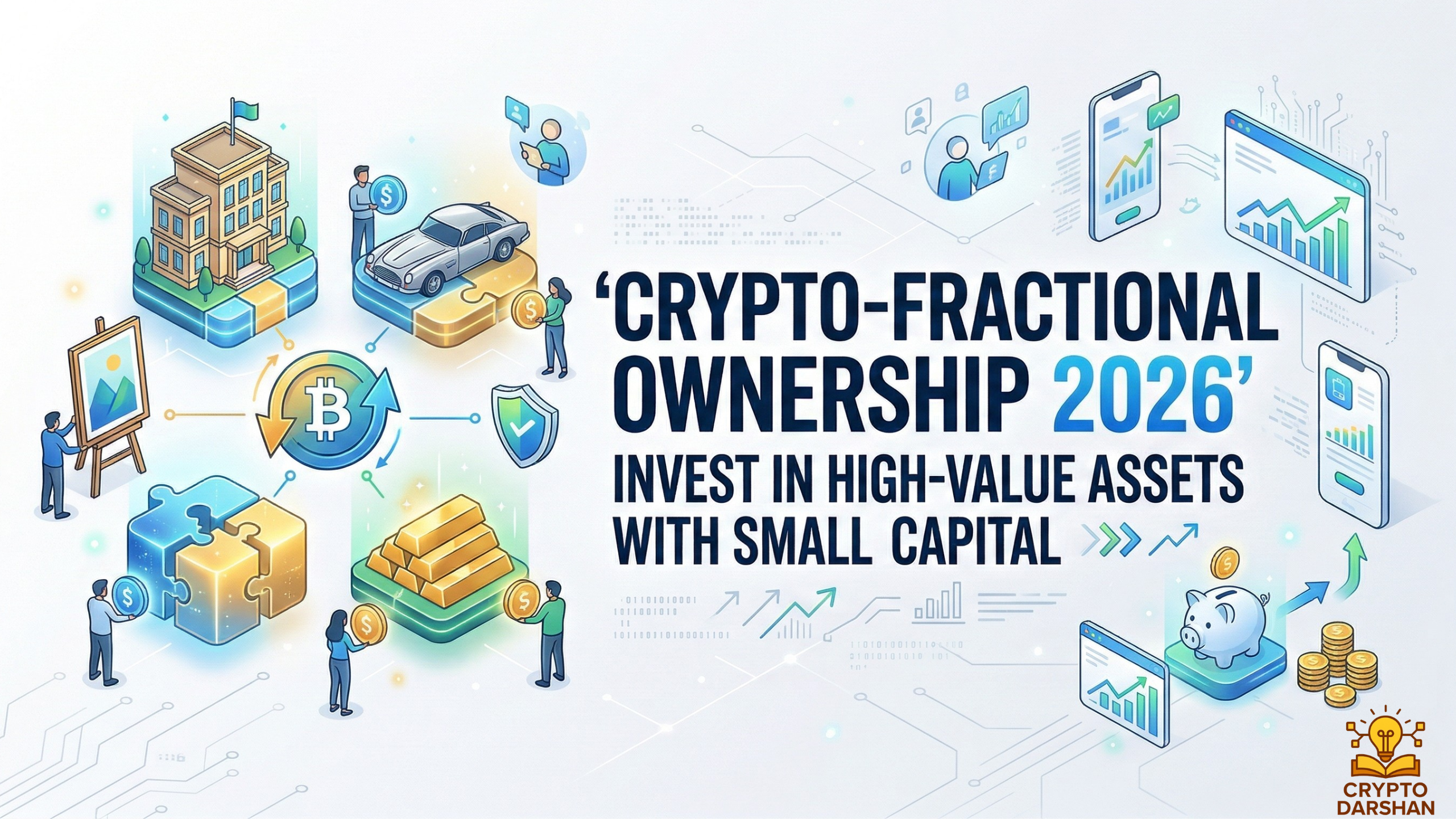
The financial landscape in 2026 is witnessing a paradigm shift. Blockchain technology, decentralized finance (DeFi), and tokenization have converged to create new opportunities for investors. Among these innovations, crypto‑fractional ownership stands out as a transformative model that allows individuals to invest in high‑value assets with small amounts of capital.
This concept has democratized access to wealth creation, enabling anyone from retail investors to small businesses to participate in markets that were once exclusive to institutional players. Whether it’s real estate, fine art, luxury cars, or intellectual property, fractional ownership powered by blockchain is redefining how assets are owned, traded, and valued.
This comprehensive guide explores the mechanics, benefits, challenges, and future potential of crypto‑fractional ownership in 2026. It also provides actionable insights for investors seeking to diversify portfolios and build wealth through tokenized assets.
Understanding Crypto‑Fractional Ownership

What Is Fractional Ownership?
Fractional ownership occurs when an investor purchases a percentage or share of an asset instead of paying the full price. Each investor holds a fraction or percentage of the asset, entitling them to proportional benefits such as profits, appreciation, or usage rights. Traditionally, this model has been used in real estate, vacation homes, and private jets.
The Blockchain Revolution
Crypto‑fractional ownership takes this concept further by integrating blockchain technology. Assets are tokenized, meaning their ownership is represented by digital tokens on a blockchain. Each token corresponds to a specific share of the asset, and ownership is recorded immutably on the blockchain ledger.
This innovation eliminates intermediaries, enhances transparency, and allows for seamless transfer of ownership. Investors can buy, sell, or trade their fractional tokens on digital marketplaces, creating liquidity in markets that were previously illiquid.
The Rise of Tokenization

How Tokenization Works
Tokenization converts the value of a physical or digital asset into blockchain‑based tokens. For example, a $1 million property can be divided into 1,000,000 tokens, each worth $1. Investors can purchase any number of tokens, effectively owning a fraction of the property.
Smart contracts self‑executing agreements coded on the blockchain govern the terms of ownership, profit distribution, and compliance. This automation reduces administrative costs and ensures trustless transactions.
Types of Tokenized Assets
- Real Estate: Residential, commercial, and industrial properties.
- Art and Collectibles: Paintings, sculptures, rare wines, and luxury watches.
- Commodities: Gold, silver, and other precious metals.
- Intellectual Property: Music royalties, patents, and trademarks.
- Luxury Goods: Cars, yachts, and designer fashion.
- Sports and Entertainment: Player contracts, film rights, and event tickets.
- Digital Assets: NFTs, metaverse land, and virtual collectibles.
By 2026, tokenization platforms have matured, offering regulatory compliance, investor protection, and cross-border accessibility.
Tokenized fractional assets can also be leveraged within DeFi lending ecosystems, where investors may use them as collateral or liquidity sources a concept further explored in Crypto Lending Platforms Guaranteeing Your Returns in 2026.
Why 2026 Is the Year of Crypto‑Fractional Ownership

1. Mainstream Blockchain Adoption
Governments and financial institutions have embraced blockchain for transparency, efficiency, and security. Regulatory frameworks now support tokenized assets, providing legal clarity for investors and issuers.
2. Democratization of Investment
Fractional ownership breaks down barriers to entry. Instead of needing millions to invest in prime real estate or fine art, individuals can start with as little as $10 or $100. This inclusivity has attracted a new generation of investors seeking alternative assets.
3. Enhanced Liquidity
Traditional assets like real estate or art are notoriously illiquid. Tokenization introduces secondary markets where fractional tokens can be traded instantly, unlocking liquidity and flexibility.
4. Technological Advancements
Improved blockchain scalability, interoperability, and user‑friendly interfaces have made fractional ownership platforms accessible to non‑technical users. Integration with DeFi protocols allows investors to stake, lend, or borrow against their tokenized assets.
5. Inflation and Economic Uncertainty
Global inflation and currency devaluation have driven investors toward tangible, inflation‑resistant assets. Fractional ownership provides a hedge by enabling exposure to real assets without over‑concentration.
Benefits of Crypto‑Fractional Ownership

1. Accessibility
Investors can participate in high‑value markets with minimal capital. This inclusivity fosters financial empowerment and wealth distribution.
2. Diversification
Fractional ownership allows investors to spread risk across multiple asset classes. For example, one can hold fractions of real estate, art, and gold simultaneously.
3. Liquidity
Unlike traditional ownership, tokenized assets can be traded on secondary markets, providing exit opportunities and flexibility.
4. Transparency
Blockchain’s immutable ledger ensures that all transactions and ownership records are verifiable, reducing fraud and disputes.
5. Cost Efficiency
Smart contracts automate processes such as dividend distribution and compliance, reducing administrative overhead.
6. Global Reach
Investors from different countries can participate in the same asset without geographical restrictions, thanks to blockchain’s borderless nature.
7. Passive Income Opportunities
Tokenized assets can generate passive income through rental yields, royalties, or staking rewards, depending on the asset type.
Challenges and Risks

1. Regulatory Uncertainty
While progress has been made, regulations vary across jurisdictions. Compliance with securities laws, taxation, and anti‑money laundering (AML) requirements remains complex.
2. Market Volatility
Crypto markets are inherently volatile. Tokenized assets may experience price fluctuations influenced by broader crypto trends.
3. Security Risks
Smart contract vulnerabilities, hacking, and phishing attacks pose potential threats. Investors must use secure wallets and trusted platforms.
4. Valuation and Appraisal
Determining the fair value of tokenized assets can be challenging, especially for unique items like art or collectibles.
5. Limited Legal Precedent
As a relatively new concept, fractional ownership lacks extensive legal case studies, which may complicate dispute resolution.
6. Platform Reliability
The success of fractional ownership depends heavily on the credibility and stability of the platform hosting the tokens.
How to Invest in Crypto‑Fractional Ownership

Step 1: Research Platforms
Choose reputable platforms that specialize in tokenized assets. Evaluate their regulatory compliance, security measures, and asset selection.
Step 2: Verify Asset Authenticity
Ensure that the underlying asset is verified, insured, and properly valued. Transparency reports and third‑party audits are essential.
Step 3: Understand Tokenomics
Review the token’s structure, supply, and governance model. Some tokens may offer dividends or voting rights, while others represent pure ownership.
Step 4: Diversify Investments
Avoid concentrating funds in a single asset. Diversify across sectors and geographies to mitigate risk.
Step 5: Monitor Market Trends
Stay informed about market developments, regulatory updates, and technological innovations that may impact asset performance.
Step 6: Secure Storage
Use hardware wallets or regulated custodians to store tokens safely.
Leading Platforms in 2026
- RealT: Specializes in tokenized real estate properties across the United States.
- Masterworks: Focuses on fractional ownership of fine art.
- Republic: Offers tokenized investments in startups, real estate, and collectibles.
- Sygnum Bank: A regulated digital asset bank providing tokenization services for institutional investors.
- Fractional.art: Enables fractional ownership of NFTs and digital collectibles.
- Lofty AI: Provides tokenized real estate investments with AI‑driven analytics.
- Tokeny Solutions: Offers enterprise‑grade tokenization infrastructure for businesses.
Real‑World Use Cases
Real Estate
A luxury apartment in New York valued at $10 million can be divided into 1 million tokens. Investors worldwide can purchase tokens worth $100 each, earning rental income and capital appreciation proportionally.
Fine Art
A Picasso painting valued at $50 million can be tokenized into 500,000 shares. Investors gain exposure to the art market without needing to purchase or store the artwork physically.
Music Royalties
Musicians can tokenize future royalty streams, allowing fans and investors to earn a share of revenue from streaming platforms.
Sports and Entertainment
Athletes and production companies can tokenize contracts or film rights, enabling fans to invest directly in their success.
Green Energy Projects
Renewable energy companies can tokenize solar farms or wind projects, allowing investors to fund sustainable initiatives while earning returns.
The Role of DeFi in Fractional Ownership

Decentralized finance (DeFi) enhances fractional ownership by providing liquidity and additional yield opportunities. Investors exploring fractional ownership often look for ways to generate passive returns from their digital assets, similar to how liquid staking allows users to earn yield while keeping their assets accessible, as explained in Liquid Staking Explained: LSTs, Restaking, and New DeFi Yields.
Through DeFi integration, token holders can utilize their fractional ownership tokens in several ways:
Stake tokens to earn rewards
Staking means you lock your tokens in a platform or protocol to support its system (like security or operations). In return, you may receive rewards. Key things to check: lock-up period, how rewards are paid, and whether rewards are fixed or can change.
Use tokens as collateral for loans
You can deposit certain tokens as “security” to borrow another asset (often a stablecoin). If the token price drops too much, the system may sell your collateral to protect the lender (this is called liquidation). Safer approach: borrow small amounts and keep a buffer so price swings don’t trigger liquidation.
Participate in liquidity pools to generate passive income
Liquidity pools are shared funds that help people trade tokens. You add two assets into a pool and may earn a share of trading fees (and sometimes extra incentives). Main risk: impermanent loss, where you can end up with less value than if you simply held the tokens, especially when prices move a lot.
Access decentralized exchanges (DEXs) for instant trading
DEXs let you swap tokens directly from your wallet without a traditional broker. This can be fast and open, but you should watch for: low liquidity (big price impact), high spreads, fake tokens, and network fees. Always verify the correct token contract before swapping.
DeFi integration transforms static ownership into dynamic, income‑generating assets.
Regulatory Landscape in 2026

Governments have recognized the potential of tokenized assets and introduced frameworks to protect investors. Key developments include:
Securities Classification
Regulators now explain more clearly when a token is treated like an investment security (similar to shares or a fund). If a token promises profit from someone else’s work (like a company managing a property), it often falls under securities rules. This usually means disclosures, investor protections, and limits on how it can be marketed or traded.
KYC/AML Compliance
Most serious platforms require identity checks (KYC) and anti‑money laundering controls (AML). This can include ID verification, proof of address, and sometimes source‑of‑funds checks. It helps reduce fraud and illegal activity, but it also means some platforms may block users from certain countries.
Taxation Policies
Many countries now give clearer guidance on how tokenized asset profits are taxed. In simple terms, you may owe tax on:
- Income (rent payouts, royalty payouts, staking-like rewards), and/or
- Capital gains (profit when you sell tokens for more than you paid).
Good record keeping is important because transactions can happen often.
Custody Regulations
Rules around custody aim to protect investors by requiring secure storage standards. Some platforms use licensed custodians (regulated companies that hold assets/keys safely). This reduces the risk of loss from hacks or poor internal controls, but it may add custody fees.
Cross‑Border Collaboration
Since tokenized assets can be bought globally, regulators are working to align rules across countries (for example, shared standards for identity checks, disclosures, and reporting). This makes it easier for platforms to operate internationally and for investors to access assets across borders though local rules still apply.
These measures have increased institutional participation and market stability.
The Future of Crypto‑Fractional Ownership

Integration with the Metaverse
Virtual real estate and digital collectibles are becoming integral to the metaverse economy. Fractional ownership enables shared investment in virtual assets, from land parcels to branded experiences.
AI‑Driven Asset Management
Artificial intelligence assists investors in analyzing market trends, predicting asset performance, and optimizing portfolios.
Cross‑Chain Interoperability
Future platforms will support cross‑chain tokenization, allowing assets to move seamlessly between different blockchains.
Institutional Adoption
Banks, hedge funds, and pension funds are incorporating tokenized assets into their portfolios, signaling mainstream acceptance.
Sustainability and ESG Investments
Tokenization facilitates transparent tracking of environmental, social, and governance (ESG) metrics, promoting responsible investing.
Integration with Central Bank Digital Currencies (CBDCs)
CBDCs will streamline payments and settlements for tokenized assets, reducing friction and improving liquidity.
Strategies for Successful Investing

Start Small
Put in an amount you can afford to lock up or lose. Use the first few buys to learn how the platform works (fees, payouts, selling process) before scaling up.
Focus on Quality Assets
Choose assets with clear proof of ownership, proper documents, and realistic pricing. Prefer assets with a track record (rental history, verified appraisals, audited reports) over “hype” listings.
Leverage Analytics
Look at basic numbers like expected yield/income, past performance, vacancy rates (for property), and trading volume (for liquidity). Compare similar assets so you know if the price and fees make sense.
Stay Compliant
Complete KYC properly, follow any investor rules (some offerings have limits), and keep records of buys/sells and income payouts. This helps avoid account freezes and makes tax filing easier.
Adopt a Long‑Term View
Many tokenized real-world assets move slowly (like property or royalties). Give time for income to add up and for the asset value to grow, instead of expecting quick flips.
Engage in Community Governance
If your tokens include voting, use it. Votes can affect things like property repairs, when to sell an asset, or how income is distributed small decisions can impact returns.
Reinvest Earnings
Instead of spending payouts, consider spreading them into other assets (example: add some to commodities, some to real estate). This can grow your portfolio faster through compounding and diversification.
Common Misconceptions

- Myth: Fractional ownership is only for crypto experts.
Reality: Modern platforms are user‑friendly and accessible to beginners.
- Myth: Tokenized assets are unregulated.
Reality: Many jurisdictions now provide clear legal frameworks.
- Myth: Fractional tokens have no real value.
Reality: Each token represents a verifiable share of a tangible or digital asset.
- Myth: Tokenization is only for luxury assets.
Reality: Everyday assets like rental properties, small businesses, and renewable energy projects can also be tokenized.
Economic and Social Impact

Crypto‑fractional ownership contributes to financial inclusion, job creation, and capital efficiency. It enables small investors to participate in wealth creation, stimulates global trade, and fosters innovation in asset management.
It also bridges the gap between traditional finance and decentralized ecosystems, creating a hybrid model that benefits both retail and institutional investors.
In developing economies, fractional ownership empowers communities to pool resources and invest in infrastructure, agriculture, and education projects. This collective investment model promotes sustainable growth and reduces inequality.
Predictions for the Next Decade
Mass Adoption (500M+ by 2030)
As apps get simpler and regulations get clearer, more people will buy small slices of real estate, gold, or funds the same way they buy stocks today. Lower minimums and easier onboarding drive growth.
Integration with AI and IoT
AI tools can track prices, risk, and payouts, then suggest rebalancing. IoT devices (like smart meters in buildings or sensors in warehouses) can automatically report real‑world data (usage, storage conditions), which helps verify performance and trigger smart‑contract actions.
Government‑Backed Tokenization
Governments may tokenize things like infrastructure bonds, public housing projects, or renewable energy programs. Citizens could invest small amounts, see transparent reporting, and receive returns or benefits based on clear rules.
Fractional Ownership of Businesses (SME tokenized equity)
Small businesses can raise money by selling tokenized shares or revenue‑share tokens. Investors get exposure to local businesses with smaller ticket sizes, while businesses get faster fundraising and potentially a wider investor base.
Global Secondary Markets
More regulated exchanges and decentralized marketplaces can make it easier to buy/sell fractional tokens anytime. Higher trading activity improves liquidity, but prices can still move due to supply/demand, spreads, and market sentiment so liquidity checks remain important.
Crypto Fractional Ownership 2026: Invest in High-Value Assets with Small Capital (FAQ)

1. What is crypto fractional ownership?
Crypto fractional ownership is a blockchain-based investment model where a high-value asset is divided into smaller digital tokens so multiple investors can own a portion of it. Instead of buying an entire asset like real estate or art, investors can purchase smaller shares represented by blockchain tokens.
2. How does fractional ownership work in crypto?
The process typically follows these steps:
- Asset Tokenization – A physical or financial asset is converted into blockchain tokens.
- Division into Fractions – The asset is split into thousands or millions of tokens.
- Token Distribution – Investors purchase tokens representing partial ownership.
- Trading & Income – Investors can trade tokens or receive a proportional share of revenue or appreciation.
For example, a $10 million property might be divided into one million tokens worth $10 each, allowing small investors to participate.
3. What types of assets can be fractionally owned through crypto?
Many traditional assets can now be tokenized, including:
- Real estate properties
- Precious metals like gold
- Art and collectibles
- Stocks and bonds
- Infrastructure projects
- Intellectual property royalties
These assets are converted into digital tokens that represent ownership rights or economic exposure to the asset.
4. Why is fractional ownership becoming popular in 2026?
Fractional ownership is growing rapidly because it:
- Reduces investment barriers by allowing small capital participation
- Improves liquidity for traditionally illiquid assets
- Enables global investment access through blockchain networks
- Allows 24/7 trading in some tokenized markets
This model is helping democratize investment opportunities that were previously limited to wealthy investors or institutions.
5. What are the benefits of investing in tokenized assets?
Key advantages include:
- Lower minimum investment requirements
- Access to previously exclusive markets
- Faster transactions through blockchain
- Transparent ownership records
- Portfolio diversification across different asset classes
Tokenization also enables programmable transactions using smart contracts, improving efficiency in ownership transfer and revenue distribution.
6. Are tokenized fractional assets safe?
They can be safe if issued by regulated platforms with proper legal backing. However, risks still exist such as:
- Smart contract vulnerabilities
- Regulatory uncertainty
- Platform or custodian failure
- Market volatility
Investors should always research the asset backing, legal structure, and issuer credibility before investing.
7. How much money do you need to start investing in fractional crypto assets?
One of the biggest advantages is the low entry barrier. Some platforms allow investments starting from as little as $10–$100, depending on the tokenized asset and platform requirements.
8. Can fractional tokens generate income?
Yes. Depending on the asset type, investors may earn:
- Rental income from tokenized real estate
- Yield from tokenized bonds or treasuries
- Revenue shares from intellectual property
- Capital gains if the asset price increases
Income distribution is often automated through smart contracts.
Conclusion
By 2026, crypto‑fractional ownership has evolved from a futuristic concept into a practical investment model. It merges the stability of traditional assets with the innovation of blockchain technology, creating a more inclusive, transparent, and efficient financial ecosystem.
Investors can now access high‑value assets with minimal capital, diversify portfolios globally, and enjoy liquidity previously unimaginable in traditional markets. As technology and regulation continue to evolve, fractional ownership stands poised to become a cornerstone of the digital economy empowering individuals and institutions alike to invest smarter, fairer, and more freely than ever before.