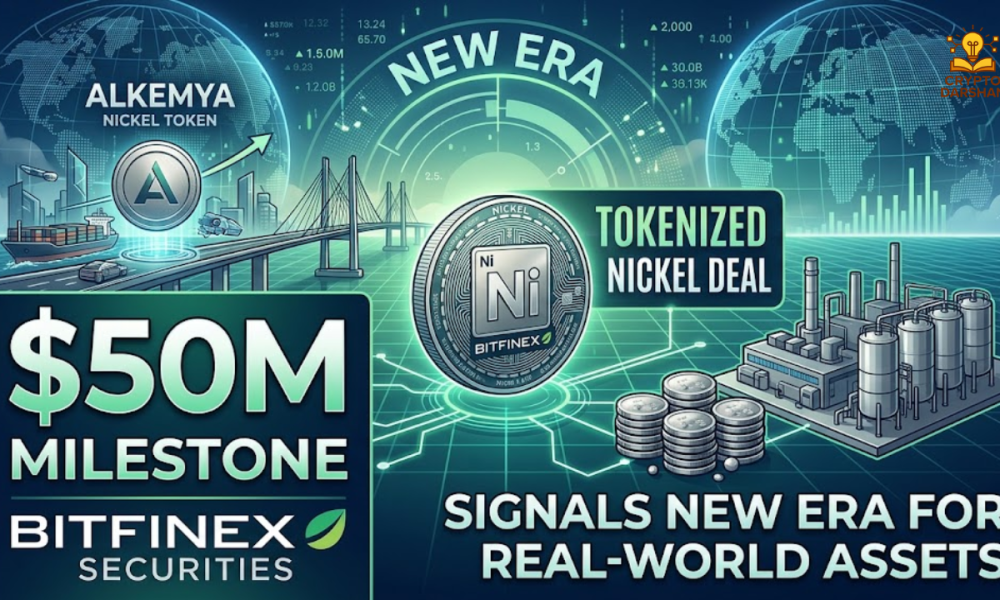
Bitfinex Securities has closed a landmark $50 million capital raise for metals company Alkemya, marking the platform’s largest tokenized offering to date. The deal centers on ALKN, a digital security backed by roughly 7 million meters of 99.99% pure nickel wire independently valued at $1.64 billion. This transaction underscores how real-world asset (RWA) tokenization is moving beyond gold and Treasuries into industrial commodities with strategic importance for tech and green energy sectors.
Record-Breaking Raise for Bitfinex Securities
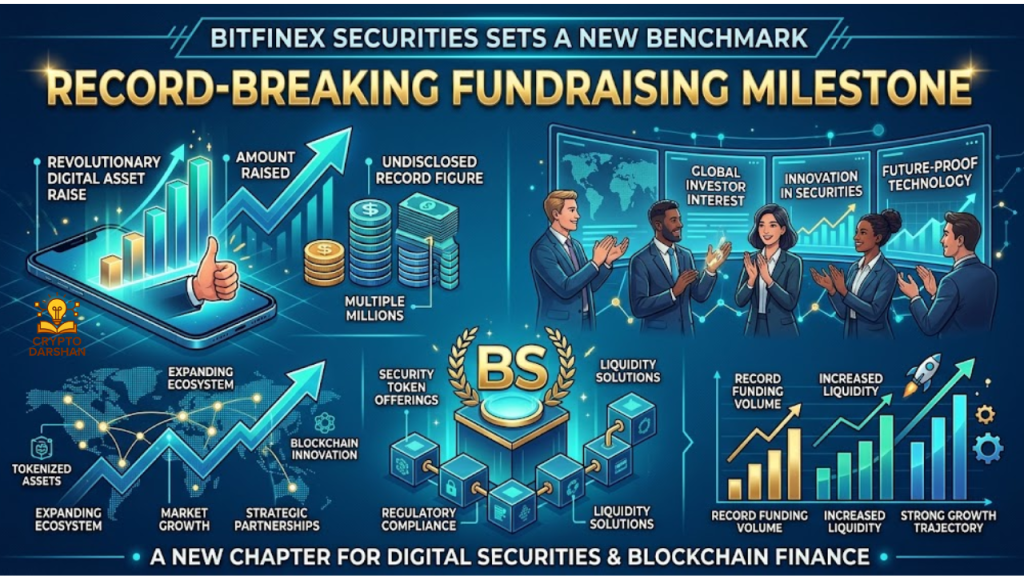
The $50 million total surpasses Bitfinex Securities’ previous record of $30 million, which involved USTBL, a tokenized product tied to short-term U.S. Treasury bonds. With this deal, the platform has now completed seven capital raises and listed 16 assets since launching its regulated securities operations.
For Alkemya, this is its first foray into tokenization. The company structured the offering through Alkemya Metacore SCSp, a Luxembourg-based limited partnership that holds the physical nickel inventory. Each ALKN token represents a fractional interest in this partnership, allowing investors to gain exposure to the underlying asset without needing to purchase or store physical nickel.
What Backs the ALKN Token?
The nickel wire backing ALKN is stored in Switzerland and has been independently appraised at approximately $1.64 billion. This substantial asset base gives Alkemya the ability to raise capital against its holdings without liquidating the entire inventory.
Key details about the token structure:
- Legal framework: ALKN tokens represent limited partnership interests in a Luxembourg entity, not direct ownership of individual nickel wire segments.
- Fractionalization: The digital format allows partnership interests to be divided into smaller, transferable units for eligible investors.
- Regulatory compliance: The offering operates under El Salvador’s Digital Assets Issuance Law, with Bitfinex Securities registered as PSAD-0001.
Why Nickel Matters Now
Nickel is a critical material for multiple high-growth industries. It’s essential for stainless steel production, electric vehicle batteries, and increasingly for semiconductor manufacturing. Alkemya plans to use the $50 million raise to commercialize engineered nickel products targeting applications in:
- Semiconductors and electromagnetic shielding
- Aerospace and defense systems
- Green hydrogen infrastructure
- Power industrial systems
- Precious metal recyclingcrypto
This focus on value-added products rather than raw commodity trading differentiates Alkemya from traditional mining or metals companies.
Tokenized Commodities: A Growing Market
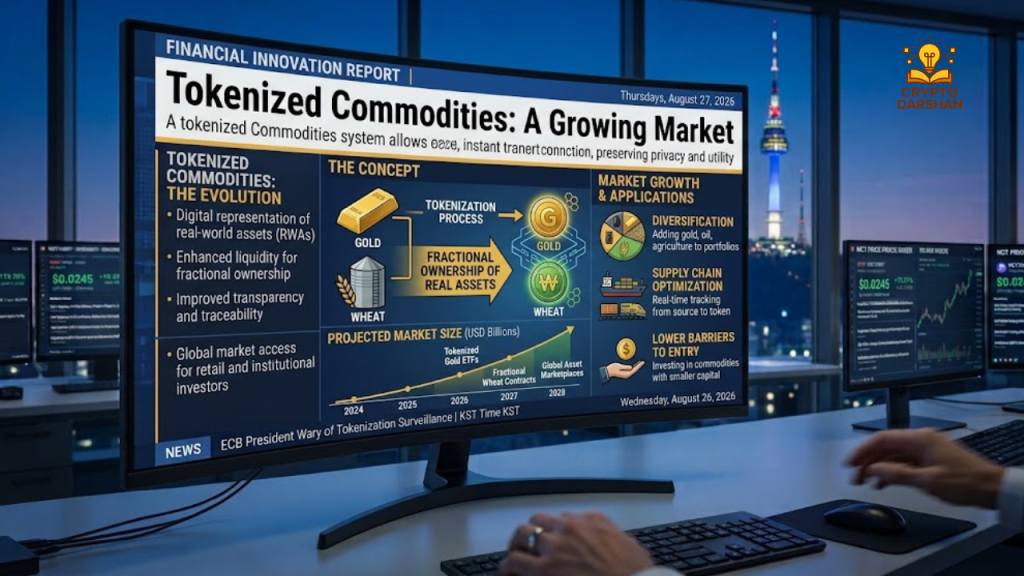
The ALKN deal arrives as tokenized commodities expand rapidly beyond precious metals. In April 2026, the total value of tokenized commodities and equities crossed $7 billion, up nearly 600% since early 2025. While gold-backed products still dominate, tokenized oil, gas, and agricultural assets are gaining traction.
Bitfinex research indicates these tokenized commodities are increasingly being used as on-chain collateral across both centralized platforms and decentralized finance (DeFi) protocols. The ALKN offering represents one of the first tokenized nickel products globally and the first tokenized commodity issuance under El Salvador’s digital asset regulatory framework.
Investment Timeline and Liquidity
Eligible investors can still subscribe to additional ALKN tokens through October 15, 2026, as Alkemya prepares for another fundraising tranche. However, secondary market trading will not begin immediately. The companies have stated that ALKN will remain unavailable for secondary trading until at least the next fundraising tranche is completed.
This phased approach allows Alkemya to secure primary market capital before opening liquidity on secondary exchanges, a common structure for institutional-grade tokenized offerings.
Bitfinex’s Expanding Tokenization Ecosystem
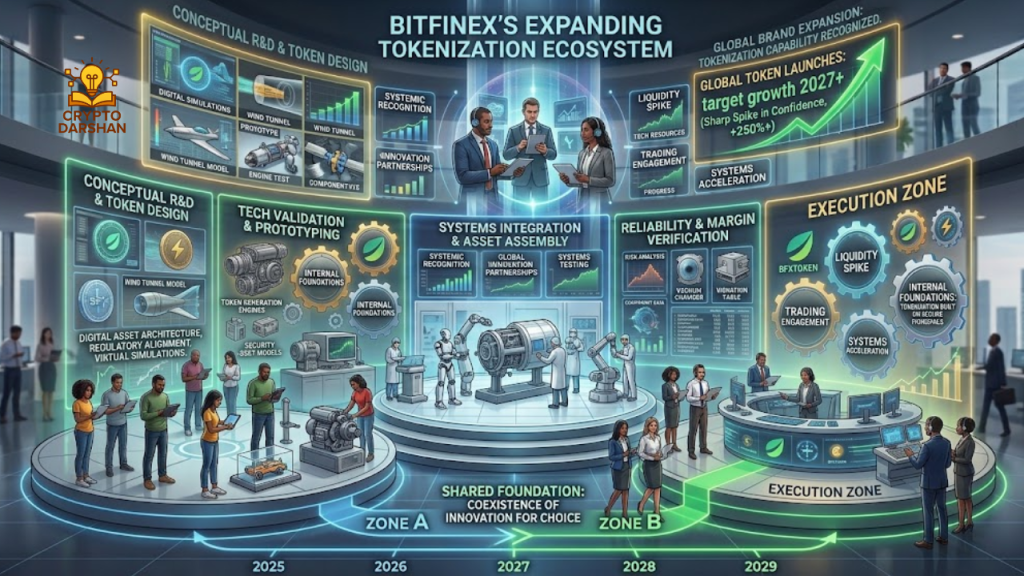
Before the Alkemya deal, Bitfinex Securities had focused primarily on tokenized government debt and corporate financing. Notable previous offerings include:
- USTBL (November 2024): A $30 million tokenized U.S. Treasury product issued under El Salvador’s Digital Asset Law, representing shares in an iShares Treasury Bond ETF.
- HILSV (April 2024): A $6.25 million tokenized debt offering for hotel construction near El Salvador International Airport, issued on the Liquid Network with a 10% annual return
- ALT2611 (2023): A 36-month tokenized bond denominated in USDT, targeting $10 million with a 10% coupon.
In November 2025, Bitfinex Securities also announced a partnership with Tether’s Hadron tokenization platform and KraneShares to provide regulated infrastructure and secondary-market liquidity for tokenized products.
Regulatory Context: El Salvador’s Digital Asset Framework
Bitfinex Securities operates under a comprehensive licensing structure in El Salvador, covering spot trading, derivatives, and regulated tokenized securities. The securities entity was registered on October 24, 2023, under the National Commission of Digital Assets, with permitted activities including issuance and trading infrastructure for tokenized financial products.
This regulatory clarity has positioned El Salvador as an emerging hub for tokenized asset innovation, attracting issuers seeking compliant pathways to bring real-world assets on-chain.
What This Means for Investors and the RWA Sector
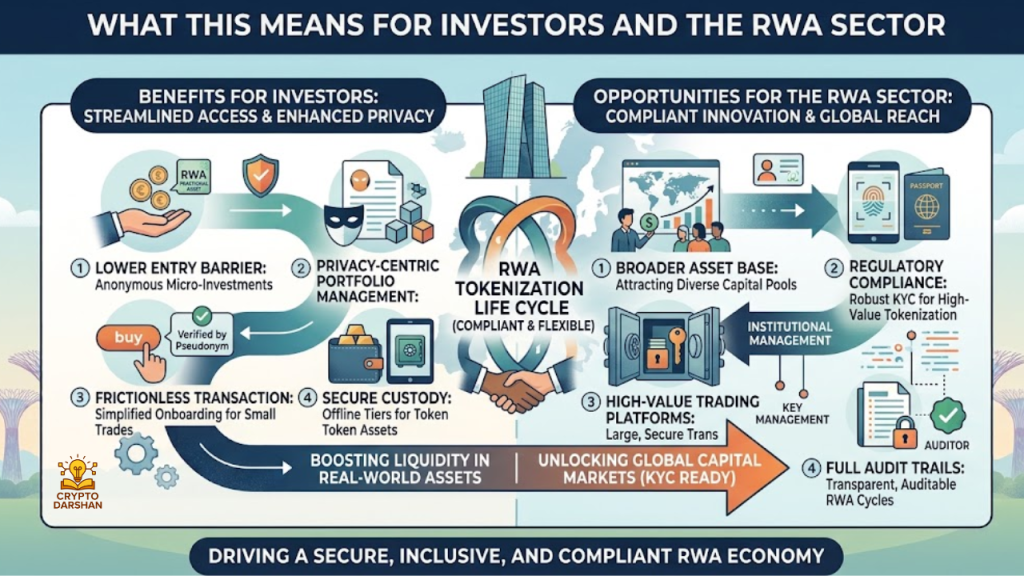
The Alkemya raise signals several important trends for the tokenized assets market:
- Industrial commodities entering the fray: After gold and Treasuries dominated early RWA tokenization, strategic metals like nickel are now being brought on-chain.
- Institutional-grade structures: The Luxembourg partnership model and El Salvador regulatory compliance provide a template for future commodity-backed tokens.
- Capital efficiency for asset holders: Companies can unlock liquidity from existing inventory without full liquidation, preserving upside potential.
- Fractional access for investors: Digital tokens lower barriers to entry for exposure to high-value industrial assets previously accessible only to large institutions.
As tokenized commodities continue to scale, deals like ALKN demonstrate how blockchain infrastructure can bridge traditional finance and digital markets, creating new opportunities for both issuers and investors in the real-world asset economy.