

Blockchain technology has evolved from a niche innovation into a global financial infrastructure. Initially known for powering cryptocurrencies like Bitcoin and Ethereum, blockchain is now transforming traditional finance through the tokenization of Real-World Assets (RWA). This concept bridges the gap between physical assets and digital ecosystems, enabling tangible items such as real estate, commodities, bonds, and art to exist as digital tokens on decentralized networks.
Real-World Assets on blockchain represent a paradigm shift in how ownership, trading, and investment are managed. By converting physical or traditional financial assets into digital tokens, blockchain enables fractional ownership, global accessibility, and enhanced liquidity. This transformation is reshaping industries, democratizing investment opportunities, and redefining how value is stored and transferred.
This comprehensive guide explores what RWAs are, how they work, their benefits, challenges, use cases, and the future of tokenized assets in the blockchain ecosystem.
What Are Real-World Assets (RWA)?
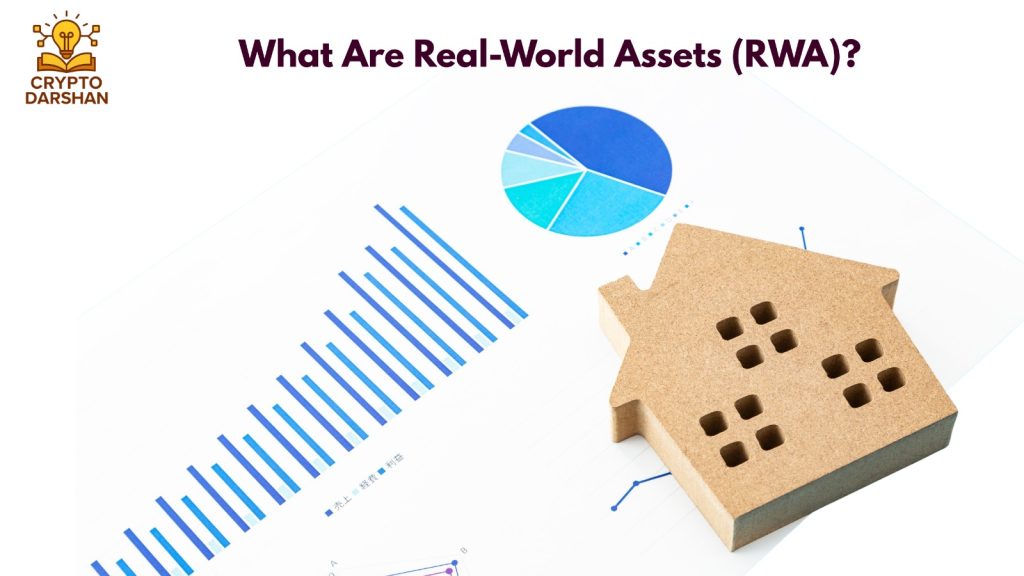
Real-World Assets (RWA) are tangible or intangible assets that exist outside the blockchain but are represented digitally through tokenization. These assets can include:
- Real estate properties
- Commodities like gold, oil, or silver
- Government and corporate bonds
- Equities and private company shares
- Fine art and collectibles
- Intellectual property rights
- Invoices and receivables
When these assets are tokenized, they are represented as digital tokens on a blockchain. Each token corresponds to a share or fraction of the underlying asset, allowing investors to buy, sell, or trade ownership seamlessly.
For example, a $1 million property can be divided into 1,000,000 tokens, each worth $1. Investors can purchase any number of tokens, gaining proportional ownership and potential returns from the asset. This process makes high-value assets accessible to a broader range of investors.
The Concept of Tokenization
Tokenization is the process of creating a digital representation of a real thing. Tokenization can also be used to protect sensitive data or to efficiently process large amounts of data. These tokens are secured by smart contracts, ensuring transparency, immutability, and traceability. Some Key Steps in Tokenization are :
Asset Identification
The first step involves selecting a real-world asset suitable for tokenization. This could be a property, artwork, or financial instrument
Legal Structuring
Legal frameworks are established to ensure that token holders have legitimate ownership rights. This often involves creating a Special Purpose Vehicle (SPV) that holds the asset.
Valuation and Fractionalization
The asset is valued, and its ownership is divided into tokens. Each token represents a specific share of the asset.
Smart Contract Deployment
Smart contracts are created to manage token issuance, transfers, and compliance with regulations.
Distribution and Trading
Tokens are distributed to investors and can be traded on secondary markets or decentralized exchanges (DEXs).
How Blockchain Enables RWA Tokenization
Blockchain technology provides the foundation for secure, transparent, and efficient tokenization. Its decentralized nature eliminates intermediaries, reduces costs, and enhances trust.
1. Transparency
All transactions are recorded on a public ledger, allowing anyone to verify ownership and transaction history.
2. Security
Blockchain’s cryptographic mechanisms protect data from tampering or unauthorized access.
3. Programmability
Smart contracts automate processes such as dividend distribution, compliance checks, and ownership transfers.
4. Liquidity
Tokenization allows fractional ownership, enabling smaller investors to participate and increasing market liquidity.
5. Global Accessibility
Investors from anywhere in the world can access tokenized assets without traditional barriers like geography or banking restrictions.
Types of Real-World Assets on Blockchain
1. Real Estate
Real estate tokenization allows properties to be divided into digital shares. Investors can buy fractions of commercial or residential properties, earning rental income and capital appreciation.
Example: A luxury apartment building is tokenized, and investors purchase tokens representing ownership shares. Rental income is distributed automatically through smart contracts.
2. Commodities
Gold, silver, and oil can be tokenized to represent physical holdings. Each token corresponds to a specific quantity of the commodity stored in a secure vault.
Example: Gold-backed tokens like PAX Gold (PAXG) represent one fine troy ounce of gold held in custody.
3. Bonds and Securities
Government and corporate bonds can be tokenized to improve liquidity and accessibility. Token holders receive interest payments directly through blockchain-based systems.
Example: Tokenized U.S. Treasury bonds allow investors to earn yield while maintaining transparency and security.
4. Art and Collectibles
High-value artworks and collectibles can be tokenized, allowing multiple investors to co-own a piece of art.
Example: A $10 million painting is divided into 100,000 tokens, enabling fractional ownership and trading.
5. Intellectual Property
Patents, music rights, and trademarks can be tokenized, allowing creators to monetize their intellectual property efficiently.
6. Private Equity and Venture Capital
Startups and private companies can issue tokenized shares, enabling investors to participate in early-stage funding with lower entry barriers.
7. Infrastructure and Energy Assets
Infrastructure projects such as solar farms, wind turbines, and transportation systems can be tokenized to attract global investors and fund sustainable development.
Benefits of Real-World Asset Tokenization
1. Increased Liquidity
Traditional assets like real estate or art are often illiquid. Tokenization allows fractional ownership, enabling easier buying and selling.
2. Lower Entry Barriers
Investors can purchase small fractions of high-value assets, democratizing access to investment opportunities.
3. Transparency and Trust
Blockchain’s immutable ledger ensures that all transactions are verifiable and transparent.
4. Efficiency and Cost Reduction
Smart contracts automate processes, reducing the need for intermediaries and lowering transaction costs. The institutionalization trend seen with firms like BlackRock is now extending beyond Bitcoin into tokenized real-world assets.
5. Global Reach
Tokenized assets can be traded globally, expanding the investor base and market potential.
6. Programmable Ownership
Smart contracts can embed rules for dividends, voting rights, and compliance, ensuring seamless management.
7. Diversification
Investors can diversify portfolios by owning fractions of multiple asset classes, reducing risk exposure.
8. Real-Time Settlement
Blockchain enables near-instant settlement of transactions, improving efficiency and reducing counterparty risk.
Challenges and Risks of RWChallenges and Risks of RWA Tokenization
A Tokenization
Despite its potential, Real-World Assets tokenization faces several challenges that must be addressed for widespread adoption.
1. Regulatory Uncertainty
Different jurisdictions have varying regulations regarding digital assets, securities, and ownership rights. Compliance remains a major hurdle.
2. Legal Enforcement
Ensuring that token holders have enforceable ownership rights in the real world requires robust legal frameworks.
3. Valuation and Auditing
Accurate valuation of underlying assets and regular audits are essential to maintain investor trust.
4. Custody and Security
Physical assets must be securely stored, and digital tokens must be protected from cyber threats.
5. Liquidity Constraints
While tokenization increases potential liquidity, actual trading volumes depend on market adoption and investor demand.
6. Technological Complexity
Integrating blockchain with traditional systems requires technical expertise and infrastructure.
7. Market Education
Investors and institutions need education about blockchain technology and tokenized assets to build confidence and adoption.
Regulatory Landscape for RWA Tokenization
Regulation plays a crucial role in the success of RWA tokenization. Governments and financial authorities are gradually developing frameworks to govern digital assets.
1. United States
The U.S. Securities and Exchange Commission (SEC) classifies most tokenized assets as securities, requiring compliance with existing securities laws. Projects must register or qualify for exemptions to operate legally.
2. European Union
The EU’s Markets in Crypto-Assets (MiCA) regulation aims to create a unified framework for digital assets, including tokenized securities. This regulation enhances investor protection and market integrity.
3. Asia-Pacific
Countries like Singapore and Japan have introduced progressive regulations to support asset tokenization while ensuring investor protection. Singapore’s Monetary Authority (MAS) has been a leader in promoting digital asset innovation.
4. Middle East
The UAE and Bahrain are emerging as hubs for blockchain innovation, offering regulatory sandboxes for tokenized asset projects. Dubai’s Virtual Assets Regulatory Authority (VARA) is setting global standards for compliance.
5. Latin America
Countries like Brazil and Chile are exploring tokenization frameworks to attract foreign investment and modernize financial systems.
Real-World Use Cases of RWA Tokenization

1. Real Estate Investment Platforms
Platforms like RealT and Lofty AI allow investors to buy fractional ownership in rental properties, earning passive income through blockchain-based systems.
2. Tokenized Gold and Commodities
Projects like Tether Gold (XAUT) and DigixDAO (DGX) provide gold-backed tokens, combining the stability of precious metals with blockchain efficiency.
3. Tokenized Bonds
Institutions like the European Investment Bank (EIB) have issued blockchain-based bonds, demonstrating the potential for tokenized debt instruments.
4. Art and Collectibles
Platforms such as Masterworks enable fractional ownership of fine art, making high-value investments accessible to retail investors.
5. Supply Chain Finance
Tokenized invoices and receivables improve liquidity for businesses by enabling faster access to working capital.
6. Renewable Energy Projects
Tokenization allows investors to fund renewable energy projects like solar farms, promoting sustainability and green finance.
7. Tokenized Funds
Asset managers are launching tokenized funds that represent diversified portfolios of traditional and digital assets.
The Role of DeFi in RWA Integration
Decentralized Finance (DeFi) platforms are increasingly integrating RWAs to enhance yield opportunities and stability.
1. Collateralization
Tokenized assets can be used as collateral for loans on DeFi platforms, expanding the range of supported assets.
2. Yield Generation
Investors can earn yields from tokenized bonds, real estate, or commodities through DeFi protocols.
3. Stablecoin Backing
Some stablecoins are backed by tokenized real-world assets, ensuring stability and transparency.
4. Liquidity Pools
DeFi liquidity pools can include RWAs, enabling diversified investment strategies.
5. Risk Management
DeFi protocols use tokenized assets to balance risk exposure and maintain stable returns.
Leading Projects in Real-World Assets(RWA) Tokenization
1. Centrifuge
Centrifuge connects real-world assets like invoices and real estate to DeFi, allowing businesses to access liquidity.
2. MakerDAO
MakerDAO integrates RWAs as collateral for its DAI stablecoin, bridging traditional finance with decentralized systems.
3. Ondo Finance
Ondo Finance focuses on tokenized U.S. Treasuries and bonds, offering yield-bearing digital assets.
4. Maple Finance
Maple provides institutional lending backed by real-world collateral, enhancing credit access through blockchain.
5. Goldfinch
Goldfinch enables decentralized credit for businesses in emerging markets using tokenized real-world assets.
6. Polymesh
Polymesh is a blockchain built specifically for regulated assets, ensuring compliance and security for tokenized securities.
7. Securitize
Securitize offers a platform for issuing and managing digital securities, enabling compliant tokenization of real-world assets.
Economic Impact of Real-World Assets Tokenization
The tokenization of real-world assets has the potential to reshape global capital markets. By unlocking trillions of dollars in illiquid assets, blockchain can drive economic growth and financial inclusion.
1. Market Efficiency
Tokenization reduces friction in asset trading, settlement, and ownership transfer, improving overall market efficiency.
2. Capital Accessibility
Small and medium enterprises (SMEs) can raise capital by tokenizing assets, bypassing traditional financial intermediaries.
3. Wealth Distribution
Fractional ownership democratizes access to wealth-building opportunities, reducing inequality.
4. Cross-Border Investment
Investors can participate in global markets without currency or jurisdictional barriers.
5. Enhanced Transparency
Blockchain’s open ledger ensures accountability and reduces fraud in asset management.
Technological Innovations Driving RWA Growth
The growth of Real-World Asset (RWA) tokenization is being accelerated by several technological innovations that make the process more secure, efficient, and scalable. These technologies are not only improving how assets are represented on blockchain but also ensuring that tokenized assets can interact seamlessly with traditional financial systems. Unlike sentiment-driven rallies discussed in Crypto Sentiment & Social Media Trends That Move Markets, RWAs are powered by real-world cash flows and structured yield. Below are the key innovations driving this transformation, explained in detail.
1. Layer-2 Scaling Solutions
One of the biggest challenges in blockchain adoption is scalability. Traditional blockchains like Ethereum can handle only a limited number of transactions per second, leading to high gas fees and slower processing times. Layer-2 scaling solutions address this issue by processing transactions off the main blockchain (Layer 1) and then recording the results back on it.
How it helps RWA growth:
- Lower transaction costs: Tokenizing and trading real-world assets often involve multiple transactions. Layer-2 solutions reduce gas fees, making these operations more affordable.
- Faster transactions: Investors can buy, sell, or transfer tokenized assets almost instantly, improving user experience.
- Scalability for institutions: Large-scale tokenization projects, such as real estate or bond markets, require high throughput. Layer-2 networks like Arbitrum, Optimism, and Polygon make this possible.
Example: A real estate platform using Ethereum Layer-2 can tokenize thousands of property shares and allow investors to trade them quickly without paying high fees.
2. Blockchain Oracles
Oracles are systems that connect blockchain smart contracts with real-world data. Since blockchains cannot access external information on their own, oracles act as bridges that feed verified data, such as asset prices, interest rates, or legal updates, into smart contracts.
How it helps RWA growth:
- Accurate asset valuation: Oracles provide real-time market data for commodities, real estate, or bonds, ensuring that token prices reflect true market value.
- Automated compliance: Oracles can deliver regulatory updates or KYC/AML verification data to smart contracts, ensuring compliance.
- Reliable yield distribution: For tokenized bonds or loans, oracles can track interest rates and trigger automatic payments to investors.
Example: Chainlink, one of the leading oracle networks, provides secure data feeds that help DeFi and RWA platforms maintain accurate pricing and transparency.
3. Decentralized Identity (DID) Systems
In traditional finance, identity verification is crucial for compliance with KYC (Know Your Customer) and AML (Anti-Money Laundering) regulations. Decentralized Identity (DID) systems bring this concept to blockchain by allowing users to control their digital identities securely without relying on centralized authorities.
How it helps RWA growth:
- Secure investor verification: DID ensures that only verified investors can buy or trade tokenized assets, meeting regulatory requirements.
- Privacy protection: Users can prove their identity or eligibility without revealing sensitive personal data.
- Cross-platform access: A single decentralized identity can be used across multiple RWA platforms, simplifying onboarding.
Example: A DID solution like Civic or SelfKey allows investors to verify their identity once and then participate in multiple tokenized asset offerings without repeating the KYC process.
4. Interoperable Blockchain Protocols
The blockchain ecosystem consists of multiple networks Ethereum, Solana, Avalanche, and others. Interoperability ensures that tokenized assets can move freely between these networks without losing value or functionality.
How it helps RWA growth:
- Cross-chain asset transfer: Investors can trade tokenized assets across different blockchains, increasing liquidity.
- Unified markets: Interoperability allows DeFi and RWA platforms to connect, creating a global marketplace for tokenized assets.
- Reduced fragmentation: It prevents assets from being locked within a single blockchain ecosystem.
Example: Protocols such as Polkadot, Cosmos, and LayerZero enable communication between blockchains, allowing tokenized assets to be traded seamlessly across networks.
5. Asset Custody Solutions
Custody is one of the most critical aspects of RWA tokenization. It involves securely storing both the physical asset (e.g., gold or real estate documents) and the digital tokens that represent ownership. Modern digital asset custody solutions combine blockchain security with traditional financial safeguards.
How it helps RWA growth:
- Secure storage: Custodians ensure that physical assets are safely stored and audited regularly.
- Regulatory compliance: Licensed custodians meet legal requirements for asset management and investor protection.
- Institutional trust: Professional custody services attract institutional investors who require high security and compliance standards.
Example: Companies like Fireblocks and Anchorage Digital provide institutional-grade custody solutions for tokenized assets, ensuring both physical and digital security.
6. Smart Contract Automation
Smart contracts are self-executing programs that run on blockchain networks. They automatically enforce the terms of an agreement without intermediaries. In RWA tokenization, smart contracts handle everything from ownership transfers to dividend payments.
How it helps RWA growth:
- Automated transactions: Ownership transfers, rent payments, or interest distributions occur automatically.
- Reduced human error: Smart contracts eliminate manual processes, reducing the risk of mistakes.
- Transparency: All actions are recorded on the blockchain, ensuring accountability.
Example: A tokenized bond can use a smart contract to automatically distribute interest payments to token holders every quarter.
The Future of Real-World Assets on Blockchain
The tokenization of real-world assets is still in its early stages but holds immense potential. As regulatory clarity improves and technology matures, Real-World Assets are expected to become a cornerstone of the global financial system.
Key Trends Shaping the Future
- Institutional Adoption Banks, asset managers, and governments are exploring tokenization to improve efficiency and transparency.
- Interoperability Cross-chain solutions will enable seamless transfer of tokenized assets across different blockchain networks.
- AI and Data Integration Artificial intelligence will enhance asset valuation, risk assessment, and portfolio management for tokenized assets.
- Sustainability and ESG Tokenization can support sustainable finance by tracking and verifying environmental, social, and governance (ESG) metrics.
- Retail Participation Fractional ownership will empower retail investors to access asset classes previously reserved for institutions.
- Integration with Central Bank Digital Currencies (CBDCs) CBDCs will facilitate faster settlement and interoperability between tokenized assets and fiat currencies.
- Expansion of Secondary Markets More regulated exchanges will emerge to trade tokenized assets, improving liquidity and price discovery.
FAQ: Real-World Assets (RWA) on Blockchain Explained
1. What are Real-World Assets (RWAs) in crypto?
Real-World Assets (RWAs) are physical or traditional financial assets like real estate, bonds, stocks, commodities, or invoices that are tokenized and represented on a blockchain. This allows them to be traded digitally.
2. How does Real-World Assets tokenization work?
RWA tokenization converts ownership rights of real-world assets into digital tokens on a blockchain. These tokens represent a share or full ownership of the asset and can be transferred or traded on-chain.
3. Why are RWAs important in crypto?
RWAs bridge traditional finance (TradFi) and decentralized finance (DeFi). They bring real-world value, stability, and steady yield into crypto markets, reducing reliance on speculative tokens.
4. What types of assets can be tokenized?
Common tokenized RWAs include:
- Real estate
- Government bonds
- Treasury bills
- Commodities like gold
- Private credit and loans
- Stocks and ETFs
5. Which blockchains support Real-World Assets projects?
Many RWA projects operate on blockchains like Ethereum due to its smart contract capabilities. Other chains such as Polygon and Solana are also gaining traction.
6. What are examples of RWA projects?
Popular RWA-focused platforms include:
- Centrifuge
- Maple Finance
- Ondo Finance
These platforms focus on bringing credit markets, treasury yields, and private lending onto blockchain networks.
7. Are RWAs safe to invest in?
RWAs can reduce volatility compared to purely crypto assets, but they still carry risks such as regulatory uncertainty, smart contract bugs, custody risks, and underlying asset default.
8. How do RWAs generate yield?
RWAs generate yield from real-world income sources like rental payments, bond interest, loan repayments, or treasury yields. These returns are distributed to token holders.
Conclusion
Real-World Assets (RWA) on blockchain represent a transformative evolution in global finance. By bridging the gap between physical assets and digital ecosystems, tokenization unlocks unprecedented opportunities for liquidity, transparency, and inclusivity.
While challenges such as regulation, legal enforcement, and technological integration remain, the momentum behind RWA tokenization is undeniable. As blockchain technology continues to mature, the tokenization of real-world assets will redefine how value is created, owned, and exchanged across the world.
The future of finance is not just digital, it’s tokenized.