
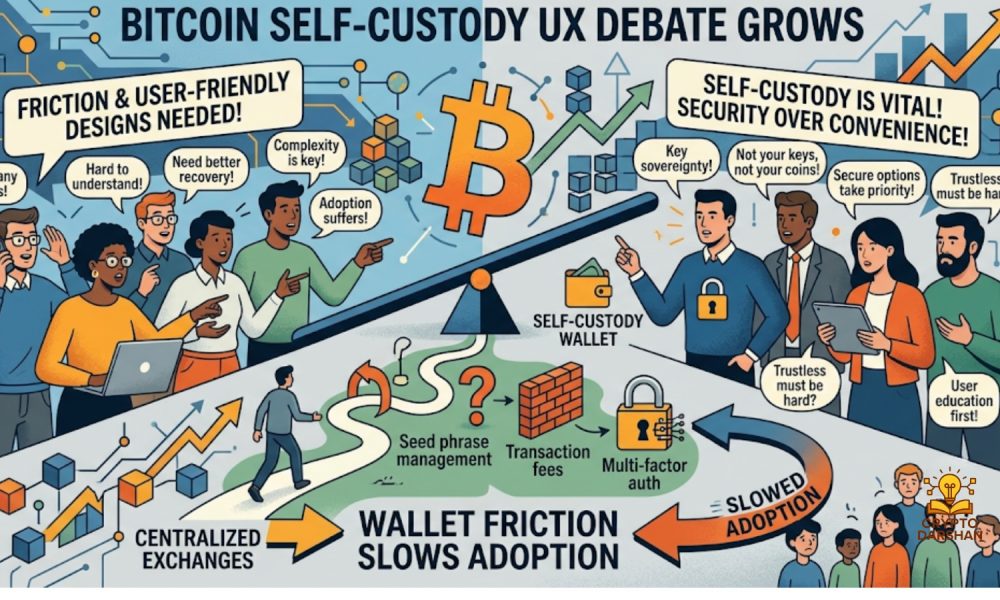
Bitcoin’s self-custody debate is heating up again, but this time the argument is not about ideology alone. The bigger issue is user experience, with critics saying many Bitcoin wallets are still too confusing, too technical, and too unforgiving for everyday users.
The discussion was reignited after Bitcoin Archive criticized the culture around self-custody, arguing that poor wallet design is often defended as a feature of “serious” Bitcoin use rather than treated as a real barrier to adoption. That framing has reopened one of crypto’s oldest questions: should users be expected to master complex key management, or should wallets do more to hide that complexity?
Why Self-Custody Still Matters

Self-custody means a user controls their own private keys instead of relying on an exchange, broker, or custodial platform. In theory, that gives people more freedom, stronger ownership, and less dependence on third parties. But in practice, it also means the user carries full responsibility for backups, recovery, and transaction safety.
That responsibility is exactly why many newcomers hesitate. If a seed phrase is lost, stolen, or misunderstood, access to funds can disappear forever. Bitcoin Core’s wallet documentation warns that forgotten passphrases cannot be recovered, which shows how unforgiving self-custody can be when users make a mistake.
Understanding the differences between fiat currency and Bitcoin makes it easier to appreciate why many users prefer self-custody over traditional banking.
The Real UX Problem

The criticism is not that self-custody is bad. The criticism is that the process is still too difficult for people who are not already fluent in crypto. Wallet setups often ask users to record recovery phrases, verify backups, understand addresses, and confirm transactions without much room for error. For experienced Bitcoin users, that may feel normal. For a beginner, it can feel overwhelming.
Bitcoin Archive’s post made that concern blunt, saying a “large contingent” of Bitcoin maximalists do not care about mainstream adoption and treat hard wallet experiences as “elitism dressed up as virtue.” Whether one agrees with that wording or not, the sentiment reflects a real split in the Bitcoin community. Some people believe friction is the price of sovereignty. Others believe friction is exactly what keeps Bitcoin from reaching more users.
What The Research Says

The debate is not just emotional; it is backed by evidence. Carnegie Mellon research found that only 43% of participants correctly recognized a seed phrase. Some users even believed a lost phrase could be reset, which shows how weak the mental model is for many people entering crypto
That is a serious problem because misunderstanding recovery can lead to permanent loss. It can also make users easier targets for scams, phishing attacks, and bad storage habits. In other words, poor wallet UX is not just an inconvenience — it can become a direct security issue.
Other studies on crypto wallet usability have reached similar conclusions. Researchers have repeatedly pointed to confusing design, unclear terminology, and difficult onboarding as major reasons why wallets struggle to attract and retain users. The pattern is clear: when the experience feels too technical, many people walk away before they ever become active users.
How Wallet Builders Are Responding

Wallet developers are not ignoring the issue. Some projects, including Bitkey, Ledger, and Proton, are experimenting with different recovery models and user flows designed to reduce the risk of permanent loss. The goal is simple: make self-custody safer without removing the user’s control over the funds.ge. If a wallet becomes too simple, it may hide important security steps. If it stays too technical, it may only appeal to advanced users. The best solutions will likely sit somewhere in the middle, combining clear instructions, better recovery flows, and more intuitive interfaces.
What This Means For Bitcoin Adoption

This renewed debate highlights a bigger truth about Bitcoin adoption: technology alone does not win users. People also need confidence, clarity, and a system they can understand without fear of making one irreversible mistake.
If Bitcoin wants to move from a niche financial tool to a mainstream monetary network, wallet designers may need to rethink the current self-custody experience. That does not mean giving up on self-sovereignty. It means making sovereignty easier to use. In the long run, that could be the difference between Bitcoin remaining a power tool for experts and becoming something ordinary people can actually manage every day