
The rise of non-fungible tokens (NFTs) has transformed digital ownership, art, and commerce. However, as the NFT market matures, tax authorities worldwide are paying closer attention to how these digital assets are reported and taxed. In the United States, the Internal Revenue Service (IRS) has made it clear that NFTs are subject to taxation, often treated as property or collectibles. This classification can lead to significant capital gains liabilities if not managed properly.
For NFT creators, investors, and collectors, understanding how to prove the utility of NFTs and avoid unnecessary capital gains hits is essential. This guide explores how NFT taxation works, what triggers audits, and how to document utility to minimize tax exposure. It also provides practical strategies for compliance, recordkeeping, and audit defense.
Understanding NFT Taxation

What Is an NFT?
NFT is an acronym for non-fungible token. The word “fungible” means “interchangeable.” An NFT is a unique digital asset recorded on a blockchain that represents ownership or proof of authenticity of a specific item such as digital art, music, videos, in-game items, or membership tokens. Unlike cryptocurrencies like Bitcoin or Ethereum, NFTs are non-fungible, meaning each token is distinct and cannot be exchanged on a one-to-one basis.
How the IRS Classifies NFTs
The IRS generally treats NFTs as property for tax purposes. This means that when an NFT is sold, traded, or otherwise disposed of, the transaction may trigger a capital gain or loss. The gain or loss is calculated as the difference between the purchase price (cost basis) and the sale price (fair market value at the time of sale).
In 2023, the IRS issued guidance suggesting that some NFTs may also be classified as collectibles, similar to art or antiques. This classification can result in higher tax rates up to 28% for long-term gains compared to the standard long-term capital gains rate of 15% or 20%.
Taxable Events Involving NFTs
NFT transactions can trigger taxable events in several ways:
- Minting NFTs: Creating an NFT may not be taxable by itself, but if the creator sells it, the proceeds are considered income.
- Selling NFTs: Selling an NFT for cryptocurrency or fiat currency triggers a capital gain or loss.
- Trading NFTs: Exchanging one NFT for another is a taxable event, as both assets have measurable fair market values.
- Receiving NFTs as Payment: If an NFT is received as payment for goods or services, its fair market value is taxable as ordinary income.
- Royalties and Secondary Sales: Ongoing royalties from NFT resales are treated as income and must be reported.
NFT Tax Audits: Why They Happen

Increased IRS Scrutiny
The IRS has intensified its focus on digital assets, including NFTs, due to the rapid growth of the market and the potential for underreporting. Blockchain transparency allows tax authorities to trace transactions, but many taxpayers fail to report NFT-related income accurately.
Common Audit Triggers
- Unreported NFT Sales: Failing to report NFT transactions or income from royalties.
- Large or Frequent Transactions: High-value or high-volume NFT trading activity can attract attention.
- Inconsistent Reporting: Discrepancies between reported income and blockchain activity.
- Crypto-to-NFT Transactions: Using cryptocurrency to buy NFTs without reporting the crypto disposal.
- Improper Classification: Misclassifying NFTs as personal property or collectibles without justification.
What Happens During an NFT Tax Audit
During an audit, the IRS may request detailed records of NFT transactions, including wallet addresses, transaction IDs, purchase and sale dates, and fair market values. They may also ask for documentation proving the purpose or utility of NFTs to determine whether they should be taxed as collectibles, business assets, or utility tokens. As NFT tax scrutiny increases, regulatory frameworks are evolving alongside broader crypto compliance trends, as explored in Crypto AML in 2026: Sanctions, DeFi Monitoring, and Global Standards, which highlights how authorities monitor and trace digital asset activity across blockchain ecosystems.
Proving NFT Utility to Avoid Capital Gains Hits

What Is NFT Utility?
Utility refers to the functional use or benefit an NFT provides beyond mere ownership or speculation. NFTs with genuine utility may be classified differently for tax purposes, potentially reducing exposure to capital gains taxes.
Examples of NFT utility include:
- Access Tokens: NFTs that grant entry to events, communities, or exclusive content.
- Membership NFTs: Tokens that provide ongoing benefits, discounts, or services.
- Gaming NFTs: In-game assets that enhance gameplay or provide functional value.
- Licensing NFTs: Tokens that represent rights to use digital content or intellectual property.
- Governance Tokens: NFTs that allow holders to vote or participate in decentralized organizations.
Why Utility Matters for Tax Classification
If an NFT serves a functional purpose such as granting access to a service it may be treated as a utility token rather than a collectible. This distinction can influence how gains are taxed. For example, utility NFTs used in a business context may qualify as business expenses or depreciable assets rather than capital assets.
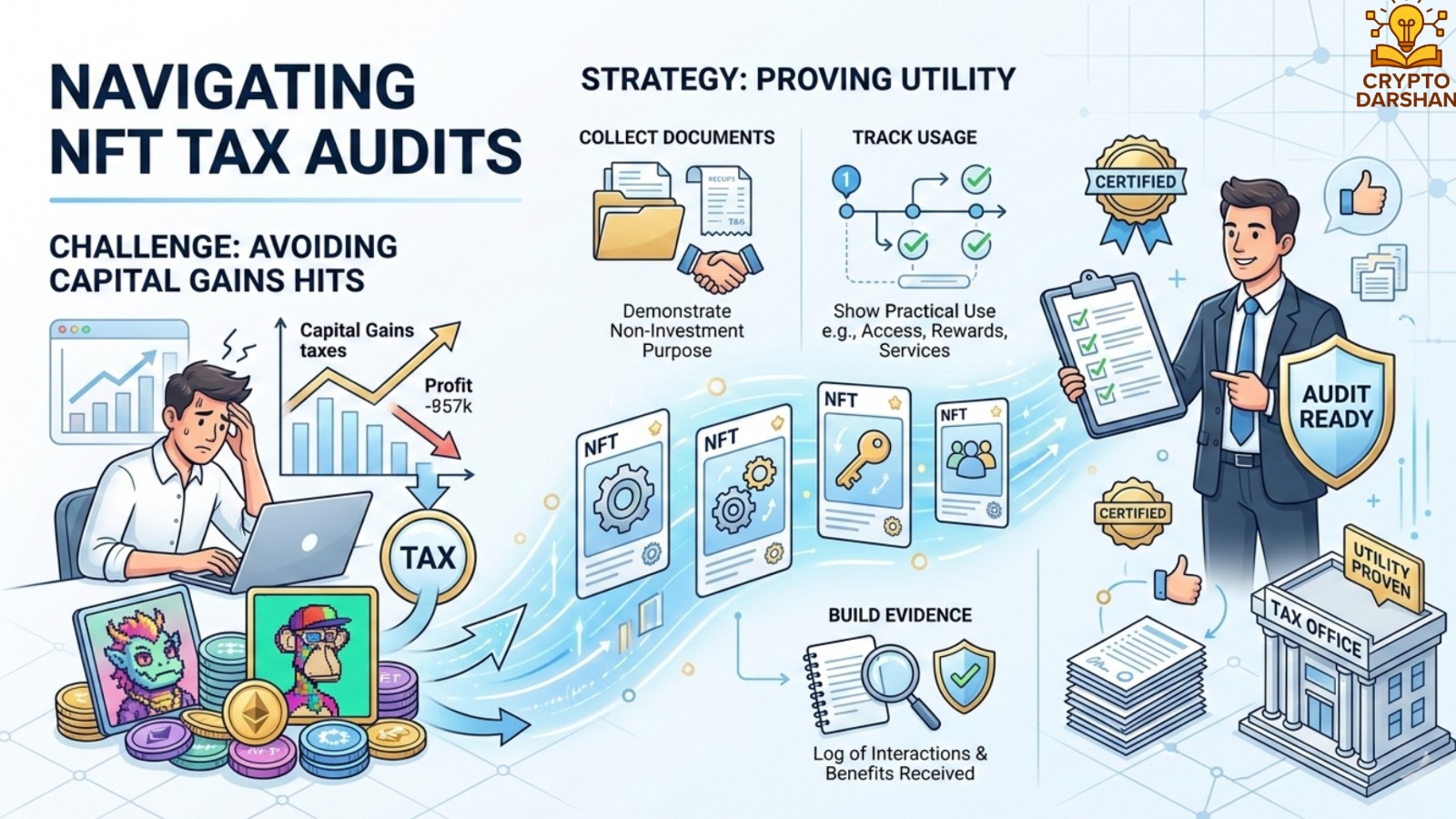
How to Document NFT Utility
To prove utility during an audit, maintain detailed records that demonstrate the NFT’s functional purpose. Key documentation includes:
- Whitepapers or Project Documentation: Descriptions of the NFT’s intended use and functionality.
- Smart Contract Details: Blockchain data showing how the NFT interacts with applications or services.
- Usage Records: Logs or screenshots showing how the NFT was used (e.g., event access, membership benefits).
- Transaction Records: Proof of purchase, sale, and any associated utility-related transactions.
- Communications and Agreements: Emails, contracts, or terms of service outlining the NFT’s utility.
Example: Utility vs. Collectible NFT
- Collectible NFT: A digital artwork purchased solely for appreciation in value. Gains from sale are subject to capital gains tax, potentially at the collectible rate.
- Utility NFT: A token that grants access to a private online community or provides recurring benefits. If used for business or service access, it may be treated as an expense rather than a capital asset.
Strategies to Minimize NFT Tax Liabilities

1. Maintain Accurate Records
Comprehensive recordkeeping is the foundation of NFT tax compliance. Keep detailed logs of:
- Purchase and sale dates
- Transaction IDs and wallet addresses
- Fair market values at the time of each transaction
- Gas fees and transaction costs
- Purpose of each NFT (investment, utility, business use)
2. Separate Personal and Business NFTs
If NFTs are used for business purposes such as marketing, membership access, or digital product delivery maintain separate wallets and records. This separation helps justify business deductions and prevents confusion during audits.
3. Use Fair Market Valuation Tools
Determining fair market value (FMV) is critical for accurate reporting. Use blockchain analytics tools or NFT marketplaces to establish FMV at the time of each transaction. Document the source of valuation for audit defense.
4. Consider Holding Periods
NFTs held for more than one year before sale qualify for long-term capital gains rates, which are lower than short-term rates. Strategic holding can reduce tax liability.
5. Offset Gains with Losses
If some NFTs have declined in value, selling them can generate capital losses that offset gains from other NFT sales. This strategy, known as tax-loss harvesting, can significantly reduce taxable income.
6. Deduct Business Expenses
Creators and businesses can deduct expenses related to NFT creation, marketing, and transaction fees. Examples include:
- Minting and gas fees
- Platform commissions
- Marketing and design costs
- Legal and accounting fees
7. Use Professional Tax Software or Advisors
Given the complexity of NFT taxation, specialized crypto tax software or professional tax advisors can help ensure compliance and optimize reporting.
NFT Audit Defense: How to Prepare

Step 1: Gather Documentation
Collect all relevant records before an audit begins. This includes wallet addresses, transaction histories, and documentation proving NFT utility. Organize files chronologically and by category (sales, purchases, royalties, etc.).
Step 2: Verify Reported Income
Ensure that all NFT-related income matches what was reported on tax returns. Cross-check blockchain data with tax filings to identify discrepancies before the IRS does.
Step 3: Demonstrate Utility
Provide clear evidence that NFTs served a functional purpose. Include project documentation, smart contract data, and proof of use. The goal is to show that NFTs were not merely speculative investments.
Step 4: Engage a Tax Professional
A tax attorney or CPA experienced in digital assets can represent taxpayers during audits, communicate with the IRS, and help substantiate claims of utility or business use.
Step 5: Maintain Transparency
Cooperate fully with auditors and provide requested documentation promptly. Transparency and organization can help resolve audits efficiently and reduce penalties.
Case Studies: NFT Tax Audit Scenarios

Case Study 1: The Artist and the Collectible NFT
An artist mints and sells digital artwork NFTs for Ethereum. The IRS audits the artist, questioning whether the NFTs were properly reported. The artist provides transaction records, wallet addresses, and proof of income reporting. Because the NFTs were sold as collectibles, the gains are taxed at the collectible rate, but no penalties are assessed due to accurate reporting.
Case Study 2: The Utility NFT Startup
A startup issues NFTs that grant access to an exclusive online platform. During an audit, the IRS questions whether these NFTs are collectibles. The company provides whitepapers, smart contract data, and user access logs proving the NFTs’ functional purpose. The IRS accepts the classification as utility tokens, allowing the company to treat related expenses as business deductions.
Case Study 3: The NFT Trader
A trader frequently buys and sells NFTs using cryptocurrency. The IRS audit reveals unreported crypto-to-NFT transactions. The trader’s lack of documentation results in penalties and back taxes. This case highlights the importance of tracking every transaction and reporting crypto disposals accurately.
International Considerations

NFT taxation varies by country, but most jurisdictions treat NFTs as digital assets subject to capital gains or income tax. Key examples include:
- United Kingdom: NFTs are treated as assets subject to capital gains tax. Business-related NFTs may be taxed as income.
- Canada: NFT sales are taxed as business income or capital gains, depending on intent and frequency.
- Australia: NFTs are considered CGT (Capital Gains Tax) assets, with exemptions for personal use in limited cases.
- European Union: Tax treatment depends on whether NFTs are classified as digital goods, services, or assets.
For international NFT investors, double taxation treaties and local reporting requirements must be considered.
Emerging Trends in NFT Taxation and Compliance

The Role of Blockchain Analytics in Audits
Tax authorities are increasingly using blockchain analytics tools to trace NFT transactions across wallets and platforms. These tools can identify wallet ownership patterns, transaction histories, and even cross-chain activity. As a result, taxpayers can no longer rely on anonymity to avoid reporting obligations. Proactive transparency and accurate reporting are now essential.
Decentralized Finance (DeFi) and NFT Integration
NFTs are becoming integrated into DeFi ecosystems, where they can be used as collateral for loans or yield-generating assets. These activities introduce new tax complexities. For example, using an NFT as collateral may not trigger a taxable event, but liquidating it to repay a loan could. Understanding these nuances helps prevent unexpected tax liabilities.
Fractionalized NFTs and Shared Ownership
Fractionalized NFTs allow multiple investors to own portions of a single NFT. While this innovation increases accessibility, it also complicates tax reporting. Each fractional owner must report their share of gains or losses, and determining fair market value for fractional interests can be challenging. Maintaining detailed records of ownership percentages and transaction values is critical. Tracking NFT transactions across multiple chains further adds complexity, especially when assets move through bridges, as discussed in Cross-Chain Bridges Fixed? Multichain Wallets That Won’t Get Hacked.
Environmental and Social Utility NFTs
A growing number of NFTs are tied to environmental or social causes, such as carbon offset tokens or charity-linked NFTs. In some cases, donations made through NFT sales may qualify for charitable deductions if the recipient organization is recognized by tax authorities. Proper documentation of donation receipts and transaction records is necessary to claim these deductions.
The Rise of NFT Accounting Standards
As NFT adoption expands, accounting bodies are developing frameworks for recognizing and valuing NFTs on balance sheets. Businesses that hold NFTs as part of their operations must determine whether to classify them as intangible assets, inventory, or investment property. These classifications affect depreciation, amortization, and tax treatment.
Future of NFT Tax Regulation

As the NFT ecosystem evolves, tax authorities are expected to refine their guidance. Potential developments include:
- Clearer Classification Rules: Distinguishing between collectible, utility, and business NFTs.
- Automated Reporting: Integration of blockchain data with tax reporting systems.
- Global Standards: International cooperation on digital asset taxation.
- Smart Contract-Based Compliance: NFTs that automatically record tax-relevant data.
- AI-Powered Tax Audits: Artificial intelligence may soon analyze blockchain data to detect underreporting or misclassification.
Staying informed about regulatory updates is essential for compliance and strategic planning.
Best Practices for NFT Tax Compliance

- Track Every Transaction: Use blockchain explorers and tax software to maintain complete records.
- Document Utility Thoroughly: Keep evidence of how NFTs are used functionally.
- Report All Income: Include NFT sales, royalties, and crypto-to-NFT transactions.
- Consult Professionals: Work with accountants familiar with digital assets.
- Stay Updated: Monitor IRS announcements and evolving NFT tax laws.
- Separate Wallets: Maintain distinct wallets for personal, business, and investment NFTs.
- Plan Ahead: Consider tax implications before minting, buying, or selling NFTs.
- Use Cold Storage for Long-Term Holdings: Secure NFTs intended for long-term investment to reduce risk and simplify tracking.
- Review Smart Contracts: Understand how royalties, transfers, and ownership rights are coded to anticipate tax consequences.
- Prepare for Global Reporting: If operating internationally, comply with cross-border tax reporting standards such as FATCA or CRS.
NFT Tax Audits: How to Prove Utility and Avoid Capital Gains Hits – FAQ

1. What is an NFT tax audit?
An NFT tax audit is a review by tax authorities to verify that your NFT transactions, income, and classifications are reported correctly. This includes checking whether NFTs were used for utility, investment, or trading purposes.
2. How are NFTs typically taxed?
NFTs are usually taxed as:
- Capital assets (if bought for investment → capital gains tax)
- Ordinary income (if earned, minted, or received as payment)
The classification depends on how the NFT is used.
3. What does “utility” mean in NFTs for tax purposes?
Utility refers to the functional use of an NFT beyond resale value, such as:
- Access to services or platforms
- Membership or subscriptions
- Event tickets or digital passes
- In-game assets or software licenses
Proving utility can help avoid capital gains classification in some cases.
4. How can I prove NFT utility during an audit?
You can prove utility by maintaining:
- Usage logs (platform access, feature usage)
- Smart contract details showing function
- Screenshots or records of benefits used
- Linked services (e.g., subscriptions, events)
Clear documentation is key.
5. Can using an NFT reduce capital gains tax?
Yes, in some jurisdictions. If an NFT is primarily used for consumption or utility, it may be treated differently than an investment asset, potentially reducing or avoiding capital gains tax. However, rules vary by country.
6. What records should I keep for NFT tax compliance?
Keep detailed records such as:
- Purchase and sale dates
- Wallet addresses and transaction hashes
- Market value at the time of transaction
- Purpose of holding (utility vs investment)
- Any income generated from NFTs
7. Are NFT airdrops and rewards taxable?
Yes. Airdrops, staking rewards, or play-to-earn NFTs are usually taxed as ordinary income based on their fair market value when received.
8. What mistakes trigger NFT tax audits?
Common triggers include:
- Not reporting NFT transactions
- Misclassifying NFTs as utility when they are speculative
- Large gains without proper documentation
- Frequent trading activity (looks like business income)
Conclusion
NFTs have opened new frontiers in digital ownership, creativity, and commerce but they also bring complex tax challenges. As tax authorities increase scrutiny, proving NFT utility and maintaining transparent records are critical to avoiding capital gains hits and audit penalties.
By understanding how NFTs are classified, documenting their functional use, and implementing sound tax strategies, creators and investors can navigate audits confidently and ensure compliance. The key lies in preparation, organization, and a clear demonstration of utility transforming NFTs from speculative assets into legitimate, functional components of the digital economy.