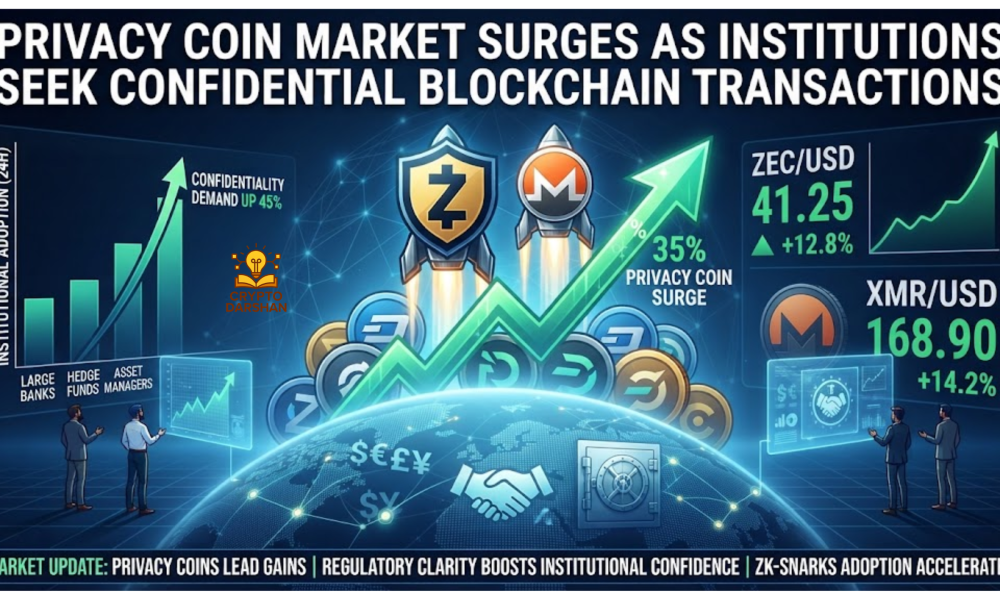
The privacy coin market has expanded sharply over the past year, with its total value rising from approximately $6.2 billion to around $30 billion, according to research from 21Shares. The growth has been led by Zcash, while institutions are showing greater interest in blockchain systems that can protect sensitive financial information.
The sector’s rise reflects a broader shift in the digital asset industry. Privacy is no longer viewed only as a feature for specialized cryptocurrencies. It is becoming an important requirement for banks, asset managers, payment providers and other institutions that want to use blockchain technology without exposing every transaction detail to the public.
Zcash leads the privacy coin rally
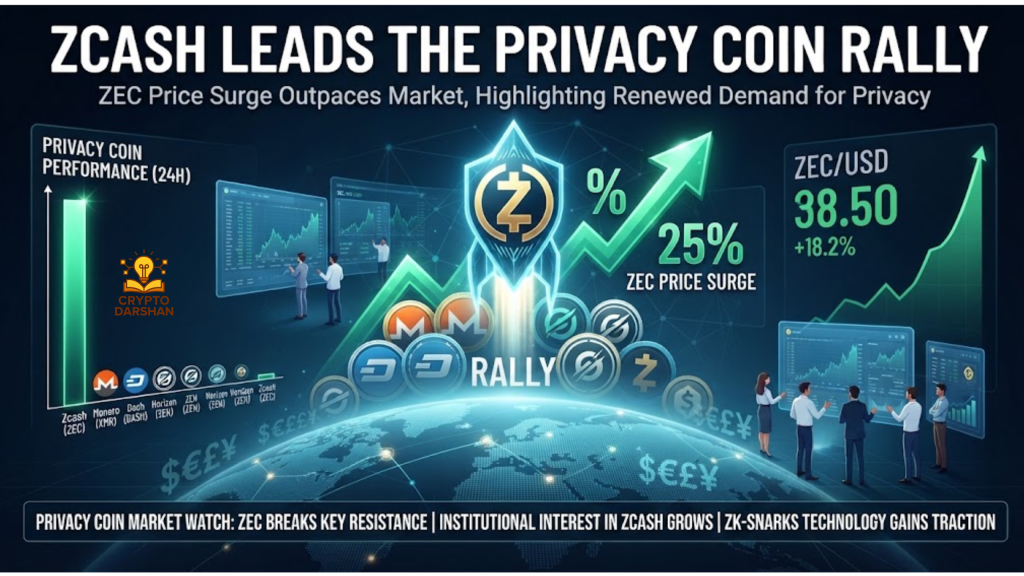
Zcash has been the main driver of the recent growth. CoinGecko data cited in the report valued the privacy coin market at nearly $36.9 billion on Sept. 22, with Zcash accounting for close to $25 billion and Monero representing approximately $11.2 billion. These figures were higher than the market estimates used in the original 21Shares research note.
The difference comes from changing prices and the use of different market categories. 21Shares and CoinGecko may include different assets in their calculations, meaning the figures are not directly interchangeable. Even so, both datasets point to a major expansion in the privacy-focused digital asset sector.
Zcash was trading near $1,473 at the time of the CoinGecko snapshot. The token had gained about 22% over seven days and 75% over the previous 30 days. The move pushed Zcash far beyond its earlier market peak of roughly $4 billion in 2021.
21Shares said Zcash had reached around $20 billion in market capitalization when it prepared its report. The asset manager also argued that privacy infrastructure could become increasingly important as more financial activity moves onto blockchain networks.
Shielded ZEC holdings increase
The growth in Zcash’s market value has happened alongside a rise in funds held inside its shielded pools. These pools allow users to conceal transaction details, including the sender, receiver and amount transferred.
ZecStats reported that approximately 4.91 million ZEC was held in shielded pools on Sept. 22. That represented about 29% of Zcash’s issued supply. At the market price available at the time, the shielded coins were worth approximately $7.19 billion.
The figure does not mean that 29% of all Zcash transactions use full privacy. Instead, it measures the amount of issued ZEC stored in shielded pools. These pools include several generations of Zcash privacy technology, including Sprout, Sapling, Orchard and the newer Ironwood pool.
Zcash activated Ironwood through its NU6.3 upgrade after developers identified a security issue connected to the Orchard pool. The project later published machine-checked proofs designed to confirm the integrity of balances in the new pool.
The upgrade highlights both the potential and the risks of privacy technology. Strong privacy systems can protect users, but technical weaknesses may raise concerns about supply accuracy and network security.
ETF creates a new route for investors

The privacy coin sector also received a boost from a new regulated investment product in the United States. Grayscale’s Zcash exchange-traded fund began trading on NYSE Arca under the ticker ZCSH on Aug. 25.
The fund was created through the conversion of Grayscale’s existing Zcash Trust. It gives investors access to ZEC price movements through a traditional brokerage account, without requiring them to purchase the asset directly or manage private keys.
An SEC filing showed that ZCSH recorded more than $70 million in cumulative inflows during its first two weeks, excluding a separate $100 million investment from an affiliate of Digital Currency Group. Grayscale has also warned investors that Zcash remains highly volatile and that they could lose their entire investment.
The ETF does not remove the risks linked to privacy coins. It simply offers a more familiar structure for investors who want exposure to the asset. Still, its launch may improve access for institutions and professional investors that cannot directly hold or manage digital tokens.
Privacy expands beyond dedicated coins
21Shares said privacy is also becoming part of the development plans for major blockchain networks such as Ethereum and Solana.
Ethereum’s privacy roadmap includes work on private reads, private writes and private proving. Private reads could help prevent wallets and infrastructure providers from exposing users’ search and account information. Private writes focus on reducing the visibility of transaction data and related metadata. Private proving would allow users to demonstrate that certain conditions are true without revealing the underlying information.
The Ethereum Foundation has also established an Institutional Privacy Task Force. Its work includes zero-knowledge proofs, fully homomorphic encryption, trusted execution environments and privacy-focused Layer 2 networks.
Solana already supports Confidential Balances through its Token-2022 framework. The feature can encrypt token balances and transfer amounts while keeping some information public, such as token accounts and account owners.
Solana also allows issuers to configure an auditor key. This key can decrypt confidential transfer amounts but does not reveal an account’s complete balance or authorize transactions.
Institutions prefer controlled disclosure
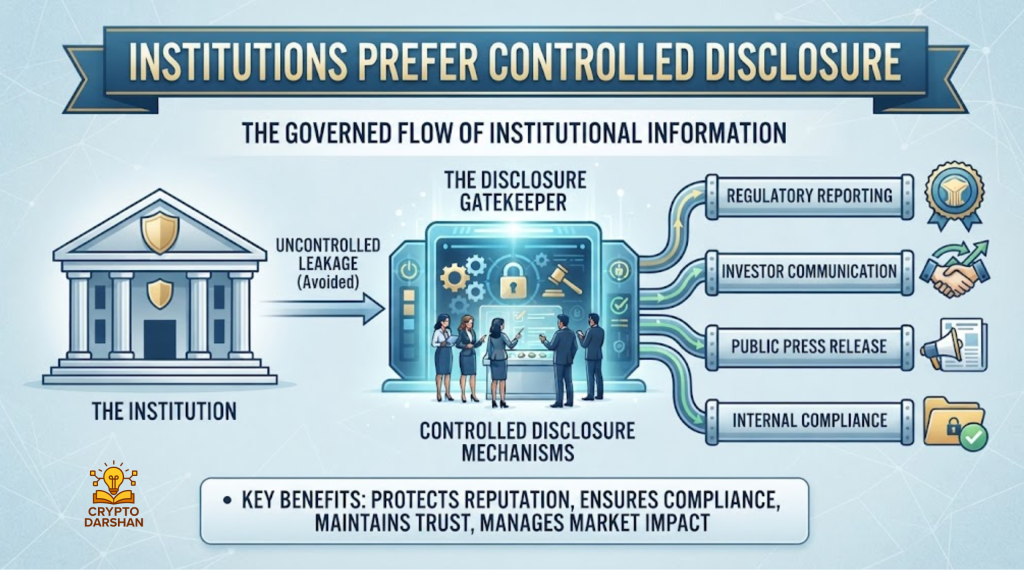
Financial institutions may not always need complete anonymity. Instead, they often want controlled disclosure, where authorized participants can see relevant information while the wider public cannot.
Canton Network is an example of this approach. Digital Asset said in an Aug. 17 comment letter that Canton had more than 1,000 participants and supported over $8 trillion in tokenized securities activity each month. The figure refers to reported monthly activity, not the total value of assets permanently stored on the network.
The Depository Trust & Clearing Corporation has also tested tokenized securities transactions using Canton and a private Besu network. More than 30 firms participated in workflows involving U.S. Treasury repo transactions, securities lending, collateral pledges, equities and delivery-versus-payment trades.
DTCC plans to launch its Tokenization Service in October 2026. If successful, the project could show how privacy-focused blockchain networks support large-scale financial markets while preserving regulatory oversight.
Regulation remains a major challenge
The rapid growth of privacy coins does not guarantee wider acceptance. Regulators continue to examine how privacy technology can meet anti-money laundering and customer identification requirements.
The European Union’s Anti-Money Laundering Regulation prohibits covered crypto-asset service providers from maintaining anonymous crypto accounts or accounts that increase transaction obfuscation through anonymity-enhancing coins. The relevant rules are scheduled to apply from July 10, 2027.
Privacy advocates argue that confidential transactions are important for personal safety, business protection and financial freedom. Businesses also need to prevent competitors from tracking their balances, suppliers and trading strategies.
At the same time, regulators want to ensure that financial institutions can identify suspicious activity when necessary. This tension means future privacy systems may focus less on complete anonymity and more on selective disclosure.
What comes next for privacy coins?
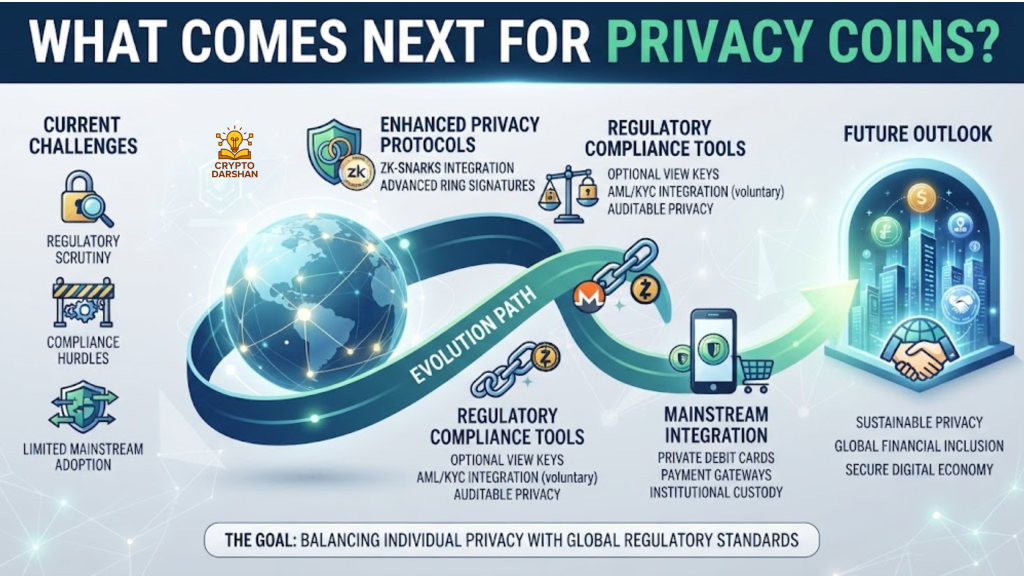
The privacy coin market’s expansion suggests that investors are paying closer attention to confidentiality as a core blockchain function. Zcash’s rally, rising shielded balances and the launch of a U.S. ETF have placed the sector in the spotlight.
However, continued growth will depend on more than token prices. Privacy projects must maintain strong technical security, attract legitimate users and find ways to work within evolving regulatory frameworks.
The next stage of blockchain adoption may therefore involve a combination of public verification and private information. Networks that can offer both transparency for regulators and confidentiality for users could play an important role in the future of digital finance.