

Kevin O’Leary is buying cryptocurrency again, signaling a fresh push into digital assets as he hunts for the next major wave of blockchain adoption in traditional finance. The “Shark Tank” investor says he’s back in the market for the next cycle, but his focus has shifted from chasing altcoins to identifying which blockchain will become the standard for big industries—especially stock exchanges
Back in the saddle: O’Leary’s new crypto buying spree

Speaking at the Avalanche Summit in New York, O’Leary told The Block he’s actively adding new crypto positions. “I’m back in the saddle buying new positions, putting my bets on for this next cycle,” he said.
This marks a notable shift after he trimmed his portfolio earlier in 2026, consolidating from 27 tokens down to mainly Bitcoin, Ethereum, and USDC. At that time, he called many smaller tokens “poo-poo coins” and argued institutional crypto was becoming a two-asset market dominated by BTC and ETH. Now, he’s expanding exposure again—but with a clearer thesis around infrastructure and adoption rather than speculation.
The “watershed moment”: a major stock exchange going onchain

O’Leary believes the clearest signal for the next blockchain winner will come when a major stock exchange adopts a public or permissioned blockchain for core infrastructure. He calls that event a potential “watershed moment” for the entire crypto industry.
His reasoning is straightforward: once an exchange standardizes on a specific chain, the surrounding ecosystem—broker-dealers, custodians, market makers, and listed companies—will have strong incentives to align with the same technical and compliance stack. That network effect could push one blockchain into a de facto standard for capital markets activity.
Real-world moves are already underway:
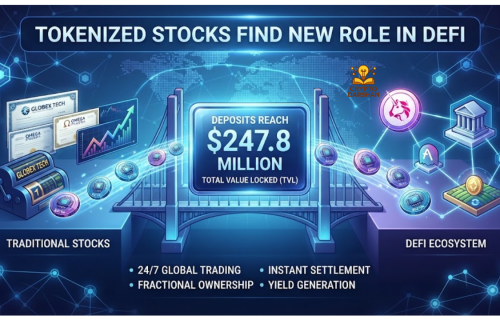
- The New York Stock Exchange (NYSE) is building onchain settlement infrastructure for tokenized securities, with NYSE President Lynn Martin confirming ongoing work on a dedicated digital trading platform.
- Intercontinental Exchange (ICE), NYSE’s parent, agreed to invest in tZERO and license its blockchain patents to support tokenized securities and 24/7 trading with instant settlement, pending regulatory approvals.
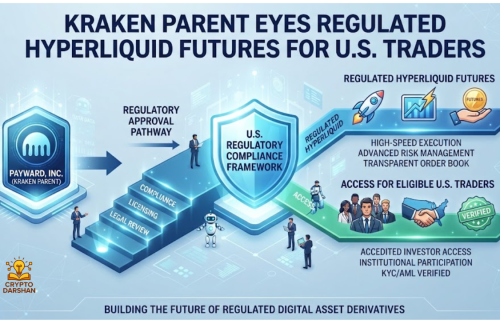
- Nasdaq is pursuing a different path: Nasdaq Ventures invested $100 million in Kraken’s parent company, Payward, at a $21 billion valuation, with plans to launch Nasdaq Equity Tokens in Q2 2027.
These developments fit O’Leary’s view that the battle is no longer just about which token moons, but which chain becomes the rails for contracts, logistics, and securities.
Regulation and taxes: CLARITY Act stalls, but policy pressure remains
O’Leary doesn’t expect the CLARITY Act—U.S. crypto market-structure legislation—to pass before the midterm elections, following a failed cloture vote in the Senate. Still, he argues that digital asset tax policy will keep regulatory momentum alive.
“If you’re going to provide a tax policy on this asset, you want more regulation, not less,” he said.
Meanwhile, the House Ways and Means Committee advanced the Digital Asset Tax Certainty Act in a 38–5 vote on Sept. 16, moving toward possible full-House consideration. The bill covers wash sales, stablecoins, crypto lending, mining, staking, and broker reporting, and includes an exception for qualifying blockchain network and transaction fees up to $10.
Even with some Senate Democrats signaling that negotiations aren’t over, the failed procedural vote has delayed formal debate on broader market-structure rules. O’Leary previously hoped for legislation before the midterms, then later framed any eventual law as a catalyst for institutional participation, especially from pension funds and sovereign wealth funds.
Bitcoin’s institutional role: 1% to 3% of alternative assets
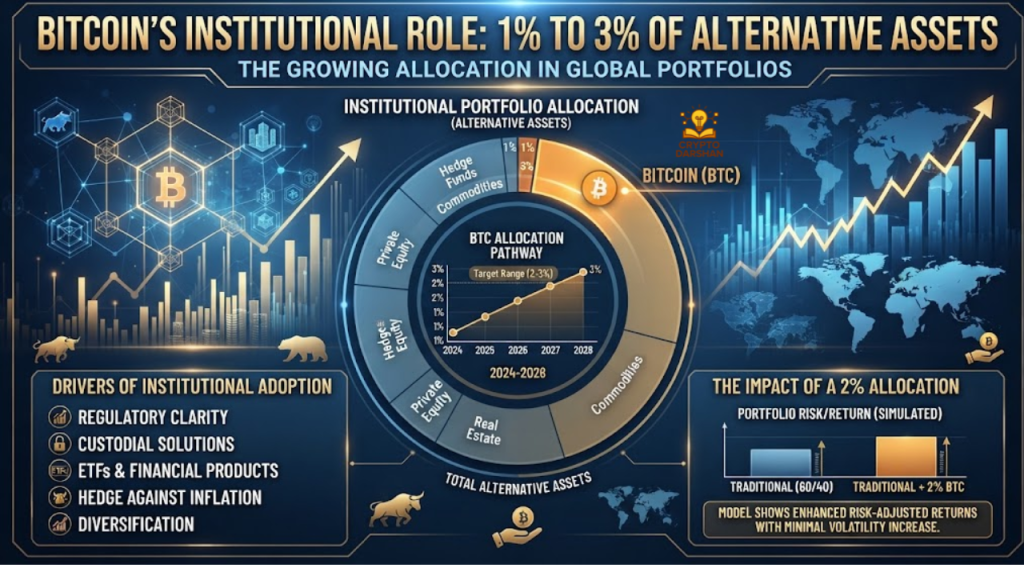
On Bitcoin specifically, O’Leary sees a steady but bounded role in institutional portfolios. He estimates BTC could eventually represent 1% to 3% of alternative-asset allocations, using institutional gold holdings as a benchmark.
That upper bound echoes earlier comments this year, when he noted some institutions hesitate to go beyond roughly 3% due to long-term security concerns, including risks from future quantum computing advances. Developers have been discussing upgrades to reduce Bitcoin’s quantum exposure, and that technical debate continues to influence allocation discussions among large investors.
Beyond crypto: power, AI infrastructure, and uranium
While re-entering crypto, O’Leary is also doubling down on non-crypto infrastructure tied to the AI boom. He says he’s investing in power generation and transmission—turbines, grids, and aggregated power contracts from nuclear and hydro—across regions like Norway, Finland, Alberta, and Utah.
He has also highlighted uranium as a strategic play, arguing that surging electricity demand from data centers will drive long-term growth in nuclear-related assets. In his view, “pure power” could outperform many other trades over the coming years, even as he keeps core crypto exposure in Bitcoin and Ethereum.
What this means for the next cycle
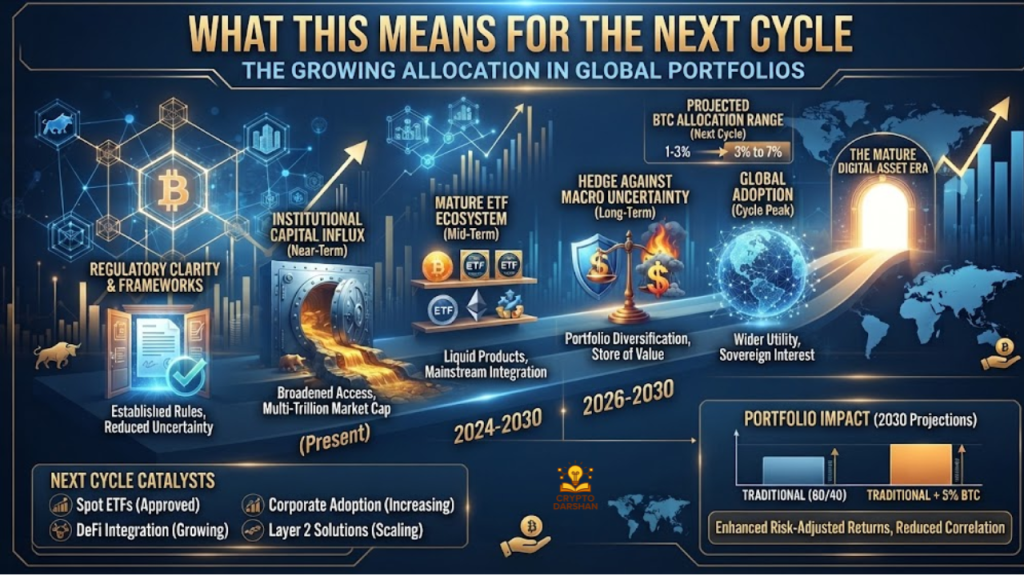
O’Leary’s return to buying crypto comes with a more institutional lens:
- He’s looking for the blockchain that becomes the default for major industries, not just the token with the strongest meme.
- A major exchange adopting a chain could trigger a cascade of compliance-aligned adoption across financial markets.
- Regulation may arrive piecemeal via tax rules first, with broader market-structure laws lagging until after the midterms.
- Bitcoin’s role is growing, but likely capped at modest single-digit percentages of alternative assets for now.
For investors watching the next adoption wave, O’Leary’s message is clear: the real opportunity lies in identifying the infrastructure layer that traditional finance will standardize on—and positioning before that “watershed moment” arrives.