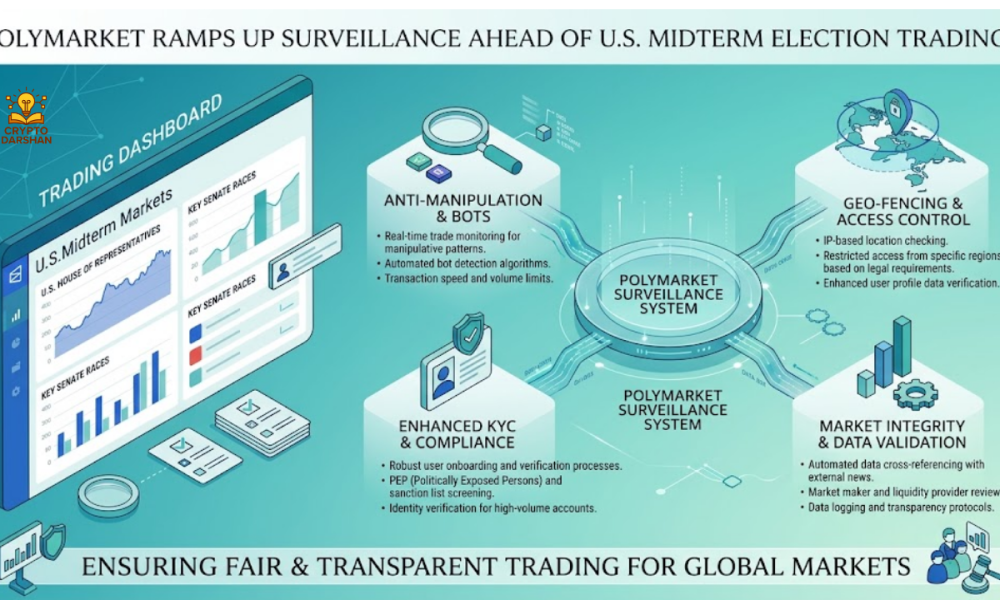
Polymarket is upgrading and publicizing its trade-surveillance and investigations setup ahead of the 2026 U.S. midterm elections, as prediction markets face growing scrutiny over insider trading and U.S. access to their international platforms. The company says its systems can flag unusual betting patterns in real time and that it has already referred more than 100 suspicious cases to law enforcement, including trades potentially tied to sensitive government and military information.
Why Midterms Are a Stress Test for Prediction Markets
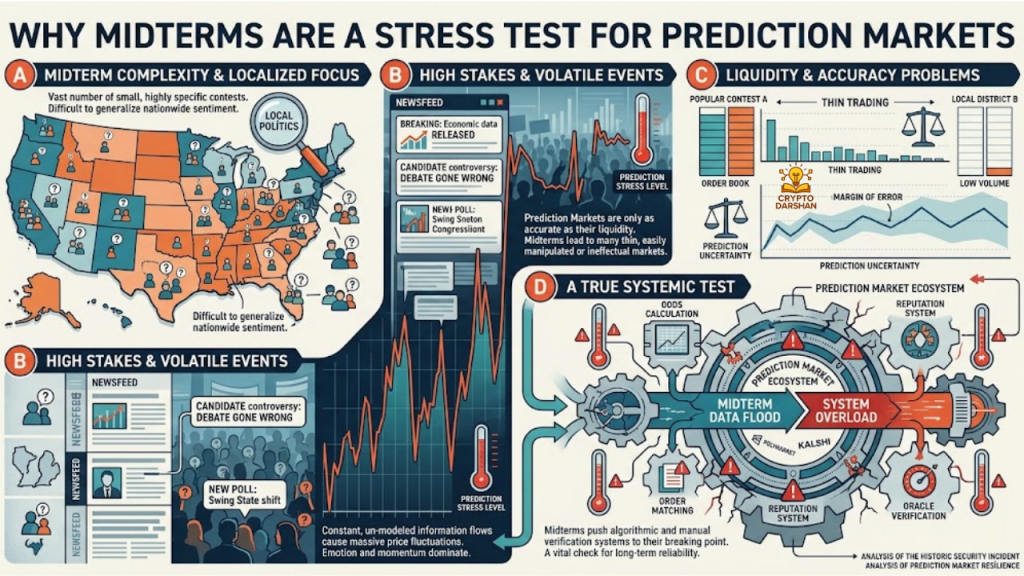
Prediction markets like Polymarket let users buy and sell contracts tied to real-world outcomes, such as which party will control Congress after the midterms. As election season heats up, regulators and lawmakers are worried these markets could be used to trade on nonpublic political or policy information, or to spread narratives that undermine confidence in election results.
That pressure has pushed Polymarket to show more of its work. Shana Bautista, the platform’s new global head of investigations and intelligence, told Reuters the company has the tools and resources needed to detect anomalous activity when the midterms arrive. “I can tell you that we have the systems in place to be able to identify anomalous activity when the midterms do come,” she said.
Inside Polymarket’s Market-Integrity Program
Polymarket’s surveillance stack combines several layers of monitoring. According to Bautista, the company uses:
- Machine learning models to spot abnormal trading behavior
- Blockchain analytics to trace wallet activity and fund flows
- Trade-surveillance tools similar to those used by traditional exchanges
- Open-source research and third-party data services
The core market-integrity program is not brand new, but Polymarket is now sharing considerably more detail about how it operates. A dedicated webpage is being launched to explain these controls and how the firm cooperates with law enforcement, giving users and regulators a clearer view of its enforcement workflow.
From Alerts to Arrests: Over 100 Cases Referred to Authorities

Polymarket says it has referred more than 100 cases to law enforcement after its systems flagged suspicious trading. Some of the most high-profile referrals involve potential insider trading on geopolitical and military events.
One case centers on a U.S. soldier accused of using classified information to trade contracts on the capture of Venezuela’s Nicolás Maduro. Prosecutors allege the trader turned roughly $33,000 into more than $400,000 through a series of Venezuela-related bets. A federal judge has paused the CFTC’s civil case while a related criminal proceeding continues, and the defendant has pleaded not guilty.
Beyond that, Polymarket has referred dozens of accounts showing patterns consistent with military insider trading, including possible wagers on U.S. actions involving Iran. Recent reporting indicates federal prosecutors are preparing expanded insider-trading cases targeting prediction-market activity, including a servicemember and a KPMG employee who allegedly traded on military and earnings data.
Blockchain as an Investigative Trail
Unlike traditional betting platforms, Polymarket’s international venue settles trades on a public blockchain. That means every wager is recorded on-chain, even if the wallet owner remains pseudonymous. Critics argue this setup could enable misconduct, but Bautista says the transparent ledger actually helps investigators.
Blockchain records let Polymarket’s team reconstruct trading sequences, link wallets, and track how funds move between addresses after suspicious bets. Researchers have used the same data to flag more than 150 wallets that may have traded on inside U.S. military information, warning that such activity could broadcast signals exploitable by foreign intelligence services.
Keeping U.S. Users Off the International Platform
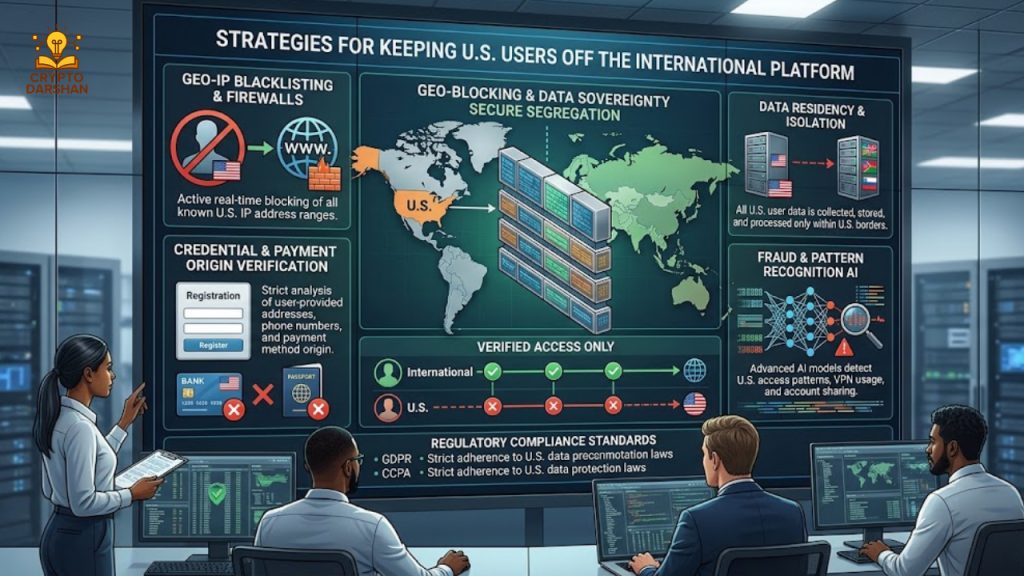
A separate but ongoing issue is U.S. access to Polymarket’s international platform. In 2022, the CFTC fined Polymarket $1.4 million and required it to bar U.S. customers from its offshore venue after finding it had offered unregistered event contracts. The settlement obliges the company to prevent American users from trading there.
Bautista says Polymarket’s current controls block the vast majority of U.S. users from the international site. “It is difficult at scale to be able to consistently and always evade all of the guardrails we have,” she said. However, on-chain research firm Allium estimated that wallets linked to the U.S. accounted for about $571 million in political-contract volume over a one-year period, despite the restrictions. Allium cautioned that its country labels are directional, since blockchain data alone cannot confirm a trader’s physical location.
To serve American customers legally, Polymarket operates a separate, CFTC-registered exchange in the U.S. that runs within the regulatory framework and is distinct from its international blockchain platform.
Lawmakers Push for Stricter Rules
Concern over insider access has reached Congress. The Senate voted unanimously in April to bar senators and their staff from trading on prediction markets such as Polymarket and Kalshi. House members are also moving to restrict lawmakers’ participation, with Rep. Bryan Steil proposing a ban on trading contracts tied to elections or public policy as part of broader limits on congressional stock trading.
More than 40 Democratic lawmakers have asked the CFTC and the U.S. Office of Government Ethics for guidance restricting federal employees from using nonpublic information to trade prediction contracts on political events, military developments, and other sensitive topics. At the same time, academic work suggests that blanket bans could reduce the informational value of market prices, recommending instead stronger penalties for traders who can directly influence outcomes.
What This Means for Traders Ahead of Midterms
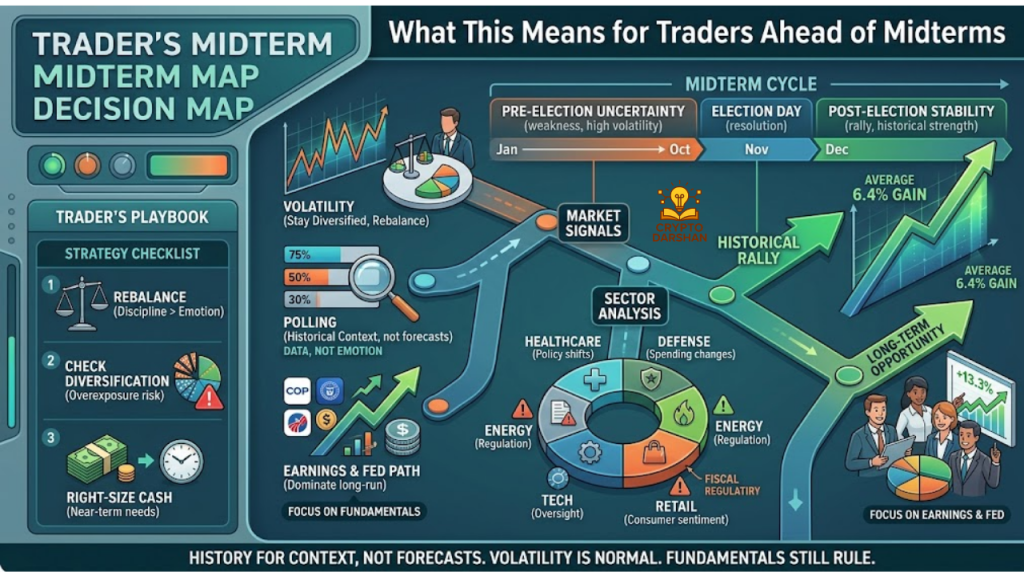
For everyday users, Polymarket’s message is that more eyes are on the books as the midterms approach. The platform is emphasizing that:
- Unusual trading patterns will be detected and investigated
- Suspicious accounts can and will be referred to law enforcement
- Blockchain transparency makes it harder to hide coordinated or insider-like behavior
As federal and state scrutiny intensifies—including separate battles with states over sports-related event contracts—prediction-market operators are walking a tightrope between innovation and compliance. Polymarket’s push to publicize its surveillance capabilities ahead of the 2026 midterms signals that it expects these markets to remain in the regulatory spotlight for the foreseeable future.