
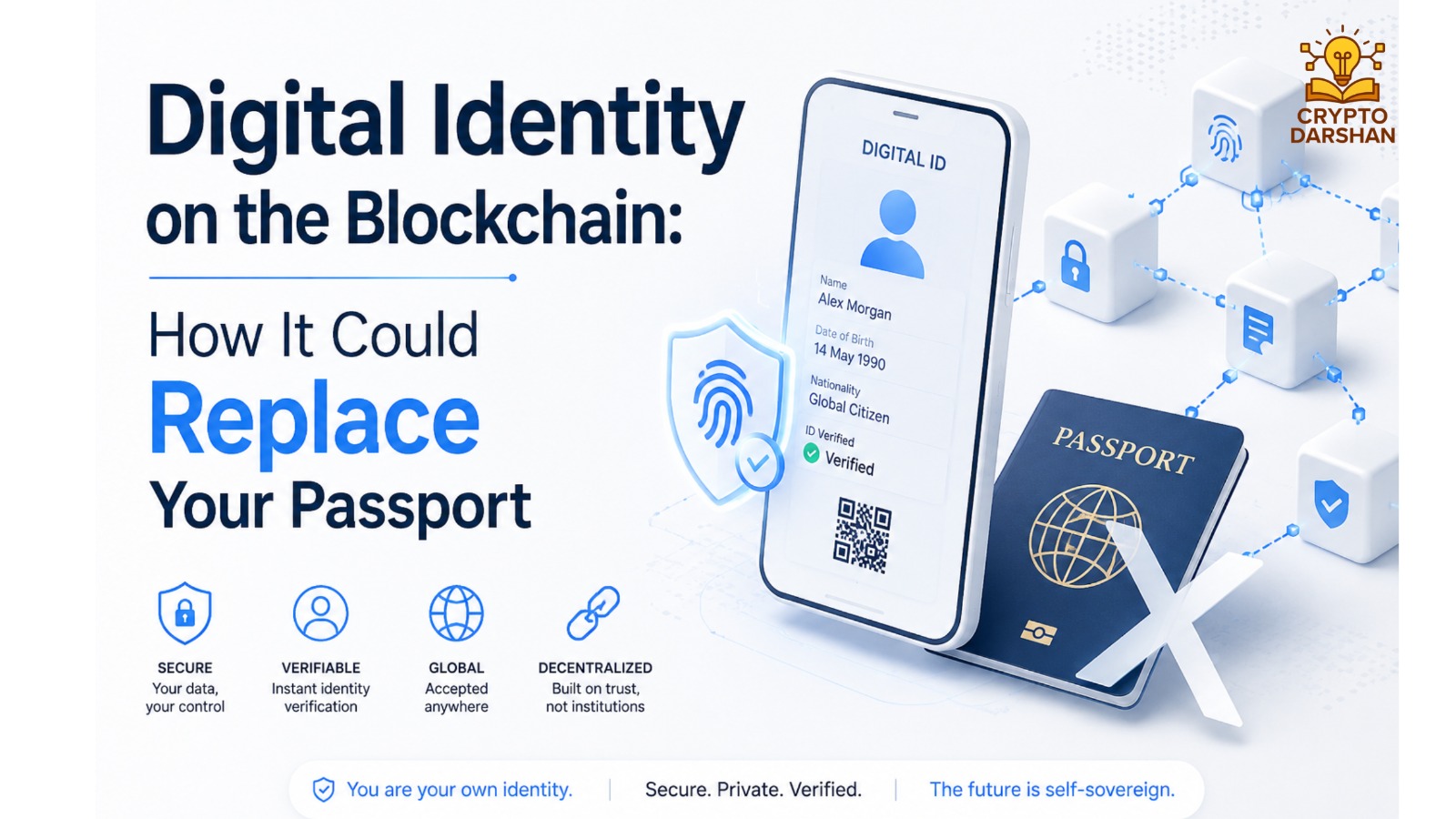
In a world that is becoming increasingly digital, the concept of Digital Identity is transforming how individuals prove who they are. From logging into social media accounts to accessing government services, identity verification is a fundamental part of modern life. However, traditional identity systems—such as passports, driver’s licenses, and ID cards—are often inefficient, insecure, and prone to fraud. The rise of blockchain technology offers a revolutionary alternative: a decentralized, tamper-proof, and user-controlled Digital Identity that could one day replace physical passports altogether.
This article explores how blockchain-based Digital Identity systems work, their potential to replace traditional passports, the benefits and challenges they present, and what the future of identity verification might look like in a decentralized world.
Understanding Digital Identity
What Is Digital Identity?
A Digital Identity is the online representation of an individual, organization, or device. It includes all the data that uniquely identifies a person in the digital world—such as name, date of birth, biometrics, social media profiles, and online behavior. Unlike physical identity documents, a Digital Identity can be verified and shared electronically, enabling seamless access to digital services.
In essence, a Digital Identity acts as a digital passport that allows individuals to prove who they are across multiple platforms without repeatedly submitting personal information. It is the foundation of trust in the digital economy.
The Problem with Traditional Identity Systems
Traditional identity systems rely on centralized authorities such as governments, banks, or corporations to issue and verify identity documents. While these systems have worked for decades, they suffer from several major flaws:
- Centralization – A single authority controls the data, making it vulnerable to breaches or misuse.
- Data Silos – Each organization maintains its own database, leading to duplication and inefficiency.
- Privacy Risks – Users often have little control over how their personal data is stored or shared.
- Fraud and Forgery – Physical documents can be lost, stolen, or counterfeited.
- Limited Accessibility – Millions of people worldwide lack access to official identity documents, excluding them from essential services.
Blockchain technology offers a solution to these challenges by decentralizing identity management and giving individuals full control over their Digital Identity.
How Blockchain Enables Digital Identity

The Basics of Blockchain
Blockchain is a distributed ledger technology that records transactions across a network of computers. Each transaction is stored in a block, and once added to the chain, it cannot be altered or deleted. This immutability and transparency make blockchain ideal for managing sensitive data like identity information.
Decentralized Identity (DID)
A Decentralized Identity (DID) is a new model of identity management built on blockchain. Instead of relying on a central authority, DIDs allow individuals to create and control their own Digital Identity using cryptographic keys. The blockchain acts as a secure registry that verifies the authenticity of these identities without storing personal data directly.
In a DID system:
- The user generates a pair of cryptographic keys: a public key and a private key.
- The public key is recorded on the blockchain, while the private key remains with the user.
- When identity verification is needed, the user signs a digital proof using the private key.
- The verifier checks the proof against the public key on the blockchain.
This process ensures that only the rightful owner can use their Digital Identity, eliminating the risk of identity theft or forgery.
Self-Sovereign Identity (SSI)
Self-Sovereign Identity (SSI) is a concept closely related to DIDs. It emphasizes user ownership and control over personal data. With SSI, individuals decide what information to share, with whom, and for how long. This approach aligns with privacy regulations like the GDPR and empowers users to manage their Digital Identity independently.
How Digital Identity Could Replace Passports

The transition from physical passports to a blockchain-based Digital Identity represents a fundamental shift in how we prove who we are when crossing borders. Instead of relying on a paper booklet that is easily lost, stolen, or forged, this system uses decentralized technology to create a secure, portable, and verifiable identity.
Here is how this transformation would work:
1. Cryptographic Verification
Instead of an immigration officer manually inspecting a physical document, a blockchain-based Digital Identity uses cryptographic keys. Your identity is linked to a digital signature that only you can control. When you arrive at a border, your device provides a “proof” that is instantly verified against the blockchain, confirming your identity and citizenship without the need for physical stamps or manual data entry.
2. Biometric Integration
A blockchain passport would likely be tied to your unique biometric data, such as facial recognition or fingerprint scans. Because this data is stored securely and linked to your Digital Identity on the blockchain, it creates a “living” document that is impossible to counterfeit. This ensures that the person presenting the identity is undeniably the owner of that identity. While decentralized identity systems offer greater user control, it’s important to understand that decentralization does not automatically guarantee a better solution in every situation.
3. Verified Digital Credentials
Governments and trusted authorities would issue “verifiable credentials” to your digital wallet. These are cryptographically signed digital certificates—such as proof of citizenship, visa status, or health records—that you can selectively share. You no longer need to hand over your entire passport; you can simply share the specific piece of information required for entry, which significantly enhances your privacy.
4. Real-Time Global Interoperability
Traditional passports are static and difficult to update. A blockchain-based system allows for real-time updates. If your visa status changes or your passport is renewed, the information on the blockchain is updated instantly and globally. This eliminates the “data silos” that currently exist between different countries’ immigration databases, allowing for seamless, automated verification anywhere in the world.
5. Enhanced Security and Reduced Fraud
Physical passports are vulnerable to tampering and sophisticated forgery. By contrast, blockchain technology is immutable; once a record is created, it cannot be altered or deleted. This creates a permanent, tamper-proof audit trail. If a passport is reported lost or stolen, it can be instantly invalidated on the blockchain, making it useless to criminals and drastically reducing the risk of identity theft.
6.The Role of Passports Today
Passports are the most widely recognized form of international identification. They serve as proof of citizenship and are required for cross-border travel. However, physical passports have several limitations:
- They can be lost, stolen, or damaged.
- Verification at borders is time-consuming.
- Counterfeit passports are a persistent problem.
- Data stored in passports is static and difficult to update.
A blockchain-based Digital Identity could overcome these issues by providing a secure, verifiable, and universally accessible alternative.
7.Blockchain-Based Passports
Imagine a world where travelers use a Digital Identity stored on a blockchain instead of a physical passport. Upon arrival at an airport, biometric data such as facial recognition or fingerprints could instantly verify the traveler’s identity against the blockchain record. Immigration officers would no longer need to manually inspect documents, reducing wait times and improving security.
Each Digital Identity could include verified credentials issued by trusted authorities—such as governments, airlines, or international organizations. These credentials would be cryptographically signed and stored on the blockchain, ensuring authenticity and preventing tampering.
Real-World Examples of Digital Identity Initiatives

Estonia’s e-Residency Program
Estonia is a pioneer in digital governance. Its e-Residency program allows anyone in the world to obtain a government-issued Digital Identity that grants access to Estonian e-services. Residents can sign documents, start businesses, and pay taxes online using secure digital authentication.
Microsoft’s ION Project
Microsoft’s ION (Identity Overlay Network) is a decentralized identity system built on the Bitcoin blockchain. It enables users to create and manage their own Digital Identity without relying on centralized intermediaries.
Sovrin Network
The Sovrin Network is a global public utility for decentralized identity. It provides a framework for creating self-sovereign identities that can be used across multiple platforms and jurisdictions.
World Economic Forum’s Known Traveller Digital Identity (KTDI)
The KTDI initiative, developed by the World Economic Forum, aims to streamline international travel using blockchain-based Digital Identity. It allows travelers to share verified identity data with border authorities in advance, speeding up security checks and reducing friction.
The Technology Behind Blockchain-Based Digital Identity

Cryptography and Public Key Infrastructure (PKI)
At the core of blockchain-based Digital Identity systems lies cryptography. Public Key Infrastructure (PKI) ensures that only authorized users can access or modify identity data. Each user has a unique digital signature that verifies their authenticity.
Smart Contracts
Smart contracts are self-executing programs stored on the blockchain. They can automate identity verification processes, such as granting access to services once certain conditions are met. For example, a smart contract could automatically verify a traveler’s visa status before allowing entry.
Zero-Knowledge Proofs (ZKPs)
Zero-Knowledge Proofs allow users to prove the validity of information without revealing the actual data. This technology enhances privacy by enabling selective disclosure. For instance, a user could prove they are over 18 without revealing their exact birthdate.
Interoperability Standards
For Digital Identity systems to work globally, interoperability is essential. Standards such as W3C’s Decentralized Identifiers (DIDs) and Verifiable Credentials (VCs) ensure that identities can be recognized across different platforms and jurisdictions.
Benefits of Blockchain-Based Digital Identity

Enhanced Security
Blockchain’s decentralized nature eliminates single points of failure. Even if one node is compromised, the rest of the network remains secure. This makes Digital Identity systems far more resilient than centralized databases.
Privacy and Data Ownership
Users retain full ownership of their personal data. They can choose what information to share and revoke access at any time. This aligns with the principles of data minimization and consent-based sharing.
Inclusion and Accessibility
Over one billion people worldwide lack official identification. Blockchain-based Digital Identity systems can provide secure, verifiable identities to the unbanked and undocumented, enabling access to financial, healthcare, and educational services.
Cost Efficiency
By reducing administrative overhead and eliminating intermediaries, blockchain-based identity systems can significantly lower costs for governments and organizations.
Transparency and Trust
Every transaction on the blockchain is transparent and auditable. This fosters trust among users, institutions, and regulators.
Challenges and Limitations

Regulatory and Legal Barriers
The adoption of blockchain-based Digital Identity faces regulatory hurdles. Governments must establish legal frameworks that recognize digital credentials as valid forms of identification.
Privacy Concerns
While blockchain enhances security, storing identity data on a public ledger raises privacy concerns. Solutions like off-chain storage and encryption are essential to protect sensitive information.
Technological Complexity
Implementing a global Digital Identity system requires advanced infrastructure and technical expertise. Developing countries may face challenges in adopting such technologies.
Interoperability Issues
Different blockchain platforms may not be compatible with one another. Establishing universal standards is crucial for seamless cross-border identity verification.
User Adoption
For Digital Identity to replace passports, widespread adoption is necessary. This requires public awareness, trust, and collaboration between governments, private companies, and international organizations.
The Future of Digital Identity

Integration with Artificial Intelligence
Artificial Intelligence (AI) can enhance Digital Identity systems by analyzing behavioral patterns, detecting anomalies, and preventing fraud. AI-driven identity verification could make digital passports even more secure and efficient.
The Rise of Metaverse Identities
As virtual worlds and the metaverse expand, Digital Identity will play a crucial role in verifying users across digital environments. Blockchain-based identities could enable seamless movement between physical and virtual spaces. Public adoption of blockchain passports will likely depend on addressing concerns about privacy, surveillance, and why many people still don’t fully trust crypto technologies.
Government Adoption
Several countries are exploring blockchain for national identity programs. In the future, citizens may use a single Digital Identity to access healthcare, education, banking, and travel services.
Cross-Border Collaboration
International organizations like the United Nations and the World Bank are promoting digital identity initiatives to support global development goals. A unified Digital Identity framework could simplify international travel, trade, and communication.
Ethical and Social Implications
Balancing Privacy and Security
The challenge lies in balancing privacy with security. While Digital Identity systems must protect personal data, they also need to ensure that identities are verifiable and trustworthy.
Digital Divide
Access to technology remains uneven across the globe. Ensuring that Digital Identity systems are inclusive and accessible to all is essential to prevent further inequality.
Trust and Governance
Decentralized systems require new governance models. Establishing trust between users, issuers, and verifiers is critical for the success of blockchain-based Digital Identity.
Steps Toward Implementation
To implement a blockchain-based Digital Identity system, stakeholders must focus on these five key areas:
Establishing Legal Frameworks
Governments must update national laws to formally recognize blockchain-based credentials as legally binding forms of identification, ensuring they hold the same weight as traditional passports.
Fostering Public-Private Partnerships
Success requires deep collaboration between technology providers, financial institutions, and government agencies to build a unified, trusted ecosystem that can handle sensitive identity data securely.
Investing in Robust Infrastructure
Nations must commit to building scalable, secure, and energy-efficient blockchain networks capable of handling millions of identity verifications simultaneously without compromising speed or reliability.
Prioritizing User Education
Widespread adoption depends on public trust; citizens must be educated on how to manage their private keys, understand their data rights, and protect their Digital Identity from potential threats.
Launching Controlled Pilot Programs
Before a full-scale rollout, authorities should implement small-scale trials—such as digital travel passes or e-residency services—to identify technical bottlenecks, refine security protocols, and gather user feedback.
FAQ: Digital Identity on the Blockchain: How It Could Replace Your Passport

1. What is a blockchain-based digital identity?
A blockchain-based digital identity is a secure digital version of your personal identification that is stored and verified using blockchain technology. It allows individuals to prove their identity online without relying on traditional paper documents.
2. How is blockchain identity different from a traditional passport?
A traditional passport is a physical document issued by a government, while a blockchain identity is a digital credential that can be verified instantly online. Blockchain identities can be updated securely and accessed from digital wallets or identity apps.
3. Can blockchain really replace passports?
Potentially, yes. Many governments and organizations are exploring digital identity systems that could complement or eventually replace physical passports for certain travel and verification processes. However, widespread adoption will require international cooperation and regulation.
4. What are the benefits of blockchain-based digital identities?
Key benefits include improved security, reduced identity fraud, faster verification, greater user control over personal data, and easier access to online services.
5. How does blockchain protect personal information?
Blockchain uses cryptographic techniques to secure data. In many digital identity systems, personal information is not stored directly on the blockchain; instead, encrypted proofs and verification records are stored, helping protect privacy.
6. What is self-sovereign identity (SSI)?
Self-sovereign identity is a model where individuals own and control their identity data instead of relying on governments, social media platforms, or centralized databases to manage it.
7. Could blockchain identities reduce identity theft?
Yes. Because blockchain identities use cryptographic verification and decentralized storage methods, they can make it much harder for criminals to steal or manipulate personal information.
8. Which countries are exploring blockchain-based digital identities?
Several countries and regions are testing digital identity initiatives, including Estonia, Singapore, and members of the European Union.
Conclusion
The concept of Digital Identity on the blockchain represents a paradigm shift in how identity is managed, verified, and protected. By decentralizing control and empowering individuals, blockchain technology offers a secure, efficient, and privacy-preserving alternative to traditional identity systems. As governments and organizations continue to explore this innovation, the possibility of replacing physical passports with blockchain-based Digital Identity becomes increasingly realistic.
In the near future, travelers may no longer need to carry physical documents. Instead, a secure, verifiable Digital Identity stored on the blockchain could serve as a universal passport—simplifying travel, enhancing security, and redefining global mobility. The journey toward this future is complex, but the potential rewards are immense: a world where identity is truly digital, decentralized, and in the hands of the individual.