The convergence of artificial intelligence (AI) and blockchain technology is reshaping the digital landscape. Among the most promising innovations emerging from this intersection are autonomous AI agents—self-governing digital entities capable of performing tasks, making decisions, and transacting value without human intervention. These agents represent a new paradigm in decentralized computing, where intelligence meets trustless infrastructure. Many experts believe that autonomous AI agents could become blockchain’s “killer app,” driving mainstream adoption and unlocking unprecedented economic potential.
This article explores the concept of autonomous AI agents, their architecture, how blockchain enables their autonomy, real-world applications, challenges, and the future outlook for this transformative technology.
Understanding Autonomous AI Agents

Definition and Core Concept
Autonomous AI agents are software-based entities or systems that continuously learn from their environment, integrate information from various sources, and make decisions to accomplish tasks autonomously on our behalf. Unlike traditional AI systems that rely on centralized servers or human oversight, autonomous agents operate with minimal external control. They can learn, adapt, and execute tasks based on data inputs and programmed objectives.
When integrated with blockchain, these agents gain the ability to own digital assets, execute smart contracts, and interact with decentralized networks securely. This combination creates a new class of digital entities that are not only intelligent but also economically active.
Key Characteristics
- Autonomy – Operates without direct human control, guided by algorithms and learned behaviors.
- Persistence – Exists continuously on decentralized networks, immune to single points of failure.
- Transparency – Actions and transactions are recorded on immutable ledgers.
- Economic Agency – Can hold, send, and receive cryptocurrency or tokens.
- Interoperability – Interacts with other agents, smart contracts, and decentralized applications (dApps).
- Adaptability – Learns from data and adjusts strategies over time.
How They Differ from Traditional AI
Traditional AI systems are typically centralized, controlled by organizations that manage data, models, and infrastructure. Autonomous AI agents, by contrast, are decentralized and self-sovereign. They can operate independently of any single entity, making decisions and executing actions directly on blockchain networks. This shift transforms AI from a service model into an economic participant in digital ecosystems.
The Role of Blockchain in Enabling Autonomy

Blockchain provides the foundational infrastructure that allows AI agents to function independently and securely. Its decentralized, transparent, and immutable nature ensures that agents can operate without relying on centralized intermediaries.
1. Decentralized Identity and Ownership
Blockchain enables self-sovereign identity (SSI) for AI agents. Each agent can have a unique cryptographic identity, allowing it to authenticate, sign transactions, and interact with other entities securely. This identity is verifiable on-chain, ensuring trust without central authorities.
2. Smart Contracts as Operational Frameworks
Smart contracts define the rules and logic governing agent behavior. They automate agreements, payments, and task execution. For example, an AI agent managing a fleet of delivery drones could use smart contracts to pay for maintenance, fuel, or data services automatically.
3. Tokenization and Economic Incentives
Blockchain’s token economy allows agents to participate in financial ecosystems. Agents can earn tokens for completing tasks, spend tokens for resources, or stake tokens to access services. This creates a machine-to-machine (M2M) economy, where digital entities transact value autonomously.
4. Data Integrity and Provenance
AI agents rely heavily on data. Blockchain ensures that data sources are verifiable and tamper-proof. By recording data provenance on-chain, agents can make decisions based on trusted information, reducing the risk of manipulation or bias.
5. Interoperability Across Networks
Blockchain protocols enable cross-platform communication and interoperability. Agents can operate across multiple blockchains, accessing diverse data sources and services. This flexibility enhances their functionality and scalability.
As autonomous AI agents execute more on-chain operations, scalable blockchain infrastructure becomes increasingly important. Technologies like sovereign rollups, explained in Rollkit: Sovereign Rollups Made Simple, are helping blockchain networks handle higher computational demands while maintaining decentralization.
Architecture of Autonomous AI Agents
An autonomous AI agent typically consists of several integrated layers:
1. Perception Layer
This layer gathers data from sensors, APIs, or decentralized oracles. It allows the agent to perceive its environment, whether physical (IoT devices) or digital (market data, user interactions).
2. Cognitive Layer
The cognitive layer processes data using AI models such as machine learning, natural language processing, or reinforcement learning. It enables reasoning, prediction, and decision-making.
3. Blockchain Layer
This layer handles identity, transactions, and smart contract interactions. It ensures transparency, security, and immutability of the agent’s actions.
4. Communication Layer
Agents communicate with other agents, users, or systems through decentralized protocols. This layer supports peer-to-peer messaging and coordination.
5. Execution Layer
The execution layer carries out actions, such as initiating payments, deploying contracts, or triggering external processes. It connects the agent’s decisions to real-world outcomes.
Real-World Applications

1. Decentralized Finance (DeFi)
Autonomous AI agents can manage portfolios, execute trades, and optimize yield strategies in DeFi ecosystems. They can monitor market conditions, rebalance assets, and interact with multiple protocols without human input.
2. Supply Chain Management
Agents can track goods, verify authenticity, and automate payments across supply chains. For instance, an AI agent could release payments to suppliers once blockchain-verified delivery conditions are met.
3. Internet of Things (IoT)
In IoT networks, autonomous agents can manage device interactions, energy consumption, and maintenance schedules. A smart vehicle could pay for charging or tolls automatically using blockchain-based tokens.
4. Digital Marketing and Advertising
AI agents can negotiate ad placements, verify impressions, and handle micropayments between advertisers and publishers. This reduces fraud and improves transparency in digital advertising.
5. Healthcare and Data Sharing
Agents can manage patient data securely, ensuring compliance with privacy regulations. They can facilitate data exchange between hospitals, researchers, and insurers using blockchain for verification.
6. Autonomous Organizations
Decentralized Autonomous Organizations (DAOs) can deploy AI agents to handle operations, governance, and resource allocation. These agents act as digital employees, executing DAO-approved tasks.
7. Gaming and Virtual Worlds
In metaverse environments, AI agents can act as NPCs (non-player characters), traders, or service providers. They can own assets, interact with players, and evolve based on user behavior.
8. Environmental Monitoring and Sustainability
Autonomous agents can monitor environmental data, manage carbon credits, and optimize renewable energy distribution. For example, an agent could automatically purchase carbon offsets when emissions exceed a threshold, ensuring compliance with sustainability goals.
The Machine Economy: A New Digital Frontier
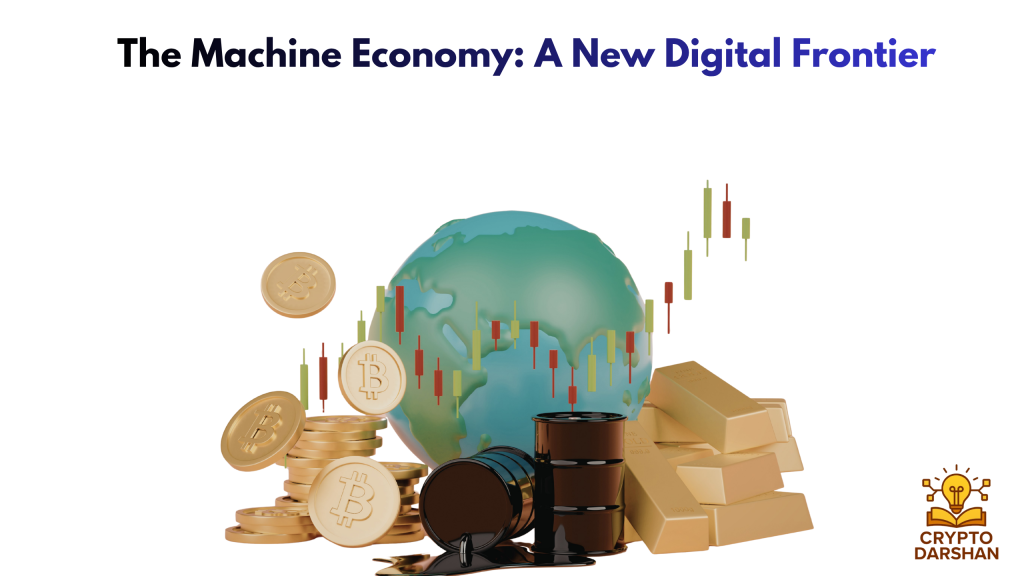
The rise of autonomous AI agents is giving birth to the machine economy, where machines and software entities transact value directly. This economy is powered by blockchain’s trustless infrastructure and AI’s decision-making capabilities.
Key Components of the Machine Economy
- Digital Wallets for Machines – Each agent or device has a wallet to store and transfer tokens.
- Smart Contracts for Automation – Define the terms of interaction between machines.
- Decentralized Marketplaces – Platforms where agents can buy and sell services autonomously.
- Data Marketplaces – Agents can trade data securely, ensuring provenance and privacy.
- Energy and Resource Management – Agents can optimize energy usage and trade surplus resources.
Economic Implications
The machine economy could revolutionize industries by reducing transaction costs, increasing efficiency, and enabling new business models. Machines will become economic actors, contributing to GDP and reshaping labor markets. Over time, this could lead to a self-sustaining digital economy, where autonomous agents continuously create, exchange, and reinvest value.
Benefits of Autonomous AI Agents on Blockchain

- Trust and Transparency – Blockchain ensures that all actions are verifiable and tamper-proof.
- Efficiency – Automation reduces human intervention and operational overhead.
- Security – Cryptographic protocols protect data and transactions.
- Scalability – Agents can operate across global networks without centralized bottlenecks.
- Cost Reduction – Eliminates intermediaries and streamlines processes.
- Innovation – Enables new forms of digital collaboration and commerce.
- Resilience – Decentralized systems are less vulnerable to outages or censorship.
- Programmable Autonomy – Agents can evolve through updates and governance mechanisms.
- Continuous Operation – Agents can function 24/7, maintaining productivity without downtime.
- Global Accessibility – Anyone with internet access can deploy or interact with agents.
Challenges and Limitations

Despite their potential, autonomous AI agents face several challenges that must be addressed for widespread adoption.
1. Technical Complexity
Building fully autonomous agents requires advanced AI models, robust blockchain infrastructure, and seamless integration between the two. Achieving this at scale remains a technical hurdle.
2. Energy Consumption
Both AI training and blockchain operations can be energy-intensive. Sustainable solutions are needed to minimize environmental impact.
3. Legal and Ethical Issues
Questions arise about accountability, liability, and ownership. If an autonomous agent causes harm or loss, determining responsibility becomes complex.
4. Security Risks
While blockchain provides security, vulnerabilities in smart contracts or AI models can be exploited. Continuous auditing and updates are essential.
Additionally, users interacting with AI-driven blockchain systems must follow proper security practices to safeguard their digital assets. Following the steps explained in How to Store Your Crypto Offline: Complete Hardware Wallet Setup Guide can significantly reduce the risk of online attacks and unauthorized access.
5. Interoperability Challenges
Different blockchains and AI frameworks may not communicate seamlessly. Standardization efforts are required to ensure compatibility.
6. Data Privacy
Balancing transparency with privacy is critical. Sensitive data must be protected while maintaining verifiable records.
7. Governance and Control
Determining how much autonomy to grant agents and how to govern their actions is a major challenge. Overly autonomous systems could act unpredictably.
8. Economic Disruption
As agents take over repetitive or analytical tasks, certain jobs may become obsolete. Societies will need to adapt through education, reskilling, and new economic models.
Emerging Projects and Ecosystems

Several pioneering projects are exploring the integration of AI agents and blockchain:
- Fetch.ai – Builds autonomous economic agents for data sharing, mobility, and energy markets.
- SingularityNET – A decentralized marketplace for AI services, enabling agents to collaborate and transact.
- Ocean Protocol – Facilitates secure data exchange for AI training and analytics.
- Numerai – Uses AI agents to manage decentralized hedge fund strategies.
- Botto – An autonomous artist that creates and sells digital art using blockchain governance.
- Autonolas – Focuses on building composable autonomous services that combine AI and blockchain logic.
- Alethea AI – Develops intelligent NFTs (iNFTs) that can interact autonomously with users.
- Cortex – Integrates AI models directly into smart contracts, enabling on-chain intelligence.
These projects demonstrate the growing momentum behind autonomous AI ecosystems and their potential to redefine digital economies.
The Future of Autonomous AI Agents

1. Integration with Web3
As Web3 evolves, autonomous AI agents will become integral to decentralized applications. They will manage user interactions, optimize resource allocation, and enhance personalization.
2. AI-Driven DAOs
Future DAOs may rely heavily on AI agents for governance, decision-making, and execution. This could lead to fully automated organizations operating without human oversight.
3. Cross-Chain Intelligence
Agents will operate across multiple blockchains, leveraging interoperability protocols to access diverse data and services.
4. Human-Agent Collaboration
Rather than replacing humans, autonomous agents will augment human capabilities. They will handle repetitive tasks, freeing humans for creative and strategic work.
5. Regulation and Governance
Governments and institutions will need to establish frameworks for regulating autonomous agents, addressing issues of accountability, taxation, and compliance.
6. Integration with Edge Computing
Combining blockchain and AI with edge computing will allow agents to process data locally, reducing latency and improving efficiency for IoT and real-time applications.
7. Personalized Digital Companions
Future agents could act as personal assistants that manage finances, negotiate contracts, and represent individuals in digital ecosystems, all while maintaining privacy and autonomy.
8. Education and Research
Universities and research institutions are beginning to explore how autonomous agents can support scientific discovery, automate experiments, and manage research data securely.
Ethical Considerations

The rise of autonomous AI agents raises profound ethical questions:
- Accountability – Who is responsible for an agent’s actions?
- Bias and Fairness – How can agents make unbiased decisions?
- Privacy – How can personal data be protected in decentralized systems?
- Autonomy vs. Control – How much independence should agents have?
- Economic Displacement – What happens when machines replace human labor?
- Moral Agency – Should autonomous agents have rights or responsibilities?
- Transparency in Decision-Making – How can humans understand and audit agent behavior?
Addressing these concerns requires collaboration between technologists, policymakers, and ethicists to ensure responsible innovation.
Case Study: Autonomous Mobility Network

Imagine a decentralized network of self-driving vehicles managed by autonomous AI agents. Each vehicle operates as an independent economic unit, capable of:
- Negotiating fares with passengers
- Paying for charging and maintenance
- Sharing data with city infrastructure
- Participating in decentralized insurance pools
Blockchain ensures transparency and trust, while AI optimizes routes and pricing. This model could revolutionize urban mobility, reducing costs and emissions while enhancing efficiency.
Economic Impact
Such a system could create new revenue streams for vehicle owners, reduce congestion through optimized routing, and enable peer-to-peer ride-sharing without centralized intermediaries. It also demonstrates how autonomous agents can coordinate complex systems efficiently.
The Path to Mass Adoption

For autonomous AI agents to become blockchain’s killer app, several milestones must be achieved:
- Scalable Infrastructure – High-performance blockchains with low fees and fast transactions.
- Interoperability Standards – Protocols enabling seamless cross-chain communication.
- User-Friendly Interfaces – Simplified tools for deploying and managing agents.
- Regulatory Clarity – Legal frameworks that define rights and responsibilities.
- Public Awareness – Education and outreach to build trust and understanding.
- AI Explainability – Transparent models that allow humans to understand agent decisions.
- Security Auditing – Continuous monitoring to prevent malicious behavior.
- Sustainability – Energy-efficient consensus mechanisms and AI models.
- Collaborative Ecosystems – Partnerships between AI developers, blockchain engineers, and policymakers.
As these elements mature, autonomous AI agents will transition from experimental projects to mainstream applications.
Long-Term Vision: A Decentralized Intelligent Economy

The ultimate vision for autonomous AI agents is a decentralized intelligent economy, where humans, machines, and algorithms coexist and collaborate. In this future:
- Machines negotiate and transact autonomously.
- Data flows securely across networks.
- AI agents represent individuals, companies, and devices.
- Economic activity becomes more efficient, transparent, and inclusive.
This transformation could redefine capitalism itself, shifting from human-centered production to machine-driven value creation. The boundaries between digital and physical economies will blur, creating a unified, intelligent ecosystem.
Frequently Asked Questions (FAQ): Autonomous AI Agents – Blockchain’s Killer App

1. What are Autonomous AI Agents?
Autonomous AI agents are intelligent software programs that can make decisions and perform tasks without constant human supervision. When combined with blockchain technology, these agents can execute transactions, manage assets, and interact with decentralized applications securely and transparently.
2. Why are Autonomous AI Agents considered a “killer app” for blockchain?
Autonomous AI agents bring automation and intelligence to decentralized systems. Blockchain provides secure data storage and trustless execution, while AI agents analyze data and make decisions. This combination allows systems to operate automatically without intermediaries, making it a powerful use case for blockchain.
3. How do Autonomous AI Agents work with blockchain?
Autonomous AI agents interact with blockchain networks using smart contracts. They can analyze blockchain data, trigger smart contracts, and execute transactions automatically based on predefined rules or AI-driven decisions.
4. What role do smart contracts play in AI agents?
Smart contracts act as the execution layer for AI agents. Once the AI agent decides on an action, the smart contract enforces it on the blockchain—such as transferring funds, validating agreements, or interacting with decentralized services.
5. What are the main benefits of combining AI agents with blockchain?
The integration provides several advantages:
- Automation: Tasks can run without human intervention.
- Transparency: All actions are recorded on a public ledger.
- Security: Blockchain prevents unauthorized manipulation.
- Trustless interaction: Parties can transact without intermediaries.
6. What are some real-world use cases of Autonomous AI Agents?
Autonomous AI agents can be used in many industries, including:
- DeFi: Automated trading, portfolio management, and yield optimization.
- Supply Chain: AI agents tracking goods and triggering payments automatically.
- Gaming: Intelligent in-game characters managing digital assets.
- DAO governance: AI agents analyzing proposals and voting strategies.
7. How do AI agents improve decentralized finance (DeFi)?
In DeFi, AI agents can analyze market trends, execute trades, rebalance portfolios, and manage liquidity automatically. This reduces manual decision-making and increases efficiency for traders and investors.
8. Can Autonomous AI Agents own crypto wallets?
Yes. AI agents can control blockchain wallets through programmed keys or smart-contract wallets. This allows them to hold digital assets, pay for services, and interact with decentralized applications independently.
Conclusion
Autonomous AI agents represent a groundbreaking fusion of artificial intelligence and blockchain technology. By combining intelligence with decentralization, they create a new class of digital entities capable of independent thought, action, and economic participation. These agents have the potential to transform industries, enable the machine economy, and redefine how value is created and exchanged online.
While challenges remain—technical, ethical, and regulatory—the trajectory is clear. As blockchain infrastructure evolves and AI capabilities advance, autonomous agents will become central to the next generation of digital ecosystems. They are not just tools but participants in a new, decentralized economy—one where machines think, act, and transact on their own.
In this emerging era, autonomous AI agents may indeed become blockchain’s killer app, driving adoption, innovation, and a reimagined digital future.