
Five major US financial regulators have proposed sweeping new rules that would force stablecoin companies to verify customer identities the same way banks do. The joint proposal, released Thursday by the Federal Reserve, FinCEN, FDIC, OCC, and NCUA, marks the latest step in bringing cryptocurrency payment tokens under traditional financial oversight.
What’s Actually Changing?

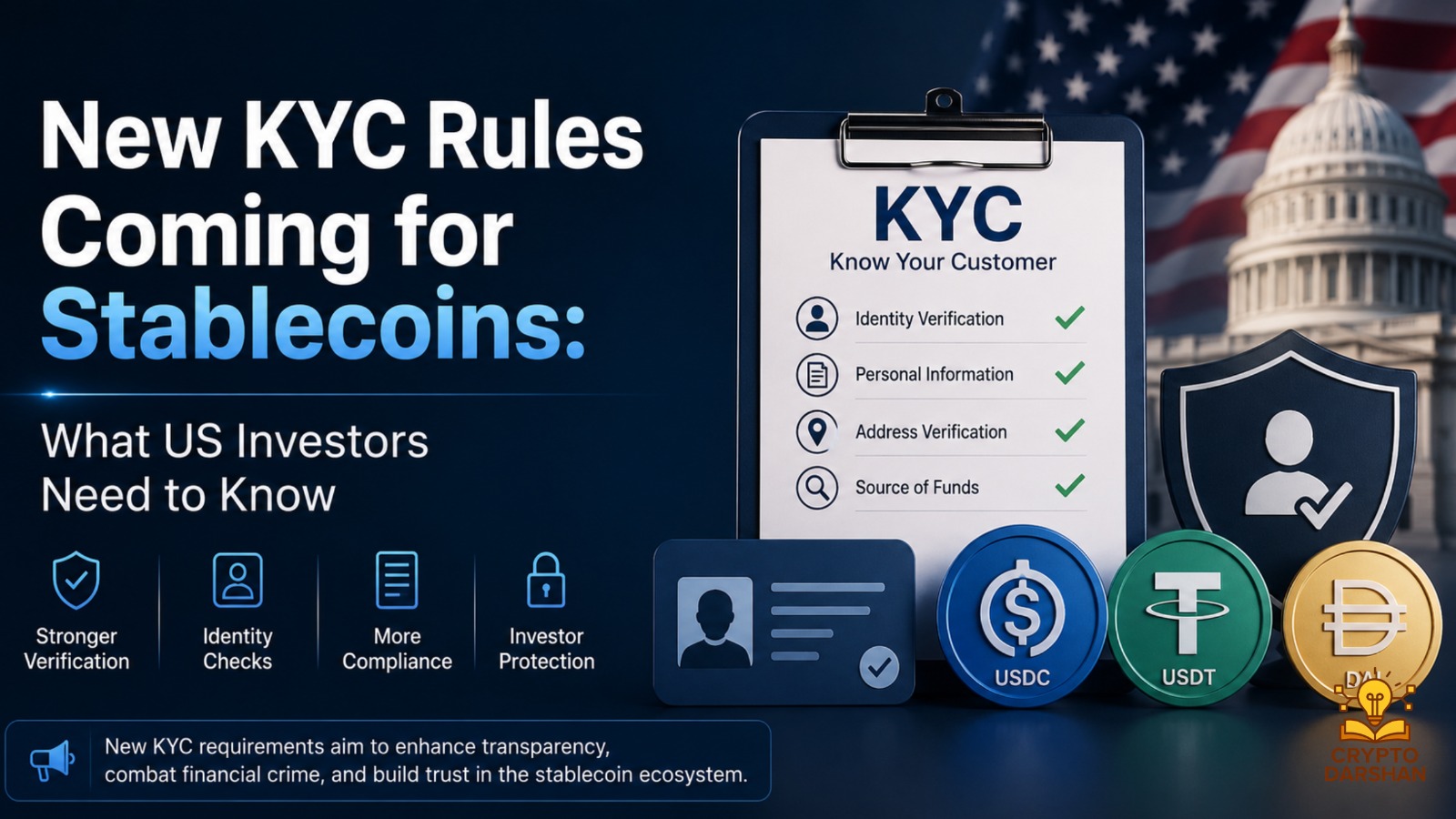
Under the proposed rule, stablecoin issuers would need to collect and verify four key pieces of information before letting anyone open an account:
- Full name of the individual or entity
- Date of birth (for people) or date of formation (for companies)
- Current address
- Identification number (like a Social Security Number or EIN)
This is called a Customer Identification Program (CIP), and it’s already mandatory for banks, broker-dealers, and other regulated financial institutions under the Bank Secrecy Act.
The GENIUS Act Connection

These rules aren’t random—they stem directly from the GENIUS Act (Guiding and Establishing National Innovation for US Stablecoins), which Congress passed and President Trump signed into law in July 2025. That law created the first comprehensive federal framework for payment stablecoins and included a specific mandate: treat stablecoin issuers like banks when it comes to knowing who their customers are.
Congress gave Treasury and banking regulators exactly this assignment, and now they’re delivering on it with a detailed 130-page proposal.
Who Does This Actually Affect?

This is where it gets important—and where many people might misunderstand the impact. The rule only applies to direct relationships with stablecoin issuers, such as:
- Minting new tokens directly from the issuer
- Redeeming tokens back for dollars
- Using custody services
- Managing reserve accounts
What it doesn’t cover: The vast majority of stablecoin activity. If you’re trading USDC or USDT on Binance, Kraken, or any crypto exchange, or doing wallet-to-wallet transfers, you’re outside this rule’s reach.
This distinction matters because most crypto users interact with stablecoins through exchanges and decentralized apps, not directly with issuers like Circle (USDC) or Tether (USDT).
Anti-Money Laundering Watch
The proposal goes beyond just collecting ID. Stablecoin companies would need to:
- Establish procedures for denying service when they can’t verify identity immediately
- Keep records of all customer information
- Check customers against terrorist lists to flag known or suspected terrorists
- Notify customers about data collection practices
Issuers could also rely on another federally regulated bank’s customer identification procedures in “reasonable” circumstances, which could reduce duplication for companies already working with traditional banks.
Exemptions Are Possible
Federal regulators have flexibility to exempt certain issuers or accounts from these requirements. The Treasury secretary can also grant exemptions if the appropriate federal regulator agrees. This means smaller issuers or specific use cases might not face the full burden.
What’s the Cost?

Regulators estimate the combined costs across issuers, customers, and the government will be roughly $2.3 million per year once the rule takes full effect. That’s relatively modest for the entire stablecoin market, which now holds hundreds of billions in value.
Issuers would get one year after the final rule is published to comply, giving them time to build verification systems.
Public Comment Period Opens

The agencies will accept public comments for 60 days after the notice officially appears in the Federal Register on Monday. This is a critical window where crypto companies, privacy advocates, and users can push for changes before the rule becomes final.
Regulators are specifically seeking feedback on:
- Digital identity tools and verifiable credentials
- Whether requirements should extend to secondary-market stablecoin activity
- Stablecoin market structure overall
Why This Matters for Crypto

This proposal represents a major shift in how the US treats cryptocurrency. By requiring bank-style KYC (Know Your Customer) for stablecoin issuers, regulators are effectively recognizing these tokens as legitimate parts of the financial system—but also subjecting them to the same safeguards as traditional money.
For stablecoin users, the impact is limited unless you mint or redeem directly from issuers. But for the industry, it’s a signal that comprehensive federal oversight is now here, not coming someday in the future.
The GENIUS Act framework continues to roll out, and this customer ID rule is just one piece of a larger regulatory puzzle that will define how stablecoins operate in the US for years to come.