Bipartisan lawmakers set to hold a critical round of meetings next week, with the August recess deadline threatening to push the bill into 2027 if talks collapse
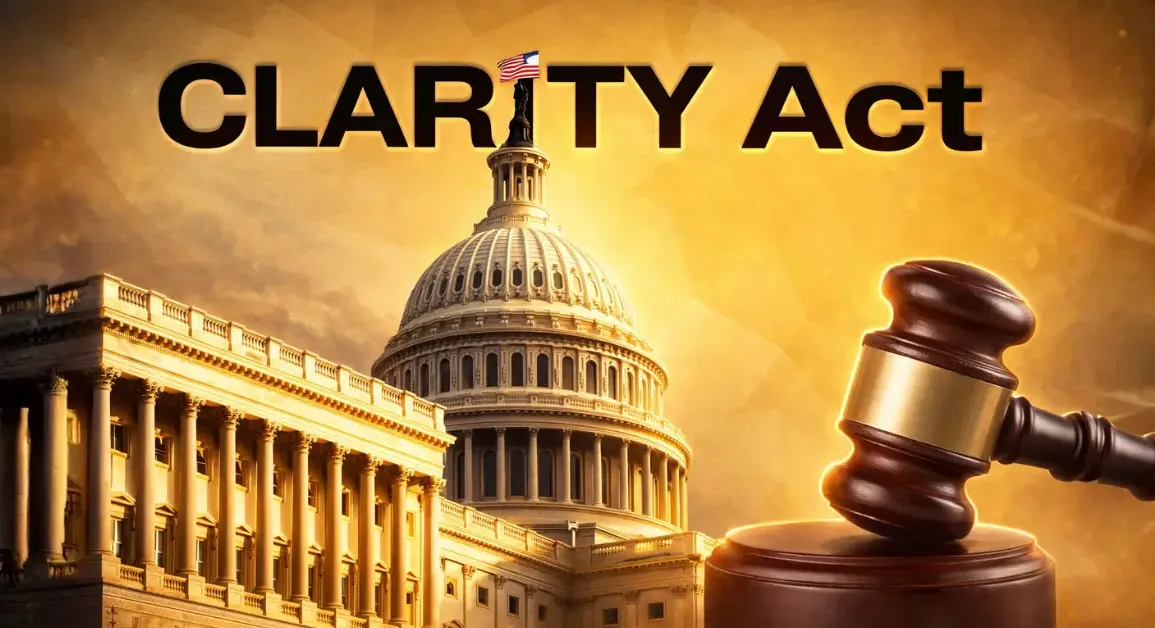
A defining moment for American crypto regulation could arrive next week, as bipartisan Senate negotiators prepare for what may be their final push to finalize the Digital Asset Market Clarity Act (CLARITY Act) before time runs out ahead of the August recess.
Where the Bill Stands
The CLARITY Act has already cleared major hurdles. The legislation, formally known as H.R. 3633, passed the House of Representatives in July 2025 with a bipartisan 294–134 vote. After months of negotiation, the Senate Banking Committee advanced its own substitute version on May 14, 2026, by a 15–9 margin, with two Democrats joining all Republicans on the panel in support.
That committee win, however, is not the same as floor passage. The bill still needs 60 votes to overcome a Senate filibuster, and several Democratic senators on the committee have signaled their support was conditional on further changes before a final floor vote.
With roughly 31 legislative session days remaining before the Senate breaks for its August recess and the start of midterm election season, negotiators are under real time pressure. Industry analysts have pointed to the end of July as the practical deadline for passage this year, warning that the bill’s prospects would weaken significantly if it slips past the recess.
What’s Left to Resolve
According to lawmakers and policy trackers, the remaining sticking points fall into four broad categories:
- SEC vs. CFTC jurisdiction — which regulator oversees which category of digital assets
- Token classification rules — determining when a token counts as a security versus a commodity
- Stablecoin language — including rules around yield and interest-bearing stablecoin balances
- DeFi treatment and exchange regulation — safe harbors for decentralized finance and licensing requirements for crypto exchanges
A central piece of the framework is the CFTC’s expanded role. Under the current draft, the CFTC would take on oversight of Bitcoin spot markets, commodity-style digital tokens, and large segments of the exchange industry, while the SEC would retain jurisdiction over assets that qualify as investment contracts.
Illicit-finance provisions have also remained a persistent flashpoint between the two parties throughout the negotiation process, with Democratic lawmakers pushing for stronger anti-money-laundering and sanctions compliance requirements before they commit to a final vote.
Why It Matters
For years, US crypto companies have operated without clear answers to basic regulatory questions: which tokens qualify as securities, which agency has jurisdiction, and what licensing exchanges actually need. Supporters of the bill — including major industry players such as Coinbase, Circle, and Ripple, along with venture capital backers like Andreessen Horowitz — argue that resolving this uncertainty would unlock investment and development that has been frozen for years, particularly in DeFi.
The White House has also been involved in talks between banking and crypto industry groups as the bill moves through its final stages.
The Stakes for Next Week
If negotiators can lock in agreement on the outstanding provisions, the bill would move toward a full Senate floor vote, putting the US on a path toward its first comprehensive federal framework for digital asset markets — covering token classification, exchange licensing, and DeFi treatment in one piece of legislation.
If talks break down, the consequences could be severe. Senator Cynthia Lummis, one of the lead Republican negotiators, has warned that failure to pass the bill this year could push meaningful crypto market structure legislation off until as late as 2030, given how Congress’s legislative calendar and political cycles tend to reset major bills that miss their window.
For now, all eyes turn to next week’s meetings — widely seen as one of the most consequential moments for US crypto policy in years.