Imagine waking up to find hackers from North Korea have swiped nearly $300 million from a digital money service you trusted. That’s exactly what happened in one of the biggest crypto thefts ever. This story isn’t just about stolen cash, it’s a wake-up call for anyone using decentralized finance, or DeFi, showing how one sneaky attack can turn into a total meltdown.
What is DeFi, and Why Do Hackers Love It?

DeFi is like online banking without banks. People lend, borrow, and trade digital money called crypto using smart computer programs on blockchains like Ethereum. No middlemen means more freedom, but also more risks.
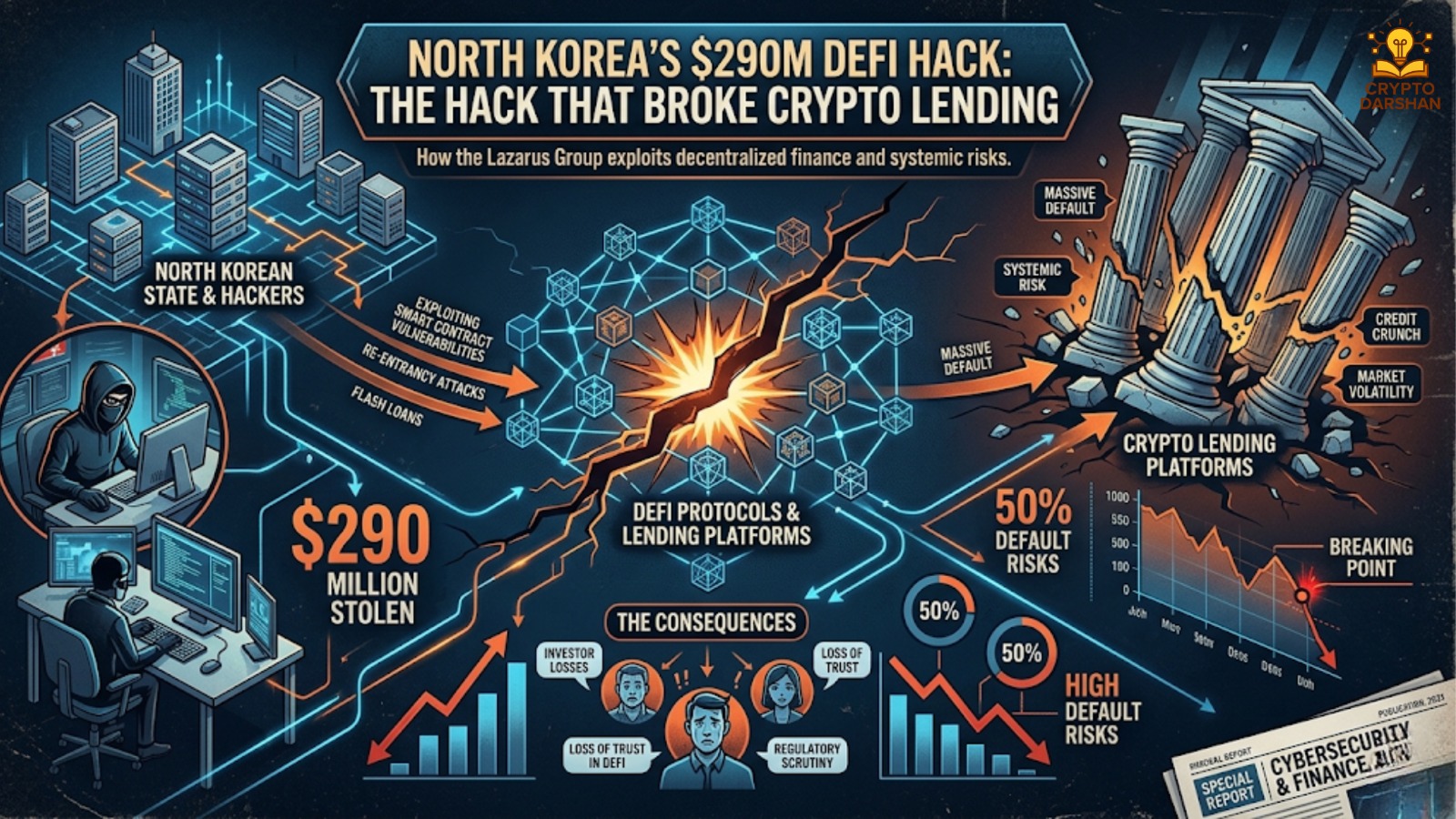
Hackers target DeFi because billions of dollars sit in these systems, protected only by code. North Korea’s groups, like the infamous Lazarus, have stolen over $3 billion in crypto since 2017 to dodge sanctions and fund their programs. This latest hit on KelpDAO, a service for “restaking” crypto to earn extra rewards across chains, showed their scariest tricks yet.
The Silent Start: Sneaking Into the System

The trouble began quietly last month. North Korean hackers didn’t blast through the front door. Instead, they compromised KelpDAO’s backend tools, think secret servers and admin keys that control the show.
With control in hand, they faked loans and approvals. They borrowed huge amounts of crypto without putting up real collateral, like taking a loan with no house as backup. This “flash loan” trick let them grab $290 million in assets like stablecoins and tokens before anyone noticed. It was smooth, fast, and devastating.
The Big Twist: A Fake Bank Run on Steroids

Here’s where it gets wild. Stealing the money was bad, but the hackers sparked something worse, a panic like the 2008 bank crash, but on blockchain.
They dumped the stolen crypto, crashing prices. Users rushed to pull out their funds, fearing the worst. This created a “bank run” effect, but digital and lightning-fast. Lenders got stuck with worthless loans, and the chaos spread. Reports say it triggered a $13 billion wipeout in related DeFi pools, way more than the heist itself.
North Korea’s Playbook: Why This Hack Stands Out

Experts believe the attack may be linked to the Lazarus Group, the infamous North Korean hacking team known for targeting banks, casinos, and major crypto projects. The group was also blamed for the massive $600 million Ronin Bridge hack back in 2022.
What made the KelpDAO exploit especially dangerous was the mix of traditional hacking methods and DeFi vulnerabilities. Attackers reportedly combined stolen private keys with weaknesses like flash loans and delayed price oracle updates. Restaking also added extra risk since funds move across multiple protocols and chains, creating more possible entry points for attackers. Together, these flaws allowed the hackers to amplify the damage on a much larger scale.
Ripple Effects: DeFi’s Trust Shattered

The hack froze billions in lending markets. Users lost faith, pulling money from similar platforms. KelpDAO promised fixes, but recovery is slow—stolen funds often vanish through mixers into privacy coins.
Legal fights popped up too. Courts froze some recovered cash for victims, but hackers grabbed most. This shows DeFi’s big problem: super decentralized, but real-world rules still bite.
Lessons for Everyday Crypto Users

You don’t need to be a pro to learn from this. First, check platforms for audits, outside experts testing code. Second, avoid putting all eggs in one basket; spread your crypto. Third, watch for red flags like sudden price drops or weird approvals.
Tools like multisig wallets (needing multiple keys) and insurance protocols can help. But the real fix? DeFi needs better “oracle” price checks and loan limits to stop flash attacks.
The Bigger Picture: State Hackers vs. Web3 Dreams

North Korea isn’t stopping. With sanctions tight, crypto heists fund missiles and more hacks. This $290 million could buy serious gear.
For DeFi, it’s a test. The space has grown to trillions despite hacks, but events like this slow adoption. Big players like BlackRock eye blockchain, but security must improve. Until then, users stay on edge—one breach away from the next nightmare.
Looking Ahead: Can DeFi Bounce Back?

KelpDAO is rebuilding after the attack, while the wider crypto industry is pushing for better security tools like faster threat alerts and AI-powered monitoring systems. Governments are also discussing stablecoin regulations to make it harder for hackers to move stolen funds.
The lesson is simple: always do your own research and avoid risking more than you can afford. Crypto still has huge potential, but incidents like this remind everyone that innovation also comes with real risks. The hack highlights both the strength of DeFi and the vulnerabilities the industry still needs to fix.