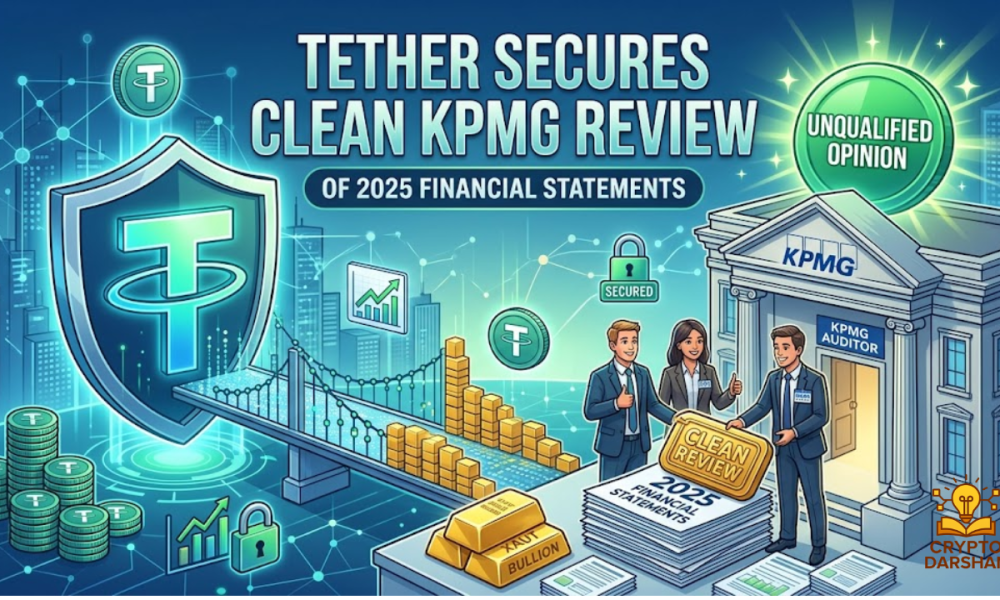
Tether, the company behind the world’s largest stablecoin, says KPMG US has completed a full independent audit of its 2025 financial statements. The accounting firm issued an unqualified opinion, giving Tether its strongest external assurance yet on the financial information supporting USDT.
The announcement marks a major development for the stablecoin industry. Tether has faced years of questions about the assets backing USDT, how those assets are managed and whether its reserves are sufficient to cover token liabilities. The new audit may help improve confidence among users, institutions and regulators, although it does not remove every question surrounding the issuer.
KPMG Audits Tether’s 2025 Accounts
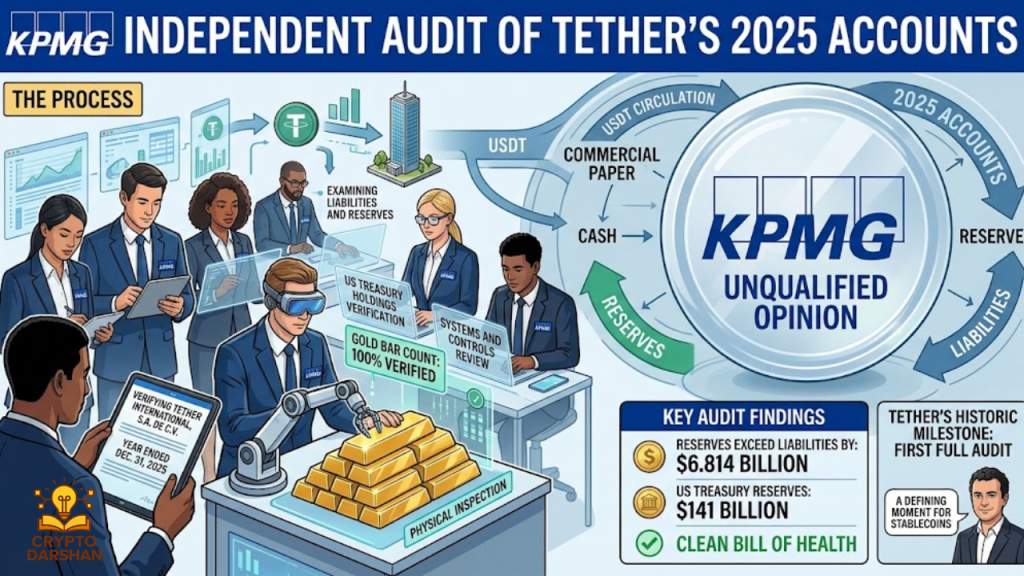
Tether said KPMG US audited the financial statements of Tether International, S.A. de C.V. for the year ended December 31, 2025. The review was conducted under US accounting standards and covered the company’s financial position, operating results and cash flows.
The audit examined more than a simple list of reserve assets. According to Tether, KPMG reviewed transactions, internal systems, ownership records, asset valuations, counterparties and supporting evidence connected to the statements.
The work also covered the company’s complete financial statements, including:
- The balance sheet.
- The income statement.
- Changes in shareholders’ equity.
- Cash-flow information.
- Assets backing issued USDT.
- Liabilities represented by the tokens in circulation.
Tether described the engagement as the largest inaugural financial audit in history. The company said the audit represents an important milestone after years of relying mainly on quarterly reserve attestations.
What an Unqualified Opinion Means
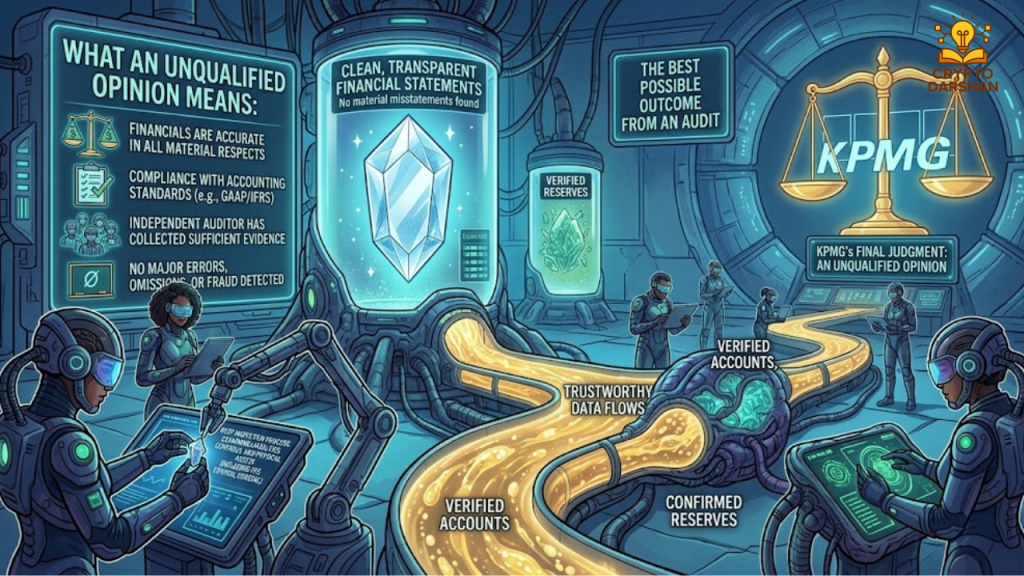
KPMG issued an “unqualified opinion” on Tether’s 2025 statements. In simple terms, this means the auditor concluded that the statements present Tether’s financial position fairly, in all material respects, under the applicable accounting framework.
This is generally considered the most favorable type of audit opinion. It suggests that KPMG did not identify a material problem that required a qualified opinion, adverse opinion or disclaimer.
However, an unqualified opinion should not be misunderstood. It does not guarantee that Tether will never face losses, market stress or operational problems. It also does not represent an investment recommendation or a promise that USDT will always trade at exactly one dollar.
An audit provides assurance about financial statements for a specific period. It does not guarantee the future value of every asset, eliminate business risk or confirm that every aspect of a company’s operations is free from risk.
Reserves Exceeded Liabilities by $6.814 Billion
Tether said its audited reserves exceeded its liabilities by $6.814 billion as of December 31, 2025. This figure represents the difference between the assets reported by the company and its obligations at the end of the audited period.
For stablecoin users, the reserve cushion is closely watched. USDT is designed to maintain a value close to one US dollar, and users generally expect the issuer to hold assets that support the tokens in circulation.
A positive reserve balance can provide additional protection against certain financial pressures. Still, the quality, liquidity and composition of those assets remain important. Cash-like assets may behave differently from commodities, securities or other investments during periods of market stress.
The reported $6.814 billion surplus therefore gives investors a useful headline figure, but it should be considered alongside the full composition of Tether’s reserves and its outstanding obligations.
KPMG Physically Counted Tether’s Gold
Tether also said KPMG physically inspected and counted every gold bar held by the company. The accounting firm reportedly verified the existence and identifying information of the gold holdings instead of relying only on records supplied by a custodian.
This detail is significant because physical verification provides a different level of evidence from simply reviewing spreadsheets or third-party statements. It allows auditors to compare reported holdings with assets that can be directly inspected.
Gold is one part of Tether’s broader reserve strategy. The company has previously reported holding a mix of assets, including US Treasury exposure, cash, precious metals and other investments.
The value of gold can change with market prices. As a result, its contribution to reserves may rise or fall over time. Physical verification confirms the existence of the bars, but it does not remove price risk or other issues linked to liquidity and valuation.
Why the Audit Matters for USDT
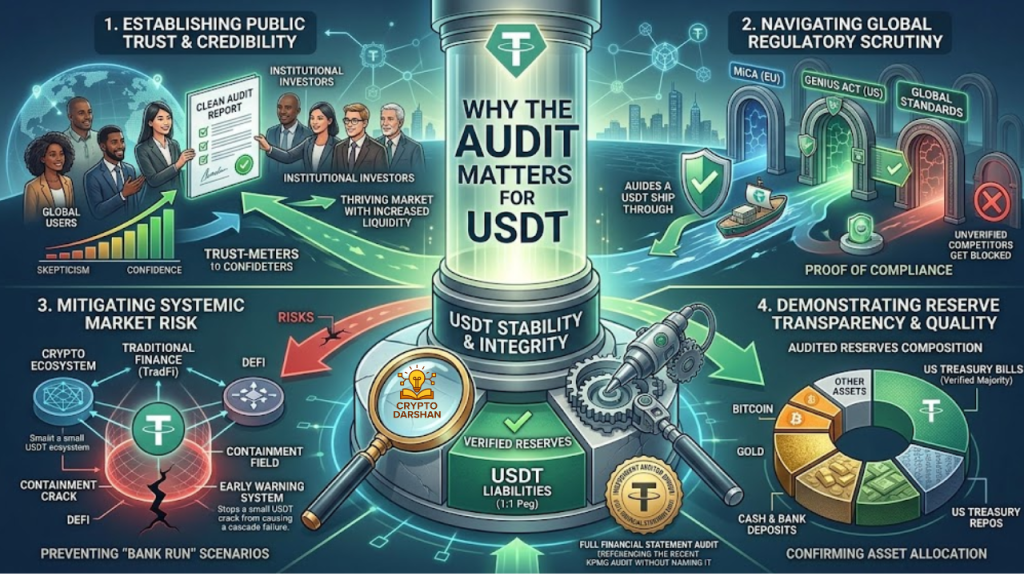
USDT is widely used in crypto trading, decentralized finance and cross-border payments. Traders often use the stablecoin to move funds between exchanges, while businesses and individuals use it for transfers and settlement.
Because of this broad use, confidence in Tether’s reserves is important beyond the company itself. If users question whether a stablecoin is adequately backed, demand for redemptions and market volatility can increase quickly.
A full audit from a major accounting firm could strengthen Tether’s position as regulators and financial institutions pay closer attention to stablecoins. It may also help the company respond to criticism that periodic attestations do not provide the same level of detail as a complete financial statement audit.
The development could influence the wider stablecoin sector as well. Other issuers may face greater pressure to publish clearer financial information, obtain independent reviews and explain how their reserves are held.
Transparency Questions Remain
Despite the positive audit opinion, Tether has not released the complete audited statements or the full opinion letter publicly, according to reports. The company’s announcement provides the main conclusions but does not give the public access to every underlying document.
That distinction matters. A summary can explain the result of an audit, but detailed statements allow analysts, regulators and users to examine the numbers directly.
The audit also covers Tether International’s 2025 financial statements. It does not automatically address every entity connected to the wider Tether group or provide a continuous guarantee of its present-day reserves.
Tether continues to publish quarterly reserve information, and future reports will be important for assessing whether its financial position remains strong after the end of 2025.
A Milestone, Not the End of Scrutiny

Tether’s first full KPMG audit is a significant step for the company and the stablecoin market. The unqualified opinion indicates that KPMG found the 2025 financial statements fairly presented under US accounting standards, while Tether reported reserves exceeding liabilities by $6.814 billion.
The audit may improve confidence in USDT, especially among professional investors and institutions. It also gives Tether a stronger foundation as stablecoin regulation develops worldwide.
At the same time, users and analysts will likely continue monitoring reserve disclosures, asset quality, liquidity and the publication of future audited statements. The latest review answers important questions about Tether’s 2025 financial reporting, but ongoing transparency will determine how lasting its impact becomes.