

Swing trading crypto is a trading strategy designed to capture medium-term price movements in the cryptocurrency market. Unlike day trading, which involves multiple trades within a single day, or long-term investing, which focuses on holding assets for months or years, swing trading aims to profit from price “swings” that occur over several days or weeks. The goal is to catch significant moves. often between 20% and 50%, without the constant stress of monitoring charts every minute.
The cryptocurrency market is known for its volatility, which makes it an ideal environment for swing traders. Prices can fluctuate dramatically within short periods, offering multiple opportunities to enter and exit trades profitably. Swing trading crypto allows traders to take advantage of these fluctuations while maintaining a balanced lifestyle, avoiding the burnout that often comes with day trading.
This guide explores everything about swing trading crypto, including strategies, tools, risk management, and psychology. It provides a step-by-step approach to help traders catch 20–50% moves without unnecessary stress.
What Is Swing Trading Crypto?

Swing trading is a well-known trading strategy that involves leveraging short- to medium-term price movements of a given asset. In general, trading tends to have its ups and downs. While a long-term financial outlook conditions us to look for incremental growth, it also makes us averse to short-term fluctuations. The typical holding period for a swing trade ranges from a few days to several weeks.
The main objective of swing trading crypto is to capture a portion of a potential price move. For example, if Bitcoin is trending upward, a swing trader might buy during a short-term dip and sell when the price reaches a resistance level. This approach allows traders to profit from both upward and downward market movements.
Swing trading crypto differs from other trading styles in several ways:
- Timeframe: Swing traders hold positions longer than day traders but shorter than long-term investors.
- Frequency: Fewer trades are made compared to scalping or day trading.
- Stress Level: Less screen time and emotional pressure.
- Profit Target: Typically aims for 20–50% gains per trade.
Why Swing Trading Crypto Works

Swing trading crypto works because the cryptocurrency market is highly volatile and driven by sentiment. Prices often move in waves, creating predictable patterns that traders can exploit. These swings occur due to factors such as news events, market manipulation, and investor psychology.
1. Market Volatility
Cryptocurrencies like Bitcoin, Ethereum, and altcoins experience frequent price fluctuations. This volatility creates multiple opportunities for swing traders to enter and exit trades profitably.
2. Technical Predictability
Crypto markets often follow technical patterns such as support and resistance, moving averages, and Fibonacci retracements. Swing traders use these tools to identify potential reversal or continuation points.
3. Emotional Market Behavior
Crypto traders often react emotionally to news and price movements. This behavior leads to overbought and oversold conditions, which swing traders can exploit by entering trades at optimal times.
4. Liquidity
Major cryptocurrencies have high liquidity, allowing traders to enter and exit positions easily without significant slippage.
Advantages of Swing Trading Crypto

Swing trading crypto offers several advantages that make it appealing to both beginners and experienced traders.
1. Reduced Stress
Unlike day trading, swing trading does not require constant monitoring of charts. Traders can analyze the market once or twice a day, reducing emotional fatigue.
2. Higher Profit Potential
By holding trades for several days or weeks, swing traders can capture larger price movements, often between 20% and 50%.
3. Flexibility
Swing trading crypto can be done part-time, making it suitable for individuals with other commitments.
4. Lower Transaction Costs
Fewer trades mean lower fees, which can significantly improve profitability over time.
5. Works in Any Market Condition
Swing trading can be applied in both bullish and bearish markets. Traders can go long during uptrends and short during downtrends.
Disadvantages of Swing Trading Crypto

While swing trading crypto has many benefits, it also comes with certain drawbacks.
1. Overnight Risk
Since trades are held for several days, unexpected news or events can cause sudden price movements against open positions.
2. Requires Patience
Swing trading requires waiting for setups to develop, which can be challenging for impatient traders.
3. Market Gaps
Crypto markets operate 24/7, but sudden price gaps can still occur, especially during low liquidity periods.
4. Emotional Discipline
Traders must manage emotions and avoid reacting impulsively to short-term price fluctuations.
How to Start Swing Trading Crypto

Step 1: Choose the Right Exchange
The first step in swing trading crypto is selecting a reliable cryptocurrency exchange. A good exchange should have strong security features, low trading fees, and a user-friendly interface. Popular options include Binance, Coinbase, Kraken, and Bybit. It’s important to ensure the exchange supports the cryptocurrencies intended for trading and offers advanced charting tools for technical analysis. Always enable two-factor authentication (2FA) to protect funds and personal information.
Step 2: Select Suitable Cryptocurrencies
Not all cryptocurrencies are ideal for swing trading. Focus on coins with high liquidity and trading volume, such as Bitcoin (BTC), Ethereum (ETH), and other major altcoins. These assets tend to have more predictable price movements and tighter spreads, making them easier to trade. Avoid low-volume or newly launched tokens, as they can be highly volatile and difficult to exit at the desired price.
Step 3: Learn Technical Analysis
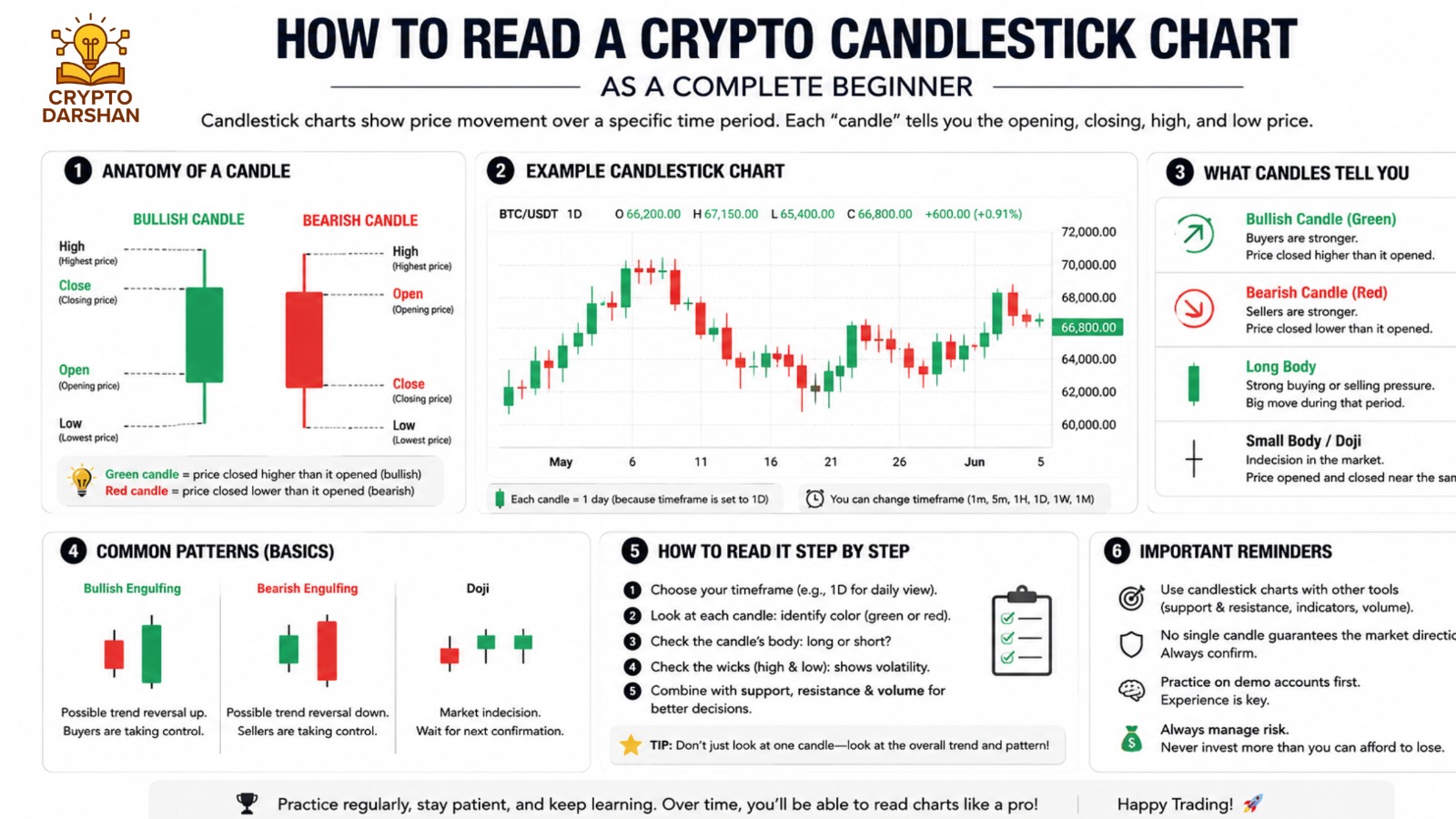
Technical analysis is the foundation of swing trading crypto. It involves studying price charts and using indicators to identify potential entry and exit points. Learn how to read candlestick patterns, recognize support and resistance levels, and use tools like moving averages, RSI (Relative Strength Index), and MACD (Moving Average Convergence Divergence). Understanding these concepts helps in predicting market trends and making informed trading decisions.
Step 4: Develop a Trading Plan

A trading plan acts as a roadmap for every trade. It defines when to enter and exit a position, how much capital to risk, and what profit targets to aim for. A solid plan includes clear rules for stop-loss and take-profit levels. Having a structured plan prevents emotional decision-making and ensures consistency. Review and adjust the plan regularly based on performance and changing market conditions.
Step 5: Use a Demo Account
Before trading with real money, practice using a demo account. Most exchanges and trading platforms offer demo or paper trading features that simulate real market conditions. This allows testing of strategies without financial risk. Practicing helps build confidence, refine techniques, and understand how different indicators behave in various market scenarios.
Step 6: Manage Risk
Risk management is crucial in swing trading crypto. Never risk more than 1–2% of total capital on a single trade. Use stop-loss orders to limit potential losses and protect profits with trailing stops when the market moves favorably. Diversify trades across multiple cryptocurrencies to reduce exposure to a single asset. Proper risk management ensures long-term survival and consistent growth in trading capital.
Risk management is key, so don’t skip our crypto risk management strategies for traders.
Step 7: Keep a Trading Journal
Maintaining a trading journal helps track performance and identify patterns in decision-making. Record details such as entry and exit points, reasons for taking the trade, profit or loss, and emotional state during the trade. Reviewing this data regularly helps improve strategy, discipline, and overall trading efficiency.
Key Strategies for Swing Trading Crypto

Several strategies can be used to profit from swing trading crypto. Each strategy focuses on identifying price swings and capturing profits efficiently.
1. Trend Following Strategy
This strategy involves trading in the direction of the prevailing trend. Traders use moving averages to identify whether the market is in an uptrend or downtrend.
- Buy Signal: When the short-term moving average crosses above the long-term moving average.
- Sell Signal: When the short-term moving average crosses below the long-term moving average.
2. Breakout Trading
Breakout trading focuses on entering trades when the price breaks above resistance or below support levels. This often signals the start of a new trend.
- Entry Point: When the price closes above resistance or below support.
- Stop-Loss: Just below the breakout level.
- Take Profit: Based on previous swing highs or lows.
3. Pullback Trading
Pullback trading involves entering trades during temporary retracements within a trend. Traders buy during dips in an uptrend or sell during rallies in a downtrend.
- Entry Point: Near support in an uptrend or resistance in a downtrend.
- Stop-Loss: Below the recent swing low or high.
4. RSI Divergence Strategy
The Relative Strength Index (RSI) helps identify overbought and oversold conditions. Divergence between price and RSI can signal potential reversals.
- Bullish Divergence: Price makes lower lows while RSI makes higher lows.
- Bearish Divergence: Price makes higher highs while RSI makes lower highs.
5. Fibonacci Retracement Strategy
Fibonacci retracement levels help identify potential reversal zones. Common retracement levels include 38.2%, 50%, and 61.8%.
- Entry Point: Near key Fibonacci levels.
- Stop-Loss: Below the next retracement level.
Tools and Indicators for Swing Trading Crypto

Successful swing trading crypto relies on using the right tools and indicators. These tools help identify trends, reversals, and entry points.
1. Moving Averages
Moving averages smooth out price data to identify trends. The 50-day and 200-day moving averages are commonly used.
2. Relative Strength Index (RSI)
RSI measures momentum and identifies overbought or oversold conditions. Values above 70 indicate overbought conditions, while values below 30 indicate oversold conditions.
3. MACD (Moving Average Convergence Divergence)
MACD helps identify trend direction and momentum. A bullish signal occurs when the MACD line crosses above the signal line.
4. Bollinger Bands
Bollinger Bands measure volatility. When the price touches the lower band, it may indicate a buying opportunity; when it touches the upper band, it may signal selling pressure.
5. Volume Analysis
Volume confirms the strength of price movements. Increasing volume during a breakout indicates strong momentum.
Risk Management in Swing Trading Crypto

Risk management is crucial for long-term success in swing trading crypto. Without proper risk control, even profitable strategies can lead to losses.
1. Position Sizing
Determine the amount to risk per trade based on total capital. A common rule is to risk no more than 2% per trade.
2. Stop-Loss Orders
Always use stop-loss orders to limit potential losses. Place them below support levels for long trades and above resistance for short trades.
3. Take-Profit Targets
Set realistic profit targets based on technical analysis. Avoid greed and stick to the plan.
4. Diversification
Avoid putting all capital into one cryptocurrency. Diversify across multiple assets to reduce risk.
5. Emotional Control
Avoid revenge trading or chasing losses. Stick to the strategy and maintain discipline.
Psychology of Swing Trading Crypto

Trading psychology plays a vital role in swing trading crypto. Emotional control and patience are key to consistent success.
1. Patience
Swing trading requires waiting for setups to develop. Avoid entering trades impulsively.
2. Discipline
Follow the trading plan strictly. Do not deviate based on emotions or market noise.
3. Confidence
Confidence comes from experience and backtesting. Trust the strategy and avoid second-guessing decisions.
4. Managing Fear and Greed
Fear can prevent taking good trades, while greed can lead to overtrading. Balance both emotions through self-awareness.
You can also learn how hedge funds use on-chain data in 2026 to gain deeper insights.
Common Mistakes in Swing Trading Crypto

Avoiding common mistakes can significantly improve performance in swing trading crypto.
1. Overtrading
Taking too many trades increases risk and reduces focus. Quality over quantity is key.
2. Ignoring Risk Management
Failing to use stop-loss orders can lead to large losses.
3. Lack of a Trading Plan
Trading without a plan leads to inconsistent results.
4. Emotional Trading
Reacting emotionally to price movements often results in poor decisions.
5. Neglecting Market News
Ignoring fundamental events can lead to unexpected losses.
Best Cryptocurrencies for Swing Trading

Not all cryptocurrencies are suitable for swing trading. The best ones have high liquidity, volatility, and strong market capitalization.
1. Bitcoin (BTC)
The most traded cryptocurrency with predictable price patterns.
2. Ethereum (ETH)
Offers strong liquidity and frequent price swings.
3. Binance Coin (BNB)
Volatile and often influenced by exchange-related news.
4. Solana (SOL)
High volatility makes it ideal for swing trading crypto.
5. Cardano (ADA)
Stable yet offers consistent swing opportunities.
Example of a Swing Trade Setup

- Identify Trend: Bitcoin is in an uptrend with higher highs and higher lows.
- Wait for Pullback: Price retraces to the 50-day moving average.
- Confirm Entry: RSI shows oversold conditions near 35.
- Enter Trade: Buy at support level.
- Set Stop-Loss: Below the recent swing low.
- Set Take-Profit: Near the previous resistance level.
- Exit Trade: When the target is reached or momentum weakens.
This setup demonstrates how swing trading crypto can capture 20–50% moves with minimal stress.
Backtesting and Optimization

Backtesting involves testing a trading strategy on historical data to evaluate its performance. It helps identify strengths and weaknesses before applying it in live markets.
Steps for Backtesting:
- Choose a cryptocurrency and timeframe.
- Apply the chosen strategy.
- Record entry, exit, and profit/loss data.
- Analyze results and adjust parameters.
- Optimize for better performance.
Automation in Swing Trading Crypto

Automation can simplify swing trading crypto by executing trades based on predefined rules. Trading bots can monitor markets 24/7 and reduce emotional bias.
Benefits of Automation:
- Consistent execution
- Faster reaction to signals
- Reduced emotional interference
- Ability to trade multiple assets simultaneously
However, automation requires careful setup and monitoring to ensure accuracy.
Long-Term Success in Swing Trading Crypto

Consistency and discipline are the foundations of long-term success in swing trading crypto. Traders must continuously learn, adapt, and refine their strategies.
Key Principles:
- Stick to the plan
- Manage risk effectively
- Keep emotions in check
- Review performance regularly
- Stay updated with market trends
Frequently Asked Questions (FAQ)

1. What is swing trading in crypto?
Swing trading is a strategy where traders hold cryptocurrencies for a few days to a few weeks to capture medium-term price movements. Instead of constant monitoring, it focuses on catching “swings” in the market trend.
2. How is swing trading different from day trading?
Swing trading requires less screen time compared to day trading. While day traders open and close positions within a single day, swing traders hold positions longer, aiming for bigger price moves (typically 20–50%).
3. Is swing trading suitable for beginners?
Yes, swing trading is often more beginner-friendly than day trading. It allows more time for decision-making and reduces emotional stress from rapid market changes.
4. How much capital do I need to start?
You can start with any amount, but having at least $100–$500 helps manage risk better and diversify trades. Always trade only what you can afford to lose.
5. What indicators are best for swing trading?
Common indicators include:
- Moving Averages (50-day, 200-day)
- RSI (Relative Strength Index)
- MACD (Moving Average Convergence Divergence)
- Support and Resistance levels
6. How do I find good swing trading opportunities?
Look for:
- Strong trends or clear reversals
- Breakouts from consolidation zones
- High-volume movements
- News or catalysts affecting specific coins
7. What timeframes are best for swing trading?
The most commonly used timeframes are:
- 4-hour (4H)
- Daily (1D)
- Weekly (for trend confirmation)
Conclusion
Swing trading crypto offers a balanced approach to trading digital assets. It allows traders to capture 20–50% moves without the constant stress of day trading. By combining technical analysis, risk management, and emotional discipline, traders can achieve consistent profitability.
The key to success in swing trading crypto lies in preparation, patience, and continuous improvement. With the right mindset and strategy, it is possible to navigate the volatile crypto market confidently and profitably.