
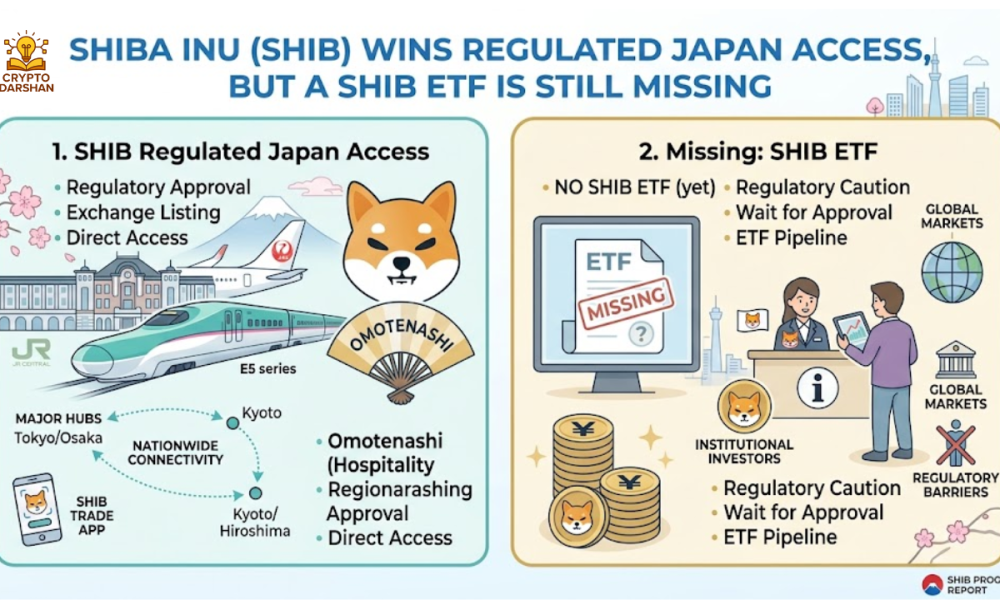
Shiba Inu has secured a major regulatory milestone in Japan, gaining access to a licensed trading venue, yet no SHIB ETF (exchange-traded fund) has been approved anywhere. The development strengthens SHIB’s standing in one of the world’s most tightly regulated crypto markets, even as investors continue to speculate about when—or if—a dedicated SHIB ETF could arrive.
What “Japan Access” Actually Means
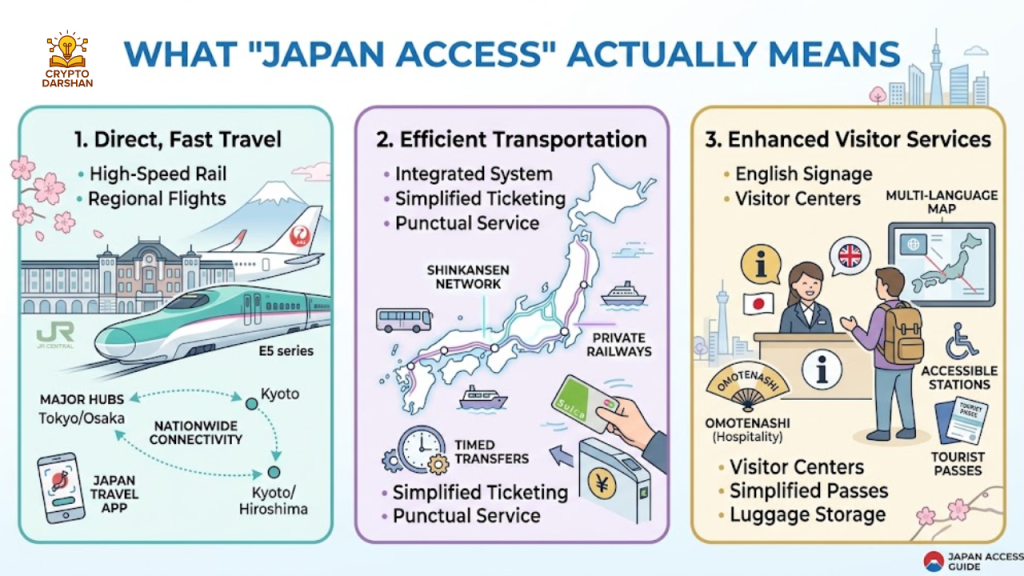
In late August 2026, Japan’s Financial Services Agency (FSA) registered Laser Digital Japan, the local arm of Nomura’s digital-asset subsidiary Laser Digital, as a crypto-asset exchange service provider. Under Japan’s Payment Services Act, this registration allows the platform to offer spot trading in a limited set of approved cryptocurrencies.
Laser Digital Japan named six supported assets: Bitcoin (BTC), Ethereum (ETH), XRP, Bitcoin Cash (BCH), Litecoin (LTC), and Shiba Inu (SHIB). For SHIB, this means Japanese retail and institutional clients now have a compliant, yen-based on-ramp to buy and sell the token through a regulated entity linked to one of Japan’s largest financial groups.
This is not an ETF. It is a regulated spot listing on a licensed exchange, which improves legitimacy and may reduce some of the regulatory uncertainty that has historically surrounded meme coins in strict jurisdictions.
Why Japan Matters for SHIB
Japan has long been a cautious but influential crypto market. Its regulators were early to license exchanges and impose strict consumer-protection rules after high-profile failures. Gaining access here signals that SHIB is no longer treated purely as a speculative meme asset by all overseers.
Several factors make this listing significant:
- Regulatory green light: SHIB sits on the Japan Virtual and Crypto Assets Exchange Association (JVCEA) “Green List,” a self-regulatory designation that places it in the same tier as BTC and ETH for certain compliance purposes.
- Tax treatment: Under Japan’s new crypto law passed in July 2026, cryptocurrencies were reclassified as financial instruments, paving the way for future crypto ETFs and more favorable, flat tax rates for eligible assets.
- Retail reach: Major Japanese platforms are already onboarding SHIB. Mercari, one of Japan’s largest marketplaces with around 23 million users, listed SHIB ETF in June 2026, widening everyday access.
Together, these moves help normalize SHIB in a market where regulatory clarity often drives institutional and retail participation.
The ETF Question: Progress, but No SHIB ETF Fund Yet
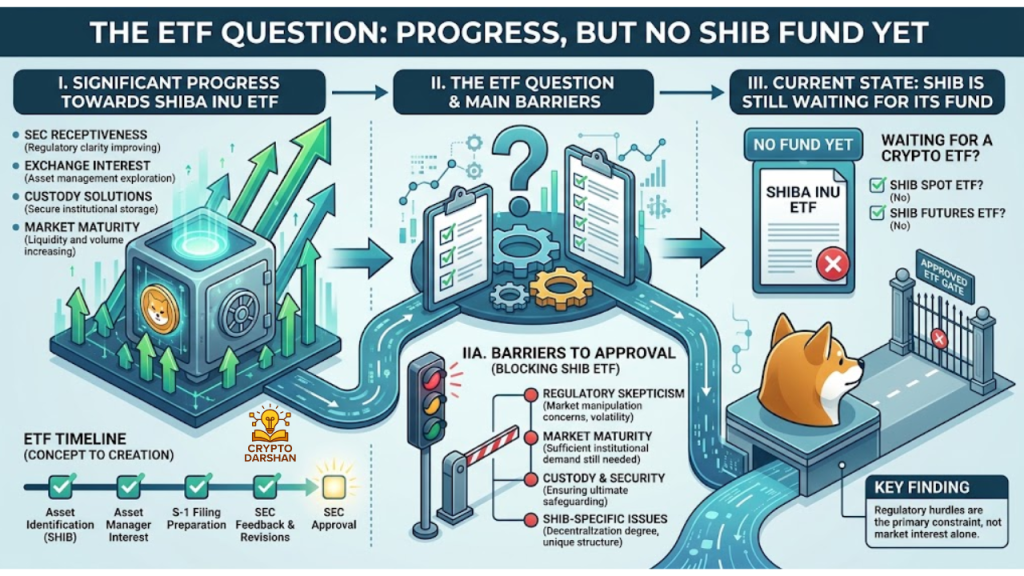
Despite the Japan listing, there is still no dedicated spot ETF for Shiba Inu in the United States, Japan, or most other major jurisdictions. However, community figures and analysts argue that SHIB is gradually moving in that direction.
Mazrael, a longtime Shiba Inu community member and Shiba Eternity advisor, has said SHIB is “well on track” for broader ETF-style exposure, even if a pure SHIB ETF does not exist today. He points to several developments:
- Inclusion in a U.S. ETF prospectus: SHIB was named as an eligible asset in the prospectus of T. Rowe Price’s TKNZ ETF, which the U.S. Securities and Exchange Commission (SEC) approved in June 2026. This does not guarantee the fund will hold SHIB, but it does mean the token is on the menu of assets the ETF is permitted to invest in.
- European exchange-traded product (ETP): SHIB already has exposure through at least one live crypto ETP in Europe, giving institutional and retail investors a regulated, exchange-listed way to gain indirect exposure.
- Futures access in Canada: SHIB futures contracts have become available to eligible clients in Canada via major platforms such as Coinbase, adding another regulated derivative avenue.
These steps do not equal a spot SHIB ETF, but they expand the ways institutions and sophisticated investors can access the token within regulated frameworks.
Japan’s New Crypto Law and the ETF Path
A key backdrop to SHIB’s Japan access is the country’s broader legal shift. On July 15, 2026, Japan’s National Diet moved cryptocurrencies under the Financial Instruments and Exchange Act (FIEA), the same law that governs stocks and traditional securities.
This change has two major implications:
- Structural foundation for crypto ETFs: By treating crypto as financial instruments, Japan created the legal basis for separate taxation rules and future crypto ETFs, similar to how equity ETFs operate today.
- Tax simplification: Assets on the Green List, including SHIB and SHIB ETF, can benefit from a flat 20% tax rate instead of the previous progressive rates that could reach as high as 55%, making crypto investing more predictable for Japanese residents.
Industry observers expect Bitcoin and Ethereum to lead any initial wave of Japanese crypto ETFs, with altcoins like SHIB potentially following if demand and regulatory comfort grow. First listings are widely seen as a 2027-or-later story, pending detailed rulemaking by the FSA.
What This Means for SHIB Holders and Traders
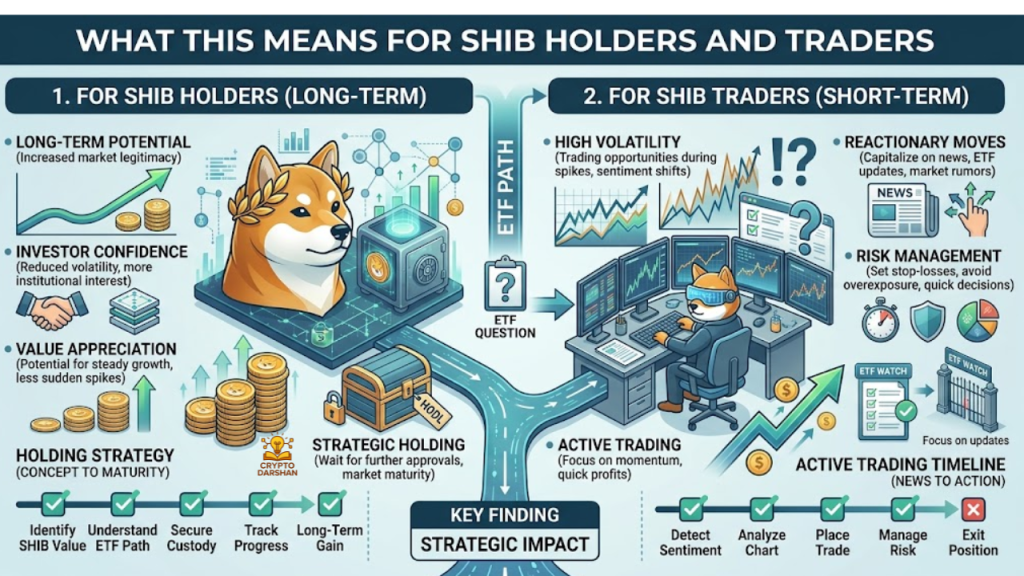
For everyday SHIB holders, the Japan listing does not instantly change the token’s price mechanics, but it does add credibility. Key takeaways include:
- Regulated on-ramp: Japanese investors now have a licensed, Nomura-backed venue to trade SHIB, which can improve liquidity and reduce reliance on offshore or less-regulated platforms.
- Institutional signaling: The presence of SHIB alongside BTC and ETH on a regulated Japanese exchange reinforces the narrative that the token is maturing beyond its meme origins.
- ETF narrative intact: While no SHIB ETF exists yet, the combination of U.S. prospectus inclusion, European ETPs, Canadian futures, and Japanese spot access keeps the longer-term ETF story alive.
At the same time, risks remain. SHIB’s price has already pulled back more than 20% from its late-August peak, and its burn rate has fluctuated sharply, creating uncertainty about short-term momentum. Regulatory progress does not eliminate volatility, especially for a high-supply meme coin.
The Bottom Line

Shiba Inu’s new regulated access in Japan marks a meaningful step toward mainstream acceptance, giving the token a compliant footprint in a major Asian economy. Yet despite this progress—and despite SHIB’s appearance in ETF-related documents and products elsewhere—no dedicated SHIB ETF has been approved.
For now, SHIB’s path looks incremental: more regulated venues, more derivative products, and gradual normalization in key markets. A true SHIB ETF may still be years away, but each new listing and legal milestone narrows the gap between meme coin and investable asset.