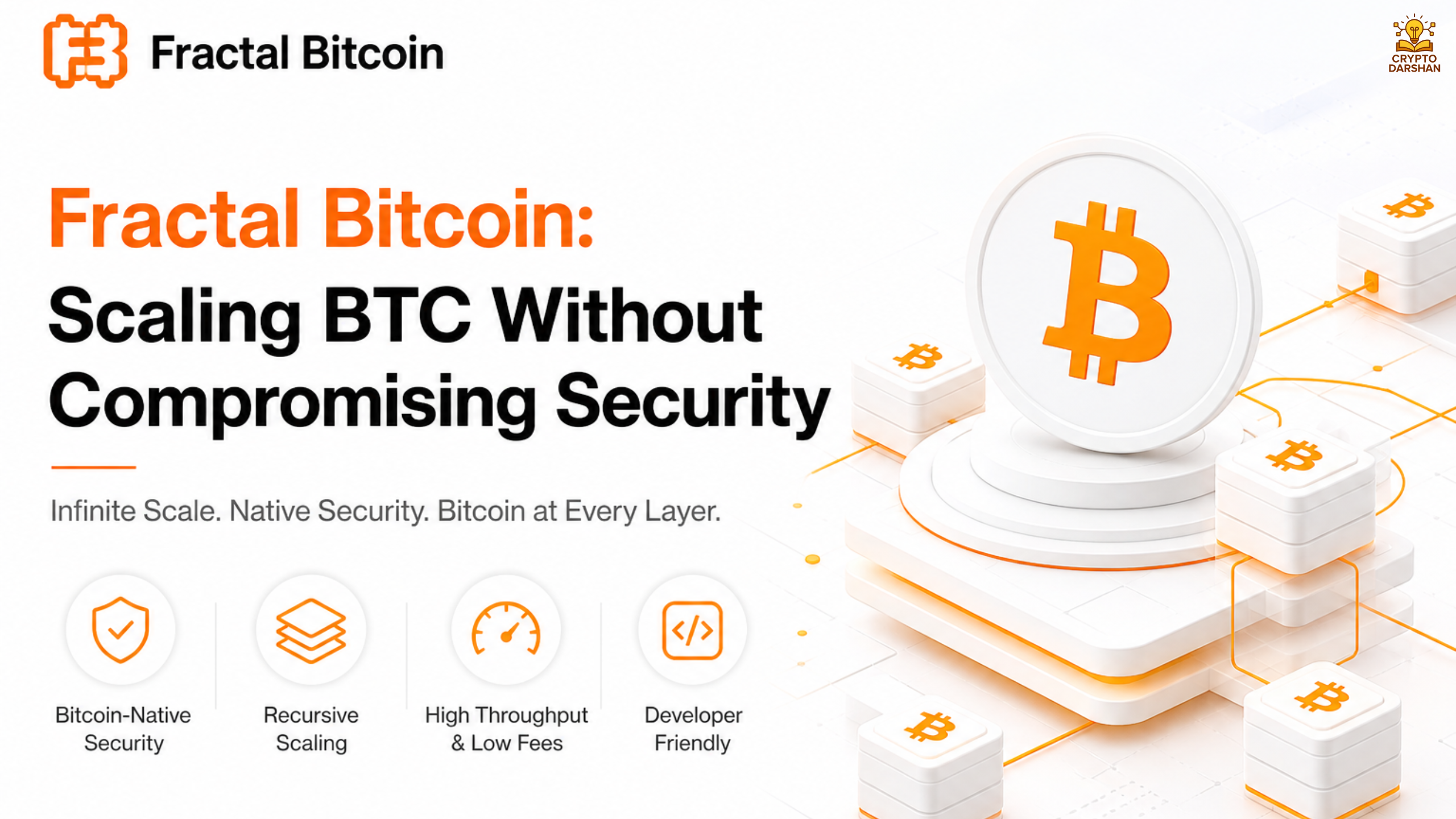
Bitcoin stands as the most secure and decentralized digital currency ever created. Since its launch in 2009, it has maintained an unbroken record of reliability, transparency, and immutability. Yet, as global adoption accelerates, Bitcoin faces a fundamental challenge—scalability. The network’s limited throughput and rising transaction fees during peak periods have fueled ongoing debates about how to scale Bitcoin without compromising its core principles of security and decentralization. As new scaling models emerge, Fractal Bitcoin introduces a recursive approach to expanding Bitcoin’s capacity. Similar blockchain scaling innovations are also evident in TON Blockchain Surge: Telegram’s Secret Weapon for Mass Adoption, where TON Blockchain leverages its multi-chain architecture to enhance throughput and support large-scale user adoption while maintaining decentralization.
Fractal Bitcoin introduces a revolutionary approach to this problem. It proposes a layered, modular architecture that allows Bitcoin to scale horizontally while maintaining the same level of trust and security that defines its base layer. This innovation could transform Bitcoin from a digital store of value into a truly global financial infrastructure capable of supporting millions of transactions per second.
This article explores Fractal Bitcoin in depth—its architecture, technology, benefits, challenges, and potential to redefine Bitcoin’s future.
The Bitcoin Scaling Problem

1. The Base Layer Bottleneck
Bitcoin’s base layer, or Layer 1, is intentionally conservative. It prioritizes security and decentralization over speed and throughput. Each block is limited to about 1 MB in size, and new blocks are added roughly every 10 minutes. This design ensures that anyone can run a full node without specialized hardware, preserving decentralization. However, it also limits the network to around 7 transactions per second (TPS), far below what is needed for global-scale payments.
2. The Trade-Off Between Security and Speed
Bitcoin’s Proof-of-Work (PoW) consensus mechanism is the cornerstone of its security. It ensures that altering the blockchain requires immense computational power, making attacks economically unfeasible. Yet, this same mechanism restricts scalability. Increasing block size or frequency could improve throughput but would also raise hardware requirements, reducing the number of participants who can run nodes and threatening decentralization.
3. The Need for Layered Scaling
To overcome these limitations, developers have turned to layered scaling solutions. The Lightning Network, sidechains, and rollups are examples of approaches that move transactions off the main chain while relying on it for final settlement. Fractal Bitcoin builds upon this concept, introducing a fractal-like structure that allows Bitcoin to scale organically without altering its base protocol.
What Is Fractal Bitcoin?

Fractal Bitcoin is a scaling solution designed to expand Bitcoin’s capabilities while keeping its core principles intact.
The term “fractal” refers to a self-similar structure that repeats at different scales. In this context, each fractal layer mirrors the security and consensus principles of Bitcoin’s base layer but operates at a smaller, faster scale. This design allows Bitcoin to scale horizontally—adding more layers as demand grows—without compromising its foundational security.
How Fractal Bitcoin Works

1. Layered Architecture
Fractal Bitcoin’s architecture consists of multiple layers stacked on top of the Bitcoin base chain:
- Layer 1 (Base Layer): The original Bitcoin blockchain, responsible for final settlement and ultimate security.
- Layer 2 (Fractal Layers): Independent layers that process transactions faster and more efficiently.
- Anchoring Mechanism: Each fractal layer periodically commits its state to the base layer, ensuring verifiability and immutability.
This structure allows Bitcoin to handle vastly more transactions without increasing the load on the base chain.
2. Security Anchoring
Each fractal layer periodically submits a cryptographic hash of its state to the Bitcoin blockchain. This process, known as anchoring, ensures that all transactions on the fractal layer can be verified against the immutable Bitcoin ledger. Even if a fractal layer experiences downtime or an attack, its data remains secure and recoverable.
3. Consensus Mechanisms
While Bitcoin’s base layer uses Proof-of-Work, fractal layers can adopt alternative consensus mechanisms optimized for speed and efficiency, such as Proof-of-Stake (PoS) or delegated validation. These mechanisms allow for faster block times and lower fees while still relying on Bitcoin’s PoW for ultimate security.
4. Cross-Layer Interoperability
Fractal Bitcoin enables seamless communication between layers. Users can move assets between layers with minimal friction, enabling diverse use cases such as micropayments, decentralized finance (DeFi), and tokenized assets—all secured by Bitcoin’s base layer.
Key Features of Fractal Bitcoin

1. Horizontal Scalability
Fractal Bitcoin scales horizontally by adding new layers as needed. Each layer can process thousands of transactions per second, collectively enabling millions of TPS across the network. This approach avoids the centralization risks associated with increasing block size or altering consensus rules.
2. Security Preservation
Every fractal layer inherits Bitcoin’s security through cryptographic anchoring. This ensures that even if a layer is compromised, its data remains verifiable and tamper-proof.
3. Low Fees and Fast Transactions
By offloading most transactions to upper layers, Fractal Bitcoin reduces congestion on the base chain. This results in lower fees and faster confirmation times, making Bitcoin practical for everyday use.
4. Developer Flexibility
Developers can build applications on fractal layers without modifying Bitcoin’s base protocol. This allows for innovation—such as smart contracts and DeFi—while maintaining backward compatibility.
5. Decentralization Maintenance
Each fractal layer can be operated by independent validators, ensuring that no single entity controls the network. This preserves Bitcoin’s decentralized ethos.
The Technology Behind Fractal Bitcoin

1. Cryptographic Anchoring
Anchoring links the state of a fractal layer to the Bitcoin base chain by embedding a hash of the fractal’s block data into a Bitcoin transaction. Once confirmed, this hash becomes immutable, providing a secure reference point for the fractal’s state.
2. Merkle Trees and Proofs
Fractal Bitcoin uses Merkle trees to efficiently verify transactions across layers. Each fractal layer maintains its own Merkle tree, which can be validated against the base layer’s anchored hash. This ensures data integrity without requiring full replication of all transactions.
3. Cross-Layer Communication Protocols
Cross-layer protocols enable assets and data to move seamlessly between layers. These protocols use cryptographic proofs to verify that transactions on one layer are valid on another, enabling trustless interoperability.
4. Smart Contract Integration
While Bitcoin’s base layer has limited scripting capabilities, Fractal layers can support more advanced smart contracts. This opens the door for decentralized applications (dApps) and DeFi platforms that leverage Bitcoin’s security while offering Ethereum-like functionality. As Bitcoin-native smart contract ecosystems evolve, privacy-preserving computation models explored in Multi-Party Computation (MPC): The Future of Secure Collaborative Computing demonstrate how Multi-Party Computation can enable secure off-chain coordination and confidential execution for more advanced decentralized applications.
Benefits of Fractal Bitcoin

1. Massive Throughput Increase
By distributing transactions across multiple fractal layers, Bitcoin’s effective throughput can increase exponentially. Each layer can process thousands of transactions per second, collectively enabling millions of TPS across the network.
2. Reduced Network Congestion
Fractal Bitcoin alleviates congestion on the base chain by handling most transactions off-chain. This ensures that the base layer remains efficient and secure, while users enjoy faster and cheaper transactions.
3. Improved User Experience
With faster confirmation times and lower fees, Fractal Bitcoin makes Bitcoin more user-friendly. Everyday transactions, such as buying coffee or sending remittances, become practical and affordable.
4. Enhanced Developer Ecosystem
Developers can build innovative applications on fractal layers without worrying about base layer limitations. This fosters a vibrant ecosystem of dApps, DeFi platforms, and tokenized assets—all secured by Bitcoin.
5. Long-Term Sustainability
Fractal Bitcoin’s modular design ensures that it can evolve over time. As technology advances, new fractal layers can be added or upgraded without disrupting the existing network.
Fractal Bitcoin vs. Other Scaling Solutions
| Feature | Fractal Bitcoin | Lightning Network | Sidechains | Rollups |
| Security | Anchored to Bitcoin base layer | Relies on payment channels | Independent consensus | Anchored via proofs |
| Scalability | Horizontal (multi-layer) | High for micropayments | Moderate | High |
| Decentralization | Preserved | Preserved | Varies | Preserved |
| Smart Contracts | Supported on fractal layers | Limited | Supported | Supported |
| Transaction Speed | High | Instant | High | High |
| Fees | Low | Very low | Low | Low |
Fractal Bitcoin combines the best aspects of these solutions. It offers the scalability of rollups, the security of anchoring, and the flexibility of sidechains—all within a unified framework.
Use Cases of Fractal Bitcoin
1. Everyday Payments
Fractal Bitcoin enables instant, low-cost payments suitable for daily transactions. Users can send and receive Bitcoin without waiting for long confirmation times or paying high fees.
2. Decentralized Finance (DeFi)
Fractal layers can host DeFi applications such as lending, borrowing, and decentralized trading platforms. These applications benefit from Bitcoin’s security while offering the flexibility of smart contracts. As Bitcoin-native DeFi expands on scalable infrastructure like Fractal, strategies explored in Kamino Finance on Solana: Automated Liquidity Goldmine show how Kamino Finance optimizes liquidity provisioning, capital efficiency, and yield generation across decentralized ecosystems.
3. Tokenization
Assets such as real estate, stocks, or collectibles can be tokenized on fractal layers. These tokens can be traded or transferred securely, with final settlement anchored to the Bitcoin blockchain.
4. Micropayments and Streaming
Fractal Bitcoin supports micropayments, enabling new business models like pay-per-use content, streaming payments, and micro-tipping.
5. Enterprise Solutions
Businesses can use private fractal layers for internal transactions, supply chain management, or data verification, all while maintaining Bitcoin-level security.
Economic and Environmental Impact

1. Lower Energy Consumption
While Bitcoin’s base layer relies on energy-intensive Proof-of-Work, fractal layers can use more energy-efficient consensus mechanisms. This reduces the overall environmental footprint of Bitcoin transactions.
2. Economic Inclusion
By lowering transaction fees and improving accessibility, Fractal Bitcoin can bring financial services to unbanked populations. Users in developing countries can transact globally without intermediaries.
3. Incentive Alignment
Fractal Bitcoin introduces new economic incentives for validators and miners. Validators on fractal layers earn fees for processing transactions, while miners continue to secure the base layer. This creates a balanced ecosystem that rewards participation at all levels.
Challenges and Considerations

1. Technical Complexity
Implementing and maintaining multiple fractal layers requires advanced technical infrastructure. Ensuring seamless interoperability and security across layers is a significant challenge.
2. Adoption and Awareness
For Fractal Bitcoin to succeed, it must gain widespread adoption among developers, businesses, and users. Education and community engagement are crucial.
3. Regulatory Uncertainty
As with all blockchain innovations, regulatory frameworks may lag behind technological progress. Clear guidelines will be needed to ensure compliance and trust.
4. Economic Incentives
Validators and miners must have proper incentives to participate in fractal layers. Designing sustainable reward mechanisms is essential for long-term viability.
5. Governance and Upgrades
Coordinating upgrades across multiple layers requires careful governance. Fractal Bitcoin must ensure that changes are implemented transparently and without centralization risks.
The Future of Bitcoin Scaling

Fractal Bitcoin represents a paradigm shift in how Bitcoin can scale. Instead of altering the base protocol, it builds upon it—creating a self-similar, layered ecosystem that grows organically. This approach aligns with Bitcoin’s philosophy of security, decentralization, and gradual evolution.
As more developers and institutions explore Fractal Bitcoin, it could become the foundation for a new era of Bitcoin-based innovation. From global payments to decentralized finance, the possibilities are vast.
1. Integration with Lightning and Rollups
Fractal Bitcoin can coexist with existing scaling solutions like the Lightning Network and rollups. Together, they form a multi-layered ecosystem that addresses different use cases—from instant micropayments to complex smart contracts.
2. Institutional Adoption
Financial institutions are increasingly exploring blockchain technology for settlement and asset management. Fractal Bitcoin’s scalability and security make it an attractive option for large-scale financial applications.
3. Global Financial Infrastructure
With its ability to handle millions of transactions per second, Fractal Bitcoin could serve as the backbone of a global financial system. It combines the trust of Bitcoin with the efficiency of modern payment networks.
The Road Ahead: Building a Fractal Future

Fractal Bitcoin is not just a technical upgrade—it represents a philosophical evolution of Bitcoin’s mission. It preserves the original vision of a decentralized, censorship-resistant currency while enabling the scalability needed for mass adoption.
1. Developer Ecosystem Growth
The success of Fractal Bitcoin depends on a thriving developer community. Open-source collaboration, developer grants, and educational initiatives will be key to building robust fractal layers and applications.
2. User Experience and Accessibility
For mainstream adoption, user interfaces must be intuitive. Wallets, exchanges, and payment processors will need to integrate fractal functionality seamlessly, allowing users to transact across layers without technical complexity.
3. Interoperability with Other Blockchains
Fractal Bitcoin could serve as a bridge between Bitcoin and other blockchain ecosystems. Through cross-chain protocols, assets and data could move freely between Bitcoin fractal layers and networks like Ethereum or Solana, creating a unified decentralized economy.
4. Security Research and Auditing
Continuous security audits and research are essential to maintain trust. Independent verification of fractal layer protocols will ensure that the system remains resilient against attacks and vulnerabilities.
5. Education and Community Engagement
Public understanding of Fractal Bitcoin will determine its adoption rate. Educational campaigns, workshops, and community-driven initiatives can help users and developers grasp its potential and functionality.
Broader Implications for the Bitcoin Ecosystem

Fractal Bitcoin could redefine how Bitcoin interacts with the broader digital economy. By enabling scalable smart contracts and tokenization, it could attract developers from other ecosystems and bring innovation back to Bitcoin. This would strengthen Bitcoin’s position as the foundation of decentralized finance.
Fractal Bitcoin also has the potential to influence monetary policy and global finance. As more assets become tokenized and settled on Bitcoin’s fractal layers, the network could evolve into a universal settlement layer for the world’s economy. Governments, corporations, and individuals could all rely on Bitcoin’s immutable ledger for transparent, secure, and efficient transactions.
As Bitcoin becomes more scalable through Fractal’s expanded transaction capacity, real-world adoption could accelerate significantly, reinforcing trends explored in Business Crypto Payments: Accepting BTC Without Volatility Risk, where businesses integrate Bitcoin payments more efficiently while reducing exposure to market volatility.
The introduction of fractal layers could also lead to new governance models. Communities could create specialized fractal layers for specific purposes—such as privacy, enterprise use, or DeFi—each governed by its own rules but anchored to Bitcoin’s immutable base. This modularity ensures flexibility while maintaining unity under Bitcoin’s security umbrella.
Frequently Asked Questions (FAQ)

1. What is Fractal Bitcoin?
Fractal Bitcoin Fractal Bitcoin is a Bitcoin-native scaling solution designed to expand Bitcoin’s transaction capacity through recursive virtualization of Bitcoin Core. Instead of modifying Bitcoin itself, it extends the existing architecture into additional scalable layers while preserving compatibility with Bitcoin’s infrastructure.
2. How does Fractal Bitcoin scale Bitcoin?
Fractal uses a recursive model where multiple Bitcoin Core instances operate in parallel. This creates additional transaction capacity, reduces congestion, and improves throughput without changing Bitcoin’s base consensus model. Fractal describes this as “virtualized Bitcoin Core” scaling.
3. Is Fractal Bitcoin a Layer 2 or sidechain?
Not exactly. Fractal positions itself as an extension of Bitcoin rather than a traditional Layer 2 or sidechain. It keeps Bitcoin’s logic and address compatibility intact while operating through merge-mined recursive layers.
4. Does Fractal Bitcoin compromise Bitcoin security?
No. Security remains a core design principle. Fractal leverages merge-mining, allowing Bitcoin miners to secure the Fractal network using the same SHA-256 mining infrastructure, helping inherit a portion of Bitcoin’s security model.
5. Why was Fractal Bitcoin created?
Fractal was built to address Bitcoin congestion caused by growing demand from Ordinals, BRC-20 tokens, and Runes. The goal is to provide more blockspace while keeping Bitcoin’s base layer stable and efficient.
6. What makes Fractal different from other Bitcoin scaling solutions?
Unlike many scaling solutions that use bridges or separate consensus systems, Fractal uses Bitcoin Core itself as the foundation. This preserves native compatibility and reduces the complexity often introduced by external chains.
7. Can developers build DeFi on Fractal Bitcoin?
Yes. Fractal supports Bitcoin-native DeFi, stablecoins, token standards, and gaming applications. It also enables expanded scripting capabilities like OP_CAT for more advanced smart contract logic.
8. Does Fractal support Ordinals and BRC-20?
Yes. Fractal is designed to support Bitcoin-native assets including Ordinals, BRC-20, and Runes without requiring major changes from developers.
Conclusion
Fractal Bitcoin offers a groundbreaking solution to one of Bitcoin’s most persistent challenges: scalability without compromising security. By introducing a layered, fractal architecture, it enables Bitcoin to process more transactions, support advanced applications, and remain true to its decentralized roots.
This approach not only enhances Bitcoin’s performance but also preserves its integrity as the world’s most secure and trusted blockchain. As adoption grows, Fractal Bitcoin could redefine what’s possible with Bitcoin—transforming it from a store of value into a scalable, global financial network that empowers individuals, businesses, and institutions alike.
Fractal Bitcoin is more than a scaling solution—it is the next evolutionary step in Bitcoin’s journey toward becoming the foundation of a decentralized global economy.