
The cryptocurrency market continues to evolve at a rapid pace, and Ethereum remains one of its most influential players. As the second-largest blockchain network by market capitalization, Ethereum has consistently shaped the direction of decentralized finance (DeFi), non-fungible tokens (NFTs), and smart contract innovation. The Ethereum Forecast 2026 is a topic of immense interest for investors, developers, and analysts seeking to understand where this powerful ecosystem is heading. With the transition to Ethereum 2.0, the rise of layer-2 scaling solutions, and the growing institutional adoption of blockchain technology, Ethereum’s trajectory over the next few years could redefine the digital economy.
This comprehensive analysis explores the advanced signals driving Ethereum’s next move, including macroeconomic trends, on-chain data, technical indicators, and ecosystem developments. The goal is to provide a clear, data-driven Ethereum Forecast 2026 that balances optimism with realism, helping readers make informed decisions in a volatile market.
The Evolution of Ethereum: From Genesis to 2026

Ethereum began with a 2013 white paper from Vitalik Buterin that proposed a general purpose blockchain capable of running smart contracts. Unlike Bitcoin, which primarily functions as a digital currency, Ethereum introduced programmability to blockchain technology. This innovation enabled developers to create decentralized applications (dApps) that operate without intermediaries.
Over the years, Ethereum has undergone several major upgrades, including Byzantium, Constantinople, Istanbul, and the highly anticipated Merge, which transitioned the network from proof-of-work (PoW) to proof-of-stake (PoS). This shift drastically reduced energy consumption and set the stage for scalability improvements. The Ethereum Forecast 2026 must therefore consider how these upgrades influence network performance, security, and adoption.
By 2026, Ethereum is expected to complete its full transition into a modular, scalable, and energy-efficient network. The introduction of sharding, rollups, and other layer-2 technologies will likely enhance transaction throughput and reduce gas fees, making Ethereum more accessible to mainstream users.
Macroeconomic Context and Its Impact on Ethereum

The Ethereum Forecast 2026 cannot be separated from the broader macroeconomic environment. Global financial markets are undergoing structural changes driven by inflation, interest rate adjustments, and geopolitical tensions. Cryptocurrencies, once considered speculative assets, are increasingly viewed as alternative investments and hedges against traditional financial instability.
1. Inflation and Monetary Policy
As central banks around the world adjust interest rates to combat inflation, risk assets like cryptocurrencies experience volatility. Ethereum’s price movements often correlate with liquidity cycles. When monetary policy tightens, speculative investments tend to decline. However, Ethereum’s utility-driven demand, stemming from DeFi, NFTs, and enterprise adoption provides a buffer against purely speculative downturns. Traders closely monitor futures markets during periods of changing monetary policy because funding rates, open interest, and liquidations often provide early signals of market sentiment. Learn more in Crypto Futures Trading: Advanced Perpetual Contracts.
2. Institutional Adoption
Institutional investors are gradually integrating Ethereum into their portfolios. The launch of Ethereum-based exchange-traded funds (ETFs) and the growing acceptance of ETH as collateral in decentralized finance platforms signal a maturing market. By 2026, institutional participation could significantly influence the Ethereum Forecast 2026, stabilizing price fluctuations and increasing liquidity.
3. Regulatory Developments
Regulation remains a double-edged sword for Ethereum. On one hand, clear regulatory frameworks can attract institutional capital and foster innovation. On the other, overly restrictive policies could stifle growth. The Ethereum Forecast 2026 must account for evolving global regulations, particularly in the United States, Europe, and Asia, where governments are defining the legal status of digital assets.
On-Chain Metrics and Network Health

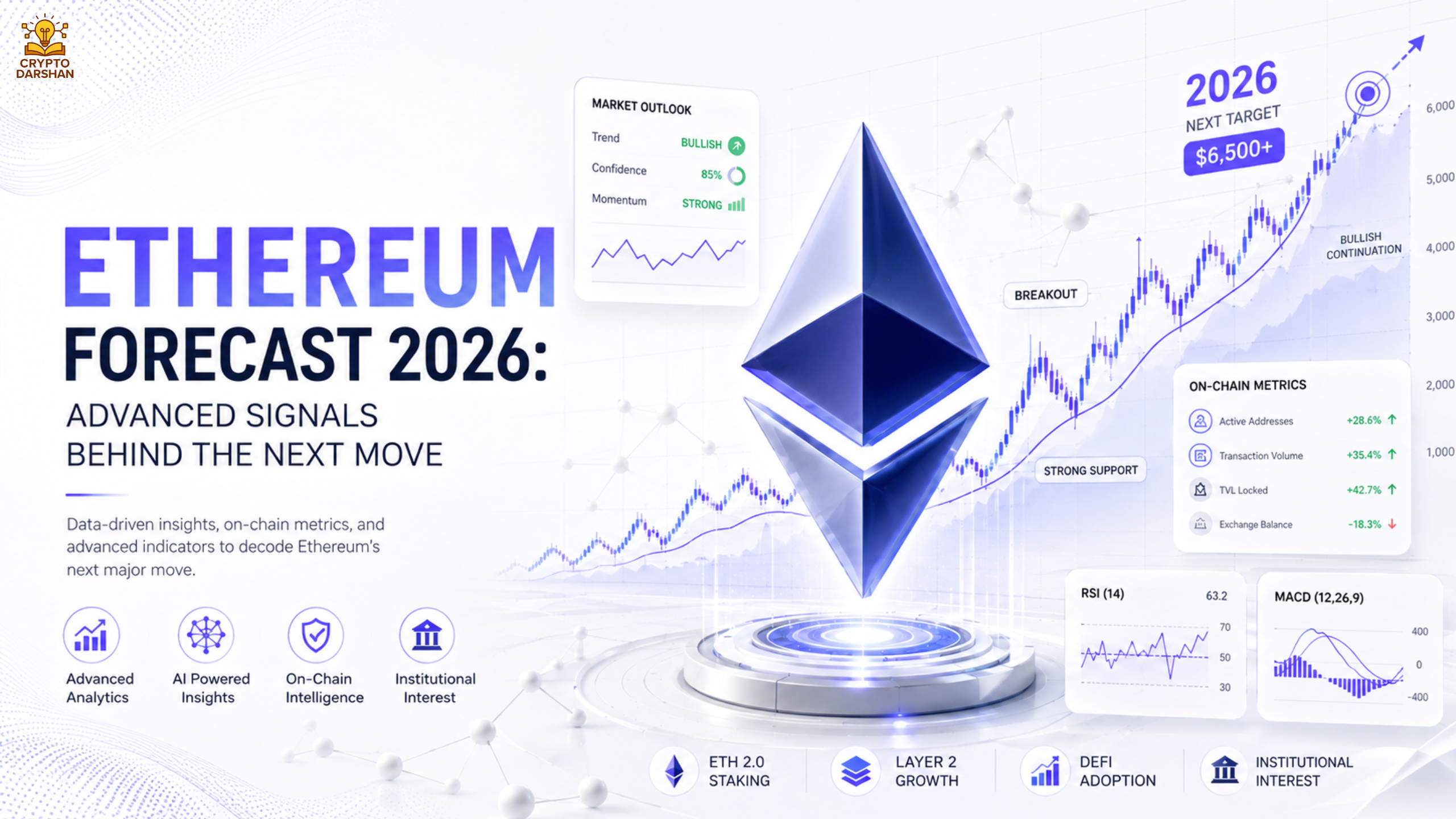
Analyzing on-chain data provides valuable insights into Ethereum’s underlying strength. Metrics such as active addresses, transaction volume, staking participation, and developer activity reveal the network’s vitality.
1. Active Addresses and Transaction Volume
The number of active Ethereum addresses has steadily increased, reflecting growing user engagement. Transaction volume, while fluctuating with market cycles, remains robust. These indicators suggest that Ethereum’s network activity is not solely driven by speculation but by genuine utility.
2. Staking and Validator Growth
Since the transition to proof-of-stake, Ethereum has seen a surge in staking participation. Millions of ETH are locked in validator nodes, reducing circulating supply and potentially exerting upward pressure on price. The Ethereum Forecast 2026 anticipates continued growth in staking as more investors seek passive income through network participation.
3. Developer Ecosystem
Ethereum’s developer community remains the largest in the blockchain industry. Thousands of developers contribute to open-source projects, build decentralized applications, and enhance network functionality. This vibrant ecosystem is a key factor in the Ethereum Forecast 2026, as innovation drives long-term value creation.
Technological Advancements Shaping Ethereum’s Future

Ethereum’s roadmap includes several transformative upgrades designed to enhance scalability, security, and sustainability. These technological milestones will play a crucial role in determining the Ethereum Forecast 2026.
1. Sharding Implementation
Sharding divides the Ethereum network into smaller, interconnected segments, allowing parallel transaction processing. This upgrade is expected to dramatically increase throughput, potentially enabling thousands of transactions per second. By 2026, full sharding implementation could make Ethereum one of the most efficient blockchains in existence.
2. Layer-2 Scaling Solutions
Layer-2 technologies such as Optimistic Rollups, zk-Rollups, and sidechains are already alleviating congestion on the main Ethereum chain. These solutions bundle multiple transactions into a single batch, reducing gas fees and improving speed. The Ethereum Forecast 2026 predicts that layer-2 adoption will become mainstream, supporting mass-market applications like gaming, social media, and decentralized finance.
3. Interoperability and Cross-Chain Bridges
Interoperability is essential for the future of blockchain. Ethereum’s integration with other networks through cross-chain bridges enhances liquidity and expands its ecosystem. By 2026, Ethereum could serve as the foundational layer for a multi-chain universe, connecting diverse blockchains into a unified digital economy.
The Role of DeFi and NFTs in Ethereum’s Growth
Decentralized finance and non-fungible tokens have been two of Ethereum’s most significant innovations. Their continued evolution will heavily influence the Ethereum Forecast 2026.
1. DeFi Expansion
DeFi platforms built on Ethereum enable users to lend, borrow, trade, and earn yields without intermediaries. The total value locked (TVL) in DeFi protocols has grown exponentially, demonstrating strong demand for decentralized financial services. By 2026, DeFi could rival traditional banking systems in efficiency and accessibility, further solidifying Ethereum’s dominance.
2. NFT Market Maturity
The NFT boom of 2021 introduced millions to blockchain technology. While the initial hype has cooled, NFTs are evolving beyond digital art into areas like gaming, real estate, and intellectual property. The Ethereum Forecast 2026 anticipates a mature NFT ecosystem integrated with real-world assets and enterprise applications.
3. Tokenization of Real-World Assets
Tokenization allows physical assets such as real estate, commodities, and securities to be represented on the blockchain. Ethereum’s robust smart contract infrastructure makes it the ideal platform for this transformation. By 2026, tokenized assets could represent trillions in value, reinforcing Ethereum’s position as the backbone of decentralized finance.
Technical Analysis: Chart Patterns and Price Projections

Technical analysis remains a cornerstone of any Ethereum Forecast 2026. By examining historical price patterns, moving averages, and momentum indicators, analysts can identify potential future trends.
1. Historical Price Trends
Ethereum’s price history reveals cyclical patterns aligned with Bitcoin’s halving events and broader market sentiment. After each major correction, Ethereum has historically entered a new growth phase driven by technological innovation and adoption.
2. Key Support and Resistance Levels
As of recent data, Ethereum’s major support levels lie around $2,000, while resistance levels are observed near $4,000. A breakout above these thresholds could signal the beginning of a new bullish cycle leading into 2026.
3. Long-Term Price Projections
Based on current fundamentals and adoption trends, analysts project Ethereum’s price could range between $6,000 and $10,000 by 2026 under favorable conditions. However, the Ethereum Forecast 2026 also considers bearish scenarios, where regulatory challenges or technological setbacks could limit growth.
Sentiment Analysis and Market Psychology

Market sentiment plays a crucial role in shaping Ethereum’s price movements. Social media trends, investor behavior, and institutional commentary all contribute to the collective psychology driving the market.
1. Retail Investor Sentiment
Retail investors remain a powerful force in the crypto market. Positive sentiment often leads to rapid price appreciation, while fear and uncertainty can trigger sharp declines. Monitoring sentiment indicators such as the Fear and Greed Index provides valuable context for the Ethereum Forecast 2026.
2. Institutional Confidence
Institutional sentiment toward Ethereum has improved significantly. Major financial institutions are exploring Ethereum-based products, and corporate treasuries are beginning to hold ETH as a strategic asset. This growing confidence supports a bullish long-term outlook.
3. Media Influence
Media coverage can amplify market movements. Positive news about technological upgrades or partnerships tends to attract new investors, while negative headlines can cause panic selling. The Ethereum Forecast 2026 must therefore account for the influence of media narratives on market dynamics. The increasing involvement of professional investment firms is one of the strongest indicators of crypto market maturity. Discover why in Why Crypto Asset Management Is the Fastest Growing Segment of Traditional Finance in 2026.
Competitive Landscape: Ethereum vs. Emerging Blockchains
Ethereum faces increasing competition from newer blockchains offering faster speeds and lower fees. However, its first-mover advantage and robust ecosystem continue to provide a strong foundation.
1. Competing Networks
Blockchains such as Solana, Avalanche, and Cardano have gained traction by addressing Ethereum’s scalability issues. Yet, many of these networks rely on trade-offs in decentralization or security. The Ethereum Forecast 2026 suggests that Ethereum’s ongoing upgrades will close the performance gap while maintaining its core principles.
2. Network Effects and Ecosystem Strength
Ethereum’s vast developer community, extensive dApp ecosystem, and established user base create powerful network effects. These advantages make it difficult for competitors to displace Ethereum as the leading smart contract platform.
3. Collaboration and Integration
Rather than viewing competitors as threats, Ethereum’s future may involve collaboration. Cross-chain interoperability allows multiple blockchains to coexist, each serving specialized functions. This cooperative model strengthens the overall blockchain ecosystem and supports a positive Ethereum Forecast 2026.
Environmental Sustainability and Social Impact

Ethereum’s transition to proof-of-stake has drastically reduced its energy consumption, addressing one of the most significant criticisms of blockchain technology. This shift enhances Ethereum’s appeal to environmentally conscious investors and institutions.
1. Energy Efficiency
The proof-of-stake mechanism consumes over 99% less energy than proof-of-work. This improvement aligns Ethereum with global sustainability goals and positions it as a leader in green blockchain innovation.
2. Social and Economic Inclusion
Ethereum’s decentralized nature promotes financial inclusion by providing access to banking services for unbanked populations. The Ethereum Forecast 2026 envisions a world where Ethereum-powered applications empower individuals across developing economies.
3. Corporate Responsibility
As corporations adopt blockchain technology, Ethereum’s sustainability credentials will play a key role in enterprise decision-making. Environmentally responsible innovation enhances Ethereum’s long-term viability and reputation.
Risk Factors and Challenges

No Ethereum Forecast 2026 would be complete without acknowledging potential risks. Understanding these challenges is essential for balanced analysis.
1. Regulatory Uncertainty
Unclear or restrictive regulations could hinder Ethereum’s growth. Governments may impose limitations on DeFi, NFTs, or staking, affecting network activity and investor confidence.
2. Technological Risks
While Ethereum’s upgrades promise scalability and efficiency, they also introduce complexity. Bugs, security vulnerabilities, or delays in implementation could impact network stability. Network security depends heavily on the effectiveness of consensus mechanisms and validator participation. Our guide on Blockchain Consensus 2026: How Networks Reach Agreement explains the technologies that help maintain blockchain reliability.
3. Market Volatility
Cryptocurrency markets are inherently volatile. External factors such as macroeconomic shocks, geopolitical events, or shifts in investor sentiment can cause rapid price fluctuations.
4. Competition and Innovation Pressure
Emerging technologies and rival blockchains pose ongoing challenges. Ethereum must continue to innovate to maintain its leadership position.
Expert Opinions and Industry Insights

Industry experts provide valuable perspectives that shape the Ethereum Forecast 2026. Analysts, developers, and institutional leaders offer diverse viewpoints on Ethereum’s future trajectory.
1. Analyst Predictions
Many analysts remain optimistic about Ethereum’s long-term potential, citing its strong fundamentals and continuous innovation. Some forecast Ethereum reaching new all-time highs by 2026, driven by mass adoption and institutional investment.
2. Developer Perspectives
Developers emphasize Ethereum’s adaptability and community-driven governance as key strengths. The open-source nature of the network ensures that it evolves in response to user needs and technological advancements.
3. Institutional Outlook
Financial institutions view Ethereum as a cornerstone of the digital asset ecosystem. Its role in tokenization, decentralized finance, and smart contracts positions it as a critical infrastructure layer for the future of finance.
Scenario Analysis: Bullish, Neutral, and Bearish Outcomes

To provide a comprehensive Ethereum Forecast 2026, it is essential to consider multiple scenarios based on varying assumptions.
1. Bullish Scenario
In the bullish case, Ethereum successfully implements all planned upgrades, achieves mass adoption, and benefits from favorable regulation. Under these conditions, Ethereum’s price could exceed $10,000, with widespread use across industries.
2. Neutral Scenario
In a moderate scenario, Ethereum continues to grow steadily but faces competition and regulatory hurdles. Prices may stabilize between $5,000 and $7,000, reflecting sustainable but cautious optimism.
3. Bearish Scenario
In the bearish outlook, technological delays, regulatory crackdowns, or market downturns could limit Ethereum’s progress. Prices might remain below $3,000, with slower adoption rates.
Strategic Investment Considerations

Investors analyzing the Ethereum Forecast 2026 should adopt a strategic approach that balances risk and reward.
1. Long-Term Holding
Ethereum’s strong fundamentals make it a viable long-term investment. Holding ETH through market cycles allows investors to benefit from compounding network growth.
2. Diversification
Diversifying across multiple assets and sectors within the Ethereum ecosystem, such as DeFi tokens, NFTs, and layer-2 projects can mitigate risk while capturing growth opportunities.
3. Staking and Yield Generation
Participating in Ethereum staking or liquidity provision offers passive income opportunities. These strategies align with the network’s proof-of-stake model and contribute to ecosystem stability.
The Road to 2026: Key Milestones to Watch

Several milestones will shape the Ethereum Forecast 2026 over the next few years:
- Full Implementation of Sharding and Scalability Upgrades
Sharding will divide the Ethereum network into multiple smaller chains, allowing parallel processing of transactions. This will significantly increase throughput and reduce congestion, making Ethereum more efficient and cost-effective. By 2026, full sharding implementation could enable Ethereum to handle thousands of transactions per second, supporting global-scale applications.
- Expansion of Layer-2 Adoption and Interoperability Solutions
Layer-2 technologies such as rollups and sidechains are essential for scaling Ethereum. Their expansion will reduce gas fees and improve transaction speed. Interoperability solutions will connect Ethereum with other blockchains, creating a seamless multi-chain ecosystem that enhances liquidity and user experience. As blockchain ecosystems become increasingly interconnected, secure asset storage becomes even more important for protecting digital wealth across multiple networks. Learn more in How Crypto Cold Storage Actually Works at the Hardware Level Most Users Never Understand.
- Regulatory Clarity in Major Markets
Clear and consistent regulations in key regions like the United States, Europe, and Asia will determine how Ethereum-based projects operate. Regulatory clarity will attract institutional investors, encourage innovation, and reduce legal uncertainty, strengthening Ethereum’s global position.
- Institutional Integration of Ethereum-Based Financial Products
The introduction of Ethereum ETFs, staking products, and tokenized securities will deepen institutional involvement. This integration will increase liquidity, stabilize prices, and legitimize Ethereum as a mainstream financial asset.
- Growth of Tokenized Real-World Assets
Tokenization will bring traditional assets such as real estate, commodities, and equities onto the blockchain. Ethereum’s smart contract capabilities make it the ideal platform for this transformation, potentially unlocking trillions in value and expanding its use cases beyond digital finance.
- Continued Innovation in DeFi and NFT Sectors
DeFi and NFTs will continue to evolve, introducing new financial instruments, governance models, and digital ownership frameworks. These innovations will drive user adoption and solidify Ethereum’s role as the foundation of decentralized applications.
Monitoring these developments will provide early signals of Ethereum’s next major move, offering valuable insights into its long-term growth trajectory and market potential.
Ethereum Forecast 2026: Advanced Signals Behind the Next Move – FAQ

1. What is the most important signal for an Ethereum forecast in 2026?
The most important signal is the divergence between Ethereum’s on-chain activity and its market price. While ETH experiences volatility, growth in active addresses, staking participation, and institutional adoption often serves as a leading indicator of future price movements.
2. How does staking affect Ethereum’s 2026 outlook?
Staking reduces the circulating supply of ETH by locking coins into validator nodes. As more investors stake their Ethereum, available market supply decreases, potentially creating upward price pressure when demand increases.
3. Why are institutional investors closely watching Ethereum?
Ethereum remains the dominant platform for decentralized finance (DeFi), stablecoins, and tokenized real-world assets. Institutions view Ethereum as critical infrastructure for the next phase of blockchain adoption.
4. What role do Ethereum ETFs play in the next move?
Spot Ethereum ETFs provide easier access for traditional investors. Strong ETF inflows can significantly increase demand for ETH, making ETF activity one of the most closely watched indicators in 2026.
5. Which on-chain metrics should investors monitor?
Important metrics include:
- Active addresses
- Daily transactions
- Staked ETH percentage
- Exchange inflows and outflows
- Stablecoin settlement volume
- Total Value Locked (TVL)
- Layer-2 network activity
These indicators help measure actual network usage and adoption.
6. Can Layer-2 growth boost Ethereum’s price?
Yes. Layer-2 solutions improve Ethereum’s scalability and reduce transaction costs. Increased Layer-2 adoption often attracts more users and developers, strengthening Ethereum’s overall ecosystem and long-term value.
7. What technical indicators are signaling Ethereum’s next move?
Traders commonly monitor:
- Relative Strength Index (RSI)
- Moving averages
- Volume profiles
- MACD crossovers
- Support and resistance zones
- Market structure trends
Combining technical analysis with on-chain data provides a more complete forecast.
8. How important are Ethereum network upgrades in 2026?
Network upgrades remain a major catalyst. Improvements in scalability, efficiency, and validator performance can increase adoption while enhancing Ethereum’s competitiveness against other blockchain networks.
Conclusion
The Ethereum Forecast 2026 presents a dynamic and multifaceted outlook for one of the most transformative technologies of the digital age. Ethereum’s evolution from a programmable blockchain to a global decentralized infrastructure is reshaping finance, art, governance, and beyond. With its robust developer community, continuous innovation, and expanding real-world applications, Ethereum stands poised to lead the next wave of blockchain adoption.
While challenges remain ranging from regulatory uncertainty to technological complexity the long-term trajectory appears promising. The convergence of scalability, sustainability, and institutional adoption positions Ethereum as a cornerstone of the decentralized future. As 2026 approaches, the advanced signals behind Ethereum’s next move suggest a period of renewed growth, innovation, and global impact.