The Ethereum ecosystem continues to evolve, offering new ways for users to earn rewards and participate in network security. One of the most innovative developments in this space is EigenLayer Restaking, a protocol that allows Ethereum stakers to maximize their earnings by reusing their staked ETH to secure additional decentralized services. This concept, known as “restaking,” is transforming how staking works on Ethereum and creating new opportunities for both validators and investors.
In 2026, EigenLayer Restaking has become one of the most discussed topics in decentralized finance (DeFi). It introduces a new layer of utility for staked ETH, enabling users to earn multiple streams of rewards without compromising the security of the Ethereum network. This article explores how EigenLayer Restaking works, its benefits, risks, and its potential to reshape the future of Ethereum staking.
Understanding Ethereum Staking
What Is Ethereum Staking?
Ethereum staking is the process of locking up ETH to help secure the Ethereum network and validate transactions. Validators are chosen to propose and confirm new blocks, earning rewards in return. Since Ethereum transitioned to Proof of Stake (PoS) in 2022, staking has become a core part of the network’s operation.
To become a validator, a user must stake 32 ETH. However, smaller holders can participate through staking pools or liquid staking protocols like Lido, Rocket Pool, and Coinbase Staking. These platforms issue liquid staking tokens (LSTs) such as stETH or rETH, representing the user’s staked ETH and accumulated rewards.
The Limitations of Traditional Staking
While staking provides steady rewards, it also has limitations:
- Staked ETH is locked and cannot be used elsewhere.
- Validators earn only from Ethereum’s base rewards.
- The capital efficiency of staked ETH is low.
This is where EigenLayer Restaking introduces a breakthrough, allowing stakers to reuse their staked ETH to earn additional rewards from other decentralized services.
What Is EigenLayer Restaking?

The Concept of Restaking
EigenLayer is a protocol built on Ethereum that introduces restaking. This is a new on-chain primitive similar to rehypothecation, allowing either natively staked ETH or Liquid Staking Tokens (LSTs) to be restaked in return for additional yield. In simple terms, it allows stakers to use the same ETH to earn multiple layers of rewards.
Instead of staking ETH only for Ethereum’s consensus, EigenLayer Restaking lets users opt in to provide security for additional decentralized systems, known as Actively Validated Services (AVSs). These AVSs can include oracles, bridges, data availability layers, and other blockchain infrastructure projects.
How EigenLayer Restaking Works
The EigenLayer Restaking process involves three main participants:
- Stakers: Individuals who have already staked ETH or hold liquid staking tokens.
- Operators: Entities that run validator nodes and manage restaked assets.
- Actively Validated Services (AVSs): Decentralized services that require additional security.
Here’s how it works step by step:
- A user stakes ETH on Ethereum or through a liquid staking protocol.
- The user deposits their staked ETH or LSTs into the EigenLayer Restaking smart contract.
- The staked assets are then used to secure AVSs.
- The user earns additional rewards from these AVSs on top of their regular Ethereum staking rewards.
This creates a system where the same ETH contributes to multiple layers of network security, increasing capital efficiency and potential earnings.
The Benefits of EigenLayer Restaking

1. Double Earnings Potential
The most attractive feature of EigenLayer Restaking is the ability to earn multiple streams of income. Stakers continue to receive their Ethereum staking rewards while also earning additional rewards from AVSs. This “double earning” mechanism makes restaking one of the most profitable strategies in the Ethereum ecosystem.
2. Enhanced Capital Efficiency
Traditional staking locks ETH into a single purpose—securing the Ethereum network. EigenLayer Restaking unlocks new utility for staked ETH, allowing it to secure multiple services simultaneously. This increases the overall efficiency of capital in the Ethereum ecosystem.
3. Support for Decentralized Infrastructure
By participating in EigenLayer Restaking, users help secure emerging decentralized services. This strengthens the broader Ethereum ecosystem by providing shared security to new projects that might otherwise struggle to establish their own validator networks.
4. Flexibility and Accessibility
EigenLayer Restaking supports both native staked ETH and liquid staking tokens. This means users can participate whether they are solo validators or using platforms like Lido or Rocket Pool. The protocol’s design ensures flexibility and inclusivity for all types of stakers.
5. Incentivized Ecosystem Growth
As more AVSs join the EigenLayer Restaking ecosystem, the demand for restaked ETH increases. This creates a positive feedback loop where more users restake, more services gain security, and the entire network becomes more robust.
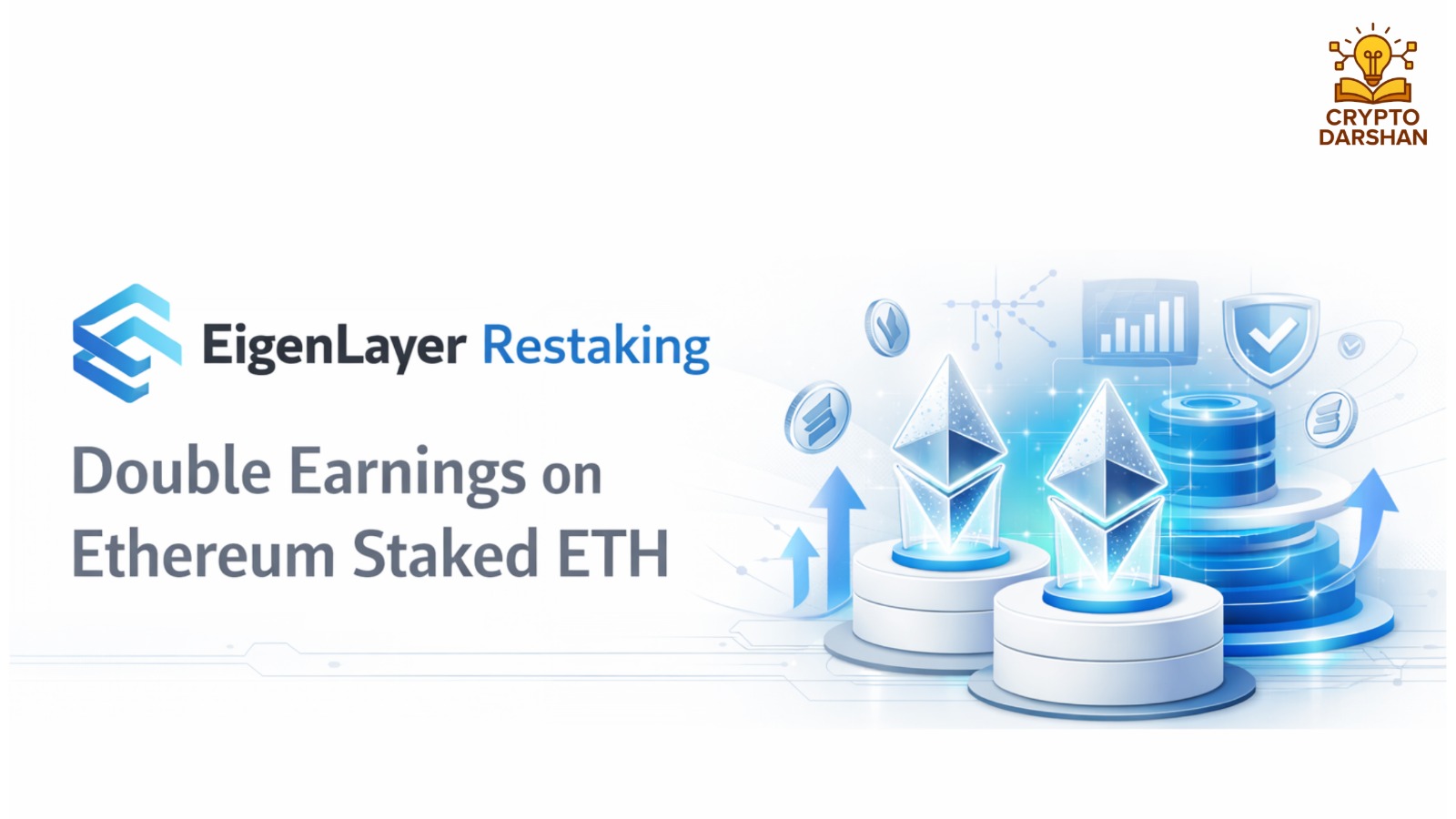
Double Earnings on Ethereum Staked ETH.
Double earnings on Ethereum staked ETH means earning two separate streams of rewards from the same staked ETH. Normally, when you stake ETH on the Ethereum network, you earn rewards for helping secure the blockchain. But with new technologies like EigenLayer Restaking, you can use that same staked ETH to earn additional rewards from other decentralized services effectively doubling your income potential.
Here’s how it works in simple terms:
1. Regular Ethereum Staking Rewards
When you stake ETH, you lock it up to help validate transactions and secure the Ethereum network.
In return, you earn:
- Base staking rewards (paid in ETH)
- Transaction fee tips from users
- MEV (Maximal Extractable Value) rewards from block proposals
These rewards usually range between 3% and 6% annually, depending on network conditions and the total amount of ETH staked.
2. Restaking for Extra Rewards
With EigenLayer Restaking, you can take your already staked ETH (or liquid staking tokens like stETH or rETH) and “restake” it to secure other decentralized services called Actively Validated Services (AVSs).
These AVSs could be:
- Oracles (which bring real-world data to blockchains)
- Cross-chain bridges
- Data availability layers
- Rollups or middleware protocols
When you restake your ETH to help secure these services, they pay you additional rewards — often in their own tokens or in ETH.
So now, you’re earning:
- Ethereum staking rewards
- AVS restaking rewards
That’s why it’s called double earnings — your ETH works twice, generating two income streams.
3. Example of Double Earnings
Let’s say you stake 10 ETH through a liquid staking platform like Lido and receive 10 stETH in return.
- You earn around 4% annually from Ethereum staking.
- You then deposit your stETH into EigenLayer Restaking.
- You choose to secure an oracle service that pays an additional 3% annually.
Now your total potential earnings are 4% + 3% = 7% per year, all from the same 10 ETH.
You didn’t need to stake more ETH — you just reused your existing staked ETH to earn extra rewards.
The Role of Actively Validated Services (AVSs)
What Are AVSs?
Actively Validated Services (AVSs) are decentralized applications or protocols that require validation and security. (AVSs) are a critical component in ensuring the reliability and security of blockchain networks. Examples include:
- Oracles: Systems that bring real-world data onto the blockchain.
- Bridges: Protocols that connect different blockchains.
- Rollups: Layer-2 scaling solutions that process transactions off-chain.
- Data Availability Layers: Services that ensure data is accessible and verifiable.
These services need validators to maintain integrity and prevent malicious activity. Instead of building their own validator networks, AVSs can leverage EigenLayer Restaking to borrow security from Ethereum’s existing validators.
How AVSs Benefit from EigenLayer Restaking
AVSs gain several advantages from EigenLayer Restaking:
- Shared Security: They inherit Ethereum’s robust validator base.
- Lower Costs: They avoid the expense of building independent security systems.
- Faster Launch: They can deploy quickly using existing infrastructure.
- Increased Trust: Users trust AVSs that are secured by Ethereum’s validators.
This shared security model creates a more interconnected and efficient blockchain ecosystem. Just like Layer-2 scaling solutions like Lightning Network improve Bitcoin efficiency, restaking enhances Ethereum’s capital efficiency.
The Technical Architecture of EigenLayer Restaking
Smart Contracts and Restaking Pools
At the core of EigenLayer Restaking are smart contracts that manage deposits, withdrawals, and delegation. Users deposit their staked ETH or LSTs into these contracts, which then allocate the assets to different AVSs based on user preferences or operator configurations.
Operators and Delegation
Operators play a crucial role in EigenLayer Restaking. They manage validator nodes and ensure that restaked assets are properly used to secure AVSs. Users can delegate their restaked ETH to trusted operators, similar to how delegation works in traditional staking systems.
Slashing and Security
To maintain integrity, EigenLayer Restaking includes slashing mechanisms. If an operator acts maliciously or fails to perform duties correctly, a portion of their restaked ETH can be slashed. This ensures accountability and aligns incentives between stakers, operators, and AVSs.
Interoperability and Modularity
EigenLayer Restaking is designed to be modular, allowing seamless integration with various AVSs. Its architecture supports interoperability across multiple Ethereum-based applications, making it a foundational layer for decentralized security.
The Economics of EigenLayer Restaking
Reward Distribution
Rewards in EigenLayer Restaking come from two sources:
- Ethereum Staking Rewards: Earned from validating Ethereum blocks.
- AVS Rewards: Paid by decentralized services that use restaked ETH for security.
These rewards are distributed proportionally to stakers based on their contributions and participation in different AVSs.
Tokenomics and Incentives
While EigenLayer Restaking primarily uses ETH and LSTs, some AVSs may issue their own tokens as incentives. This creates a multi-token reward system where users can earn ETH, AVS tokens, or governance tokens depending on their participation.
Market Impact
The introduction of EigenLayer Restaking has increased demand for staked ETH and LSTs. As more users stake, the total value locked (TVL) in the Ethereum ecosystem grows, strengthening its economic foundation.
Risks and Challenges of EigenLayer Restaking

1. Slashing Risks
Restaking introduces additional slashing risks. If an operator misbehaves or fails to meet AVS requirements, stakers could lose part of their restaked ETH. Choosing reliable operators is essential to minimize this risk.
2. Smart Contract Vulnerabilities
Like all DeFi protocols, EigenLayer Restaking relies on smart contracts. Bugs or exploits could lead to loss of funds. Audits and security reviews are critical to maintaining trust in the system.
3. Complexity and User Understanding
Restaking adds complexity to the staking process. Users must understand how their assets are being used and the associated risks. Simplified interfaces and educational resources are helping to make EigenLayer Restaking more accessible.
4. Regulatory Uncertainty
As staking and restaking evolve, regulators are still defining their stance on these activities. EigenLayer Restaking operates in a decentralized manner, but legal interpretations may vary across jurisdictions.
EigenLayer Restaking vs. Traditional Staking

| Feature | Traditional Staking | EigenLayer Restaking |
| Earnings | Single source (Ethereum rewards) | Multiple sources (Ethereum + AVSs) |
| Capital Efficiency | Low | High |
| Security Model | Ethereum-only | Shared across multiple services |
| Flexibility | Limited | Supports ETH and LSTs |
| Risk | Lower | Higher due to additional layers |
| Innovation | Established | Cutting-edge |
EigenLayer Restaking clearly offers higher earning potential and flexibility, but it also introduces new risks that users must manage carefully. Unlike energy-intensive systems, Ethereum’s restaking model contrasts with sustainable Bitcoin mining innovations focused on reducing power usage.
The Future of EigenLayer Restaking

Expansion of AVSs
As more decentralized services adopt EigenLayer Restaking, the ecosystem will expand rapidly. Each new AVS adds more opportunities for stakers to earn rewards and for developers to build secure applications.
Integration with DeFi and Web3
EigenLayer Restaking is becoming a key component of the broader DeFi and Web3 landscape. It enables new financial products, such as restaking derivatives, yield aggregators, and cross-chain security solutions.
Institutional Adoption
Institutions are beginning to explore EigenLayer Restaking as a way to enhance returns on staked assets. With proper risk management and compliance frameworks, restaking could become a mainstream investment strategy.
Long-Term Vision
The long-term vision of EigenLayer Restaking is to create a unified security layer for the decentralized internet. By leveraging Ethereum’s validator network, it aims to secure a wide range of applications, from financial systems to data networks, all powered by restaked ETH.
How to Participate in EigenLayer Restaking

Step 1: Stake ETH or Obtain LSTs
Users can either stake ETH directly on Ethereum or use liquid staking platforms like Lido or Rocket Pool to obtain LSTs such as stETH or rETH.
Step 2: Connect to EigenLayer
Visit the EigenLayer Restaking platform and connect a compatible wallet (e.g., MetaMask). The interface will display available restaking options and supported AVSs.
Step 3: Deposit and Delegate
Deposit staked ETH or LSTs into the EigenLayer Restaking smart contract. Choose an operator to delegate your restaked assets to. Operators manage the technical aspects of securing AVSs.
Step 4: Earn Rewards
Once restaked, users begin earning additional rewards from AVSs while continuing to receive their Ethereum staking rewards. Rewards can be claimed periodically through the platform.
Step 5: Monitor and Manage
Regularly monitor performance, rewards, and operator reliability. Users can withdraw or redelegate their restaked assets as needed.
The Broader Impact of EigenLayer Restaking

Strengthening Ethereum’s Ecosystem
EigenLayer Restaking enhances Ethereum’s position as the most secure and versatile blockchain. By extending Ethereum’s security to other services, it creates a network effect that benefits the entire ecosystem.
Encouraging Innovation
Developers can now build decentralized services without worrying about creating their own validator networks. This lowers barriers to entry and accelerates innovation across DeFi, gaming, and infrastructure projects.
Empowering Stakers
For stakers, EigenLayer Restaking represents a new era of financial empowerment. It allows them to maximize returns, diversify income sources, and actively contribute to the growth of decentralized systems.
FAQ

1. What is EigenLayer restaking?
EigenLayer restaking allows users to reuse their already staked ETH (or liquid staking tokens) to secure additional services and earn extra rewards on top of standard staking yields.
2. How does restaking generate double earnings?
Restaking lets your staked ETH earn:
- Base rewards from Ethereum staking
- Additional rewards from securing new protocols (like AVSs)
This creates a “double yield” effect without needing more capital.
3. What is Ethereum staking?
Ethereum staking involves locking ETH to help validate transactions and secure the network, earning rewards in return.
4. Do I need to unstake ETH to use EigenLayer?
No. You can restake using liquid staking tokens (like stETH), meaning your ETH remains staked while still earning extra rewards.
5. What are AVSs in EigenLayer?
AVSs (Actively Validated Services) are external protocols that use Ethereum’s security via EigenLayer. Examples include data availability layers, oracles, and middleware services.
6. Is EigenLayer safe to use?
While promising, restaking introduces additional risks:
- Smart contract vulnerabilities
- Slashing risks across multiple services
- Dependency on new protocols
Always evaluate risks before participating.
7. What are the risks of restaking ETH?
Key risks include:
- Increased slashing penalties
- Complexity in managing multiple rewards
- Potential bugs in AVSs or smart contracts
- Regulatory uncertainty
8. Can beginners use EigenLayer?
Yes, but it’s more suited for intermediate to advanced users who understand staking, DeFi, and smart contract risks.
Conclusion
EigenLayer Restaking is revolutionizing Ethereum staking by introducing a new layer of utility and profitability. It allows users to restake their ETH or liquid staking tokens to secure multiple decentralized services, earning additional rewards while supporting the broader blockchain ecosystem.
By combining security, flexibility, and innovation, EigenLayer Restaking transforms how staking works on Ethereum. It empowers users to achieve double earnings, enhances capital efficiency, and strengthens the foundation of decentralized infrastructure.
As the ecosystem matures, EigenLayer Restaking is poised to become a cornerstone of Ethereum’s future, bridging the gap between staking, DeFi, and shared security. For anyone involved in Ethereum, understanding and participating in EigenLayer Restaking is not just an opportunity, it’s a glimpse into the next evolution of decentralized finance.