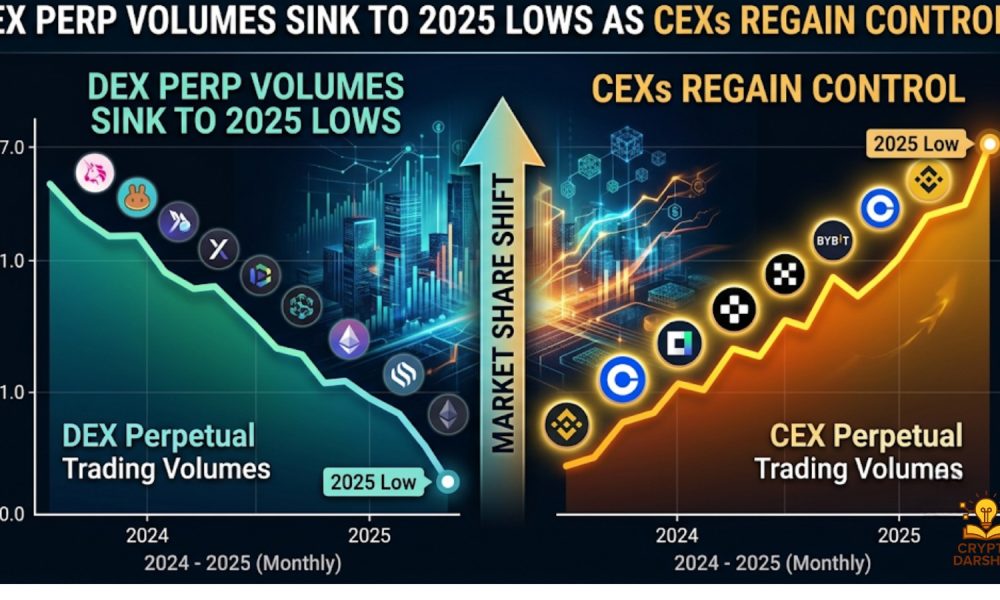
Decentralized perpetual trading has cooled sharply, and the latest data suggests centralized exchanges are winning back active traders. July’s DEX perpetual volume fell to $355.78 billion, the lowest monthly level since April 2025, while the DEX-to-CEX futures ratio dropped to 11.49% as CEXs captured 96.03% of derivatives activity.
What Happened to DEX Perpetual
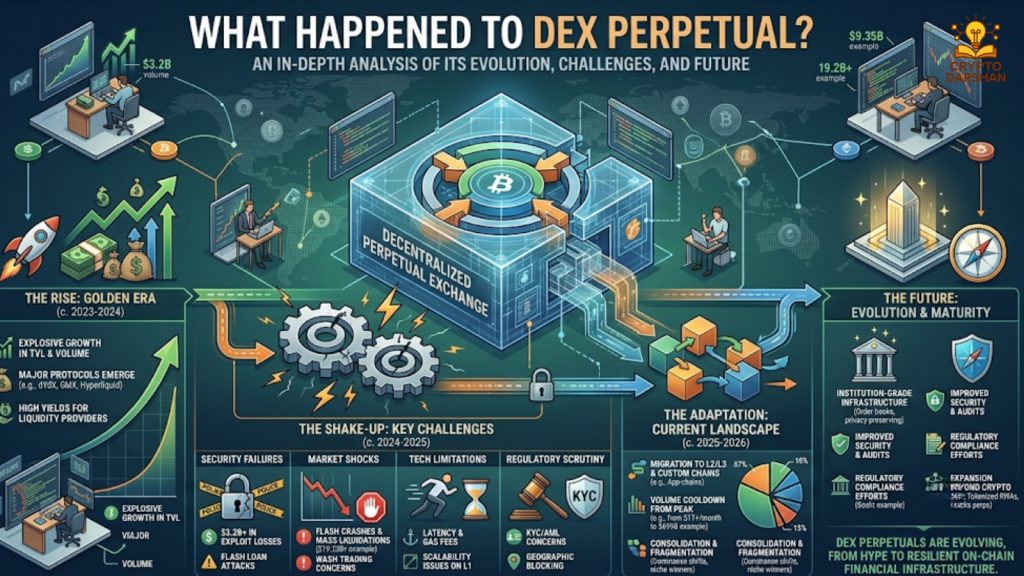
The drop is notable because it comes after a huge run-up in late 2025, when DEX perpetual volume peaked at about $1.19 trillion in October. Since then, volumes have slid steadily, showing that the on-chain futures boom was never guaranteed to last forever.
This slowdown does not mean traders have abandoned decentralized markets entirely. Instead, it suggests many users are shifting between venues based on speed, liquidity, fee structure, and execution quality.
Are CEXs Pulling Traders Back?
The short answer is: partly, yes. The current numbers show more trading activity flowing into centralized perpetual markets, which still dominate the broader derivatives landscape. CoinMarketCap data in the report puts CEXs at 96.03% of total derivatives trading, leaving DEXs with a much smaller share.
That gap matters because traders usually follow the best mix of deep liquidity, tight spreads, and reliable order execution. For many high-frequency and leveraged traders, centralized exchanges still feel easier and faster, especially when market conditions become choppy.
Why DEX Activity Fell
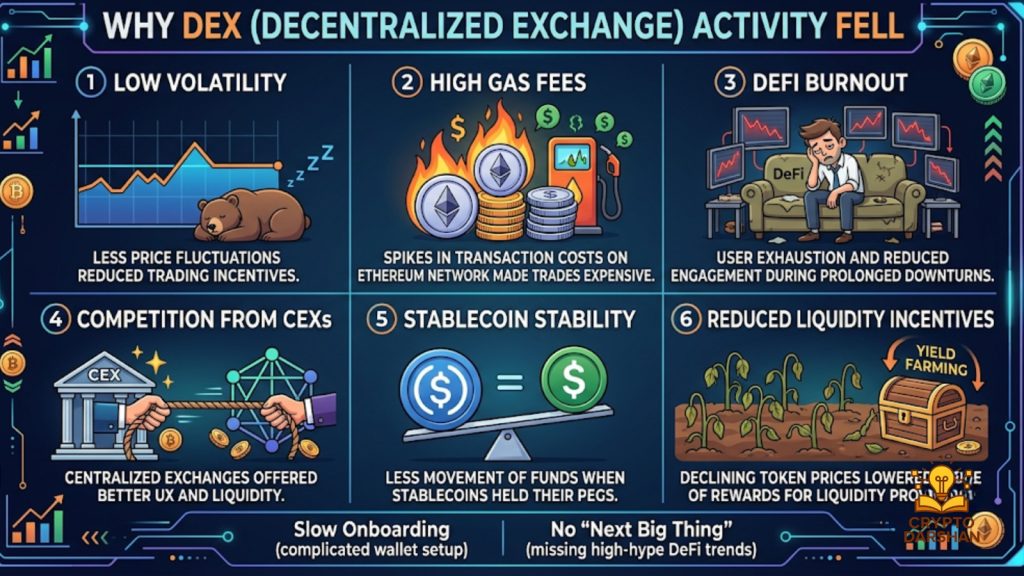
Several forces may be behind the decline. First, the market often rotates after a major volume spike, and DEX perps had already enjoyed a massive run into late 2025. Second, centralized platforms continue to offer a familiar experience that many traders already trust.
There is also a practical side. DEXs have improved a lot, but they still face challenges like liquidity fragmentation, higher slippage in some pairs, and the need for users to manage wallets and on-chain gas or bridge risks. Those frictions can matter more when traders want speed over ideology.
Not All The Signals Are Bearish

Even with volume falling, the market is not collapsing. The same report shows HIP-3 open interest reached a record $3.96 billion, which means interest in decentralized perpetuals is still alive even if turnover is weaker right now.
That is an important distinction. Volume measures how much traders are moving, while open interest shows how much risk is still sitting in the market. In simple terms, fewer people may be trading, but the market is not empty.
What It Means For Traders

For active traders, this shift is a reminder that venue choice still matters. If a trader needs speed, deeper liquidity, and fewer execution delays, CEXs can look more attractive in the short term. If self-custody, transparency, and on-chain settlement matter more, DEXs still have a strong case.
For the wider crypto market, the trend shows that DEXs are no longer a novelty, but they are also not yet the default for perpetual futures. The battle is now less about whether on-chain trading can exist, and more about whether it can match CEX performance at scale.
Final Take
The latest drop in DEX perpetual volume looks like a real cooling phase, not a collapse. CEXs appear to be pulling some traders back with stronger liquidity and smoother execution, but DEXs remain an important part of the market and still hold meaningful open interest.
If current trends continue, the next phase of competition will likely be decided by product quality, not just ideology. The exchanges that win will be the ones that make trading feel fast, cheap, and effortless.