If you’ve ever bought a crypto token at launch hoping for quick riches, you’re not alone—but you’re likely not alone in losing money either. New research reveals a harsh reality: most crypto tokens never recover from their initial drop, spending roughly 70% of their entire lifespan below their launch price.
This isn’t about bad luck or a single bear market. It’s a structural problem built into how most tokens are launched, priced, and traded today.
The Numbers That Should Make Every Investor Pause

A comprehensive study by Memento Research analyzed 118 token generation events (TGEs)—the moment a crypto token first launches—and uncovered eye-opening data:
Even worse, 90% of newly listed tokens on major decentralized exchanges fall below their issuance price within just 12 months. Only about 32% profit immediately after launch, and that number shrinks to less than 10% by the one-year mark.
Why Do So Many Crypto Tokens Fail to Recover?
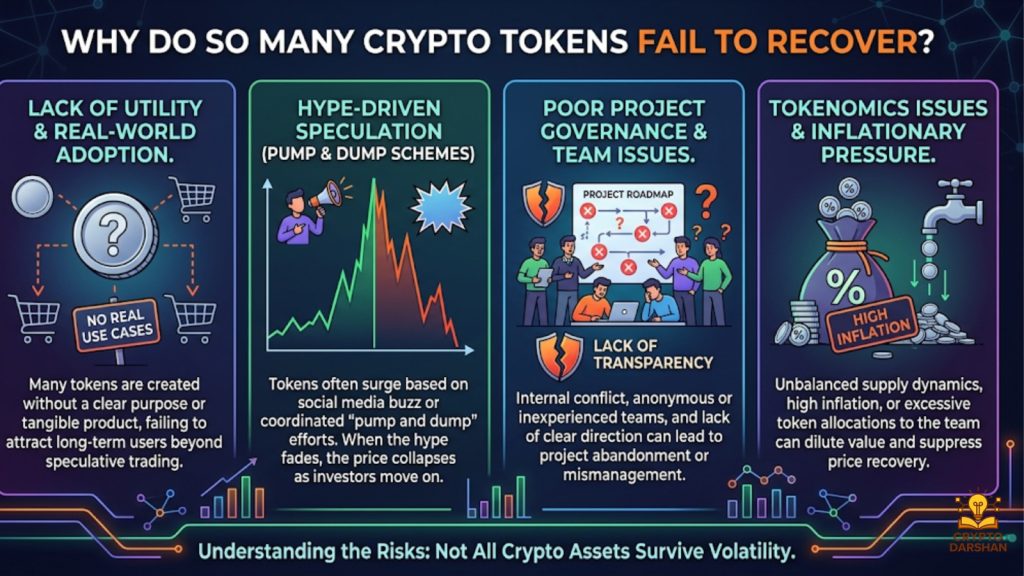
This isn’t random. Several predictable patterns explain why most tokens crash and never bounce back.
1. Inflated Launch Valuations (High FDV Trap)
Many projects launch with massive fully diluted valuations (FDV)—often over $1 billion—before proving real demand. When the market realizes the token is overpriced, it crashes hard. All 28 tokens in the study with FDVs above $1 billion are currently trading 81% below their launch price on average.
2. The “TGE Is the Peak” Phenomenon
For most tokens, the Token Generation Event (TGE) marks the highest price point, not the beginning of growth. After launch, early investors and insiders often sell quickly, creating massive downward pressure. Median declines of 70–83% are common for most segments.
3. Outdated Technology and No Real Use Case
The crypto industry evolves fast. Tokens built on outdated tech or without real-world applications become irrelevant quickly. Many projects fail to deliver on promises, leaving investors with no reason to hold.
4. Trend-Based Tokens with No Longevity
Remember Play-to-Earn (P2E) and Walk-to-Earn (W2E)? These trends created buzz but faded fast. Tokens built on transient trends lack sustainability and often disappear once user interest dries up.
5. Artificial Metrics Masking Weak Fundamentals
Some projects use fake trading volume, controlled supply tactics, or aggressive marketing to create the illusion of demand. When real demand fails to materialize, these tokens crash and stay crashed.
Which Token Categories Perform Worst?
Not all sectors suffer equally. The data shows clear winners and losers:
DeFi is the only sector showing meaningful recovery potential, while infrastructure and high-valuation tokens are the most dangerous bets.
What This Means for You as an Investor

Buying tokens at launch in 2025 was largely unprofitable. For most tokens, the TGE was an unfortunate entry point, not a golden opportunity.
How to Protect Yourself
- Do Your Own Research (DYOR): Look beyond price. Check community size, ongoing development, partnerships, and roadmap clarity.
- Avoid High FDV Launches: Tokens launching with over $1B FDV have a near-zero chance of recovery.
- Seek Continuous Innovation: Successful projects keep evolving with new tech and market needs.
- Focus on Real-World Use Cases: Tokens with tangible applications and active communities are more resilient.
- Wait for Stability: Let the initial volatility settle before entering. Many tokens never recover from their first drop.
The Glaring Exception: Bitcoin and Ethereum
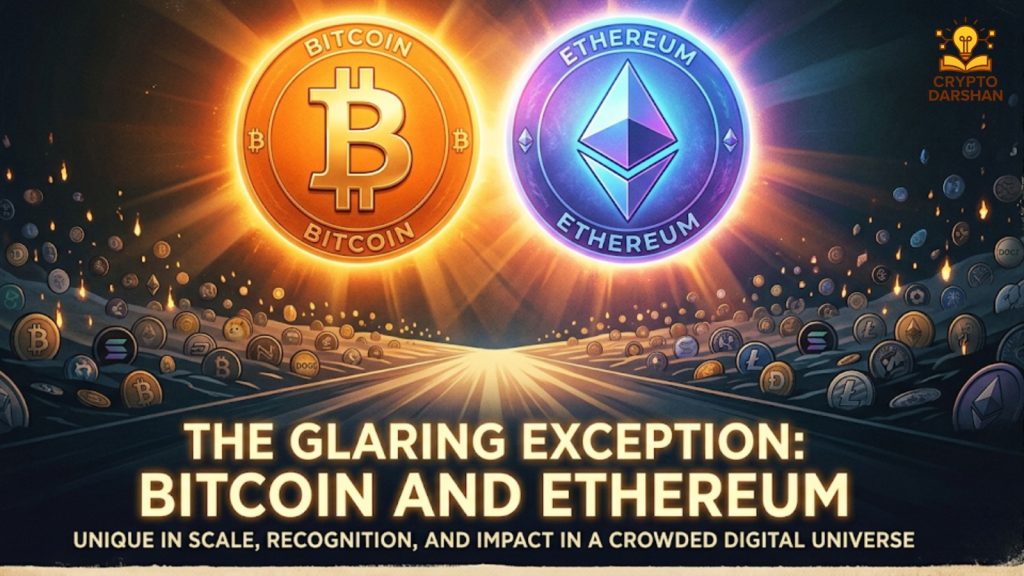
While thousands of crypto tokens have come and gone, Bitcoin and Ethereum continue to stand strong. More than 53% of the tokens launched since 2021 are no longer active, highlighting how difficult it is for crypto projects to survive in the long run. In contrast, Bitcoin and Ethereum have weathered multiple market cycles thanks to their real-world utility, large and active communities, strong developer ecosystems, and growing support from institutional investors. Their resilience shows why they remain the foundation of the crypto market even as many newer projects fade away.
The Bottom Line

The crypto market is full of hype, but the data tells a sobering truth: most Crypto tokens never recover. They spend 70% of their life below launch price, with median declines of over 70%.
For investors, this means being extremely selective. For developers, it means building real value, not just launching tokens. The era of easy gains from new token launches is over—what remains is a maturing market where only the strongest survive.