The world of blockchain and Web3 has evolved rapidly over the past decade. What began as a niche technology for cryptocurrency enthusiasts has now become a foundational layer for the next generation of the internet. However, one of the biggest barriers to mainstream adoption of Web3 technologies is complexity. Most users find blockchain concepts, like wallets, private keys, gas fees, and decentralized applications (dApps), too technical and intimidating.
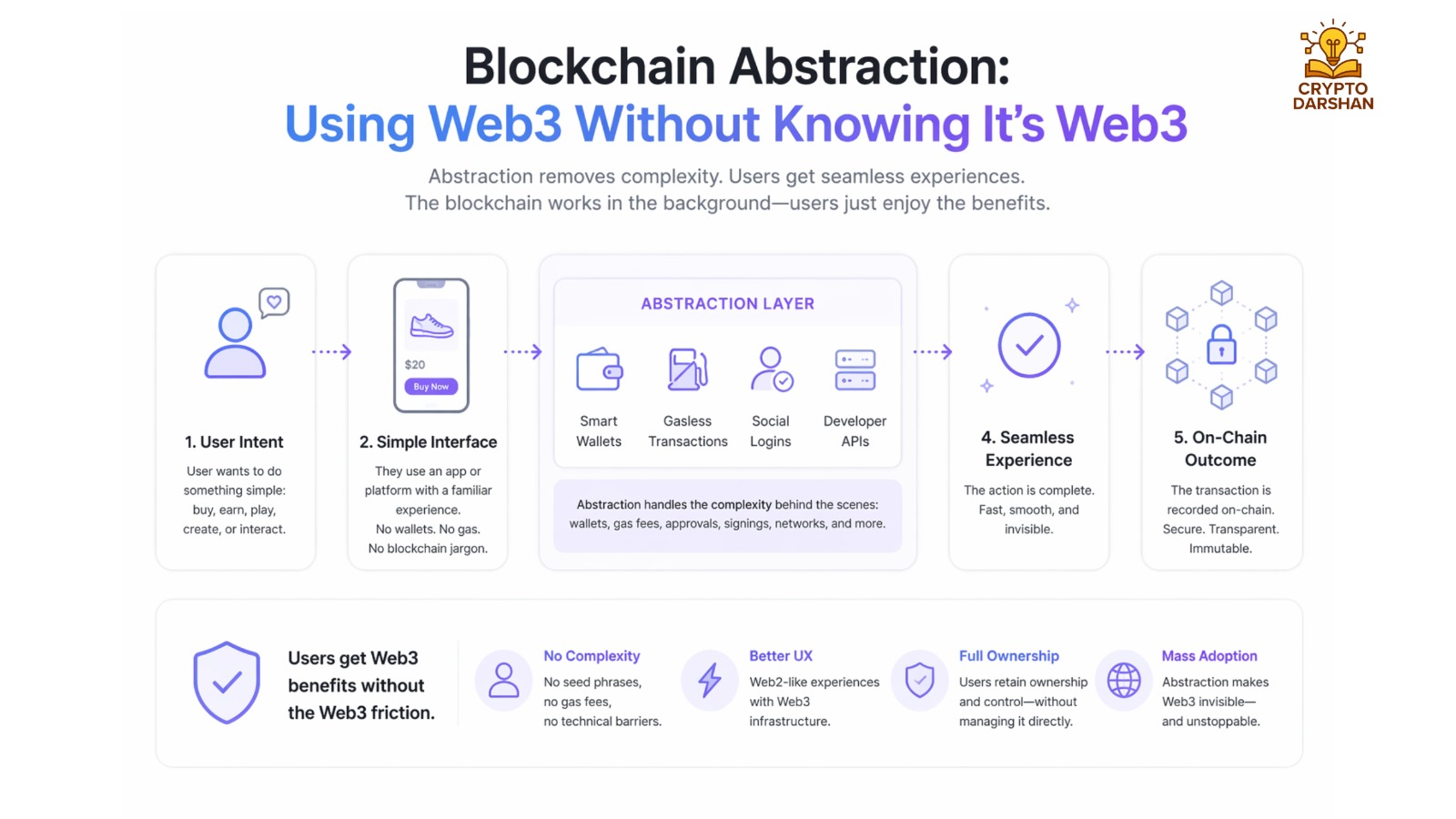
This is where blockchain abstraction comes in. Blockchain abstraction is the process of hiding the technical complexities of blockchain from end users, allowing them to interact with decentralized systems as easily as they do with traditional Web2 applications. In simple terms, it means using Web3 without even realizing it’s Web3.
This article explores blockchain abstraction in depth, what it is, how it works, why it matters, and how it’s shaping the future of digital experiences. It also examines real-world examples, challenges, and the technologies enabling this seamless integration between Web2 and Web3.
Understanding Web3 and Its Challenges
What Is Web3?
Web3 refers to the decentralized version of the internet built on blockchain technology. Unlike Web2, where data and applications are controlled by centralized entities (like Google, Facebook, or Amazon), Web3 gives users ownership and control over their data, digital assets, and online identities.
Key features of Web3 include:
- Decentralization: No single entity controls the network.
- Ownership: Users own their data and digital assets.
- Transparency: Transactions and operations are recorded on public ledgers.
- Interoperability: Applications can interact across different blockchains.
- Tokenization: Digital assets can represent value, rights, or access.
The Problem with Web3 Adoption
Despite its potential, Web3 adoption remains limited. The main reasons include:
- Complex User Experience: Managing wallets, private keys, and gas fees is confusing for non-technical users.
- Security Risks: Losing a private key means losing access to assets permanently.
- Scalability Issues: Many blockchains struggle with transaction speed and cost.
- Fragmentation: Different blockchains operate independently, making cross-chain interactions difficult.
- Lack of Familiarity: Most users are comfortable with Web2 interfaces and don’t want to learn new systems.
These challenges create friction, preventing Web3 from reaching mainstream audiences. Blockchain abstraction aims to solve this by simplifying the user experience.
What Is Blockchain Abstraction?

Definition
Blockchain abstraction is a concept that aims to simplify the user experience by hiding the technical intricacies of blockchain operations. It’s designed to make interacting with blockchain networks as easy as using a traditional web application, potentially opening the door for broader adoption of cryptocurrency and blockchain-based services. It hides the technical details—like wallet addresses, gas fees, and network selection—behind intuitive interfaces and automated systems.
In essence, blockchain abstraction allows users to:
- Use decentralized apps (dApps) without creating a crypto wallet.
- Pay for services without worrying about gas fees.
- Interact with multiple blockchains seamlessly.
- Enjoy the benefits of decentralization with the simplicity of Web2.
The Goal of Blockchain Abstraction
The main goal is to make blockchain technology invisible yet functional. Just as most people use the internet without understanding TCP/IP or DNS, blockchain abstraction ensures users can use Web3 applications without knowing how blockchain works.
The Layers of Blockchain Abstraction

Blockchain abstraction operates across multiple layers of the Web3 stack. Each layer contributes to simplifying the user experience.
1. Wallet Abstraction
Traditional crypto wallets require users to manage private keys and seed phrases. Wallet abstraction removes this complexity by introducing smart contract wallets or account abstraction. These wallets allow:
- Social logins (Google, Apple, etc.) instead of seed phrases.
- Recovery options through trusted contacts or devices.
- Automated gas fee management.
- Multi-chain compatibility.
Example: A user logs into a dApp using their email, and a smart contract wallet is created automatically in the background. The user never sees a private key but still owns their assets securely.
2. Gas Fee Abstraction
Gas fees are payments made to process transactions on a blockchain. For new users, this concept is confusing and inconvenient. Gas fee abstraction allows applications or third parties to pay gas fees on behalf of users or convert them into familiar currencies like USD.
Example: A gaming app covers gas fees for players, allowing them to trade in-game assets without worrying about blockchain costs.
3. Cross-Chain Abstraction
Different blockchains have unique protocols and tokens. Cross-chain abstraction enables seamless interaction between them. Users can transact or move assets across blockchains without manually bridging or swapping tokens.
Example: A user buys an NFT on Ethereum and sells it on Polygon without manually transferring it between networks.
4. Identity Abstraction
Web3 introduces decentralized identities (DIDs), but managing them can be complex. Identity abstraction simplifies this by linking blockchain identities to familiar login methods or digital IDs.
Example: A user logs into a decentralized platform using their Google account, which is linked to a blockchain-based identity behind the scenes.
5. Data Abstraction
Blockchain data is often stored in complex formats. Data abstraction tools convert this data into readable, structured information for developers and users.
Example: A dashboard displays real-time blockchain analytics without requiring users to query smart contracts directly.
How Blockchain Abstraction Works

Blockchain abstraction relies on a combination of technologies and design principles that work together to hide complexity while maintaining decentralization.
1. Smart Contracts
Smart contracts automate processes like wallet creation, transaction management, and access control. They enable programmable logic that can abstract away manual steps.
2. Middleware and APIs
Middleware solutions act as bridges between blockchains and applications. APIs allow developers to integrate blockchain features without dealing with low-level blockchain code.
3. Account Abstraction (EIP-4337)
Ethereum’s EIP-4337 introduces account abstraction, allowing smart contract wallets to function like user accounts. This enables features like:
- Custom transaction validation.
- Gas fee sponsorship.
- Multi-signature security.
- Automated recovery.
4. Meta-Transactions
Meta-transactions let users sign a transaction that another party submits and pays for. This removes the need for users to hold native blockchain tokens.
5. Cross-Chain Bridges and Interoperability Protocols
Protocols like LayerZero, Cosmos IBC, and Polkadot enable communication between blockchains, allowing assets and data to move freely across networks.
6. User Interface Design
A key part of abstraction is intuitive design. Applications use familiar Web2-style interfaces while blockchain operations happen in the background.
What Does “Using Web3 Without Knowing It’s Web3” Mean?

Imagine using your smartphone without understanding how cellular networks, processors, or operating systems work. You just tap apps, send messages, and browse the web. “Using Web3 without knowing it’s Web3” works the same way.
It means:
- You interact with blockchain-powered applications (like games, social media, or payment systems)
- But you don’t see or deal with crypto wallets, private keys, gas fees, or blockchain jargon
- The technology works invisibly in the background, just like how you don’t think about servers when using Netflix
Real-World Example: You play a mobile game where you earn rewards and trade items with other players. Behind the scenes, those items are NFTs on a blockchain, and trades are smart contract transactions—but you never see a wallet address or pay gas fees. You just play and enjoy.
Importance
1. Mass Adoption Becomes Possible
Currently, only tech-savvy users adopt Web3 because of its complexity. When blockchain becomes invisible, billions of everyday users can access decentralized apps without learning new technical skills. This transforms Web3 from a niche technology into a mainstream platform—just like how smartphones went from tech enthusiast devices to tools used by grandparents and children.
2. Removes Fear and Friction
Most people are intimidated by concepts like “seed phrases,” “gas fees,” and “wallet addresses.” They fear losing money or making mistakes. When these complexities are hidden, users feel safe and confident. They can enjoy benefits like true digital ownership, transparent transactions, and decentralized control without the anxiety of managing complex blockchain mechanics.
3. Enables Business Innovation
Companies can integrate blockchain features (like tokenized loyalty points, verifiable credentials, or supply chain tracking) into their existing products without forcing customers to learn about crypto. A coffee shop can offer blockchain-based rewards, an airline can use NFT tickets, or a bank can provide instant cross-border payments—all while customers use familiar interfaces they already understand.
4. Bridges Web2 and Web3 Worlds
This approach creates a smooth transition path from traditional internet (Web2) to decentralized internet (Web3). Users don’t have to choose between the two or abandon familiar platforms. Instead, their favorite apps gradually gain Web3 superpowers—better privacy, data ownership, and interoperability—without disrupting their daily routines or requiring them to migrate to entirely new platforms.
5. Focuses on Value, Not Technology
When blockchain is invisible, users focus on what actually matters: the benefits and experiences. They care about owning their digital assets, having control over their data, earning rewards, or accessing global services—not about which blockchain protocol is running underneath. This shifts the conversation from “how it works” to “what it does for me,” which is essential for any technology to become truly useful and widespread.
Benefits of Blockchain Abstraction

1. Simplified User Experience
Users can interact with decentralized apps as easily as traditional apps. No need for seed phrases, gas tokens, or complex setups.
2. Faster Adoption
By removing friction, blockchain abstraction encourages more users and businesses to adopt Web3 technologies.
3. Enhanced Security
Smart contract wallets and recovery mechanisms reduce the risk of losing assets due to lost keys.
4. Interoperability
Users can interact across multiple blockchains without manual bridging or token swaps.
5. Developer Efficiency
Developers can focus on building user-friendly applications instead of managing blockchain infrastructure.
6. Business Integration
Businesses can integrate blockchain features—like tokenized rewards or digital ownership—without requiring customers to understand blockchain.
Real-World Examples of Blockchain Abstraction

1. Coinbase Wallet and Smart Wallets
Coinbase’s smart wallet allows users to log in using familiar credentials and interact with dApps without managing private keys or gas fees.
2. Magic.link
Magic.link provides passwordless authentication and wallet creation using email or social logins, abstracting away blockchain complexity.
3. Argent Wallet
Argent uses smart contract wallets with recovery options, gasless transactions, and DeFi integrations—all without exposing users to blockchain details.
4. zkSync and StarkNet
Layer 2 solutions like zkSync and StarkNet use account abstraction to simplify transactions and reduce gas costs.
5. Web3Auth
Web3Auth enables social logins for blockchain applications, allowing users to access dApps using Google, Twitter, or Discord accounts.
The Role of Developers in Blockchain Abstraction

Developers play a crucial role in designing systems that balance simplicity and decentralization. Key responsibilities include:
- Building intuitive interfaces.
- Implementing smart contract wallets.
- Integrating APIs for gasless transactions.
- Ensuring security and compliance.
- Testing cross-chain functionality.
By focusing on user experience, developers can make blockchain technology accessible to everyone.
Challenges in Blcockchain Abstraction

1. Security Risks
Simplifying blockchain interactions can introduce new vulnerabilities if not implemented carefully. Smart contract bugs or compromised APIs can expose users to risks.
2. Centralization Trade-offs
Some abstraction layers rely on centralized services (like custodial wallets or API providers), which can undermine decentralization.
3. Regulatory Uncertainty
Abstracted systems may blur the lines between custodial and non-custodial services, raising legal and compliance questions.
4. Interoperability Complexity
Ensuring seamless cross-chain communication remains technically challenging and prone to security issues.
5. Developer Education
Developers need to understand both blockchain fundamentals and abstraction frameworks to build secure, user-friendly systems.
The Future of Blockchain Abstraction

1. Invisible Web3 Experiences
In the future, users may interact with blockchain-powered apps without realizing it. For example, a social media platform could use NFTs for content ownership or tokens for rewards—all behind the scenes.
2. Integration with AI and IoT
Blockchain abstraction will enable AI systems and IoT devices to interact with decentralized networks autonomously, creating new possibilities for automation and data integrity.
3. Enterprise Adoption
Businesses will adopt blockchain for supply chain, finance, and identity management without needing blockchain expertise.
4. Multi-Chain Ecosystems
Abstraction will make multi-chain ecosystems the norm, where users and developers can operate across networks effortlessly.
5. Standardization and Regulation
As abstraction matures, industry standards and regulations will emerge to ensure security, privacy, and interoperability.
How Blockchain Abstraction Impacts Web2 and Web3 Integration

1. Creates a Seamless Transition Path
Blockchain abstraction allows Web2 companies to add Web3 features without rebuilding their platforms. Traditional apps can integrate blockchain capabilities while keeping familiar interfaces. Users continue using their favorite apps the same way, but gain Web3 benefits like asset ownership and transparency. For example, a social media platform could let users own their content as NFTs without changing how they post.
2. Eliminates Technical Barriers
Users no longer need to understand wallets, private keys, or gas fees. They can use familiar login methods (email, Google, etc.) to access Web3 features. A shopper can buy products with a credit card while the platform handles blockchain transactions in the background—recording purchases for authenticity or issuing loyalty tokens. This makes Web3 accessible to mainstream users.
3. Enables Hybrid Business Models
Companies can combine Web2’s ease of use with Web3’s decentralization and transparency. A music streaming service could work like Spotify but use blockchain for instant, transparent artist payments. A game could run on traditional servers but use blockchain for item ownership. Businesses innovate without abandoning proven infrastructure.
4. Solves Interoperability Issues
Web2 platforms operate in silos—your data doesn’t transfer between services. Blockchain abstraction creates portable digital identities and assets that work across platforms. Your reputation, purchases, or loyalty points could work seamlessly across different services, all managed through blockchain but experienced through simple apps.
5. Builds Trust While Maintaining Privacy
Web2 lacks transparency; Web3 can compromise privacy. Blockchain abstraction balances both by using blockchain for transparency where needed while protecting sensitive data. An online marketplace can verify real reviews without revealing identities. Users get Web3 trust and control with Web2 privacy and ease of use.
Key Technologies Powering Blockchain Abstraction
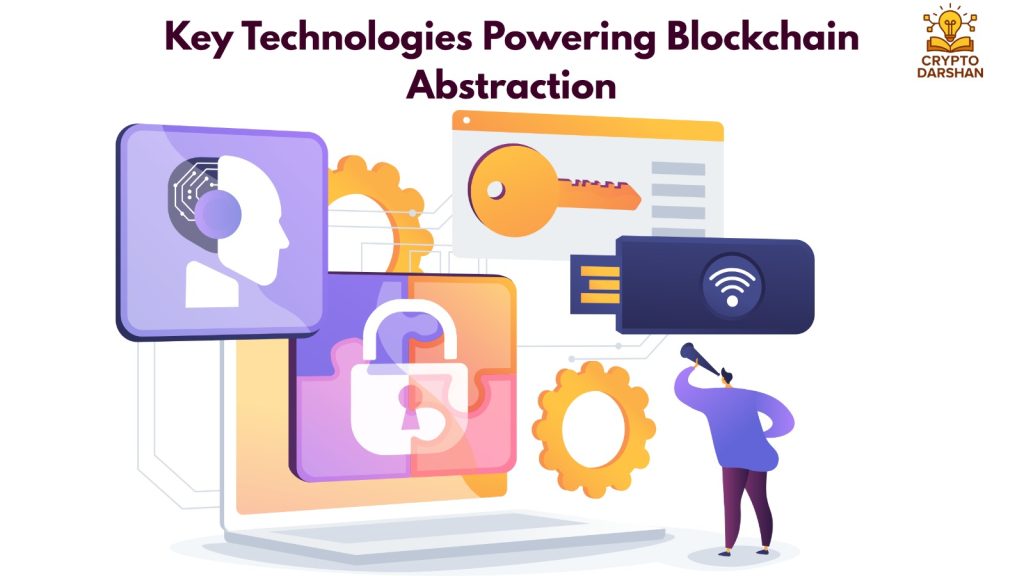
| Technology | Function | Example |
| Smart Contract Wallets | Automate wallet management | Argent, Safe (Gnosis Safe) |
| Account Abstraction | Custom transaction logic | EIP-4337 |
| Meta-Transactions | Gasless transactions | Biconomy |
| Cross-Chain Protocols | Interoperability | LayerZero, Cosmos IBC |
| Decentralized Identity | Simplified authentication | ENS, DID |
| Middleware APIs | Developer integration | Alchemy, Infura |
| Zero-Knowledge Proofs | Privacy and scalability | zkSync, StarkNet |
The Economic Impact of Blockchain Abstraction
Blockchain abstraction will reshape digital economies by:
- Lowering entry barriers for users and businesses.
- Enabling new business models like decentralized finance (DeFi) and tokenized assets.
- Reducing transaction costs through automation.
- Encouraging innovation in gaming, supply chain, and digital identity sectors.
As blockchain becomes more accessible, global participation in decentralized economies will increase.
Ethical and Social Implications
While abstraction simplifies blockchain use, it also raises ethical questions:
- Transparency: Users may not realize they’re interacting with blockchain systems.
- Data Ownership: Simplified systems must still ensure user control over data.
- Digital Divide: Access to abstracted blockchain tools must be equitable across regions.
Responsible design and regulation will be essential to ensure fairness and trust.
FAQ

1. What is blockchain abstraction?
Blockchain abstraction refers to hiding the technical complexities of blockchain (wallets, gas fees, private keys) so users can interact with Web3 applications as easily as traditional apps.
2. Why is abstraction important for Web3 adoption?
Most users are unfamiliar with crypto concepts. Abstraction removes friction, making Web3 accessible to non-technical users and enabling mass adoption.
3. How does blockchain abstraction improve user experience?
It simplifies onboarding by eliminating steps like seed phrase management, manual transaction signing, and network switching, creating a seamless experience similar to Web2 apps.
4. What are examples of blockchain abstraction in action?
Examples include social logins for wallets, gasless transactions, auto network switching, and apps where users don’t realize blockchain is being used behind the scenes.
5. What are smart accounts and how do they relate to abstraction?
Smart accounts are programmable wallets that enable features like password recovery, batching transactions, and gas sponsorship—key components of blockchain abstraction.
6. Does abstraction compromise decentralization?
In some cases, yes. While abstraction improves usability, it may introduce intermediaries or reduce user control, creating a trade-off between convenience and decentralization.
7. What role do Layer 2 solutions play in abstraction?
Layer 2 networks reduce fees and improve speed, allowing developers to hide transaction costs and delays, which enhances the abstraction experience.
8. Are users still interacting with blockchain if it’s abstracted?
Yes, the blockchain is still functioning in the background. Abstraction simply hides the complexity—it doesn’t remove the underlying technology.
Conclusion
Blockchain abstraction represents the next major step in the evolution of Web3. By hiding complexity and focusing on usability, it enables a future where decentralized technologies are seamlessly integrated into everyday life. Users will interact with blockchain-powered systems without needing to understand wallets, gas fees, or cryptographic keys.
This invisible layer of Web3 will drive mass adoption, empower developers, and transform industries. As abstraction technologies mature, the line between Web2 and Web3 will blur, creating a unified, user-friendly, and decentralized digital world.