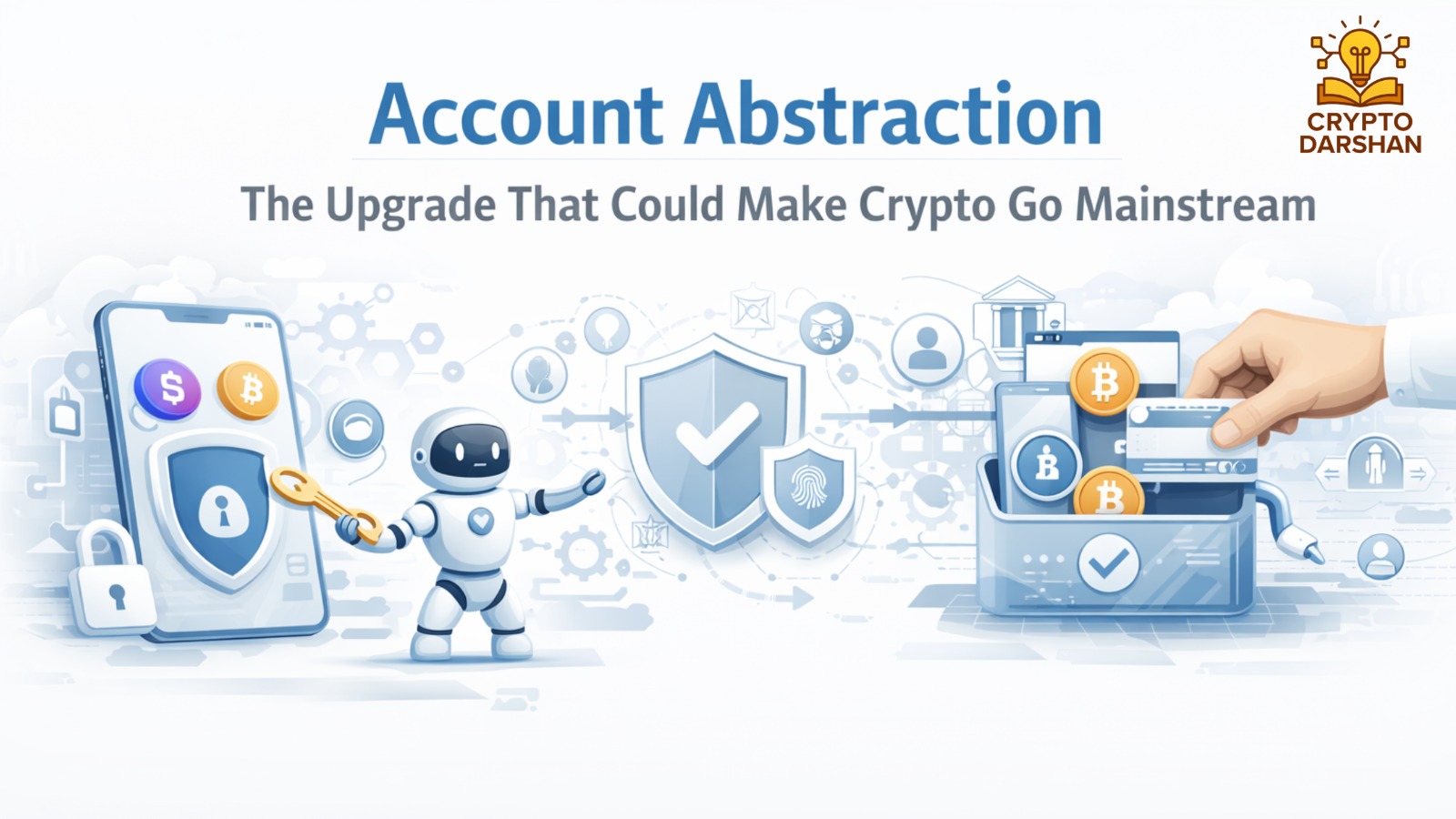
The world of cryptocurrency has come a long way since the launch of Bitcoin in 2009. From decentralized finance (DeFi) to non-fungible tokens (NFTs), blockchain technology has evolved into a global ecosystem of innovation. Yet, despite its growth, crypto still faces one major barrier to mass adoption usability. For most people, managing private keys, gas fees, and complex wallet interfaces remains intimidating. This is where Account Abstraction comes in.
Account Abstraction is a groundbreaking upgrade that could make crypto as easy to use as traditional banking apps. It simplifies how users interact with blockchain networks, making transactions more flexible, secure, and user-friendly. By bridging the gap between technical complexity and everyday usability, Account Abstraction could be the key to bringing crypto into the mainstream.
This article explores what Account Abstraction is, how it works, its benefits, challenges, and why it could be the most important upgrade in the history of blockchain technology.
What Is Account Abstraction?

Account abstraction is a concept in blockchain technology that allows users to use smart contracts as their accounts. This means that instead of having a traditional account, users can establish their own flexible rules for wallet management.
Traditionally, there are two types of accounts on Ethereum and similar blockchains:
- Externally Owned Accounts (EOAs): Controlled by private keys. These are standard user wallets like MetaMask.
- Contract Accounts: Controlled by smart contract code. These accounts can execute complex logic but cannot initiate transactions on their own.
Account Abstraction merges these two types into one unified model. It allows user accounts to behave like smart contracts, meaning users can define custom rules for how their accounts operate. This includes how transactions are authorized, how fees are paid, and how security is managed.
In essence, Account Abstraction transforms crypto wallets from static key-based systems into dynamic, programmable accounts.
The Problem with Traditional Crypto Accounts

Before understanding why Account Abstraction is revolutionary, it’s important to look at the limitations of the current system.
1. Private Key Dependency
Every crypto wallet today relies on a private key. If the key is lost, the funds are gone forever. This single point of failure makes crypto risky for everyday users.
2. Complex User Experience
Managing gas fees, signing transactions, and switching networks can be confusing. New users often struggle with the technical aspects of using crypto wallets.
3. Limited Flexibility
Traditional accounts cannot define custom transaction rules. For example, users cannot set spending limits, multi-signature approvals, or automated recovery options without using external smart contracts.
4. Security Risks
Phishing attacks, key theft, and human error are common causes of crypto losses. The lack of built-in security features makes wallets vulnerable.
5. Poor Compatibility with Institutions
Businesses and organizations require advanced account management features like role-based access and automated approvals. Traditional wallets are not designed for such use cases.
Account Abstraction addresses all these issues by making accounts programmable and adaptable to user needs.
How Account Abstraction Works

Account Abstraction changes how transactions are processed on the blockchain. Improvements like account abstraction are part of a broader push to simplify blockchain infrastructure, similar to the innovations discussed in Rollup-as-a-Service (RaaS): The Shopify Moment for Blockchains. Instead of requiring every transaction to be signed by a private key, it allows users to define their own validation logic.
Here’s how it works step by step:
1. Smart Contract Wallets
Under Account Abstraction, each user’s wallet is a smart contract. This contract defines how transactions are authorized and executed. For example, it can require multiple signatures, biometric verification, or time delays for large transfers.
Simplifying crypto wallets may also help decentralized services compete with traditional tech infrastructure, a topic explored in Decentralized Cloud Computing: Can Blockchain Replace Big Tech Servers?
2. User Operations
Instead of sending traditional transactions, users send “UserOperations” — structured requests that specify what they want to do. These operations are processed by a special contract called the EntryPoint.
3. Bundlers
Bundlers are network participants that collect multiple UserOperations and submit them to the blockchain in a single batch. This improves efficiency and reduces gas costs.
4. Paymasters
Paymasters are smart contracts that can pay gas fees on behalf of users. This allows for gasless transactions, where users don’t need to hold native tokens like ETH to interact with the blockchain.
5. Validation Logic
Each smart contract wallet defines its own validation logic. This means users can choose how their transactions are approved — through passwords, biometrics, or even social recovery mechanisms.
By abstracting away the technical details, Account Abstraction makes blockchain interactions more intuitive and secure.
The Evolution of Account Abstraction

The idea of Account Abstraction has been around for years, but it took time to become practical. Here’s a brief timeline of its evolution:
1. Early Proposals (2016–2019)
Ethereum developers first discussed Account Abstraction in Ethereum Improvement Proposals (EIPs) like EIP-86. The goal was to make accounts more flexible, but technical limitations prevented implementation.
2. Smart Contract Wallets (2019–2021)
Projects like Argent, Gnosis Safe, and Loopring introduced smart contract wallets that mimicked some features of Account Abstraction. These wallets offered social recovery, multi-signature security, and gasless transactions, but they still relied on EOAs for transaction initiation.
3. ERC-4337 (2023)
The breakthrough came with ERC-4337, a standard that enables Account Abstraction without changing the Ethereum protocol. It introduced the concept of UserOperations, Bundlers, and Paymasters, making Account Abstraction possible at the application layer.
4. Mainstream Adoption (2024–Present)
With ERC-4337 live on Ethereum and other compatible chains, developers are building wallets and dApps that fully leverage Account Abstraction. This marks the beginning of a new era in crypto usability.
Key Features of Account Abstraction

1. Programmable Wallets
Users can define custom rules for how their wallets operate. For example, a wallet can require two-factor authentication or limit daily spending.
2. Gasless Transactions
Paymasters can cover gas fees, allowing users to transact without holding ETH or other native tokens. This is especially useful for onboarding new users.
3. Social Recovery
Instead of relying on a single private key, users can assign trusted contacts to help recover their accounts if access is lost.
4. Multi-Signature Security
Wallets can require multiple approvals for transactions, enhancing security for individuals and organizations.
5. Automated Payments
Users can schedule recurring payments or subscriptions directly from their wallets, similar to traditional banking systems.
6. Custom Authentication
Wallets can integrate biometric verification, hardware security modules, or password-based access instead of private keys.
7. Cross-Chain Compatibility
Account Abstraction can be implemented across multiple blockchains, enabling seamless interoperability between networks.
Benefits of Account Abstraction

1. Improved User Experience
Account Abstraction hides the complexity of blockchain interactions. Users no longer need to manage gas fees, private keys, or complex transaction settings.
2. Enhanced Security
By allowing custom validation logic, users can implement stronger security measures like multi-signature approvals and time locks.
3. Easier Onboarding
New users can start using crypto apps without needing to understand technical details. Gasless transactions and social recovery make onboarding simple.
4. Institutional Adoption
Businesses can use programmable wallets to manage funds securely, set spending policies, and automate compliance.
5. Developer Flexibility

Developers can build innovative wallet features and payment systems without being limited by the traditional account model.
6. Greater Accessibility
Account Abstraction enables mobile-friendly and user-centric wallet designs, making crypto more accessible to non-technical users.
7. Reduced Risk of Loss
Social recovery and backup mechanisms reduce the risk of losing funds due to lost private keys.
Account Abstraction vs Traditional Wallets

| Feature | Traditional Wallets | Account Abstraction Wallets |
| Private Key Dependency | Single key required | Custom authentication options |
| Gas Fees | Paid by user | Can be sponsored by Paymasters |
| Security | Basic | Programmable and multi-layered |
| Recovery Options | None | Social and automated recovery |
| Transaction Flexibility | Limited | Fully customizable |
| User Experience | Complex | Simplified and intuitive |
| Institutional Use | Difficult | Fully supported |
This comparison shows how Account Abstraction transforms crypto wallets into powerful, user-friendly tools.
Real-World Use Cases of Account Abstraction

1. Gasless NFT Purchases
Users can buy NFTs without holding ETH. The marketplace or Paymaster covers the gas fees, making the process seamless.
2. Subscription Payments
Users can set up recurring payments for services like decentralized storage or streaming platforms directly from their wallets.
3. Family and Business Accounts
Multi-signature wallets allow families or companies to manage shared funds securely, with approval rules for transactions.
4. Gaming and Metaverse
Players can interact with blockchain games without worrying about gas fees or wallet management. Account Abstraction enables smooth in-game transactions.
5. Decentralized Identity
Wallets can integrate identity verification systems, allowing users to prove ownership or credentials without exposing private data.
6. Cross-Border Payments
Account Abstraction simplifies international transactions by automating currency conversions and fee management.
7. DAO Treasury Management
Decentralized organizations can use programmable wallets to automate fund distribution, voting, and payroll.
The Role of ERC-4337 in Account Abstraction

1. Introduction to ERC-4337
ERC-4337 is a technical standard introduced to bring Account Abstraction to Ethereum without changing its core protocol. It allows users to create smart contract wallets that function like regular accounts but with advanced features such as custom transaction validation, gasless transactions, and social recovery.
This standard was designed to make blockchain interactions more user-friendly and flexible, paving the way for mainstream crypto adoption.
2. Purpose of ERC-4337
The main goal of ERC-4337 is to eliminate the limitations of traditional Externally Owned Accounts (EOAs) by enabling programmable accounts. It allows users to define how their transactions are authorized and executed, giving them more control over security, fees, and wallet behavior.Essentially, ERC-4337 makes every wallet a smart contract wallet, capable of executing complex logic automatically.
3. No Protocol-Level Changes Required
One of the biggest advantages of ERC-4337 is that it doesn’t require any modifications to Ethereum’s base protocol or consensus layer.Instead, it operates entirely at the application layer, meaning it can be implemented on any Ethereum-compatible blockchain. This makes adoption faster and easier since developers and users don’t need to wait for a hard fork or network upgrade.
4. Introduction of UserOperations
ERC-4337 replaces traditional transactions with a new structure called UserOperation.A UserOperation is a request that contains all the details of a transaction — such as the These operations are collected and processed by special entities called Bundlers, which submit them to the blockchain in batches.This system improves efficiency and allows for more flexible transaction handling.
5. The EntryPoint Contract
The EntryPoint is a central smart contract defined in ERC-4337 that manages all UserOperations.It verifies, executes, and settles transactions according to the rules defined in each user’s smart contract wallet.The EntryPoint ensures that all operations follow the same structure, maintaining security and consistency across the network.
6. Role of Bundlers
Bundlers are network participants that collect multiple UserOperations from users and submit them to the EntryPoint contract in a single transaction.They act similarly to miners or validators but focus on processing user requests efficiently.Bundlers help reduce gas costs and improve transaction throughput, making blockchain interactions smoother.
7. Role of Paymasters
Paymasters are smart contracts that can pay gas fees on behalf of users.This feature enables gasless transactions, where users can interact with decentralized applications (dApps) without holding ETH or other native tokens.Paymasters can also implement custom payment logic, such as allowing users to pay fees in stablecoins or tokens.
Challenges and Limitations

1. Complexity for Developers
Building and maintaining smart contract wallets requires advanced technical knowledge. Developers must ensure security and compliance.
2. Security Risks
While Account Abstraction enhances security, poorly written smart contracts can introduce vulnerabilities.
3. Regulatory Uncertainty
Gasless transactions and sponsored fees may raise questions about compliance and financial responsibility.
4. Network Congestion
Bundlers and Paymasters add new layers of infrastructure that must scale efficiently to handle large volumes of transactions.
5. User Education
Even with simplified interfaces, users need to understand how programmable wallets work to use them safely.
The Impact on the Crypto Ecosystem

Account Abstraction could reshape the entire crypto landscape by making blockchain technology more accessible and practical.
1. Wallet Innovation
Developers can create wallets that function like digital banks, offering features such as credit scoring, automated savings, and insurance.
2. DeFi Growth
Simplified onboarding and gasless transactions will attract more users to decentralized finance platforms.
3. NFT Expansion
Easier transactions and better user experience will drive NFT adoption among mainstream audiences.
4. Institutional Integration
Banks and corporations can adopt blockchain-based systems without sacrificing security or compliance.
5. Global Financial Inclusion
Account Abstraction lowers barriers for people in developing countries to access digital financial services.
Account Abstraction and Web3

Web3 aims to create a decentralized internet where users control their data and assets. Account Abstraction aligns perfectly with this vision by giving users full control over their wallets and transactions.
With programmable accounts, users can interact with decentralized applications (dApps) seamlessly. They can log in using familiar methods, authorize transactions with biometrics, and recover accounts easily — all without compromising decentralization.
This user-centric approach could make Web3 applications as intuitive as traditional web apps, accelerating mainstream adoption.
The Future of Account Abstraction

The future of Account Abstraction looks promising. As more developers adopt ERC-4337 and similar standards, the crypto ecosystem will become more user-friendly and secure.
Key Trends to Watch:
- Integration with Layer 2 Networks: Account Abstraction will enhance scalability and reduce transaction costs.
- Cross-Chain Wallets: Unified wallets that work across multiple blockchains.
- AI-Powered Wallets: Smart wallets that analyze user behavior and suggest optimal transaction strategies.
- Institutional Adoption: Banks and fintech companies integrating programmable wallets into their services.
- Mainstream Applications: Everyday apps using blockchain without users even realizing it.
In the long run, Account Abstraction could make blockchain technology invisible — powering the next generation of digital finance behind the scenes.
Case Studies

Case Study 1: Argent Wallet
Argent pioneered smart contract wallets with features like social recovery and gasless transactions. It demonstrated how Account Abstraction principles could improve usability and security.
Case Study 2: Safe (formerly Gnosis Safe)
Safe introduced multi-signature wallets for individuals and organizations. Its programmable structure laid the groundwork for institutional adoption of Account Abstraction.
Case Study 3: Stackup and Biconomy
These projects provide infrastructure for ERC-4337, enabling developers to integrate Account Abstraction features into their dApps easily.
Economic and Social Implications

Account Abstraction could have far-reaching effects beyond technology.
- Economic Inclusion: Simplified wallets make crypto accessible to unbanked populations.
- Reduced Fraud: Custom authentication reduces phishing and theft.
- Financial Innovation: Programmable accounts enable new business models and financial products.
- Decentralized Governance: DAOs can operate more efficiently with automated treasury management.
- Environmental Efficiency: Bundled transactions reduce network load and energy consumption.
By making crypto safer and easier to use, Account Abstraction could accelerate the transition to a decentralized global economy.
Ethical Considerations

While Account Abstraction offers many benefits, it also raises ethical questions:
- Data Privacy: Integration with identity systems must protect user privacy.
- Centralization Risks: Overreliance on Paymasters or Bundlers could reintroduce central points of control.
- Accessibility: Developers must ensure that new wallet designs remain inclusive for all users.
- Security Responsibility: Users and developers share responsibility for maintaining secure smart contracts.
Responsible development and transparent governance will be essential to ensure that Account Abstraction benefits everyone.
FAQ

1. What is account abstraction in crypto?
Account abstraction is a blockchain upgrade that allows crypto wallets to function like smart contracts. This enables more flexible features such as automated transactions, customizable security rules, and easier user experiences.
2. Why is account abstraction important for crypto adoption?
Account abstraction simplifies how users interact with blockchain wallets. It can remove complex steps like managing private keys or paying gas fees manually, making crypto easier for everyday users.
3. How does account abstraction improve wallet security?
With account abstraction, wallets can include advanced security features like social recovery, multi-signature approval, spending limits, and biometric authentication.
4. Which blockchains support account abstraction?
Account abstraction is most commonly associated with the Ethereum ecosystem, especially after upgrades like ERC-4337. Some other blockchains are also experimenting with similar wallet innovations.
5. What problems does account abstraction solve?
It addresses major usability issues in crypto, including complex wallet management, lost private keys, and difficult transaction processes that often discourage new users.
6. Does account abstraction remove the need for private keys?
No, private keys still exist, but account abstraction allows alternative authentication methods and recovery options, making wallets more user-friendly and secure.
7. How could account abstraction affect crypto apps?
It allows developers to create smoother user experiences, such as gasless transactions, automated payments, and simplified onboarding for decentralized applications.
Conclusion
Account Abstraction represents a major leap forward in blockchain usability and security. Merging the flexibility of smart contracts with the simplicity of user wallets, it removes many of the barriers that have kept crypto from going mainstream.
With features like gasless transactions, social recovery, and programmable security, Account Abstraction transforms how people interact with digital assets. It empowers users, simplifies onboarding, and opens the door for institutional adoption.
As the crypto industry continues to evolve, Account Abstraction could become the foundation of a new financial era — one where blockchain technology is not just powerful, but truly accessible to everyone.