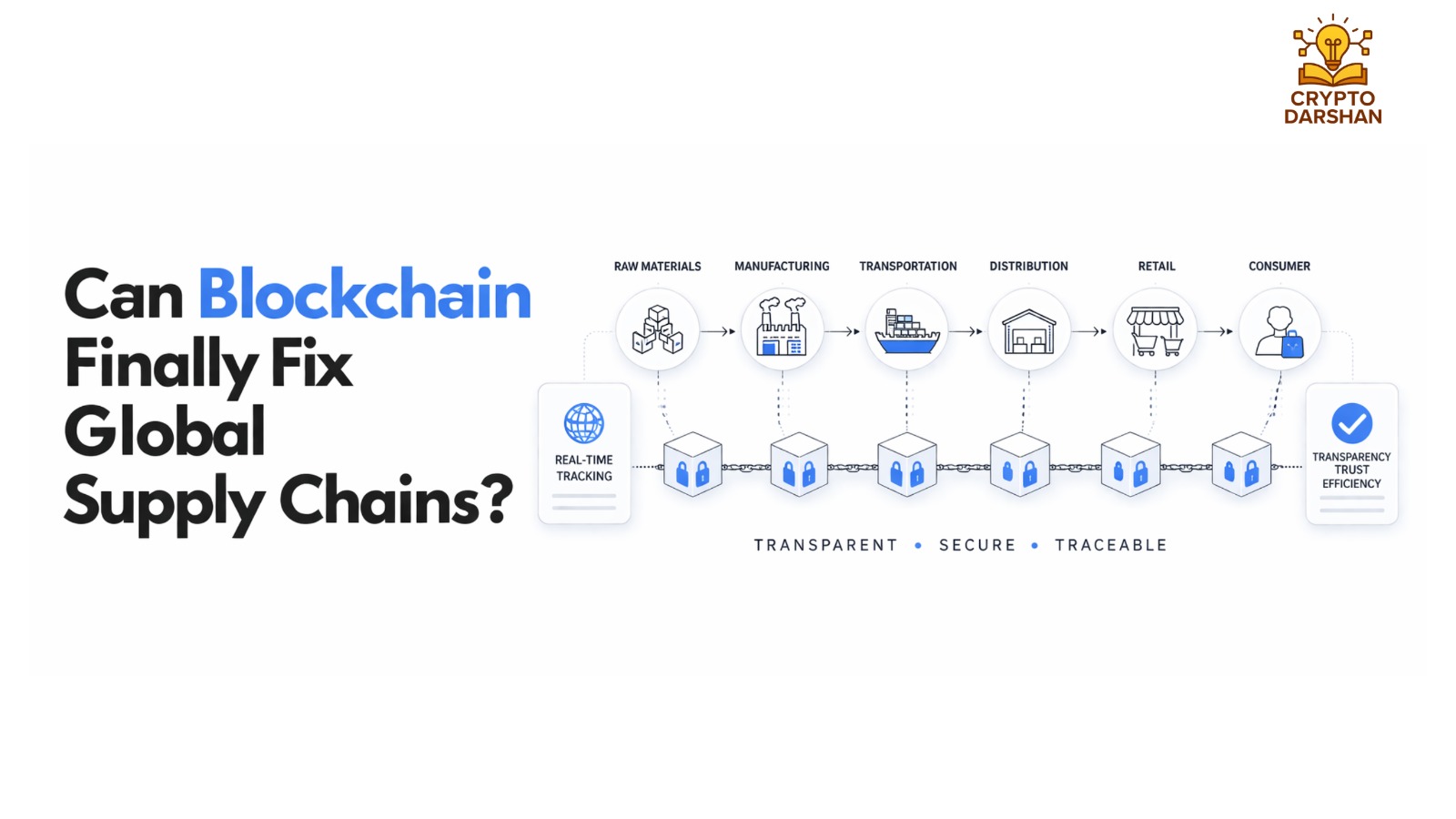
Global Supply Chains form the backbone of international trade and commerce. They connect manufacturers, suppliers, logistics providers, and retailers across continents, ensuring that goods move efficiently from production to consumption. However, despite technological advancements, Global Supply Chains remain plagued by inefficiencies, lack of transparency, fraud, and delays. The question arises: can blockchain technology finally fix Global Supply Chains?
Blockchain, a decentralized digital ledger system, has emerged as a transformative force across industries. Its ability to record transactions securely, transparently, and immutably makes it a promising solution for the complex challenges facing Global Supply Chains. This article explores how blockchain can revolutionize supply chain management, the benefits it offers, real-world applications, challenges to adoption, and the future outlook for blockchain-powered Global Supply Chains.
Understanding Global Supply Chains

What Are Global Supply Chains?
Global Supply Chains refer to the interconnected network of production, transportation, and distribution processes that deliver goods and services worldwide. They involve multiple stakeholders, including raw material suppliers, manufacturers, logistics companies, distributors, and retailers. Each participant plays a crucial role in ensuring that products reach consumers efficiently and cost-effectively.
The Complexity of Global Supply Chains
Modern Global Supply Chains are highly complex due to globalization, outsourcing, and the increasing demand for faster delivery. A single product, such as a smartphone, may involve components sourced from multiple countries, assembled in another, and distributed globally. This complexity introduces challenges such as:
- Lack of visibility across the supply chain
- Counterfeit products and fraud
- Inefficient documentation and manual processes
- Delays due to customs and regulatory compliance
- Environmental and ethical concerns
These issues highlight the need for a transparent, secure, and efficient system to manage Global Supply Chains — a role blockchain technology is uniquely positioned to fill.
The Problems with Traditional Supply Chain Systems

1. Lack of Transparency
Traditional supply chain systems rely on centralized databases and manual record-keeping. This makes it difficult for stakeholders to access real-time information about product movement, origin, and authenticity. The lack of transparency often leads to mistrust among partners and consumers.
2. Counterfeit Goods
Counterfeiting is a major issue in Global Supply Chains, especially in industries like pharmaceuticals, luxury goods, and electronics. Without a reliable system to verify product authenticity, counterfeit products can easily enter the market, damaging brand reputation and endangering consumers.
3. Inefficient Documentation
Paper-based documentation and manual data entry slow down operations and increase the risk of errors. In international trade, where multiple parties and jurisdictions are involved, documentation inefficiencies can cause costly delays.
4. Supply Chain Fraud
Fraudulent activities such as invoice manipulation, false reporting, and product substitution are common in Global Supply Chains. These practices not only lead to financial losses but also undermine trust among stakeholders.
Security remains one of blockchain’s strongest advantages. With immutable records and cryptographic verification, blockchain reduces fraud risks, similar to how modern tools are helping users recover stolen cryptocurrency and prevent scams.
5. Poor Traceability
In many industries, tracing the origin of a product or its components is difficult. This lack of traceability becomes critical during product recalls, quality control checks, or sustainability audits.
What Is Blockchain Technology?

Blockchain technology is an advanced database mechanism that allows transparent information sharing within a business network. A blockchain database stores data in blocks that are linked together in a chain. The data is chronologically consistent because you cannot delete or modify the chain without consensus from the network. Each transaction, or “block,” is linked to the previous one, forming a chain of records that cannot be altered retroactively.
Key Features of Blockchain
- Decentralization: No single entity controls the blockchain, reducing the risk of manipulation.
- Transparency: All participants can view and verify transactions.
- Immutability: Once recorded, data cannot be changed or deleted.
- Security: Cryptographic algorithms protect data from unauthorized access.
- Smart Contracts: Automated agreements that execute when predefined conditions are met.
These features make blockchain an ideal solution for addressing the inefficiencies and trust issues in Global Supply Chains.
How Blockchain Can Transform Global Supply Chains

1. Enhanced Transparency
Blockchain provides a shared, tamper-proof ledger accessible to all participants in the supply chain. Every transaction, from raw material sourcing to final delivery, is recorded and visible in real time. This transparency helps build trust among stakeholders and allows consumers to verify product authenticity.
2. Improved Traceability
With blockchain, each product can be assigned a unique digital identity that tracks its journey through the supply chain. This enables companies to trace the origin of materials, monitor production processes, and ensure ethical sourcing. In case of recalls or quality issues, blockchain allows for quick identification of affected batches.
3. Reduced Fraud and Counterfeiting
Blockchain’s immutable nature makes it nearly impossible to alter or falsify records. This helps prevent counterfeit goods from entering Global Supply Chains. For example, pharmaceutical companies can use blockchain to verify the authenticity of drugs, ensuring patient safety.
Even with blockchain, risks such as smart contract vulnerabilities and market volatility remain. That’s why applying strong risk management strategies is crucial for businesses integrating blockchain into their supply chain operations.
4. Streamlined Documentation
Smart contracts can automate documentation processes such as customs clearance, payments, and compliance verification. This reduces paperwork, minimizes human error, and speeds up transactions across borders.
5. Cost Efficiency
By eliminating intermediaries and reducing administrative overhead, blockchain can significantly lower operational costs. Real-time tracking and automated processes also reduce delays and inventory holding costs.
6. Sustainability and Ethical Sourcing
Consumers are increasingly concerned about the environmental and ethical impact of products. Blockchain enables companies to provide verifiable data on sourcing practices, labor conditions, and carbon footprints, promoting sustainable Global Supply Chains.
Real-World Applications of Blockchain in Global Supply Chains

1. Food and Agriculture
Blockchain is being used to track food products from farm to table. Companies like IBM Food Trust and Walmart have implemented blockchain systems to ensure food safety and traceability. Consumers can scan a QR code to see where their food was grown, processed, and distributed.
2. Pharmaceuticals
The pharmaceutical industry faces challenges with counterfeit drugs and regulatory compliance. Blockchain allows for secure tracking of drugs throughout the supply chain, ensuring authenticity and preventing fraud.
3. Automotive Industry
Automakers use blockchain to track parts and components from suppliers to assembly lines. This ensures quality control, reduces recalls, and improves supplier accountability.
4. Fashion and Luxury Goods
Luxury brands use blockchain to verify the authenticity of high-end products. Consumers can confirm that their purchases are genuine and ethically produced.
5. Logistics and Shipping
Shipping companies use blockchain to manage documentation, track shipments, and streamline customs processes. Maersk and IBM’s TradeLens platform is a leading example of blockchain in logistics, improving efficiency and reducing delays in Global Supply Chains.
Case Studies: Blockchain in Action
IBM Food Trust and Walmart
Walmart partnered with IBM to implement blockchain for tracking food products. The system reduced the time required to trace the origin of mangoes from seven days to just 2.2 seconds. This level of traceability enhances food safety and consumer confidence.
De Beers and Diamond Traceability
De Beers uses blockchain to track diamonds from mines to retail stores. This ensures that all diamonds are conflict-free and ethically sourced, addressing long-standing concerns in the diamond industry.
TradeLens by Maersk and IBM
TradeLens is a blockchain-based platform that digitizes global shipping documentation. It connects shippers, freight forwarders, ports, and customs authorities, improving transparency and reducing paperwork in Global Supply Chains.
Benefits of Blockchain for Global Supply Chains

- Transparency: Real-time visibility into every stage of the supply chain.
- Security: Immutable records prevent tampering and fraud.
- Efficiency: Automated processes reduce delays and administrative costs.
- Traceability: Easy tracking of products from origin to destination.
- Trust: Shared data builds confidence among stakeholders.
- Compliance: Simplified regulatory reporting and auditing.
- Sustainability: Verifiable data supports ethical and eco-friendly practices.
Challenges to Blockchain Adoption in Global Supply Chains

1. Integration with Existing Systems
Many companies rely on legacy systems that are not compatible with blockchain. Integrating new technology requires significant investment and technical expertise.
2. Scalability
Blockchain networks can face scalability issues when processing large volumes of transactions, which is common in Global Supply Chains.
3. Data Privacy
While transparency is a key advantage, it also raises concerns about data privacy. Companies must balance openness with the need to protect sensitive information.
4. Regulatory Uncertainty
Different countries have varying regulations regarding blockchain and digital transactions. This lack of standardization can hinder global adoption.
5. Cost and Complexity
Implementing blockchain requires upfront investment in infrastructure, training, and system redesign. Small and medium-sized enterprises may find these costs prohibitive.
The Future of Blockchain in Global Supply Chains

1. Integration with IoT and AI
Combining blockchain with Internet of Things (IoT) devices and Artificial Intelligence (AI) can further enhance supply chain efficiency. IoT sensors can automatically record data on blockchain, while AI can analyze patterns to predict disruptions.
2. Tokenization of Assets
Blockchain enables the tokenization of physical assets, allowing for fractional ownership and easier trade of goods. This could revolutionize financing and inventory management in Global Supply Chains.
3. Government and Industry Collaboration
Governments and industry bodies are increasingly recognizing the potential of blockchain. Collaborative efforts can lead to standardized frameworks and regulations that support widespread adoption.
4. Sustainable Supply Chains
Blockchain will play a crucial role in promoting sustainability by providing verifiable data on carbon emissions, resource usage, and ethical sourcing. This transparency will help companies meet environmental goals and consumer expectations.
5. Decentralized Supply Chain Networks
Future Global Supply Chains may operate on decentralized networks where all participants share equal access to data. This will reduce dependency on intermediaries and foster greater collaboration.
Steps to Implement Blockchain in Global Supply Chains

Implementing blockchain in Global Supply Chains requires a structured and strategic approach. It’s not just about adopting new technology—it’s about transforming how data, trust, and transactions flow across the entire network of suppliers, manufacturers, logistics providers, and retailers. Below is a detailed explanation of the seven key steps to successfully implement blockchain in Global Supply Chains.
1. Identify Pain Points
Before introducing blockchain, companies must first identify the specific problems they want to solve within their Global Supply Chains. Blockchain is a powerful tool, but it’s not a one-size-fits-all solution.
Common pain points include:
- Lack of transparency in product movement
- Counterfeit goods entering the supply chain
- Inefficient documentation and manual processes
- Delays in customs clearance or payments
- Difficulty in verifying ethical sourcing
By pinpointing these issues, businesses can determine where blockchain will deliver the most value. For example, a food company might focus on traceability to ensure food safety, while a logistics firm might prioritize real-time tracking and documentation automation.
2. Choose the Right Platform
Once the challenges are identified, the next step is selecting the right blockchain platform. There are several blockchain frameworks available, each with unique features, scalability options, and governance models.
Some popular blockchain platforms for Global Supply Chains include:
- Hyperledger Fabric: Ideal for private, permissioned networks where participants are known and trusted.
- Ethereum: Suitable for public or hybrid networks that use smart contracts for automation.
- Corda: Designed for industries that require privacy and regulatory compliance, such as finance and trade.
When choosing a platform, companies should consider:
- Scalability: Can the platform handle large transaction volumes?
- Security: Does it provide strong encryption and access control?
- Interoperability: Can it integrate with existing enterprise systems like ERP or IoT platforms?
- Cost: What are the setup and maintenance expenses?
3. Collaborate with Stakeholders
Blockchain’s true power lies in collaboration. Since Global Supply Chains involve multiple parties—suppliers, manufacturers, logistics providers, customs authorities, and retailers—successful implementation requires cooperation among all stakeholders.
Each participant must agree on:
- Data-sharing protocols: What information will be shared and who can access it?
- Governance rules: How will decisions be made and disputes resolved?
- Technical standards: Which blockchain platform and data formats will be used?
Building trust among stakeholders is essential. Companies should organize workshops, pilot programs, and training sessions to ensure everyone understands the benefits and responsibilities of using blockchain.
4. Start with Pilot Projects
Instead of implementing blockchain across the entire supply chain at once, it’s best to start small with pilot projects. A pilot allows companies to test the technology, identify challenges, and measure results before scaling up.
For example:
- A food company might track one product line from farm to store.
- A logistics firm might use blockchain to digitize shipping documents for a single trade route.
- A manufacturer might test blockchain for supplier payments using smart contracts.
During the pilot phase, companies should monitor key performance indicators (KPIs) such as:
- Reduction in paperwork and processing time
- Improvement in traceability and transparency
- Cost savings and efficiency gains
5. Ensure Data Accuracy
Blockchain ensures data integrity, but it cannot guarantee data accuracy at the point of entry. If incorrect or fraudulent data is entered, it becomes a permanent part of the blockchain record. Therefore, maintaining data accuracy is critical.
To ensure reliable data:
- Automate data collection: Use IoT sensors, RFID tags, and barcode scanners to capture real-time information automatically.
- Establish validation protocols: Verify data before it’s added to the blockchain.
- Train employees: Ensure that staff understand how to input and verify data correctly.
- Audit regularly: Conduct periodic checks to identify and correct discrepancies.
6. Train Employees
Blockchain technology introduces new processes and tools that may be unfamiliar to employees. Training is essential to ensure that everyone involved understands how to use the system effectively.
Training should cover:
- Basic blockchain concepts: How the technology works and why it’s being implemented.
- System usage: How to record, verify, and access data on the blockchain.
- Security practices: How to protect private keys and prevent unauthorized access.
- Compliance requirements: Understanding legal and regulatory obligations related to blockchain data.
Well-trained employees are more likely to adopt the technology confidently and use it correctly.
7. Monitor and Optimize
Blockchain implementation is not a one-time project—it’s an ongoing process that requires continuous monitoring and improvement. After deployment, companies should regularly evaluate system performance and gather feedback from users.
Key areas to monitor include:
- Transaction speed and scalability: Is the system handling the required volume efficiently?
- Data accuracy and integrity: Are there any inconsistencies or errors?
- User experience: Are stakeholders finding the system easy to use?
- Return on investment (ROI): Are the expected cost savings and efficiency gains being realized?
Based on these insights, companies can optimize their blockchain systems by upgrading software, refining smart contracts, or integrating new technologies like AI and IoT.
The Economic Impact of Blockchain on Global Supply Chains

Blockchain has the potential to generate significant economic benefits by reducing inefficiencies and improving trust. According to industry reports, blockchain could save the global logistics industry billions of dollars annually through reduced fraud, faster payments, and improved inventory management. Enhanced transparency can also lead to stronger brand loyalty and consumer trust, further boosting profitability.
Ethical and Environmental Implications
Blockchain can help ensure that Global Supply Chains adhere to ethical and environmental standards. By providing verifiable data on sourcing and production, companies can demonstrate compliance with labor laws, fair trade practices, and sustainability goals. This transparency empowers consumers to make informed purchasing decisions and encourages responsible business practices.
The Road Ahead

The adoption of blockchain in Global Supply Chains is still in its early stages, but momentum is growing. As technology matures and regulatory frameworks evolve, more industries will embrace blockchain to enhance efficiency, transparency, and trust. The future of Global Supply Chains lies in digital transformation, and blockchain is at the heart of this revolution.
Frequently Asked Questions.

1. What problems do global supply chains face today?
Global supply chains struggle with a lack of transparency, fraud, delays, inefficient paperwork, and poor traceability. These issues often lead to increased costs, product recalls, and mistrust among stakeholders.
2. How does blockchain improve supply chain transparency?
Blockchain creates a shared, immutable ledger where every transaction is recorded in real time. This allows all participants—from manufacturers to consumers—to track goods at every stage, ensuring full transparency.
3. Can blockchain prevent fraud in supply chains?
Yes, blockchain significantly reduces fraud by providing tamper-proof records. Once data is recorded, it cannot be altered, making it easier to verify authenticity and detect counterfeit products.
4. What is traceability in blockchain-based supply chains?
Traceability refers to the ability to track a product’s journey from origin to final delivery. Blockchain enables end-to-end tracking, helping companies quickly identify issues like contamination or defects.
5. How do smart contracts help in supply chain management?
Smart contracts automatically execute predefined agreements when conditions are met. For example, payments can be released instantly once goods are delivered, reducing delays and manual intervention.
6. Can blockchain reduce supply chain costs?
Yes, by eliminating intermediaries, reducing paperwork, and improving efficiency, blockchain can significantly lower operational and administrative costs.
7. Which industries are using blockchain in supply chains?
Industries such as food, pharmaceuticals, logistics, and manufacturing are adopting blockchain to improve transparency, safety, and efficiency.
Conclusion
Blockchain technology holds immense potential to fix the long-standing issues in Global Supply Chains. By providing transparency, traceability, and security, blockchain can eliminate inefficiencies, reduce fraud, and foster trust among stakeholders. While challenges such as integration, scalability, and regulation remain, the benefits far outweigh the obstacles.
As more companies adopt blockchain solutions, Global Supply Chains will become more resilient, sustainable, and efficient. The question is no longer whether blockchain can fix Global Supply Chains, but how quickly the world can embrace this transformative technology to build a smarter, more transparent global economy.