
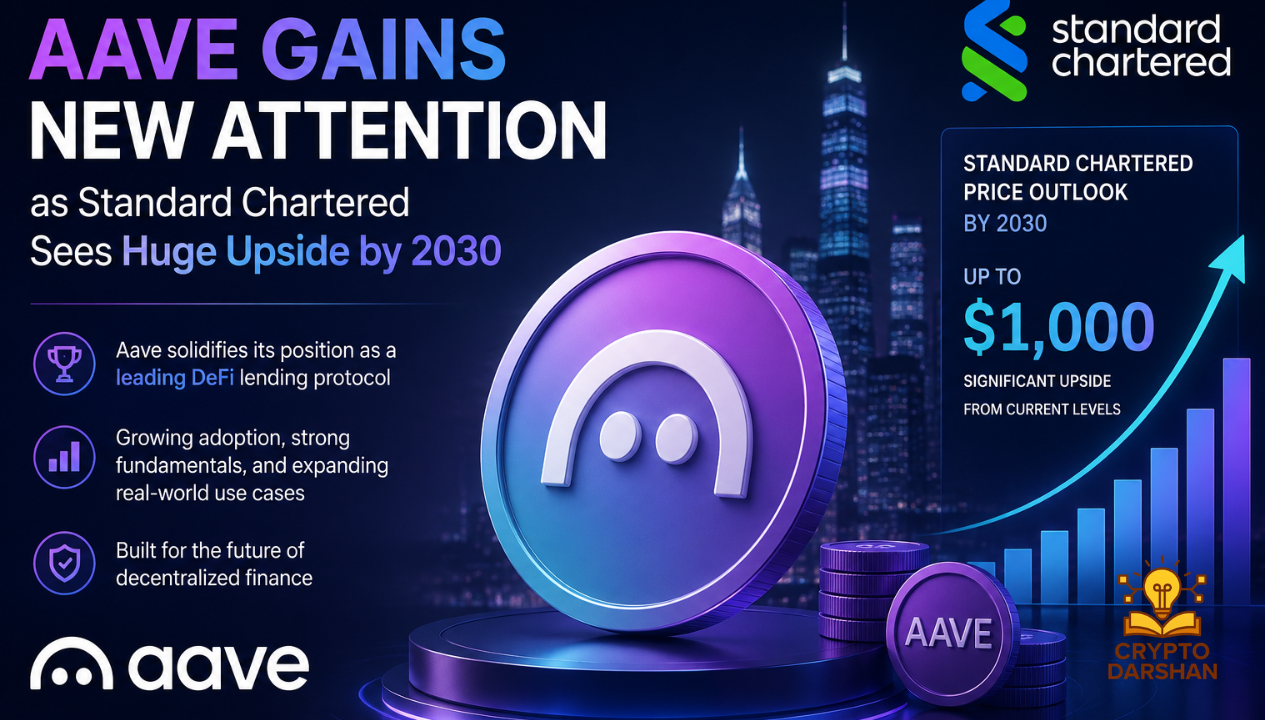
Aave is back in the spotlight after Standard Chartered said the token could rise sharply by the end of 2030. The bank’s call has caught attention because it links Aave’s future to the bigger growth story in decentralized finance, tokenized assets, and on-chain lending.
A Bold Price Target
Standard Chartered has reportedly set a $3,500 target for AAVE by 2030, which would imply a gain of roughly 50 times from its current level. The bank also sees the token climbing in stages before then, with a path that includes higher levels in 2026, 2027, 2028, and 2029.
That kind of forecast is not just a price call. It is a sign that some traditional finance players now think DeFi could become a much larger part of the financial system over the next few years.
Why The Bank Is Bullish
The main reason behind the forecast is the expected growth of tokenized finance. Standard Chartered believes assets active in DeFi could grow many times over this decade, which would send more deposits and activity toward platforms like Aave.
Aave is one of the biggest lending protocols in crypto, and it allows users to borrow and lend without a middleman. That simple structure is one of the reasons it has stayed relevant through many market cycles
Real-World Assets Matter
A major part of Aave’s growth story now comes from real-world assets, or RWAs. These are traditional assets that are represented on blockchain, such as private credit or other tokenized financial products.
Aave’s permissioned RWA market lets approved institutions use tokenized assets as collateral and borrow stablecoins against them. Supporters say this gives the protocol a bridge between old finance and new finance, which could help it attract larger and more stable deposits over time.
Recent Pressure And Recovery
The bullish view comes after a rough stretch for Aave. A recent exploit tied to the broader DeFi ecosystem hit confidence and helped cut into the platform’s deposits and market share.
Even so, Standard Chartered argues that Aave has already moved past that shock. The bank believes the protocol is still well-positioned because it has strong infrastructure, a well-known brand, and growing use cases tied to tokenized assets.
Another reason for optimism is Aave’s connection to real-world assets and tokenized finance. As more institutions look for blockchain-based financial tools, Aave could benefit from being one of the first major lending platforms with a clearer path into that market. The platform’s existing scale, brand recognition, and product development may help it regain momentum if the broader DeFi sector keeps growing.
What Could Drive Growth
There are a few reasons Aave could keep gaining ground if the market turns in its favor. First, more tokenized assets could mean more borrowing activity on the platform. Second, a restart of its token buyback program could support the token’s value. Third, deeper links with traditional finance could bring in more capital.
Aave’s own ecosystem also keeps evolving. Its newer version, V4, has already drawn early deposits, which suggests users are still interested in the protocol’s long-term roadmap.
Risks Still Remain
The forecast is exciting, but it is not a sure thing. DeFi still faces regulatory uncertainty, smart contract risk, and tough competition from other lending platforms.
There is also the issue of adoption speed. The bank’s target depends on tokenized finance growing much faster than it does today, and that kind of shift may take longer than many traders expect.
What This Means For Investors

For investors, the headline is less about an exact price target and more about the bigger trend. A major bank is now treating Aave as a serious long-term DeFi player, not just a speculative crypto token.
That does not remove risk, but it does show how much attention decentralized finance is getting from traditional financial institutions. If tokenized assets keep growing, Aave could become one of the clearest winners in the space