Crypto payment innovation accelerates as stablecoins challenge Visa and Mastercard dominance. With $27.6T volume in 2024 surpassing traditional networks, the crypto payment wars question if they’ll replace cards amid integrations and explosive growth. The global payments industry is experiencing one of the most significant transformations in modern financial history. For decades, Visa and Mastercard have stood as the undisputed leaders of electronic payments, processing trillions of dollars annually and connecting billions of consumers and merchants worldwide. Their networks have become the backbone of global commerce, enabling seamless transactions across borders and currencies.
However, a new contender has entered the arena stablecoins. These blockchain-based digital currencies, designed to maintain a stable value by being pegged to fiat currencies like the U.S. dollar, are challenging the traditional payment giants. They promise faster, cheaper, and borderless transactions that operate 24/7 without intermediaries.
As the world moves toward digital finance, the question becomes increasingly relevant: Can stablecoins truly replace Visa and Mastercard, or will they coexist in a hybrid financial ecosystem?
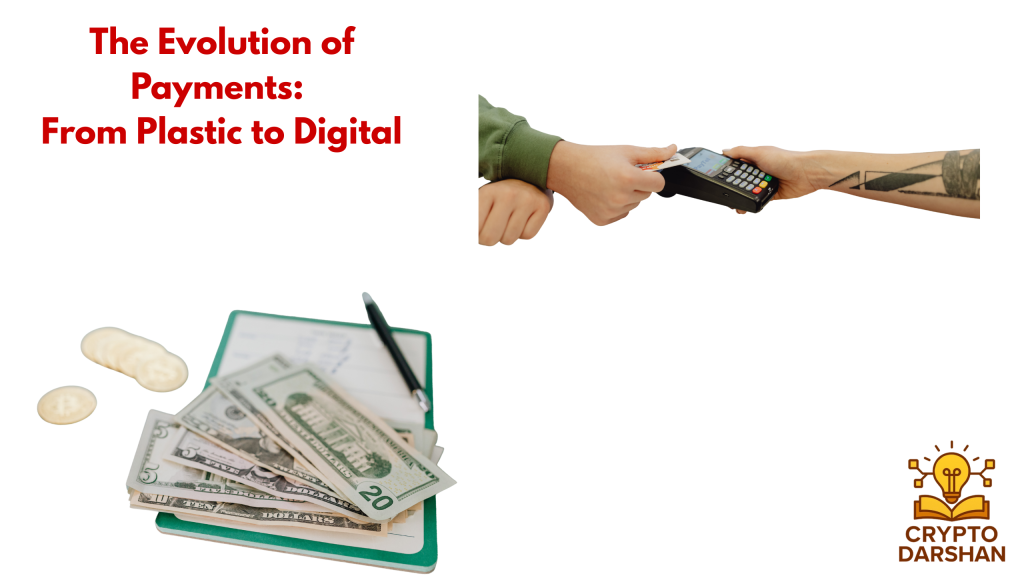
The Evolution of Payments: From Plastic to Digital
The Rise of Card Networks
Visa and Mastercard revolutionized payments by replacing cash and checks with plastic cards. Their networks connect consumers, merchants, banks, and payment processors, creating a global infrastructure that supports billions of transactions daily.
Their model relies on intermediaries each transaction passes through multiple entities before approval. While this ensures security and fraud prevention, it also introduces delays and high fees. Merchants often pay between 1.5% and 3.5% per transaction, and cross-border payments can take several days to settle.
The Digital Transformation
The rise of e-commerce, mobile banking, and fintech innovation has changed consumer expectations. People now demand instant, low-cost, and borderless payments. Digital wallets like PayPal, Apple Pay, and Google Pay have made transactions more convenient, but they still depend on the same card networks underneath.
This dependency on legacy systems has created inefficiencies that blockchain technology aims to solve. The emergence of cryptocurrencies, and later stablecoins, introduced a new paradigm decentralized, peer-to-peer payments that bypass traditional intermediaries.
The Rise of Stablecoins

What Are Stablecoins?
Stablecoins are digital assets that are designed to maintain a stable price over time. They combine the stability of traditional money with the efficiency of blockchain technology.
There are three main categories:
- Fiat-collateralized stablecoins – Backed by reserves of fiat currency (e.g., USDC, USDT).
- Crypto-collateralized stablecoins – Backed by other cryptocurrencies (e.g., DAI).
- Algorithmic stablecoins – Use algorithms to maintain price stability (e.g., TerraUSD, which failed in 2022).
The rapid development of blockchain ecosystems has enabled stablecoins to become a key component of Web3 financial infrastructure, similar to the decentralized systems discussed in The Battle for Web3 Infrastructure: RPC Providers vs Decentralized Nodes.
The Growth of Stablecoins
Stablecoins have grown exponentially. By 2025, their total market capitalization exceeded $150 billion, with USDT (Tether) and USDC (USD Coin) leading the market. They are now used for trading, remittances, payroll, and even decentralized finance (DeFi) applications.
Their appeal lies in speed, cost, and accessibility. Transactions settle in seconds, cost less than a cent, and operate 24/7 without banks or intermediaries. For businesses and consumers frustrated by high fees and slow settlements, stablecoins offer a compelling alternative.
How Stablecoins Work in Payments
The Transaction Process
Stablecoin payments occur directly between digital wallets on a blockchain. There are no banks or card processors involved. The blockchain verifies and records the transaction, ensuring transparency and security.
Example:
- A customer pays a merchant in USDC.
- The transaction is broadcast to the blockchain.
- Within seconds, the merchant receives the funds.
- Settlement is final and irreversible.
This peer-to-peer model eliminates intermediaries, reducing costs and delays.
Merchant Integration
Payment gateways like BitPay, Coinbase Commerce, and Circle allow merchants to accept stablecoins easily. These platforms can automatically convert stablecoins into fiat currency, protecting merchants from crypto volatility.
Major companies such as Shopify, Overstock, and Newegg already accept stablecoin payments, signaling growing mainstream adoption.
Comparing Stablecoins to Visa and Mastercard
| Feature | Stablecoins | Visa/Mastercard |
| Transaction Speed | Seconds (blockchain confirmation) | Seconds for authorization, days for settlement |
| Fees | Near zero to <1% | 1.5%–3.5% per transaction |
| Availability | 24/7, global | Dependent on banking hours |
| Intermediaries | None (peer-to-peer) | Multiple (banks, processors, networks) |
| Transparency | Public blockchain ledger | Private, centralized systems |
| Chargebacks | Not possible (irreversible) | Possible but costly |
| Regulation | Evolving, fragmented | Highly regulated and standardized |
Stablecoins outperform traditional networks in speed and cost, but Visa and Mastercard maintain advantages in trust, consumer protection, and global acceptance.
The Advantages of Stablecoin Payments

1. Lower Transaction Costs
Stablecoins eliminate intermediaries, drastically reducing fees. This benefits small businesses and international merchants who lose significant revenue to payment processing costs.
2. Instant Settlement
Traditional card payments can take days to settle, especially across borders. Stablecoins settle in seconds, improving cash flow and reducing risk.
3. Borderless Transactions
Stablecoins operate globally without currency conversion or banking restrictions, making them ideal for cross-border commerce and remittances.
4. Financial Inclusion
Billions of people lack access to traditional banking but have smartphones. Stablecoins enable participation in the digital economy without needing a bank account.
5. Transparency and Security
Blockchain technology ensures every transaction is recorded on a public ledger, reducing fraud and increasing accountability.
6. Programmable Money
Stablecoins can integrate with smart contracts, enabling automated payments, subscriptions, and escrow services something traditional systems cannot easily replicate.
The Challenges Facing Stablecoins
1. Regulatory Uncertainty
Governments are still defining how to regulate stablecoins. Concerns include money laundering, consumer protection, and financial stability. The collapse of TerraUSD in 2022 intensified scrutiny.
In the U.S., the Stablecoin TRUST Act aims to establish clear rules for issuers, requiring full reserves and regular audits. Until global standards emerge, uncertainty remains a major barrier.
2. Trust and Transparency
Not all stablecoins are equally trustworthy. Some issuers have faced criticism for lack of transparency about their reserves. Without clear audits, users risk holding tokens that may not be fully backed.
3. Volatility of Underlying Assets
While stablecoins are designed to maintain a fixed value, their stability depends on the assets backing them. Economic shocks or poor management could destabilize even fiat-backed coins.
4. Limited Merchant Adoption
Despite growing interest, most merchants still rely on Visa and Mastercard. Integrating stablecoin payments requires new infrastructure and education.
5. Lack of Consumer Protections
Stablecoin transactions are irreversible. If funds are sent to the wrong address or a scam occurs, there is no recourse. Visa and Mastercard, by contrast, offer chargebacks and fraud protection.
Visa and Mastercard’s Response to Crypto
Visa’s Crypto Strategy
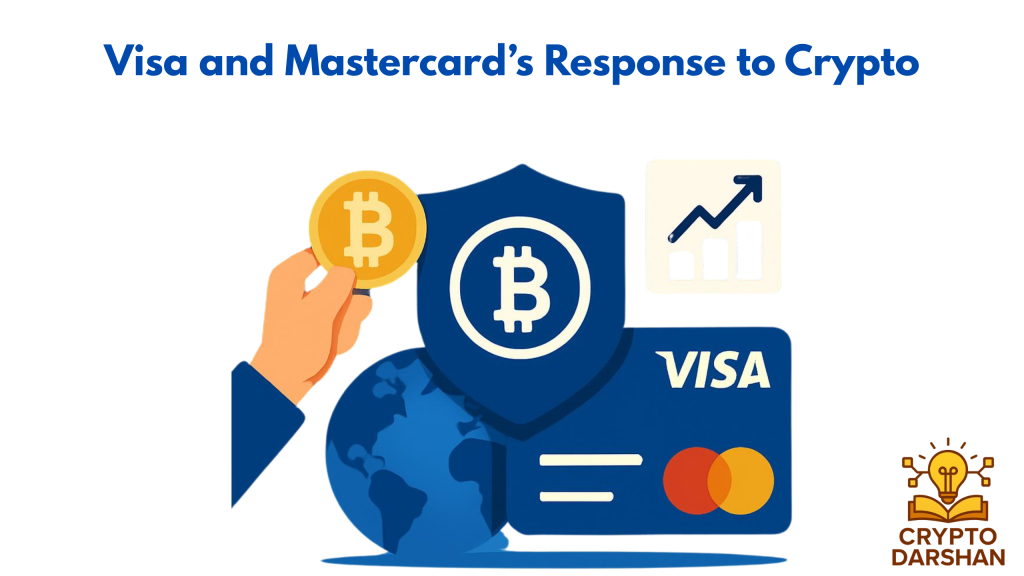
Visa has partnered with crypto platforms like Crypto.com, Coinbase, and Circle to issue crypto-linked debit cards. These allow users to spend stablecoins anywhere Visa is accepted. Visa also supports USDC settlements on its network, enabling faster cross-border payments.
Mastercard’s Blockchain Initiatives
Mastercard has developed its Multi-Token Network (MTN) to support digital assets, stablecoins, and central bank digital currencies (CBDCs). It has also partnered with blockchain firms to enhance security and compliance for crypto transactions.
Both companies recognize that the future of payments will be multi-rail, combining traditional and blockchain-based systems.
The Role of Central Bank Digital Currencies (CBDCs)
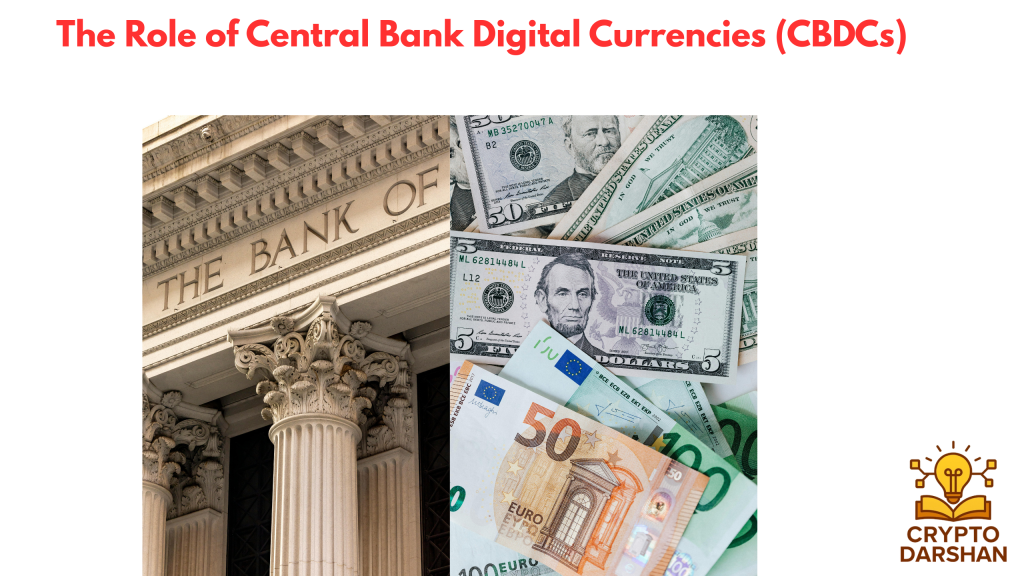
Central banks worldwide are exploring CBDCs, digital versions of national currencies. These could compete directly with private stablecoins while offering government-backed stability.
Countries like China (Digital Yuan), Sweden (e-Krona), and the Bahamas (Sand Dollar) have already launched pilot programs. The U.S. Federal Reserve is studying a potential digital dollar.
CBDCs could integrate with existing payment networks, allowing Visa and Mastercard to remain relevant while leveraging blockchain efficiency. However, they could also reduce the need for private stablecoins if governments provide similar benefits.
The Future of Payments: Collaboration or Competition?

The future may not be a zero-sum game between stablecoins and card networks. Instead, a hybrid model could emerge where both coexist and complement each other.
Scenario 1: Stablecoins Replace Card Networks
Blockchain technology becomes the dominant payment infrastructure. Merchants and consumers transact directly using stablecoins, bypassing banks and card processors. This would require mass adoption, regulatory clarity, and user-friendly interfaces.
Scenario 2: Integration and Coexistence
Stablecoins integrate into existing systems. Visa and Mastercard could act as on-ramps and off-ramps for digital currencies, processing stablecoin payments alongside fiat transactions.
Scenario 3: Centralized Digital Dominance
If CBDCs become widespread, governments could control digital payments directly. Visa and Mastercard might pivot to providing infrastructure and analytics for CBDC transactions.
Case Studies: Stablecoins in Action

1. Circle and USDC
Circle’s USD Coin (USDC) is fully backed by U.S. dollar reserves and audited monthly. It is used by businesses for payroll, remittances, and cross-border settlements. Circle’s partnerships with Visa and Stripe show how stablecoins can integrate with traditional finance.
2. Tether (USDT)
Tether remains the largest stablecoin by market cap, widely used in crypto trading and international transfers. Despite controversies, it continues to dominate liquidity in the crypto ecosystem.
3. PayPal USD (PYUSD)
PayPal launched PYUSD in 2023, marking a major milestone in mainstream adoption. Integrated directly into PayPal and Venmo, PYUSD allows users to send, receive, and convert digital dollars seamlessly.
4. Emerging Market Use Cases
In countries with unstable currencies, such as Argentina and Nigeria, stablecoins are becoming a lifeline. People use them to preserve value and make international payments without relying on local banks.
The Economic Impact of Stablecoin Adoption
On Consumers
Stablecoins empower consumers with faster, cheaper, and more transparent payments. They also enable access to decentralized finance (DeFi) services, allowing users to earn interest or borrow funds without banks.
On Businesses
Merchants benefit from lower fees, instant settlements, and global reach. However, they must manage new risks, including regulatory compliance and crypto volatility.
On Banks and Financial Institutions
Banks face disruption as stablecoins reduce the need for intermediaries. Yet, they can adapt by offering custody, compliance, and liquidity services for digital assets. Stablecoin markets remain stable partly because liquidity providers help maintain efficient trading environments, a process explained in Crypto Market Makers in 2026: Who Controls Liquidity Behind the Scenes?
On Governments
Widespread stablecoin use could challenge monetary policy and financial oversight. Regulators must balance innovation with stability, ensuring that digital currencies do not undermine national economies.
Technological Innovations Driving Stablecoin Payments

Layer-2 Scaling Solutions
Networks like Polygon, Arbitrum, and Optimism enable faster and cheaper stablecoin transactions by processing them off-chain before settling on the main blockchain.
Cross-Chain Interoperability
Projects such as Chainlink CCIP and Cosmos IBC allow stablecoins to move seamlessly across different blockchains, enhancing liquidity and usability.
Smart Contracts and Automation
Stablecoins can integrate with smart contracts to automate payments, subscriptions, and escrow services, reducing administrative overhead.
Tokenized Assets and Real-World Integration
Stablecoins are paving the way for tokenized assets digital representations of real-world items like stocks, bonds, and real estate creating a unified digital economy.
Global Adoption Trends and Real-World Examples

Stablecoin adoption is accelerating across industries and regions. In Latin America, platforms like Bitso and Ripio use stablecoins to facilitate remittances between the U.S. and Mexico, reducing transfer costs by up to 70%. In Africa, startups such as Yellow Card and Chipper Cash leverage stablecoins to enable cross-border payments where traditional banking infrastructure is limited.
In Asia, e-commerce giants are experimenting with stablecoin payments. For instance, Grab and Shopee have explored blockchain-based payment systems to reduce settlement times for merchants. Meanwhile, Singapore and Hong Kong are developing regulatory sandboxes to test stablecoin-based financial products.
In the corporate world, companies like Stripe and Checkout.com have integrated stablecoin settlement options for global merchants. This allows businesses to receive payments in USDC, reducing foreign exchange costs and improving liquidity.
Even humanitarian organizations are adopting stablecoins. The United Nations World Food Programme has used blockchain-based stablecoin systems to distribute aid efficiently in regions with limited banking access. These real-world applications demonstrate that stablecoins are not just speculative assets they are becoming practical tools for global commerce and financial inclusion.
The Road Ahead: Challenges and Opportunities

The path to mainstream stablecoin adoption is filled with both promise and obstacles. Key developments to watch include:
- Regulatory frameworks that define how stablecoins operate globally.
- Technological advancements improving scalability and security.
- Institutional adoption by banks, corporations, and governments.
- Consumer education to build trust and understanding.
- Integration with existing payment networks for seamless user experiences.
- Environmental sustainability, as blockchain networks evolve toward energy-efficient consensus mechanisms.
- Interoperability standards, ensuring stablecoins can move freely across platforms and jurisdictions.
The Role of Artificial Intelligence and Data Analytics
Artificial intelligence (AI) is beginning to play a major role in the evolution of digital payments. AI-driven analytics can help detect fraud, predict transaction patterns, and optimize blockchain efficiency. When combined with stablecoins, AI could enable real-time risk assessment, automated compliance, and personalized financial services.
For example, AI algorithms could monitor blockchain transactions to identify suspicious activity, helping regulators and businesses maintain transparency. This integration of AI and blockchain could make stablecoin payments not only faster but also smarter and safer.
The Environmental Debate
One growing concern is the environmental impact of blockchain networks. While early blockchains like Bitcoin consume large amounts of energy, newer networks such as Ethereum (post-merge), Solana, and Avalanche use energy-efficient consensus mechanisms. As stablecoin transactions increasingly move to these eco-friendly platforms, the environmental footprint of digital payments will continue to shrink.
The Human Element in the Future of Payments
Beyond technology and regulation, the success of stablecoins will depend on human trust and behavior. Consumers must feel confident that digital currencies are safe, easy to use, and widely accepted. Education will play a crucial role in helping people understand how stablecoins work and how to protect their assets. Financial literacy programs, transparent communication from issuers, and user-friendly wallets will drive adoption.
As younger generations grow up in a digital-first world, their comfort with blockchain-based payments could accelerate the shift toward stablecoins, making them a natural part of everyday financial life alongside traditional payment systems.
FAQ: Crypto Payment Wars – Will Stablecoins Replace Visa and Mastercard?
1. What are stablecoins?
Stablecoins are cryptocurrencies pegged to stable assets like the US dollar, euro, or gold. They aim to combine the benefits of digital currencies (fast, borderless transactions) with the stability of traditional money, reducing volatility seen in coins like Bitcoin or Ethereum.
2. How can stablecoins compete with Visa and Mastercard?
Stablecoins can enable instant, low-fee transactions across borders without relying on traditional banking rails. Unlike Visa or Mastercard, which depend on intermediaries and can charge fees for cross-border payments, stablecoins can streamline payments using blockchain networks.
3. Are there any major companies using stablecoins for payments?
Yes. Companies like PayPal and Stripe are experimenting with crypto and stablecoin integration. Some retailers and online platforms now accept stablecoins as a payment option, though adoption is still in early stages compared to traditional card networks.
4. What are the benefits of stablecoin payments?
- Lower transaction fees compared to card networks.
- Faster settlements, often near-instant globally.
- Borderless access, especially useful in countries with limited banking infrastructure.
- Programmable money: Smart contracts can automate recurring payments and other financial processes.
5. What are the challenges of replacing Visa and Mastercard with stablecoins?
- Regulatory hurdles: Governments are cautious about stablecoin use due to potential risks like money laundering and financial instability.
- Consumer adoption: Most people are familiar with cards and may hesitate to switch.
- Merchant infrastructure: Many retailers need payment processors and POS systems that support stablecoins.
- Volatility and trust: While stablecoins are designed to be stable, public confidence is crucial.
6. Could central bank digital currencies (CBDCs) impact this shift?
Yes. CBDCs are government-backed digital currencies that can compete with private stablecoins. Their adoption could accelerate digital payments while maintaining regulatory oversight, potentially reducing the need for private stablecoins as mainstream payment methods.
7. Are stablecoins safer than using credit cards?
Stablecoins can reduce the risk of fraud or chargebacks since blockchain transactions are immutable. However, users are responsible for securing private keys and wallets. Card networks offer consumer protection, which stablecoins currently lack in many cases.
8. Will stablecoins completely replace Visa and Mastercard?
Not immediately. Stablecoins are more likely to complement traditional payment networks initially. Over time, as infrastructure, adoption, and regulation improve, they could become a serious alternative for global payments but replacing Visa and Mastercard entirely would require mass adoption, trust, and widespread merchant support.
Conclusion
The battle between stablecoins and traditional payment giants like Visa and Mastercard is not just about technology it’s about the future of money. Stablecoins offer a vision of decentralized, borderless, and efficient payments, while Visa and Mastercard represent trust, regulation, and global infrastructure built over decades.
Rather than outright replacement, the most likely outcome is convergence. Stablecoins will continue to grow, reshaping how value moves across the world, while Visa and Mastercard evolve to integrate blockchain technology into their networks. Together, they could create a hybrid financial system that combines the best of both worlds speed and stability, innovation and trust.
The crypto payment wars are far from over, but one thing is certain: the way the world pays is changing forever.