
Transferring funds between wallets and exchanges is one of the most essential activities in the world of cryptocurrency trading. Whether moving assets for trading, investment, or security purposes, understanding how to transfer funds efficiently and safely is crucial. This guide provides a comprehensive explanation of how traders transfer funds between wallets and exchanges easily, the tools they use, the risks involved, and the best practices to ensure smooth transactions. The focus keyword wallets and exchanges will be explored in depth throughout this article.
Introduction to Wallets and Exchanges
In cryptocurrency trading, wallets and exchanges are the two main components that enable users to store, send, and trade digital assets. A wallet is a digital tool that stores private keys and allows users to manage their cryptocurrencies. An exchange, on the other hand, is a platform where traders buy, sell, or swap cryptocurrencies.
What Are Wallets?
A cryptocurrency wallet is a digital or physical device that stores the cryptographic keys needed to access and manage digital assets. There are two main types of wallets:
- Hot Wallets – These are connected to the internet and are convenient for frequent transactions. Examples include mobile wallets, desktop wallets, and web wallets.
- Cold Wallets – These are offline storage devices that provide enhanced security. Examples include hardware wallets and paper wallets.
Each type of wallet has its advantages and disadvantages. Hot wallets are faster and easier to use, while cold wallets offer better protection against hacking.
What Are Exchanges?
An exchange is a marketplace where securities, commodities, derivatives, and other financial instruments are traded. An exchange ensures fair trading and spreads price information efficiently for all securities traded. Cryptocurrency exchanges are online platforms that facilitate the buying, selling, and trading of cryptocurrencies. They act as intermediaries between buyers and sellers. There are two main types of exchanges:
- Centralized Exchanges (CEXs) – Operated by companies that manage user accounts and hold funds on behalf of traders. Examples include Binance, Coinbase, and Kraken.
- Decentralized Exchanges (DEXs) – Operate without intermediaries, allowing users to trade directly from their wallets. Examples include Uniswap, PancakeSwap, and SushiSwap.
Understanding how wallets and exchanges work together is key to managing funds effectively.
Why Traders Transfer Funds Between Wallets and Exchanges
Traders transfer funds between wallets and exchanges for several reasons. Each reason is tied to specific trading strategies, security preferences, and investment goals.
1. Trading Opportunities
Traders often move funds from wallets to exchanges to take advantage of market opportunities. Exchanges provide liquidity and access to various trading pairs, allowing traders to buy or sell assets quickly.
2. Security and Storage
After trading, many traders transfer their funds back to personal wallets for safekeeping. Keeping large amounts of cryptocurrency on exchanges can be risky due to potential hacks or platform failures. Wallets, especially cold wallets, provide better control and security.
3. Diversification
Some traders use multiple wallets and exchanges to diversify their holdings. This strategy reduces risk by spreading assets across different platforms and storage methods.
4. Staking and Yield Farming
Certain wallets and exchanges offer staking or yield farming opportunities. Traders may transfer funds to participate in these programs and earn passive income.
5. Cross-Platform Transfers
Traders who use multiple exchanges often transfer funds between them to access specific coins, lower fees, or better liquidity.
Step-by-Step Guide: How to Transfer Funds Between Wallets and Exchanges

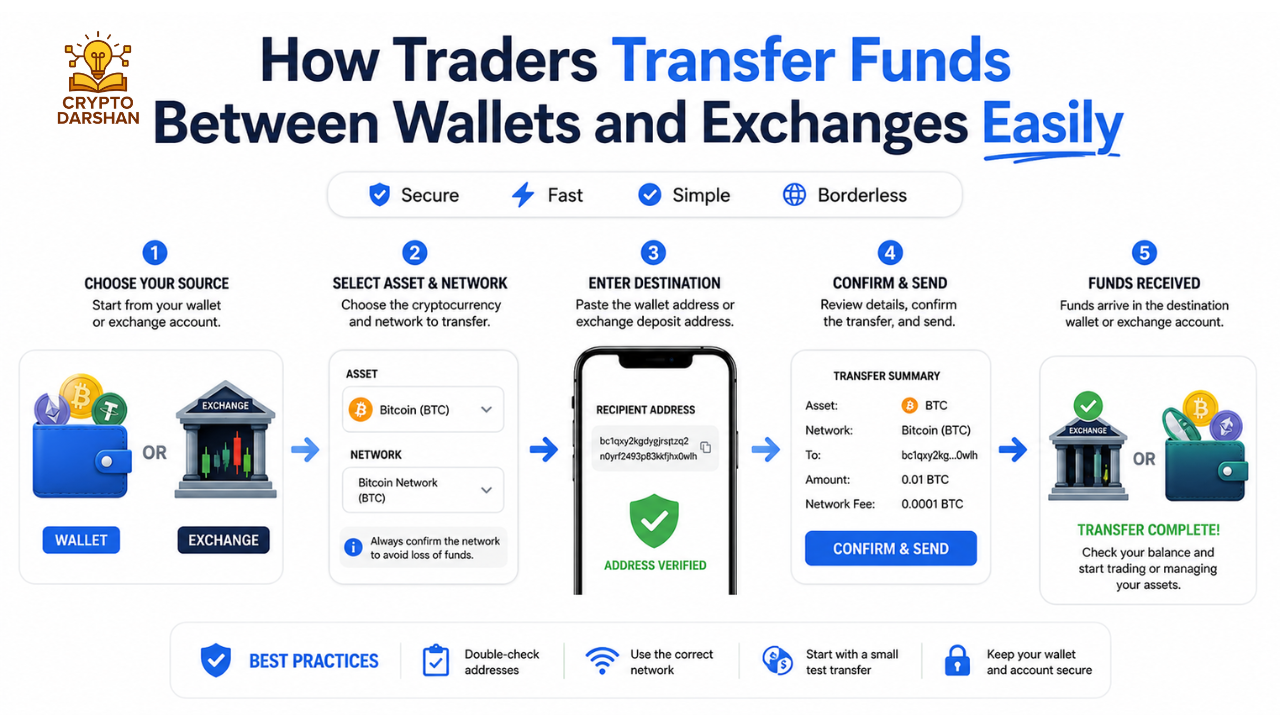
Transferring funds between wallets and exchanges involves several steps. Each step must be followed carefully to avoid errors or loss of funds.
Step 1: Choose the Right Wallet and Exchange
Before transferring funds, select a reliable wallet and exchange. Ensure both support the cryptocurrency being transferred. For example, if transferring Ethereum, both the wallet and exchange must support ERC-20 tokens.
Step 2: Verify Wallet and Exchange Addresses
Every cryptocurrency has a unique address format. Copy the correct deposit or withdrawal address from the exchange or wallet. Double-check the address to avoid sending funds to the wrong destination.
Step 3: Initiate the Transfer
- From Wallet to Exchange:
Open the wallet, select the cryptocurrency, and choose the “Send” option. Paste the exchange’s deposit address and enter the amount to transfer. - From Exchange to Wallet:
Log in to the exchange, go to the withdrawal section, and paste the wallet’s receiving address. Confirm the amount and complete the transaction.
Step 4: Confirm Network Fees
Every blockchain transaction requires a network fee. Fees vary depending on the network’s congestion and the type of cryptocurrency. Always check the fee before confirming the transfer.
Step 5: Wait for Confirmation
After initiating the transfer, wait for blockchain confirmations. The time required depends on the network. Bitcoin transactions may take several minutes, while others like Solana or Polygon are faster.
Step 6: Verify Receipt
Once the transaction is confirmed, check the receiving wallet or exchange account to ensure the funds have arrived. Always verify the transaction ID (TXID) on a blockchain explorer.
Common Mistakes When Transferring Funds Between Wallets and Exchanges

Even experienced traders can make mistakes when transferring funds between wallets and exchanges. Understanding these common errors helps prevent losses.
1. Sending to the Wrong Address
Each cryptocurrency has a unique address format. Sending funds to an incompatible address (e.g., sending Bitcoin to an Ethereum address) can result in permanent loss.
2. Ignoring Network Selection
Some cryptocurrencies exist on multiple networks. For example, USDT can be sent via ERC-20, TRC-20, or BEP-20. Choosing the wrong network can cause delays or loss of funds.
3. Not Checking Fees
High network fees can reduce the amount received. Always check and compare fees before transferring.
4. Transferring During Network Congestion
During peak times, blockchain networks can become congested, leading to delays. It’s best to transfer during off-peak hours.
5. Failing to Enable Two-Factor Authentication (2FA)
Without 2FA, accounts are more vulnerable to unauthorized access. Always enable 2FA on both wallets and exchanges.
Security Tips for Transferring Funds Between Wallets and Exchanges
1. Use Trusted Platforms
Only use reputable wallets and exchanges with proven security records. Research platforms thoroughly by checking user reviews on forums like Reddit and Trustpilot. Verify they’ve operated for years without major breaches. Always access platforms through official websites or apps from legitimate app stores. Bookmark official URLs to avoid phishing sites. Trusted platforms invest in security infrastructure, insurance funds, and regular audits to protect your assets.
2. Enable Two-Factor Authentication
Two-factor authentication (2FA) requires both your password and a verification code to access wallets and exchanges. Use authenticator apps like Google Authenticator or Authy instead of SMS, which can be intercepted through SIM swapping. Enable 2FA for logins, withdrawals, and API access. Even if hackers steal your password, they cannot access your account without the second authentication factor.
3. Avoid Public Wi-Fi
Never transfer funds between wallets and exchanges over public Wi-Fi in cafes, airports, or hotels. These networks are vulnerable to man-in-the-middle attacks where hackers intercept your data. Always use secure, private connections at home or mobile data. If you must use public Wi-Fi, connect through a reputable VPN to encrypt your connection, though it’s best to avoid financial transactions on public networks entirely.
4. Keep Private Keys Secure
Private keys control your cryptocurrency—never share them with anyone, including support staff from wallets and exchanges. Store them offline in hardware wallets, encrypted USB drives, or written on paper in a safe. Avoid cloud storage, email, or unencrypted files. Create multiple backup copies in different physical locations for added protection against loss or damage.
5. Verify URLs and Apps
Phishing attacks use fake websites and apps that mimic legitimate wallets and exchanges to steal credentials. Always verify URLs for correct spelling, proper domains, and HTTPS certificates. Bookmark official sites and use those instead of search results. Download apps only from official stores and verify developer names. Be suspicious of unsolicited links in emails or messages.
6. Use Small Test Transactions
Before transferring large amounts between wallets and exchanges, send a small test transaction first. This confirms the address is correct, the network is properly selected, and both platforms work normally. Send $5-10 worth, wait for confirmation, then proceed with the larger transfer. While you pay fees twice, it’s worth the protection against costly mistakes, especially with new platforms or networks.
The Role of Blockchain Networks in Transfers

Blockchain networks are the backbone of all transactions between wallets and exchanges. Each network has its own transaction speed, fee structure, and confirmation process.
Bitcoin Network
Bitcoin transactions are secure but can be slow and expensive during high traffic periods. It’s best for large, infrequent transfers.
Ethereum Network
Ethereum supports smart contracts and ERC-20 tokens but can have high gas fees. Layer 2 solutions like Arbitrum and Optimism help reduce costs.
Binance Smart Chain (BSC)
BSC offers faster and cheaper transactions, making it popular for transferring tokens like BNB and BEP-20 assets.
Solana and Polygon
These networks provide high-speed, low-cost transactions, ideal for frequent transfers between wallets and exchanges.
Tools That Simplify Transfers Between Wallets and Exchanges – Concise Explanations
1. QR Codes
QR codes eliminate typing errors when transferring funds between wallets and exchanges. Instead of copying long wallet addresses, simply scan the QR code with your device’s camera. This method is faster, more accurate, and protects against clipboard malware. Many QR codes also include payment amounts and network types, streamlining the entire transfer process for mobile users.
2. Blockchain Explorers
Blockchain explorers like Etherscan, BscScan, and Blockchain.com let you track transactions between wallets and exchanges in real-time. Enter your transaction ID (TXID) to view confirmation status, fees, and timestamps. These tools help verify transfers are processing correctly and troubleshoot delays by checking network congestion and fee levels.
3. Portfolio Trackers
Apps like CoinStats, CoinMarketCap, and Delta consolidate your holdings across multiple wallets and exchanges into one dashboard. They display real-time balances, transaction history, and portfolio value through API connections or manual entry. This centralized view helps you decide when and where to transfer funds for optimal asset distribution.
4. Cross-Chain Bridges
Bridges like Wormhole, Multichain, and Synapse Protocol enable asset transfers between different blockchains. They let you move tokens from one network to another—like converting USDC from Ethereum to Polygon. This is useful when wallets and exchanges support different networks or when seeking lower transaction fees on alternative chains.
5. API Integrations
APIs from major exchanges allow advanced traders to automate transfers between wallets and exchanges through custom scripts or bots. You can execute transfers, check balances, and set automated rules—like daily profit withdrawals to cold storage or cross-exchange arbitrage. While requiring technical knowledge, APIs enable efficient, sophisticated fund management.
How to Choose the Best Wallets and Exchanges

Selecting the right wallets and exchanges depends on trading goals, security needs, and convenience.
Factors to Consider
- Security Features – Look for 2FA, encryption, and cold storage options.
- Supported Assets – Ensure the platform supports the desired cryptocurrencies.
- User Interface – A simple, intuitive interface reduces errors.
- Fees – Compare transaction and withdrawal fees.
- Customer Support – Reliable support is essential for resolving issues quickly.
- Regulation and Compliance – Choose platforms that comply with local regulations.
The Future of Transfers Between Wallets and Exchanges

The process of transferring funds between wallets and exchanges is evolving rapidly. Innovations in blockchain technology are making transactions faster, cheaper, and more secure.
1. Layer 2 Solutions
Layer 2 networks reduce congestion on main blockchains, enabling faster and cheaper transfers.
2. Cross-Chain Compatibility
Future wallets and exchanges will support seamless cross-chain transfers, eliminating the need for bridges.
3. Decentralized Identity (DID)
DID systems will enhance security by verifying user identities without compromising privacy.
4. AI and Automation
Artificial intelligence will help detect suspicious transactions and automate fund management.
5. Regulatory Advancements
As governments develop clearer regulations, transferring funds between wallets and exchanges will become safer and more transparent.
Best Practices for Efficient Transfers – Medium Explanations

1. Double-Check All Addresses Before Sending
Cryptocurrency transactions are irreversible, so verifying addresses is crucial. Always copy and paste addresses instead of typing them manually. After pasting, compare at least the first and last six characters with the original address. Be cautious of clipboard malware that can alter copied addresses. Some platforms offer address whitelisting features for added security. Taking an extra minute to verify can prevent permanent loss of funds.
2. Use the Correct Network for Each Token
Many cryptocurrencies operate on multiple blockchain networks. For instance, USDT can be sent via Ethereum (ERC-20), Tron (TRC-20), or Binance Smart Chain (BEP-20). Before transferring between wallets and exchanges, confirm both platforms support the same network. Each network has different speeds and fees. Sending funds on an unsupported network can result in lost assets that may be impossible to recover.
3. Keep Transaction Records for Tax and Audit Purposes
Document all transfers between wallets and exchanges for tax compliance and personal tracking. Record the date, amount, cryptocurrency type, addresses, transaction ID, and purpose. Use spreadsheets or crypto tax software like CoinTracker to organize this data. These records are essential during tax season, protect you during audits, and help track portfolio performance.
4. Avoid Transferring Large Amounts During Volatile Market Conditions
During high market volatility, blockchain networks often become congested, leading to higher fees and slower confirmations. If transferring to catch a trading opportunity, delays might cause you to miss your target price. When possible, transfer during calmer periods. If you must transfer during volatility, expect to pay premium fees for faster processing.
5. Regularly Update Wallet and Exchange Software
Keep your wallet apps and exchange platforms updated to access the latest security patches and features. Outdated software may contain vulnerabilities that hackers can exploit. Enable automatic updates or check weekly for new versions. For hardware wallets, firmware updates are especially important for addressing security issues. Always review release notes before updating.
6. Use Hardware Wallets for Long-Term Storage
Hardware wallets like Ledger and Trezor store private keys offline, offering maximum security for long-term holdings. Exchanges are more vulnerable to hacking since they’re online and hold many users’ funds. Transfer significant amounts you don’t need for immediate trading to a hardware wallet. When needed, move only the necessary amount to wallets and exchanges for trading, keeping the majority secure offline.
7. Stay Informed About Network Updates and Security Alerts
Subscribe to official announcements from your wallets and exchanges through email, social media, or community channels. Be aware of scheduled maintenance, network upgrades, or security alerts about phishing campaigns and fake apps. Staying informed helps you avoid disruptions during transfers and protects you from scams. Also monitor regulatory changes that might affect cryptocurrency transactions in your region.
FAQ: How Traders Transfer Funds Between Wallets and Exchanges Easily

1. Why do traders move funds between wallets and exchanges?
Traders transfer funds to buy or sell crypto quickly, secure profits, participate in staking or DeFi, and keep assets safer in private wallets instead of leaving everything on exchanges.
2. What is the difference between a crypto wallet and an exchange?
A crypto wallet gives users control of their private keys and funds, while a crypto exchange is a platform where users trade cryptocurrencies with others.
3. Are crypto transfers instant?
Not always. Transfer speed depends on the blockchain network being used. Some networks confirm transactions within seconds, while others may take several minutes.
4. What fees do traders pay when transferring crypto?
Most transfers include blockchain network fees, often called gas fees. Exchanges may also charge withdrawal fees depending on the cryptocurrency and network selected.
5. Why do traders use different blockchain networks?
Different networks offer different advantages such as lower fees, faster transactions, or better compatibility with certain wallets and exchanges.
6. What happens if crypto is sent to the wrong network?
Funds can become inaccessible or permanently lost if the receiving platform does not support that network. Traders always double-check wallet addresses and blockchain compatibility before sending.
7. How do traders keep transfers secure?
Experienced traders use hardware wallets, enable two-factor authentication (2FA), verify wallet addresses carefully, and avoid sharing private keys or seed phrases.
Conclusion
Transferring funds between wallets and exchanges is a fundamental skill for every cryptocurrency trader. Understanding how to move assets safely and efficiently helps maximize profits and minimize risks. By following best practices, using secure platforms, and staying informed about blockchain technology, traders can ensure smooth and reliable transactions. As the crypto ecosystem continues to evolve, the process of transferring funds between wallets and exchanges will become even more seamless, secure, and accessible to users worldwide.