


Ethereum co-founder Vitalik Buterin believes younger generations investing in stocks and digital assets instead of real estate could reduce the pressure that keeps housing prices high. His argument is that when fewer people rely on rising home values to build wealth, there may be less political resistance to building more homes and allowing prices to fall.
Buterin made the comments on X on November 18, following a discussion about housing affordability in Raleigh, North Carolina. He acknowledged that crypto still lacks some of the stability and long-term discipline traditionally associated with homeownership.
Why housing prices create conflict
Buterin described a conflict between housing as a basic need and housing as an investment. When people own homes, they often benefit from higher prices, which can make them less supportive of policies that increase housing supply.
He wrote that younger people investing more in stocks and “other digital things” could reduce incentives to keep housing expensive. In his view, society should be able to welcome lower housing prices in the same way it welcomes lower prices for other essential goods.
However, Buterin also recognized why housing has been attractive. It is a relatively safe, long-term asset that people cannot easily sell in seconds, which can discourage impulsive trading and encourage steady saving.
Raleigh shows how supply can lower rents
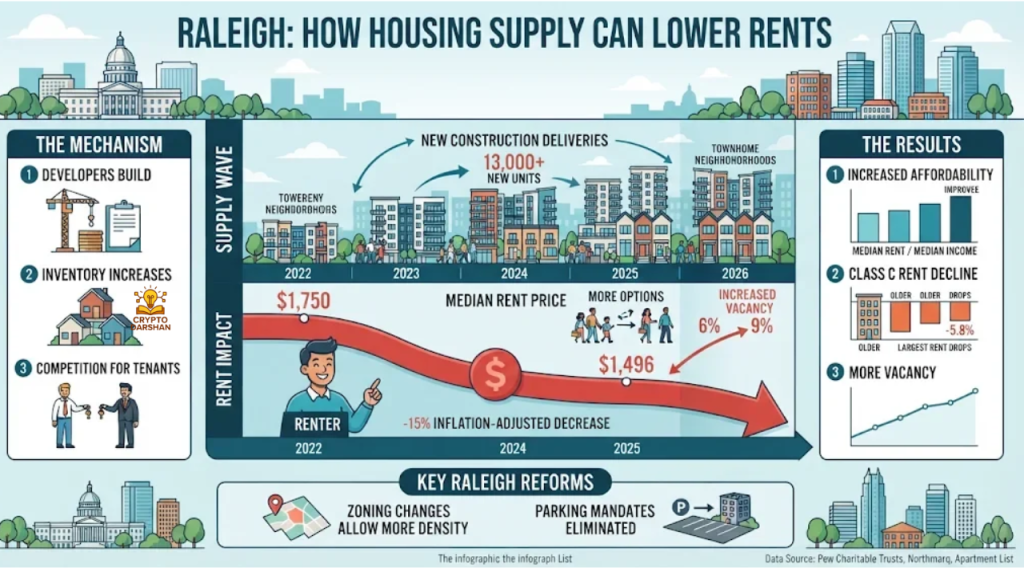
Buterin’s comments followed research from The Pew Charitable Trusts on Raleigh’s housing reforms. The city relaxed restrictions on townhouses and apartment developments and removed minimum parking requirements in 2022.
Between 2021 and 2024, Raleigh added 16,884 housing units, expanding its housing stock by 7.7%. Nationally, the housing stock grew by only 3.2% during the same period.
The results were meaningful. Inflation-adjusted rents in Raleigh fell 15% between 2022 and 2025. Rents for older and cheaper apartments fell 5.8% between 2023 and 2024.
In 2022, households needed to earn 79% of the area’s median income to afford a typical Raleigh apartment. By 2025, that requirement had fallen to 65%.
Are Gen Z choosing crypto over homes?
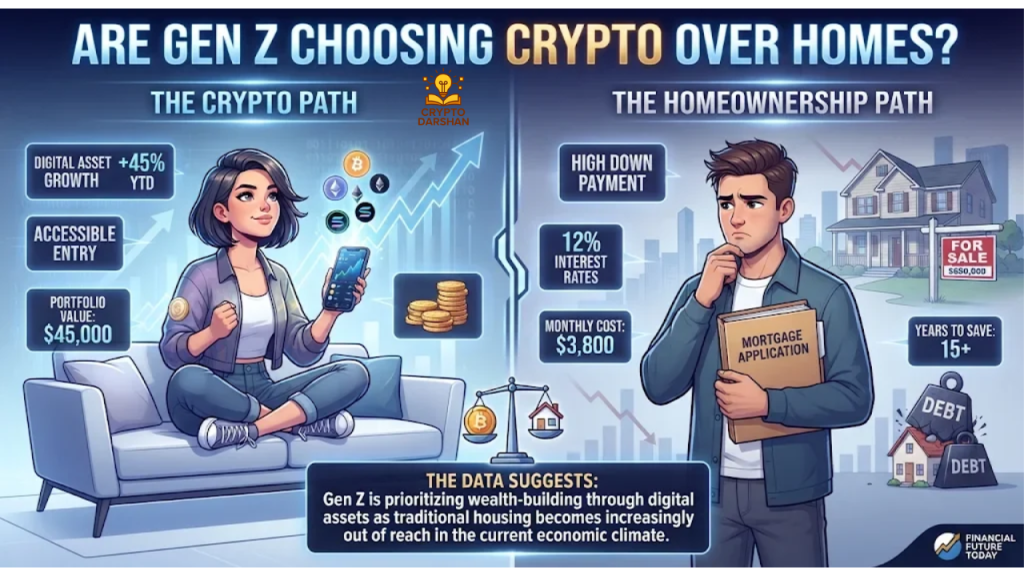
Homeownership remains difficult for many young Americans. The Federal Reserve’s May 2026 household economic survey found that only 24% of adults aged 18 to 29 owned homes in 2025.
By comparison, 58% of people aged 30 to 44 and 83% of adults aged 60 or older owned homes. The data show a clear generational gap in access to property ownership.
Crypto participation is also rising. The same Federal Reserve survey found that 9% of American adults bought or held cryptocurrencies as investments in 2025, up from 7% a year earlier.
A January 2025 Gemini survey found that 51% of Gen Z respondents across five countries had owned or currently held crypto, compared with 35% of respondents across all age groups.
Crypto and housing may not compete
The idea that young people must choose between crypto and real estate is not always accurate. A 2023 National Bureau of Economic Research working paper found that households sometimes sold cryptocurrency to fund home purchases and other expenses.
The research also found that areas with higher crypto wealth saw faster home-price growth after strong crypto market periods. In other words, crypto gains can become a source of housing down payments rather than a replacement for property investment.
The connection is becoming more formal. In June 2026, Coinbase and Better Mortgage completed their first Bitcoin-backed mortgage transaction. The arrangement allowed borrowers to use digital assets as collateral without selling their Bitcoin.
Buterin wants safer digital investing

Buterin did not say that Ethereum or any other token is a safe replacement for a home. Instead, he called for digital asset platforms to build products that encourage responsible long-term saving.
He argued that many modern platforms encourage the opposite behavior, including frequent trading and speculation. He wants digital finance to offer the useful qualities of housing investment: stability, patience, and a focus on long-term wealth building.
His comments build on earlier proposals for low-risk decentralized finance. In September 2025, he called for more attention to savings products, payments, and fully collateralized lending on Ethereum.
What it means for investors
For Gen Z, the practical message is that crypto should not be treated as an automatic substitute for housing. Digital assets can be volatile, while a home provides shelter and may offer a more stable long-term financial foundation.
A balanced approach may work best: build an emergency fund, invest for long-term goals, and use crypto only in amounts that will not create financial hardship if prices fall.
For the housing market, Buterin’s broader point is important. More housing supply, sensible zoning rules, and fewer barriers to construction may do more to improve affordability than simply encouraging young people to invest differently.