
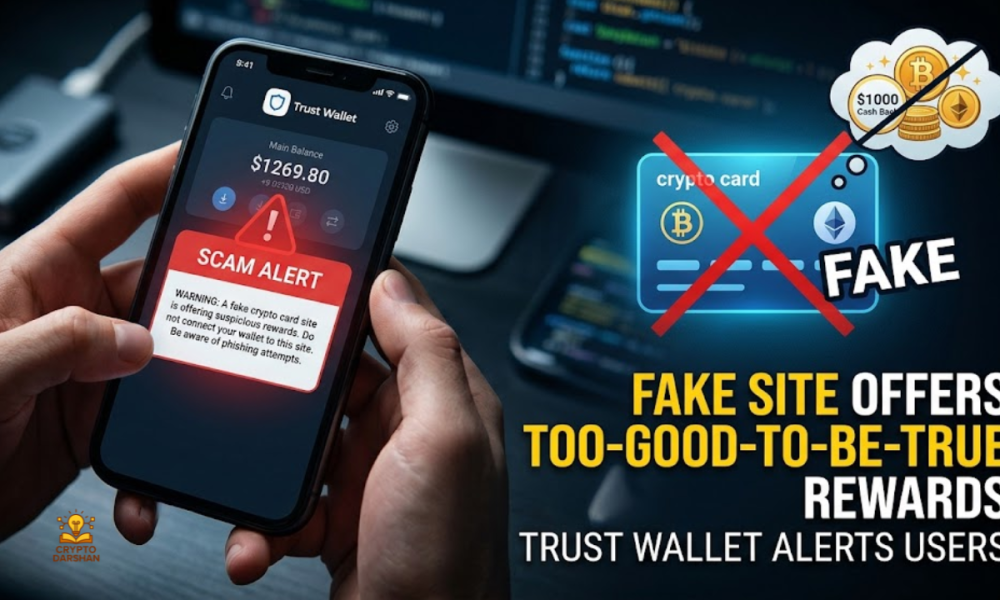
Trust Wallet has issued a security warning after a fraudulent website used its name and branding to promote a cryptocurrency payment card with unrealistic benefits. The company confirmed that the site is not connected to Trust Wallet and urged users not to connect their wallets or approve suspicious requests.
The fake offer promised premium features such as a $100,000 spending limit, up to 8% cashback, airport lounge access, zero foreign-exchange fees, and no KYC verification. It also claimed users could receive the card for only a $1 issuance fee.
What the fake website advertised
The scam site presented itself as a polished crypto card service using Trust Wallet’s logo, card designs, and promotional language. It offered three membership tiers: Lite, Signature, and Metal.
According to screenshots shared by crypto security researcher Daniel, known as @0xDani on X, the Lite card promised up to 3% cashback. The Signature tier advertised 5% rewards, zero foreign-exchange fees, and priority support. The Metal card claimed 8% cashback, unlimited airport lounge access, and 24/7 concierge service.
The site also said the card could be used anywhere, supported Apple Pay and Google Pay, and required no identity verification. Those claims were major red flags, especially because legitimate payment-card providers normally must follow KYC and anti-money-laundering rules.
Why the offer looked suspicious
Several details made the promotion unlikely to be genuine:
- A $1 issuance fee for a premium metal card with high rewards.
- A $100,000 spending limit without proper identity checks.
- Up to 8% cashback, far above typical card reward programs.
- No KYC despite claims of operating under licenses in four countries.
- A requirement for users to connect their crypto wallets.
The most dangerous part was the wallet connection request. Scammers often use fake websites to persuade users to connect a wallet and then sign a malicious transaction or permission request.
Trust Wallet confirms the site is fake
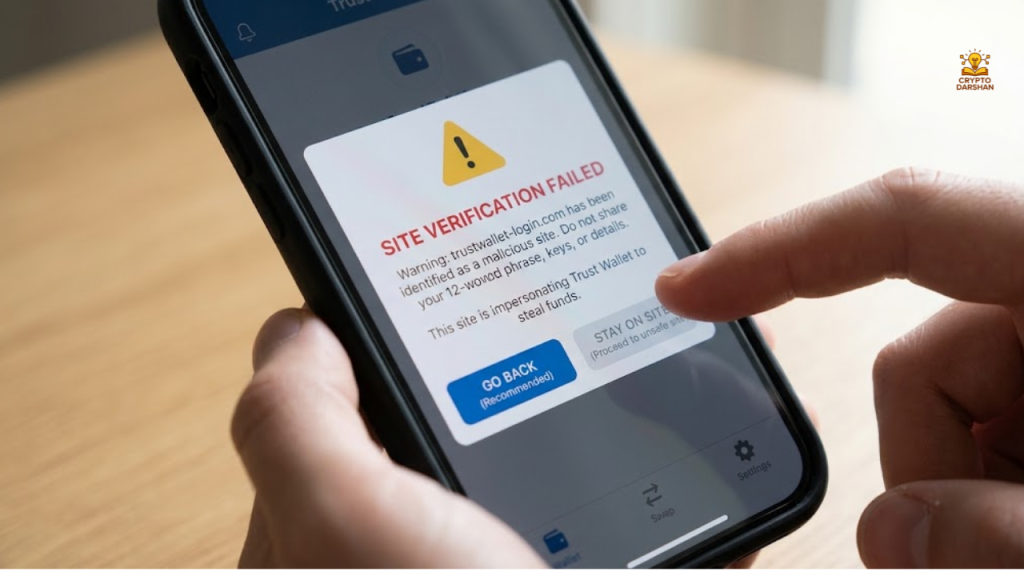
After Daniel shared the warning on X, James Bro, speaking for Trust Wallet’s security team, confirmed that the website had no connection to the company. He told users to rely only on Trust Wallet’s official application and website.
Trust Wallet also warned people not to connect their wallets or approve suspicious signatures in exchange for a payment card. The company’s response makes clear that any site asking users to connect a wallet to receive a card is not an authorized Trust Wallet product.
At the time of the report, there were no confirmed victim losses, affected wallet addresses, or public details about who operated the fraudulent site.
How wallet approvals can drain funds
Connecting a wallet to a website does not automatically give that site control over your crypto. The real danger begins when a user signs a transaction or grants a smart-contract permission.
Some malicious approvals give a scammer’s contract permission to move certain tokens from a wallet. Once that permission is granted, attackers may be able to transfer funds without ever knowing the victim’s seed phrase or private key.
The report noted recent examples of this type of attack. In July, one Ethereum user reportedly lost nearly $1 million after approving a malicious transaction. Another reported case involved about $1.65 million stolen after a victim connected to a fake exchange website and signed a harmful smart contract.
Blockchain security firm Salus also linked unauthorized USDG withdrawals to permit signatures that gave attackers unlimited token-spending access.
How to avoid fake crypto card scams
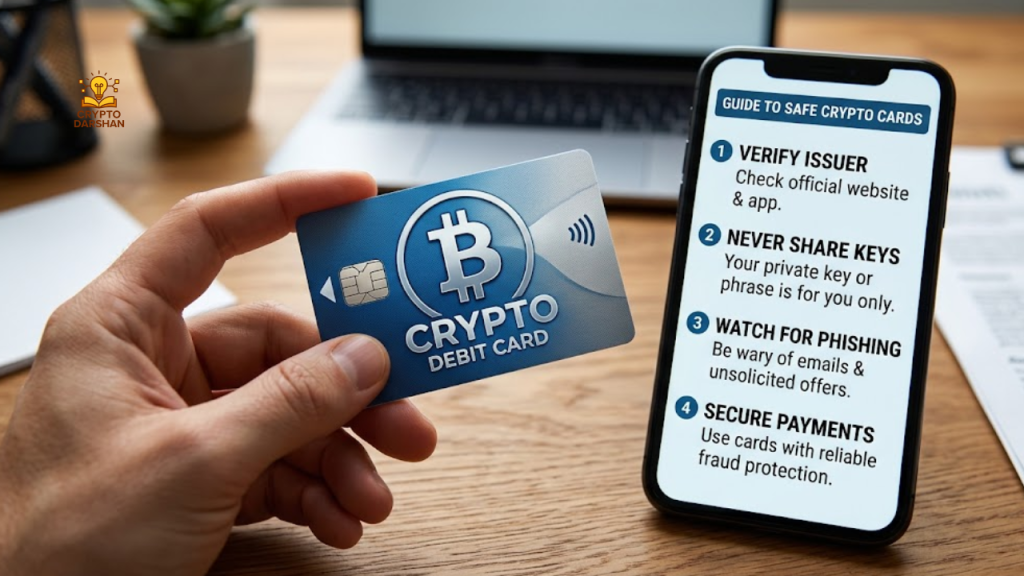
Crypto users can reduce their risk by following a few simple safety habits:
- Visit Trust Wallet only through its official website or official mobile app.
- Check the website address carefully before connecting a wallet.
- Never enter a seed phrase or recovery phrase on any website.
- Be cautious of offers promising very high cashback, no KYC, or extremely low fees.
- Do not approve a transaction if you do not understand what permission you are granting.
- Review and revoke old token approvals using a reputable wallet-security tool.
- Treat unsolicited links from social media, ads, and direct messages as risky.
Trust Wallet has previously warned users about counterfeit versions of its app appearing on third-party app stores. In 2024, the company said it requested removal of fraudulent apps and advised people to download its software only through verified channels.
The bigger lesson for crypto users

This incident shows why crypto users need to be careful when a product looks attractive but asks for wallet access. A real payment-card provider may ask for identity verification, but it should not need permission to move tokens from a self-custody wallet.
The safest rule is simple: if a website offers premium rewards, luxury benefits, and no verification for just $1, pause before connecting anything. Scammers rely on excitement and urgency. Taking a few extra seconds to verify the official source can protect an entire crypto portfolio.