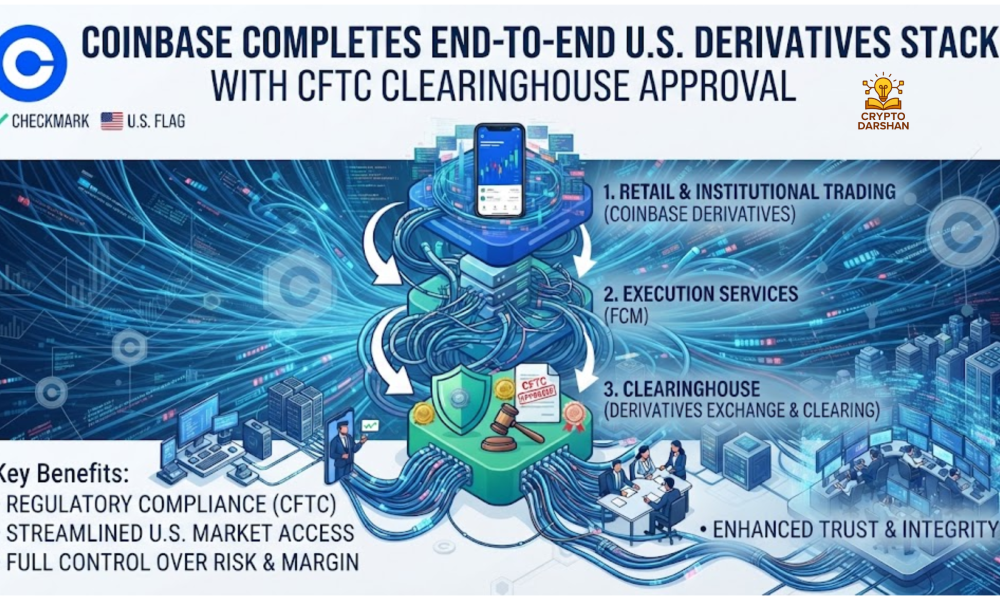
Coinbase has secured U.S. regulatory approval to clear its own derivatives trades, giving it full control over the exchange, brokerage, and clearing layers of its regulated futures business. The move marks a major infrastructure milestone for the company and sets the stage for faster, more flexible product launches using USDC collateral and 24/7 settlement.
What the CFTC Approval Means
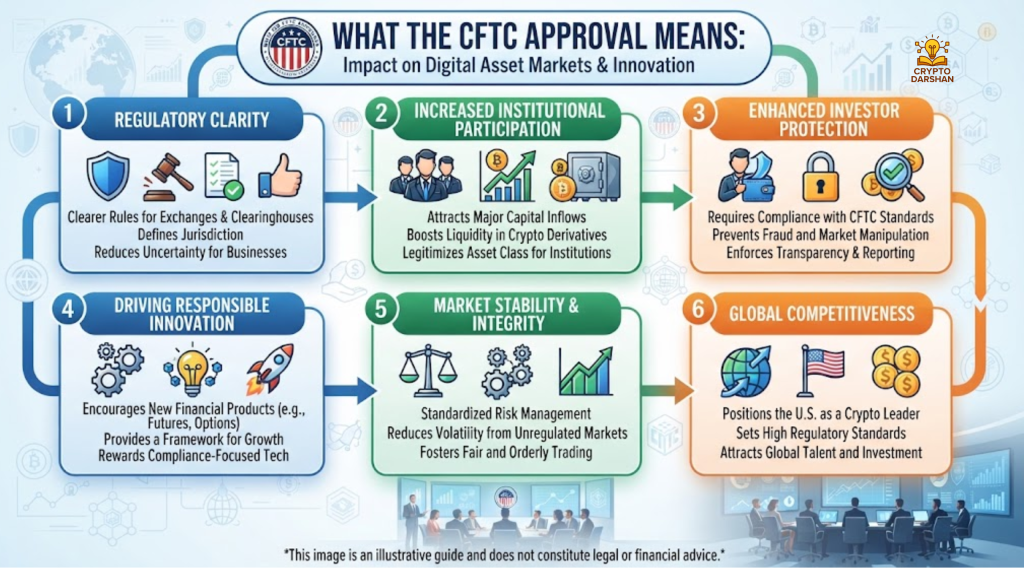
The Commodity Futures Trading Commission (CFTC) registered Coinbase Clearing LLC as a Derivatives Clearing Organization (DCO) on Monday, September 28, 2026. This registration allows Coinbase Clearing to clear fully collateralized futures, options on futures, and swaps in the United States.
Importantly, the approval does not extend to leveraged or margined derivatives. Those products will continue to be cleared through Coinbase’s existing third‑party clearing partners.
The Three Layers of Coinbase’s Derivatives Stack
With this approval, Coinbase now operates three regulated entities that cover the full workflow for U.S. derivatives:
- Coinbase Derivatives, LLC – the exchange (a Designated Contract Market, or DCM) where contracts are listed and traded.
- Coinbase Financial Markets, Inc. – the broker (a Futures Commission Merchant, or FCM) that handles customer accounts and margin.
- Coinbase Clearing LLC – the clearinghouse (a DCO) that guarantees trade settlement and manages collateral.
Before this approval, Coinbase already controlled the exchange and broker layers but relied on external clearinghouses for settlement. Now, for fully collateralized products, it can run the entire stack in‑house under U.S. regulation.finance.yahoo+5
Why “Owning Every Layer” Matters
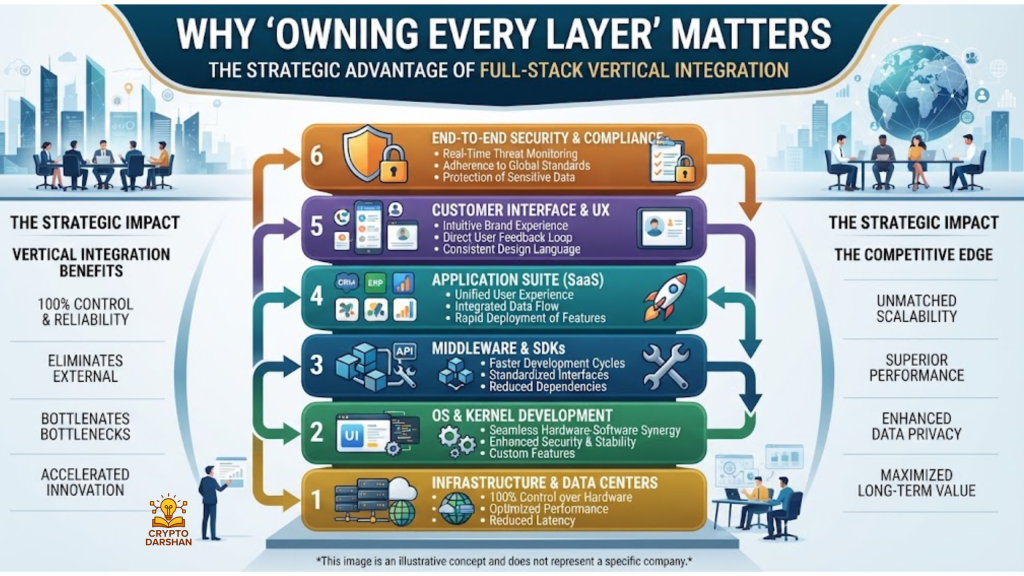
Controlling all three layers changes what Coinbase can build and how quickly it can ship new products.
- Faster product development: Coinbase no longer needs to coordinate with an outside clearinghouse for every new fully collateralized contract.
- Tighter integration: Exchange rules, broker risk controls, and clearing processes can be designed together from the start.
- Reduced dependency: Fewer external dependencies mean fewer bottlenecks when launching or updating derivatives products.
In its statement, Coinbase said: “For the first time, we can create and settle fully collateralized contracts directly,” signaling more autonomy over its U.S. derivatives roadmap.
A USDC‑Native, 24/7 Clearinghouse
A key feature of Coinbase Clearing is that it is built to accept USDC as collateral and settle 24 hours a day, 7 days a week. Traditional U.S. clearinghouses typically rely on cash and Treasuries and operate on a banking calendar, which limits weekend and holiday settlement.
By using a stablecoin as margin, Coinbase’s clearinghouse is designed for “always‑on” crypto markets, where trading does not stop at 5 p.m. on Friday. This structure is especially relevant for fully collateralized contracts, where the full value of the position is posted upfront rather than traded on leverage.
What Products Are Affected—and What Aren’t
The CFTC registration specifically covers:
- Fully collateralized futures
- Options on those futures
- Swaps
These are products where traders post the full amount of collateral required, rather than trading on margin.
By contrast:
- Margined futures and other leveraged derivatives will continue to clear through external partners.
- Coinbase’s planned single‑stock perpetuals (for names like Apple, Tesla, and Nvidia) are expected to clear via existing partners for now, as those are margined products.
This distinction matters because the CFTC’s order explicitly limits Coinbase Clearing’s authority to fully secured contracts.
Competitive Context: Following Kraken’s Playbook
Coinbase’s move mirrors a strategy already pursued by rivals. Last year, Payward (Kraken’s parent) paid about $550 million for Bitnomial to acquire both an exchange and a clearinghouse registration, giving it similar end‑to‑end capabilities.
Kraken is already using that stack to support perpetual futures for U.S. clients on platforms like Hyperliquid, with Bitnomial acting as both market creator and clearer. With its own DCO, Coinbase now has the regulatory foundation to attempt comparable structures in the U.S., though it has not yet announced specific plans to do so.
Broader Momentum for Coinbase’s Derivatives Push

The clearinghouse approval arrives during a busy period for Coinbase’s institutional and derivatives efforts:
- A deepened Citi partnership now allows the bank’s institutional clients to accept stablecoin payments at checkout via Coinbase.
- The company recently introduced fixed‑rate USDC loans against Bitcoin with Morpho.
- In August, it launched tokenized stocks on Base for non‑U.S. users, expanding its tokenized assets footprint.
Together, these moves show Coinbase building out a broader regulated crypto‑finance stack, with derivatives as a core pillar.
What This Could Mean for Traders and Institutions
For U.S. traders and institutions, the practical implications include:
- More regulated derivatives products that can be settled in USDC around the clock.
- Potentially faster rollout of new fully collateralized contracts, including crypto and possibly other asset classes.
- Continued reliance on third‑party clearing for leveraged products, at least in the near term.
Over time, owning the full stack could let Coinbase experiment with novel contract designs and settlement mechanics that are harder to implement when relying on external clearinghouses.
Bottom Line

With CFTC approval for Coinbase Clearing LLC, Coinbase now controls every regulated layer of its U.S. derivatives business for fully collateralized products: exchange, broker, and clearinghouse. The company describes this as the completion of its end‑to‑end derivatives infrastructure, optimized for USDC collateral and 24/7 settlement. While leveraged products still depend on outside partners, the new clearinghouse gives Coinbase significantly more freedom to innovate within the bounds of U.S. regulation.