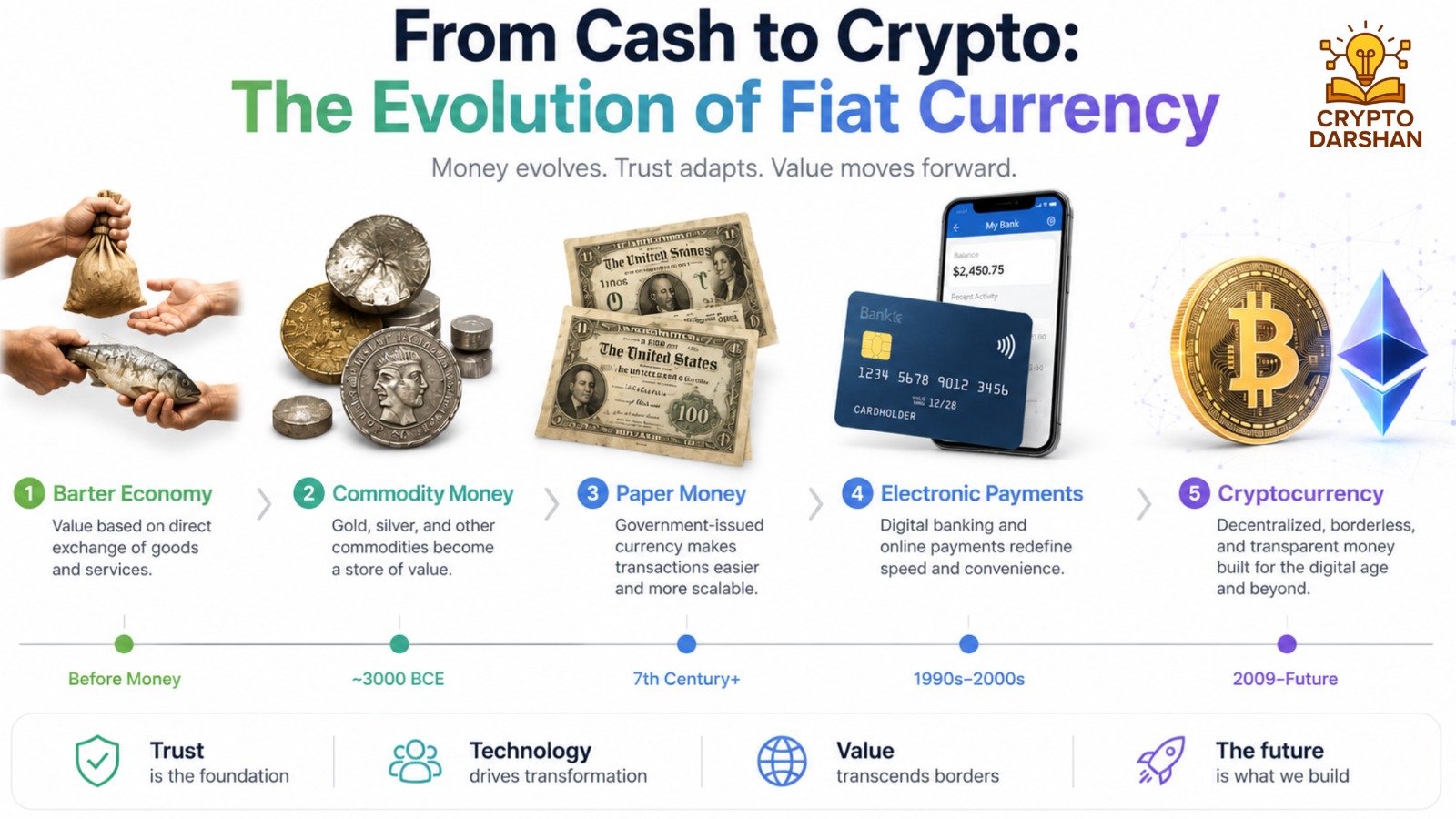
Money has always been at the heart of human civilization. From the earliest barter systems to the rise of digital assets, the way people exchange value has evolved dramatically. Among the most significant developments in this journey is the creation and dominance of Fiat Currency. This form of money, backed by government authority rather than physical commodities like gold or silver, has shaped global economies for centuries. However, with the rise of cryptocurrencies and digital payment systems, the future of Fiat Currency is being reimagined.
This article explores the complete evolution of Fiat Currency, tracing its origins, growth, challenges, and the potential transformation it faces in the digital age. It also examines how cryptocurrencies are redefining the concept of money and what this means for the global financial system.
The Origins of Money

The Barter System
Before Fiat Currency or even coins existed, people relied on the barter system. Goods and services were exchanged directly without a standardized medium of exchange. For example, a farmer might trade grain for a blacksmith’s tools. While this system worked in small communities, it had major limitations. The “double coincidence of wants” problem meant that both parties had to want what the other offered at the same time.
The Birth of Commodity Money
To solve the inefficiencies of barter, societies began using commodity money—items with intrinsic value such as gold, silver, salt, or even cattle. These commodities were widely accepted and could be stored or transported easily. Over time, precious metals became the preferred medium of exchange due to their durability and divisibility.
The Emergence of Metal Coins
Around 600 BCE, the Lydians (in modern-day Turkey) introduced the first metal coins. These coins were stamped with official seals to verify authenticity and weight. This innovation marked the beginning of standardized money, paving the way for more complex economies. However, carrying large amounts of metal was cumbersome, leading to the next major evolution—paper money.
The Birth of Paper Money

Early Chinese Innovations
The concept of paper money first appeared in China during the Tang Dynasty (7th century) and became widespread under the Song Dynasty (11th century). Merchants used promissory notes and government-issued paper currency known as “Jiaozi.” This early form of Fiat Currency was revolutionary because it represented value rather than containing intrinsic value itself.
The Spread to Europe
By the 17th century, European merchants and governments began adopting paper money. The Bank of England, established in 1694, issued notes that could be exchanged for gold or silver. These notes were initially backed by precious metals, ensuring public trust. However, as economies grew and trade expanded, it became impractical to maintain full gold reserves for every note issued.
The Evolution from Cash to Crypto
The journey from physical cash to digital assets reflects humanity’s constant pursuit of efficiency and innovation. Fiat Currency has evolved from paper notes to electronic balances and now to potential digital tokens. Cryptocurrencies represent the next frontier, challenging traditional notions of money and value. As traditional money evolves, cryptocurrencies are increasingly being viewed as an alternative financial system. Learn more in Financial Inclusion Through Crypto: How Blockchain Helps the Unbanked.
The Evolution from Cash to Crypto
1. From Physical to Digital Representation
The fundamental shift in money’s evolution is moving from tangible physical forms like coins and paper bills to purely digital representations. Cash requires physical storage and transportation, while digital currencies exist only as encrypted data on computer networks. This transformation has made transactions faster, more convenient, and accessible globally without the need for physical exchange. As governments explore digital versions of national currencies, blockchain-based identity systems may play a key role in the future of finance. Discover more in Digital Identity on the Blockchain: How It Could Replace Your Passport.
2. Decentralization Challenges Traditional Control
Traditional fiat currency operates through centralized systems controlled by governments and central banks that manage supply and monetary policy. Cryptocurrencies introduced a revolutionary decentralized model where no single authority controls the currency. Instead, blockchain technology and distributed networks maintain the system through consensus mechanisms, giving users more autonomy over their financial assets.
One of the biggest challenges facing fiat currencies is inflation, which has led many investors to seek alternative stores of value during periods of economic uncertainty. Learn how markets react in What Is Crypto Winter? How to Survive When the Market Crashes.
3. Trust Shifts from Institutions to Technology
Fiat currency derives its value from trust in government institutions and economic stability. Cryptocurrencies, however, place trust in mathematical algorithms, cryptographic security, and transparent blockchain protocols. This represents a philosophical shift where code and technology replace institutional authority as the foundation of monetary confidence, appealing to those seeking alternatives to traditional banking systems.
4. Scarcity Models: Policy-Based vs. Algorithm-Based
Governments can print unlimited fiat currency based on economic policies and needs, which provides flexibility but risks inflation. Cryptocurrencies like Bitcoin have predetermined, algorithm-controlled supply limits built into their code. This creates digital scarcity similar to precious metals, offering protection against inflation but reducing flexibility to respond to economic crises.
5. Integration Rather Than Complete Replacement
Rather than cryptocurrencies completely replacing fiat currency, we’re witnessing a hybrid evolution. Central Bank Digital Currencies (CBDCs) combine the stability of government-backed money with digital efficiency. Stablecoins bridge both worlds by pegging crypto tokens to fiat values. This integration suggests the future involves coexistence, where traditional and digital currencies complement each other in a diversified financial ecosystem.
The Rise of Fiat Currency
Definition and Concept
Fiat Currency is money that has value because a government declares it legal tender. Unlike commodity money, it is not backed by physical assets such as gold or silver. Its value is derived from trust in the issuing authority and the stability of the economy. Examples include the US dollar, the euro, the yen, and most modern national currencies.
The Gold Standard Era
In the 19th and early 20th centuries, many countries adopted the gold standard, linking their currencies to a fixed quantity of gold. This system provided stability and facilitated international trade. However, it also limited governments’ ability to respond to economic crises, as the money supply was tied to gold reserves.
The End of the Gold Standard
The turning point came in 1971 when US President Richard Nixon ended the convertibility of the dollar into gold, effectively dismantling the Bretton Woods system. This event marked the full transition to Fiat Currency. From that moment, money was no longer tied to any physical commodity but was instead backed by government decree and economic confidence.
How Fiat Currency Works

Government Authority and Central Banks
The value of Fiat Currency depends on the issuing government’s credibility and the policies of its central bank. Central banks, such as the Federal Reserve or the European Central Bank, control the money supply, set interest rates, and manage inflation. Their goal is to maintain economic stability and public trust in the currency.
Supply and Demand Dynamics
The value of Fiat Currency fluctuates based on supply and demand. When more money is printed without corresponding economic growth, inflation occurs, reducing purchasing power. Conversely, limited money supply can lead to deflation, slowing economic activity. Balancing these forces is a key challenge for policymakers.
Legal Tender and Public Trust
Fiat Currency is declared legal tender, meaning it must be accepted for all debts, public and private. This legal status, combined with public trust, gives it value. People accept Fiat Currency because they believe others will also accept it in exchange for goods and services.
Advantages of Fiat Currency

- Flexibility in Monetary Policy
Governments can adjust the money supply to manage inflation, unemployment, and economic growth. - Cost Efficiency
Printing paper money or minting coins is cheaper than maintaining gold reserves. - Economic Growth Support
Fiat Currency allows for credit expansion, enabling businesses and consumers to borrow and invest. - Global Acceptance
Major Fiat Currencies like the US dollar serve as global reserves, facilitating international trade. - Ease of Use
Paper and digital forms of Fiat Currency are convenient for everyday transactions.
Disadvantages of Fiat Currency

- Inflation Risk
Excessive money printing can lead to hyperinflation, as seen in historical cases like Zimbabwe and Venezuela. - Dependence on Government Stability
The value of Fiat Currency relies heavily on political and economic stability. - Lack of Intrinsic Value
Unlike gold or silver, Fiat Currency has no inherent worth beyond government backing. - Potential for Mismanagement
Poor fiscal policies or corruption can erode trust and devalue the currency. - Debt Expansion
Easy access to credit can lead to unsustainable debt levels in both public and private sectors.
Historical Examples of Fiat Currency Success and Failure

The US Dollar
The US dollar is the most widely used Fiat Currency in the world. It became the global reserve currency after World War II, supported by the strength of the US economy. Despite occasional inflationary pressures, the dollar remains a symbol of stability and trust.
The German Papiermark
After World War I, Germany experienced hyperinflation due to excessive money printing to pay war reparations. The value of the Papiermark collapsed, leading to economic chaos. This event remains a cautionary tale about the dangers of mismanaging Fiat Currency.
The Zimbabwean Dollar
In the early 2000s, Zimbabwe’s government printed massive amounts of money to finance spending, leading to hyperinflation that rendered its Fiat Currency worthless. Eventually, the country abandoned its currency in favor of foreign alternatives.
The Digital Transformation of Fiat Currency

The Rise of Electronic Payments
The 21st century has seen a shift from physical cash to digital transactions. Credit cards, online banking, and mobile payment apps have made Fiat Currency more accessible and efficient. Digital payments reduce transaction costs and increase convenience, but they also raise concerns about privacy and cybersecurity.
Central Bank Digital Currencies (CBDCs)
Many governments are exploring Central Bank Digital Currencies (CBDCs), which represent a digital form of Fiat Currency. Unlike cryptocurrencies, CBDCs are fully regulated and backed by central banks. Countries like China (with the digital yuan) and the Bahamas (with the Sand Dollar) are leading this innovation.
CBDCs aim to combine the stability of Fiat Currency with the efficiency of digital technology. They could enhance financial inclusion, reduce transaction costs, and improve monetary policy implementation.
The Rise of Cryptocurrencies

The Birth of Bitcoin
In 2009, Bitcoin introduced a new form of decentralized digital money. Unlike Fiat Currency, Bitcoin operates on blockchain technology, without central authority or government backing. Its limited supply and transparency attracted users seeking alternatives to traditional financial systems.
Key Differences Between Fiat Currency and Cryptocurrency
| Aspect | Fiat Currency | Cryptocurrency |
| Backing | Government decree | Blockchain protocol |
| Control | Centralized (central banks) | Decentralized (peer-to-peer) |
| Supply | Unlimited (policy-based) | Limited (algorithm-based) |
| Form | Physical and digital | Purely digital |
| Trust Basis | Government and economy | Technology and consensus |
The Appeal of Cryptocurrencies
Cryptocurrencies offer transparency, security, and independence from government control. They appeal to those who distrust traditional banking systems or live in countries with unstable Fiat Currencies. However, their volatility and lack of regulation pose significant risks.
The Relationship Between Fiat Currency and Cryptocurrency
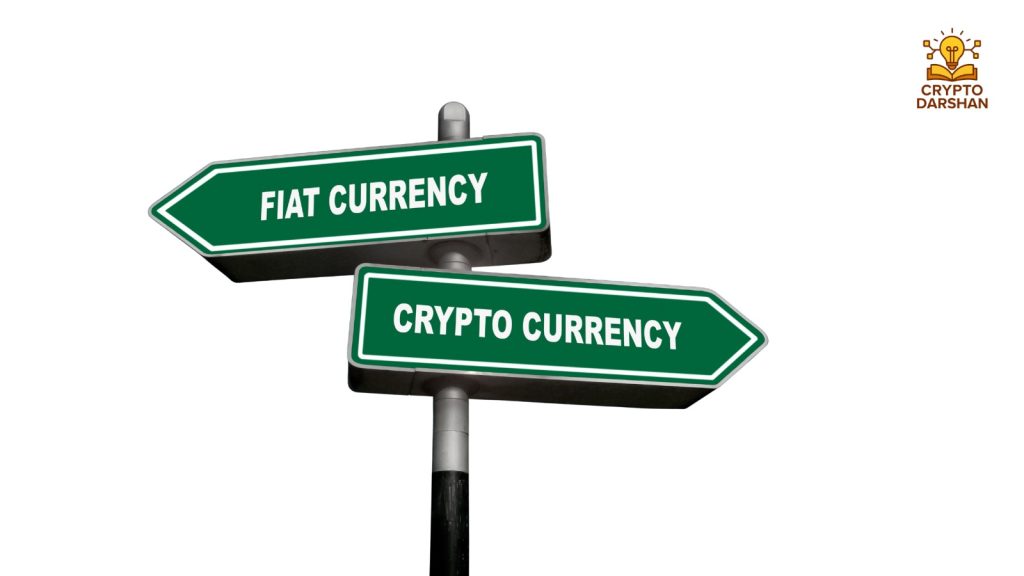
Coexistence and Competition
Rather than replacing Fiat Currency, cryptocurrencies currently coexist with it. Many governments are integrating blockchain technology into their financial systems while maintaining control over monetary policy. The competition between these two forms of money is driving innovation in global finance.
Regulation and Integration
Governments are developing frameworks to regulate cryptocurrencies, ensuring they complement rather than threaten Fiat Currency systems. Some countries are even exploring hybrid models where digital assets are pegged to Fiat Currency values, known as stablecoins.
The Role of Stablecoins
Stablecoins bridge the gap between Fiat Currency and cryptocurrency. They are digital tokens backed by reserves of traditional currencies like the US dollar. This stability makes them useful for digital transactions and cross-border payments.
The Future of Fiat Currency

Technological Integration
The future of Fiat Currency lies in digital transformation. Blockchain, artificial intelligence, and fintech innovations are reshaping how money is created, distributed, and used. Governments are investing in secure digital infrastructures to modernize their monetary systems.
The growth of decentralized finance shows how blockchain-based systems are challenging traditional financial models built around fiat currency. Learn the foundations in What Is ERC-20? The Token Standard That Powers Most of DeFi.
Environmental Considerations
As digital transactions grow, energy consumption becomes a concern. While cryptocurrencies like Bitcoin face criticism for high energy use, digital Fiat Currency systems aim to be more sustainable and efficient.
Global Economic Shifts
Emerging economies are challenging the dominance of traditional Fiat Currencies like the US dollar. The rise of regional trade blocs and digital currencies could lead to a more multipolar financial world.
Financial Inclusion
Digital Fiat Currency can help bring banking services to unbanked populations, especially in developing countries. Mobile money platforms and CBDCs can provide secure, low-cost access to financial systems.
Challenges Facing Fiat Currency in the Digital Age

- Cybersecurity Threats
As Fiat Currency becomes more digital, it faces risks from hacking and data breaches. - Privacy Concerns
Digital transactions can be tracked, raising questions about personal financial privacy. - Economic Inequality
Access to digital financial tools may widen the gap between developed and developing nations. - Monetary Policy Complexity
Managing inflation and interest rates becomes more challenging in a globalized, digital economy. - Public Trust
Maintaining confidence in Fiat Currency amid technological disruption is crucial for stability.
Case Study: The US Dollar in the Digital Era

The US dollar remains the world’s leading Fiat Currency, but it faces new challenges from digital competitors. The Federal Reserve is exploring a digital dollar to maintain its global influence. This initiative aims to enhance payment efficiency, reduce fraud, and ensure the dollar’s relevance in a digital economy.
However, the rise of cryptocurrencies and foreign CBDCs could erode the dollar’s dominance. To stay competitive, the US must balance innovation with regulation, ensuring that its Fiat Currency remains trusted and adaptable.
The Psychological Aspect of Fiat Currency
Money is not just an economic tool—it’s also a social construct based on collective belief. The success of Fiat Currency depends on public confidence. When people lose faith in their government or economy, the currency’s value can collapse, regardless of its legal status. This psychological dimension underscores the importance of transparency, stability, and trust in monetary systems.
FAQ: From Cash to Crypto: The Evolution of Fiat Currency

1. What is fiat currency?
Fiat currency is government-issued money that has value because people trust the issuing authority, not because it is backed by a physical commodity like gold or silver.
2. How did fiat currency replace commodity-backed money?
Most countries gradually moved away from the gold standard during the 20th century, allowing governments and central banks greater control over monetary policy and economic growth.
3. What gives fiat currency its value?
Fiat currency derives its value from public trust, government regulation, legal tender laws, and the stability of the economy that issues it.
4. What are the advantages of fiat currency?
Fiat currency enables flexible monetary policy, supports economic growth, facilitates trade, and allows central banks to respond to financial crises.
5. What are the drawbacks of fiat currency?
Its value can decline due to inflation, excessive money printing, economic instability, or loss of confidence in the issuing government.
6. How is cryptocurrency different from fiat currency?
Fiat currencies are controlled by governments and central banks, while cryptocurrencies operate on decentralized blockchain networks and often have fixed supply mechanisms.
7. Why was Bitcoin created as an alternative to fiat currency?
Bitcoin was introduced in 2009 as a decentralized digital currency designed to operate without banks or governments and to offer an alternative to inflationary monetary systems.
8. Can cryptocurrencies replace fiat currencies?
While cryptocurrencies are gaining adoption, fiat currencies remain dominant for everyday transactions, taxation, and government operations. A complete replacement is unlikely in the near future.
9. What role do central banks play in the fiat system?
Central banks manage money supply, set interest rates, control inflation, and maintain financial stability within their respective economies.
Conclusion
The evolution of Fiat Currency from ancient barter systems to modern digital economies is a testament to human ingenuity. It has enabled global trade, economic growth, and financial stability. Yet, as technology advances, the boundaries between traditional and digital money are blurring.
Cryptocurrencies and Central Bank Digital Currencies are redefining what money means in the 21st century. The future of Fiat Currency will depend on how well governments adapt to these changes while maintaining trust, stability, and inclusivity.
From cash to crypto, the story of Fiat Currency is far from over. It continues to evolve, reflecting the dynamic relationship between technology, trust, and human progress.