

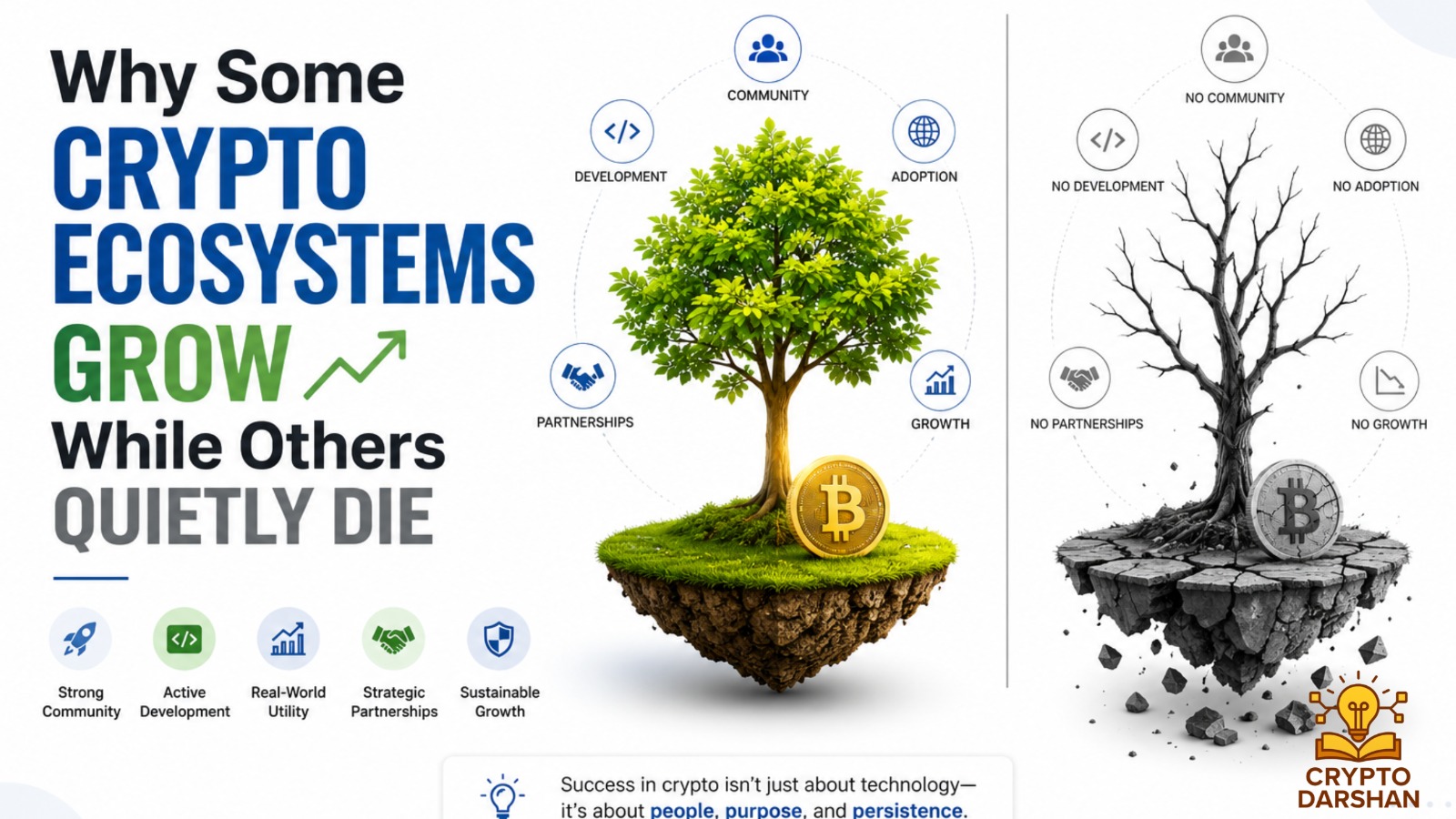
The world of cryptocurrency is dynamic, unpredictable, and constantly evolving. Over the past decade, thousands of blockchain projects have emerged, each promising to revolutionize finance, technology, or governance. Yet, while some Crypto Ecosystems thrive and expand into global networks, others fade into obscurity. Understanding why certain Crypto Ecosystems grow while others quietly die requires examining the interplay of technology, community, governance, and market forces.
This article explores the key factors that determine the success or failure of Crypto Ecosystems, analyzing their structure, innovation, user adoption, and sustainability. It also highlights lessons from both thriving and failed projects to reveal what truly drives long-term growth in the crypto world.
Understanding Crypto Ecosystems
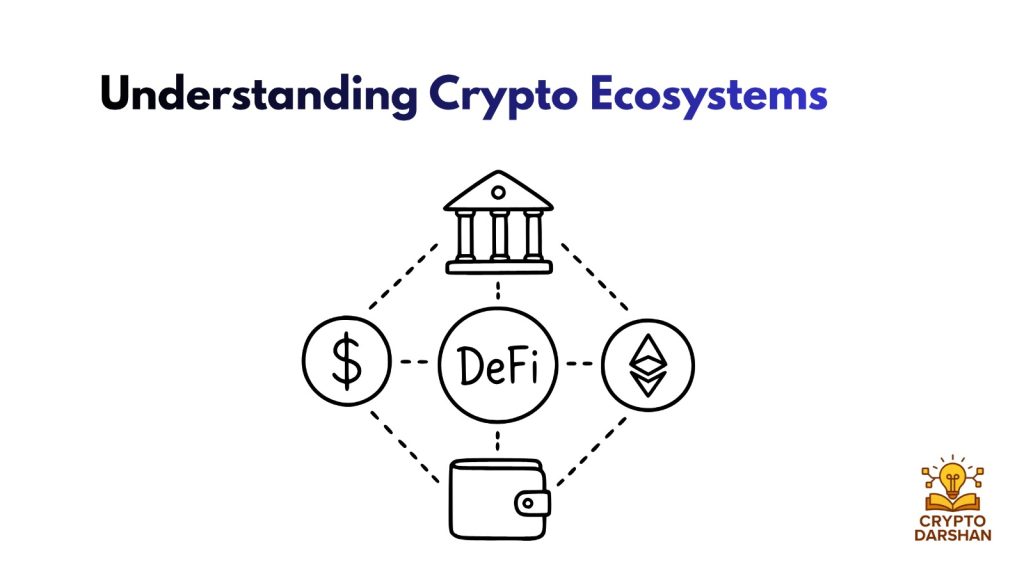
A Crypto Ecosystem refers to the interconnected network of participants, technologies, and institutions that support a cryptocurrency or blockchain project. It includes developers, miners, validators, investors, exchanges, wallets, decentralized applications (dApps), and users. Together, these elements create a self-sustaining environment where digital assets are created, traded, and utilized.
Healthy Crypto Ecosystems function like living organisms. They evolve, adapt, and grow through collaboration and innovation. However, when one or more components fail—such as weak governance, poor technology, or lack of community engagement—the entire ecosystem can collapse.
The Building Blocks of a Strong Crypto Ecosystem

Before exploring why some Crypto Ecosystems succeed, it’s essential to understand what makes them strong in the first place. Several foundational elements determine whether a project can sustain growth and attract long-term participation.
1. Robust Technology and Scalability
At the heart of every successful Crypto Ecosystem lies a reliable and scalable blockchain infrastructure. Projects like Ethereum and Solana have thrived because they continuously improve their technology to handle more transactions, reduce fees, and enhance security. Scalability ensures that as user demand grows, the network can support it without slowing down or becoming too expensive to use.
2. Active and Committed Community
A vibrant community is the lifeblood of any Crypto Ecosystem. Developers, investors, and users who believe in the project’s vision contribute to its growth through innovation, marketing, and adoption. Communities that engage in open discussions, governance, and education help sustain momentum even during market downturns.
3. Strong Governance and Transparency
Governance determines how decisions are made within Crypto Ecosystems. Transparent and inclusive governance models—such as decentralized autonomous organizations (DAOs)—allow participants to vote on upgrades, funding, and policies. Projects with clear governance structures tend to build trust and attract long-term supporters.
4. Real-World Utility
The most successful Crypto Ecosystems solve real problems. Whether it’s enabling decentralized finance (DeFi), non-fungible tokens (NFTs), or supply chain tracking, projects that offer tangible value beyond speculation are more likely to survive. Real-world use cases create sustainable demand for tokens and encourage continuous innovation.
5. Strategic Partnerships and Integrations
Partnerships with other blockchain networks, financial institutions, or technology companies can accelerate growth. Interoperability—allowing different Crypto Ecosystems to communicate and share data—expands reach and functionality. Projects that isolate themselves often struggle to remain relevant.
Why Some Crypto Ecosystems Grow

Certain Crypto Ecosystems manage to achieve exponential growth, attracting millions of users and billions in market capitalization. Their success is rarely accidental; it results from a combination of innovation, adaptability, and community-driven development.
1. Continuous Innovation
Innovation is the engine that drives growth in Crypto Ecosystems. Projects that regularly introduce new features, improve scalability, and enhance user experience maintain relevance in a competitive market. Ethereum’s transition from proof-of-work to proof-of-stake, for example, demonstrated adaptability and commitment to sustainability.
2. Strong Developer Support
Developers are the architects of Crypto Ecosystems. Platforms that provide robust development tools, grants, and documentation attract talented programmers who build new applications. The more developers contribute, the richer and more diverse the ecosystem becomes. This network effect fuels long-term growth.
3. Effective Tokenomics
Tokenomics—the economic design of a cryptocurrency—plays a crucial role in ecosystem sustainability. Successful Crypto Ecosystems balance supply and demand through mechanisms like staking, burning, and rewards. Well-designed tokenomics incentivize participation while preventing inflation or manipulation.
4. Community Engagement and Education

Education and engagement are vital for adoption. Thriving Crypto Ecosystems invest in educating users about blockchain technology, security, and governance. They host events, hackathons, and online forums to keep the community active. A well-informed community is more likely to contribute meaningfully and remain loyal.
5. Adaptability to Market Trends
The crypto market evolves rapidly. Projects that adapt to emerging trends—such as DeFi, NFTs, or Web3—stay relevant. For instance, Binance Smart Chain grew quickly by offering low-cost alternatives to Ethereum during periods of high gas fees. Flexibility allows Crypto Ecosystems to capture new opportunities as they arise.
6. Security and Trust
Security breaches can destroy confidence overnight. Successful Crypto Ecosystems prioritize security audits, bug bounties, and transparent communication. When users trust that their assets are safe, they are more likely to invest time and money in the ecosystem.
7. Regulatory Awareness
Navigating regulation is critical for long-term survival. Projects that proactively comply with legal frameworks attract institutional investors and mainstream adoption. By contrast, those that ignore regulations risk being banned or losing credibility. Regulatory clarity helps Crypto Ecosystems grow sustainably.
Why Some Crypto Ecosystems Quietly Die
While some Crypto Ecosystems flourish, many others fade away. The reasons for failure are often rooted in poor planning, weak leadership, or lack of adaptability. Understanding these pitfalls helps identify warning signs before a project collapses.
1. Lack of Real Utility
Many Crypto Ecosystems fail because they offer no real-world value. Projects that rely solely on hype or speculation eventually lose momentum. Without practical use cases, users and investors move on to more promising ventures. A token without utility is like a car without fuel—it cannot go far.
2. Poor Governance and Leadership
Weak or centralized governance can lead to corruption, mismanagement, or internal conflict. When decision-making lacks transparency, trust erodes. Some projects collapse because founders abandon them or misuse funds. Sustainable Crypto Ecosystems require accountable leadership and community participation.
3. Overreliance on Hype
Marketing can attract attention, but it cannot sustain growth. Many Crypto Ecosystems launch with aggressive promotions and celebrity endorsements but fail to deliver on promises. Once the hype fades, users realize there is little substance behind the project, leading to rapid decline.
4. Security Breaches and Exploits
Security failures are among the most common reasons Crypto Ecosystems die. Hacks, rug pulls, and smart contract vulnerabilities can drain funds and destroy trust. Once users lose confidence in a project’s safety, recovery becomes nearly impossible.
5. Unsustainable Tokenomics
Poorly designed tokenomics can doom a project. Excessive token supply, lack of utility, or unfair distribution often lead to price crashes. When early investors dump tokens, the ecosystem loses liquidity and credibility. Sustainable Crypto Ecosystems carefully balance incentives to maintain long-term stability.
6. Failure to Adapt
The crypto industry changes rapidly. Projects that fail to evolve with new technologies or market demands become obsolete. For example, blockchains that ignore scalability or interoperability issues struggle to compete with newer, faster networks. Adaptability is essential for survival.
7. Weak Community Engagement
A disengaged or toxic community can cripple growth. Without active participation, development slows, and innovation stalls. Successful Crypto Ecosystems nurture positive, inclusive communities that encourage collaboration and feedback.
Case Studies: Growth vs. Decline

Examining real-world examples provides valuable insights into why some Crypto Ecosystems succeed while others fail.
Case 1: Ethereum – A Model of Sustainable Growth
Ethereum remains one of the most successful Crypto Ecosystems due to its continuous innovation and strong developer community. Its introduction of smart contracts revolutionized blockchain technology, enabling thousands of decentralized applications. The transition to Ethereum 2.0 improved scalability and energy efficiency, ensuring long-term viability. Transparent governance and active community engagement have kept Ethereum at the forefront of blockchain innovation.
Case 2: Terra (LUNA) – A Cautionary Tale
Terra’s collapse in 2022 serves as a stark reminder of how fragile Crypto Ecosystems can be. Its algorithmic stablecoin, UST, lost its peg to the dollar, triggering a massive sell-off. The failure exposed flaws in its tokenomics and risk management. Despite initial success, the lack of sustainable design and overreliance on artificial demand led to its downfall.
Case 3: Binance Smart Chain – Rapid Growth Through Accessibility
Binance Smart Chain (BSC) grew rapidly by offering low transaction fees and compatibility with Ethereum-based applications. Its user-friendly approach attracted developers and retail investors alike. However, critics argue that BSC’s centralization compromises decentralization principles. Still, its pragmatic balance between efficiency and accessibility has made it one of the fastest-growing Crypto Ecosystems.
Case 4: EOS – From Promise to Decline
EOS launched with great promise, raising billions in its initial coin offering (ICO). However, poor governance, centralization issues, and lack of developer engagement led to stagnation. Despite strong initial funding, EOS failed to maintain momentum, illustrating that money alone cannot sustain Crypto Ecosystems without innovation and community trust.
The Role of Community in Crypto Ecosystem Growth

Community is the heartbeat of every Crypto Ecosystem. A strong, engaged community drives adoption, innovation, and resilience. When users feel ownership and participation, they become advocates who promote the project organically.
1. Open Communication Channels
Transparent communication builds trust. Successful Crypto Ecosystems maintain active forums, social media channels, and governance platforms where users can voice opinions and share ideas. Open dialogue fosters collaboration and accountability.
2. Incentivized Participation
Rewarding users for contributions—such as staking, governance voting, or content creation—encourages long-term engagement. Incentive programs align community interests with the project’s success, creating a self-reinforcing growth cycle.
3. Education and Onboarding
Educating new users about blockchain technology and ecosystem features reduces barriers to entry. Tutorials, webinars, and documentation help newcomers understand how to participate safely and effectively in Crypto Ecosystems.
4. Developer Ecosystem Support
Developers are the builders of innovation. Providing grants, hackathons, and open-source tools attracts talent and accelerates growth. A thriving developer community ensures continuous improvement and diversification of applications.
5. Cultural Identity and Vision
Successful Crypto Ecosystems often cultivate a shared vision or cultural identity. Whether it’s financial freedom, decentralization, or sustainability, a unifying mission inspires loyalty and collaboration among participants.
The Importance of Interoperability

Interoperability—the ability of different blockchains to communicate and share data—is becoming a defining factor in the success of Crypto Ecosystems. Projects that remain isolated risk obsolescence, while those that embrace cross-chain functionality expand their reach and utility.
1. Cross-Chain Bridges
Cross-chain bridges allow assets and data to move between different Crypto Ecosystems, increasing liquidity and user flexibility. However, these bridges must be secure to prevent exploits that can damage trust
2. Multi-Chain Applications
Applications that operate across multiple blockchains attract a broader user base. By integrating with various Crypto Ecosystems, developers can reach more users and reduce dependency on a single network.
3. Collaborative Innovation
Interoperability encourages collaboration rather than competition. When Crypto Ecosystems share resources and standards, the entire blockchain industry benefits from faster innovation and adoption.
The Role of Regulation and Institutional Adoption

Regulation plays a dual role in shaping Crypto Ecosystems. While excessive regulation can stifle innovation, clear legal frameworks provide legitimacy and attract institutional investors.
1. Regulatory Clarity
Projects that operate within clear legal boundaries gain credibility. Regulatory compliance reassures investors and users that the ecosystem is stable and trustworthy.
2. Institutional Investment
Institutional participation brings liquidity, stability, and long-term growth. When large financial institutions invest in Crypto Ecosystems, they validate the technology and encourage mainstream adoption.
3. Global Policy Coordination
As Crypto Ecosystems operate globally, international cooperation on regulation is essential. Harmonized policies prevent fragmentation and promote healthy competition among projects.
Sustainability and Environmental Impact

Sustainability is becoming a major consideration for Crypto Ecosystems. Energy-intensive consensus mechanisms like proof-of-work face criticism for their environmental impact. Projects that adopt eco-friendly alternatives gain public support and regulatory favor.
1. Transition to Energy-Efficient Models
Proof-of-stake and other low-energy consensus mechanisms reduce carbon footprints while maintaining security. Ethereum’s shift to proof-of-stake set a precedent for sustainable blockchain development.
2. Green Initiatives
Some Crypto Ecosystems invest in carbon offset programs or renewable energy projects to mitigate environmental impact. These initiatives enhance reputation and attract environmentally conscious investors.
3. Long-Term Viability
Sustainability extends beyond energy use. Economically and socially sustainable Crypto Ecosystems design tokenomics and governance models that ensure fairness, inclusivity, and resilience over time.
Lessons from Success and Failure

The contrasting fates of various Crypto Ecosystems reveal several key lessons:
- Innovation must be continuous. Stagnation leads to irrelevance.
- Community engagement is non-negotiable. Without people, technology is meaningless.
- Transparency builds trust. Hidden agendas and opaque governance destroy credibility.
- Utility drives adoption. Real-world use cases sustain long-term growth.
- Adaptability ensures survival. The crypto landscape changes rapidly; flexibility is essential.
The Future of Crypto Ecosystems

The future of Crypto Ecosystems will be defined by collaboration, regulation, and technological evolution. As blockchain technology matures, ecosystems will become more interconnected, user-friendly, and sustainable. The focus will shift from speculation to real-world applications that improve finance, governance, and digital ownership.
Emerging trends such as decentralized identity, Web3 integration, and AI-driven automation will further expand the capabilities of Crypto Ecosystems. Projects that embrace these innovations while maintaining transparency and community trust will lead the next wave of growth.
FAQ: Why Some Crypto Ecosystems Grow While Others Quietly Die

1. What is a crypto ecosystem?
A crypto ecosystem is a network of blockchain projects, developers, users, applications, tokens, and infrastructure that work together on a particular blockchain or platform.
2. Why do some crypto ecosystems grow faster than others?
Successful ecosystems typically attract developers, offer strong technology, maintain active communities, provide useful applications, and secure ongoing investment and support.
3. How important are developers to a crypto ecosystem’s success?
Developers are crucial because they build applications, improve infrastructure, fix issues, and create new use cases that attract users and investors.
4. What role does community support play in ecosystem growth?
A strong community helps drive adoption, promotes projects, participates in governance, and contributes to long-term ecosystem sustainability.
5. Why do some blockchain ecosystems fail despite strong funding?
Funding alone is not enough. Ecosystems can struggle if they lack real-world utility, user adoption, developer activity, or a clear long-term vision.
6. How does network activity affect an ecosystem’s survival?
Higher network activity often indicates healthy user engagement, growing demand for applications, and increasing value creation within the ecosystem.
7. What are common signs that a crypto ecosystem is declining?
Warning signs include falling developer activity, decreasing transaction volume, shrinking user bases, declining liquidity, and reduced community engagement.
8. Why is utility more important than hype for long-term growth?
Hype can attract short-term attention, but sustainable growth depends on products and services that solve real problems and retain users over time.
Conclusion
Not all Crypto Ecosystems are destined to succeed. Some rise to global prominence through innovation, community strength, and adaptability, while others quietly die due to poor governance, weak utility, or lack of trust. The difference lies in how well they balance technology, transparency, and human collaboration.
Thriving Crypto Ecosystems are built on more than just code—they are sustained by people, purpose, and progress. As the industry matures, the projects that prioritize real-world value, security, and inclusivity will shape the future of digital economies. In the end, growth in the crypto world is not about hype or speculation—it’s about building ecosystems that endure.