
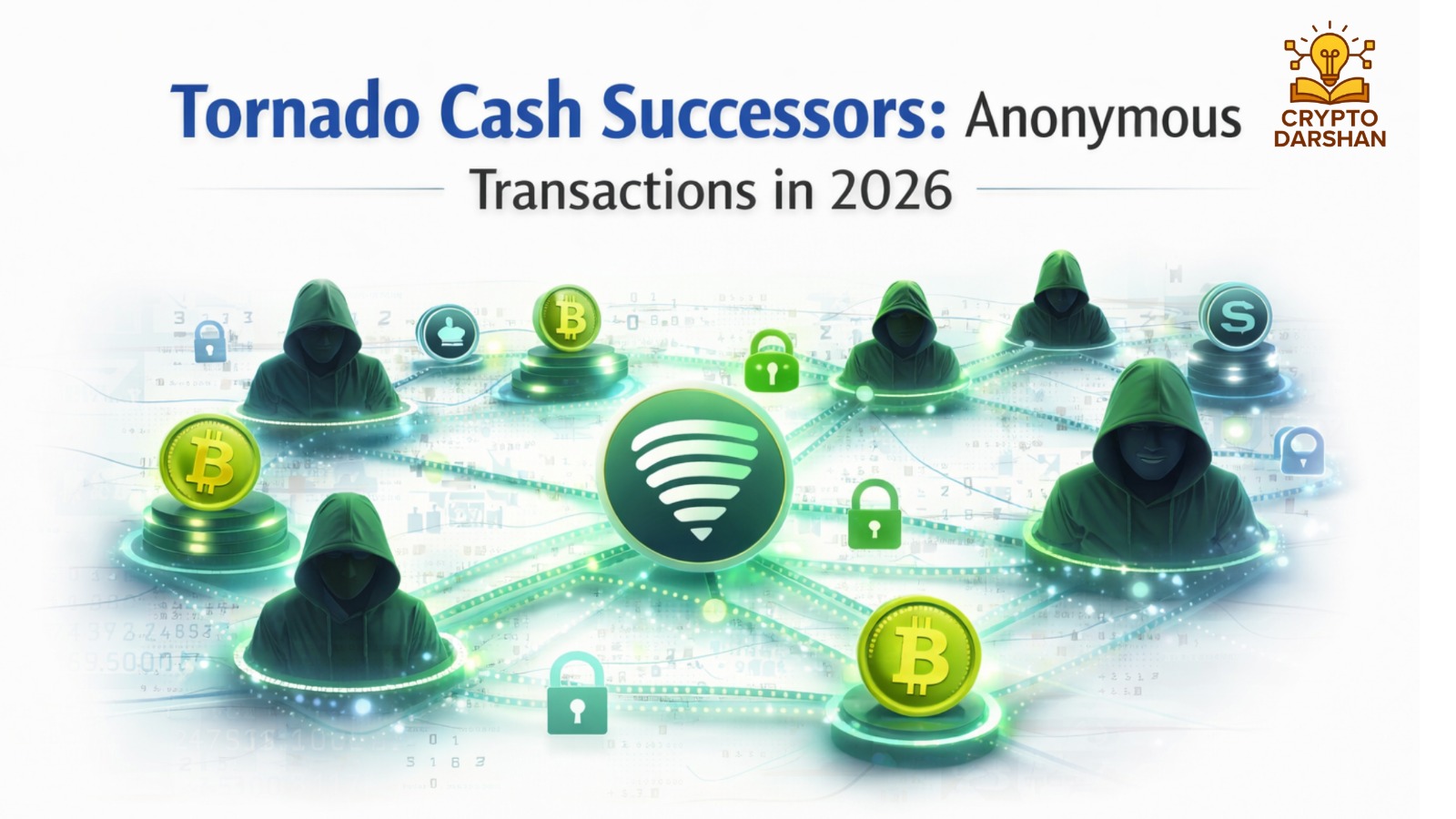
In the evolving world of blockchain and cryptocurrency, privacy has always been a central concern. As governments tighten regulations and blockchain analytics become more advanced, the demand for anonymous transactions continues to grow. Tornado Cash, once the most popular Ethereum-based privacy protocol, became a symbol of decentralized anonymity. However, after facing regulatory scrutiny and sanctions, the crypto community began searching for new ways to preserve privacy. In 2026, the successors of Tornado Cash are redefining what anonymous transactions mean in the decentralized era.
This article explores the rise, fall, and rebirth of Tornado Cash, the emergence of its successors, and how privacy-focused technologies are shaping the future of blockchain. It also examines the ethical, legal, and technical implications of anonymous transactions in 2026.
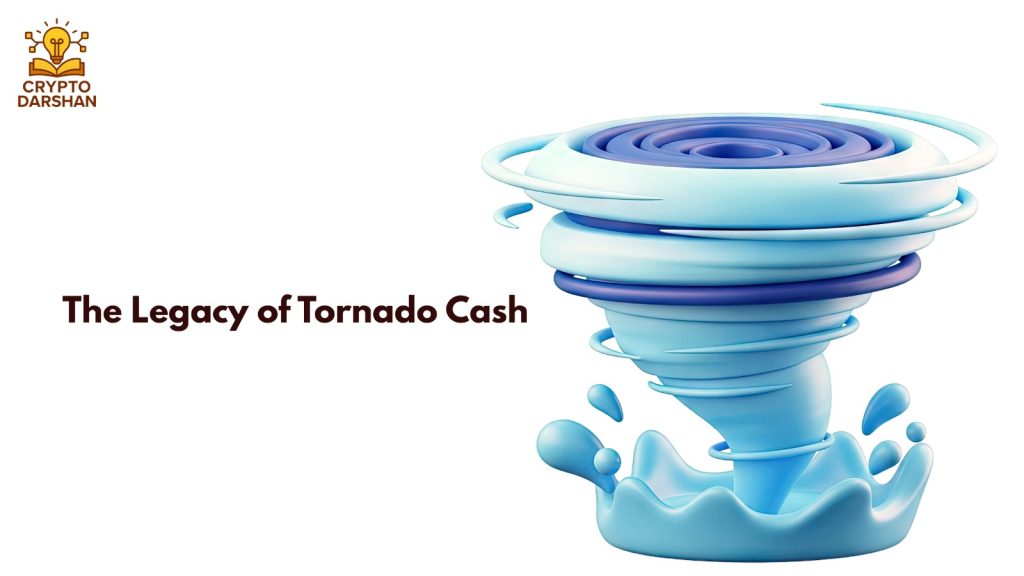
The Legacy of Tornado Cash
The Birth of Tornado Cash
Tornado Cash was launched in 2019 as a decentralized, non-custodial privacy solution built on Ethereum. It used zero-knowledge proofs (zk-SNARKs) to allow users to send and receive cryptocurrency anonymously. By breaking the on-chain link between sender and receiver, Tornado Cash provided a level of privacy that traditional blockchain transactions lacked.
The protocol quickly gained popularity among users who valued financial privacy. It became a go-to tool for individuals, developers, and even organizations that wanted to protect their transaction history from public view.
The Technology Behind Tornado Cash
At its core, Tornado Cash relied on cryptographic techniques that allowed users to deposit funds into a smart contract and later withdraw them to a different address without revealing the connection between the two. This was achieved through zero-knowledge proofs, which verified the legitimacy of a transaction without exposing any details.
The process worked as follows:
- A user deposited ETH or ERC-20 tokens into the Tornado Cash smart contract.
- The contract generated a secret note, which served as proof of ownership.
- Later, the user could withdraw the same amount to a new address using the secret note.
- The blockchain would record the deposit and withdrawal, but no one could link them together.
This mechanism made Tornado Cash one of the most effective privacy tools in the crypto ecosystem.
The Fall of Tornado Cash
In 2022, the U.S. Treasury’s Office of Foreign Assets Control (OFAC) sanctioned Tornado Cash, alleging that it was used by hackers and criminal organizations to launder stolen funds. The sanctions led to the arrest of one of its developers and sparked a global debate about the legality of open-source code and privacy in blockchain.
Despite being decentralized and open-source, Tornado Cash faced severe restrictions. Its website was taken down, and major platforms like GitHub removed its repositories. However, the protocol itself continued to exist on the blockchain, beyond the reach of any single authority .For a broader perspective on anonymity, explore how privacy coins like Monero and Zcash are designed to make transactions completely untraceable.
The Tornado Cash incident became a turning point in the crypto world, raising questions about the balance between privacy, regulation, and decentralization.
The Rise of Tornado Cash Successors

The Need for Privacy After Tornado Cash
After the sanctions, the crypto community realized that privacy was not just a luxury—it was a necessity. Users wanted to protect their financial data from surveillance, competitors, and even governments. The fall of Tornado Cash inspired developers to create new privacy protocols that could withstand regulatory pressure while maintaining decentralization.
These new projects, often referred to as Tornado Cash successors, aimed to improve upon the original design by enhancing anonymity, decentralization, and compliance.
Key Features of Tornado Cash Successors

The successors of Tornado Cash in 2026 share several common features:
Enhanced Decentralization
Many new privacy protocols operate without centralized servers or identifiable developers. Governance is handled through decentralized autonomous organizations (DAOs), ensuring that no single entity can be targeted or sanctioned
Advanced Zero-Knowledge Proofs
Successors use more efficient cryptographic systems like zk-STARKs and zk-SNARKs 2.0, which offer faster verification and lower gas fees.
Cross-Chain Compatibility
Unlike the original Tornado Cash, which was limited to Ethereum, new protocols support multiple blockchains, including Binance Smart Chain, Polygon, and Avalanche.
Regulatory Awareness
Some successors integrate optional compliance features, allowing users to prove the legitimacy of their funds without revealing their entire transaction history.
Community Governance
Governance tokens allow users to vote on protocol upgrades, ensuring transparency and community-driven development.
Examples of Tornado Cash Successors
While many privacy protocols have emerged since 2022, a few have gained significant traction by 2026:
- Whirlwind Protocol
A decentralized mixer that uses zk-STARKs for faster and cheaper transactions. It supports multiple blockchains and offers optional compliance proofs. - Cyclone Network
Built as a fork of Tornado Cash, Cyclone Network introduced cross-chain privacy pools and DAO-based governance. - Shade Protocol
A privacy layer for DeFi applications, allowing users to interact with decentralized exchanges and lending platforms anonymously. - Obscura Finance
A next-generation privacy protocol that integrates AI-based anomaly detection to prevent illicit use while maintaining user anonymity.
These projects represent the evolution of Tornado Cash’s vision—privacy without compromise.
What Are Anonymous Transactions?

An ‘Anonymous Transaction‘ refers to a mechanism that defines transactions as a series of independent pure update operations, allowing for simpler transaction handling without the need for naming each transaction explicitly. Unlike traditional blockchain transactions—where every transfer is recorded on a public ledger—anonymous transactions use cryptographic methods to conceal who sent what to whom.
In 2026, these transactions will not be limited to cryptocurrencies like Bitcoin or Ethereum. They extend to decentralized finance (DeFi), non-fungible tokens (NFTs), and even cross-chain transfers.
How Anonymous Transactions Work?
Anonymous transactions work by using advanced cryptographic techniques to hide the identities of the sender and receiver, as well as the amount being transferred. In simple terms, they make it possible to send or receive digital money without anyone being able to trace who sent it, who received it, or how much was sent.
Here’s a clear explanation of how anonymous transactions work step by step:
1. The Problem with Regular Blockchain Transactions
On most blockchains like Bitcoin or Ethereum, every transaction is public.
Anyone can see:
- The sender’s wallet address
- The receiver’s wallet address
- The amount sent.
Even though wallet addresses don’t show real names, they can often be linked to people through exchanges or spending patterns. This means that regular blockchain transactions are pseudonymous, not truly anonymous.
Anonymous transactions were created to solve this problem by breaking the visible link between sender and receiver.
2. The Core Idea Behind Anonymous Transactions
Anonymous transactions use cryptography to make transactions verifiable but private.
This means:
- The network can confirm that a transaction is valid.
- But no one can see who made it or where it went.
This is achieved through mathematical proofs that confirm a transaction happened without revealing any personal or transaction details.
3. Key Technologies That Make Anonymous Transactions Possible
a. Zero-Knowledge Proofs (ZKPs)
A zero-knowledge proof allows someone to prove that they know a secret (like a transaction key) without revealing the secret itself. Most Tornado Cash successors rely heavily on zero-knowledge proofs in blockchain to ensure transaction confidentiality. In anonymous transactions, ZKPs confirm that a transaction is valid, meaning the sender has enough funds and isn’t double-spending, without showing the sender’s or receiver’s addresses.
b. Mixers and Tumblers
A mixer (or tumbler) is a smart contract or service that collects many users’ transactions, mixes them together, and then redistributes the funds.
Because all the transactions are combined, it becomes impossible to tell which deposit corresponds to which withdrawal.
Tornado Cash worked this way:
- You deposit cryptocurrency into the mixer.
- The mixer gives you a secret note.
- Later, you use that note to withdraw your funds to a new address.
- The blockchain shows both transactions, but no one can link them.
c. Ring Signatures
Used by privacy coins like Monero, ring signatures mix a user’s transaction with others in a group.
When a transaction is signed, it looks like it could have come from any member of the group, making it impossible to identify the real sender.
d. Stealth Addresses
Stealth addresses generate a unique, one-time address for every transaction.
Even if someone knows your public wallet address, they can’t see your incoming payments because each payment goes to a new, random address that only you can access.
e. Confidential Transactions
This method hides the transaction amount using cryptographic commitments.
The network can still verify that the total inputs and outputs match, but no one can see the actual numbers.
4. Step-by-Step Example of an Anonymous Transaction
Let’s take a simplified example using a privacy protocol similar to Tornado Cash:
- Deposit:
You send 1 ETH to a privacy pool (a smart contract). The contract records the deposit but doesn’t store your identity. - Generate a Secret Note:
The system gives you a secret code (a cryptographic proof) that proves you made the deposit. - Wait:
Many other users also deposit funds into the same pool. This increases anonymity because your transaction is mixed with others. - Withdraw:
Later, you use your secret note to withdraw 1 ETH to a new wallet address.
The blockchain confirms that the withdrawal is valid, but no one can link it to your original deposit.
This process ensures that your transaction is valid and secure, but completely private.
How Tornado Cash Influenced the Future of Privacy
Decentralization as a Shield
The Tornado Cash case demonstrated that decentralization is the strongest defense against censorship. Even after sanctions, the smart contracts remained operational, proving that code, once deployed on the blockchain, cannot be easily removed.
This realization pushed developers to design fully autonomous systems, with no central points of failure. The successors of Tornado Cash are built with this principle in mind, ensuring that privacy tools remain accessible to everyone.
The Ethical Debate Around Privacy
The controversy surrounding Tornado Cash sparked a global debate about the ethics of privacy. Critics argued that privacy tools enable money laundering and terrorism financing, while supporters claimed that financial privacy is a fundamental human right.
In 2026, this debate continues. Regulators are exploring ways to balance privacy with accountability, while developers are creating tools that allow selective disclosure—users can prove compliance without revealing all their data.
The Role of Zero-Knowledge Proofs
Zero-knowledge proofs have become the cornerstone of privacy in blockchain. The technology that powered Tornado Cash has evolved significantly, enabling more efficient and scalable privacy solutions.
Modern zk-protocols allow for:
- Private smart contracts
- Confidential DeFi transactions
- Anonymous voting systems
- Secure identity verification
These advancements ensure that the legacy of Tornado Cash lives on through innovation.
Tornado Cash and the Regulatory Landscape in 2026

Global Regulations on Privacy Protocols
By 2026, governments around the world have adopted varying approaches to privacy protocols. Some countries, like Switzerland and Singapore, have embraced privacy-preserving technologies under strict compliance frameworks. Others, such as the United States, continue to impose restrictions on tools similar to Tornado Cash.
Regulators now focus on the concept of “responsible privacy,” encouraging developers to include optional compliance features. This allows legitimate users to maintain privacy while preventing misuse.
The Legal Status of Tornado Cash Successors
The successors of Tornado Cash operate in a legal gray area. While the code itself is not illegal, its use for illicit purposes can lead to penalties. Developers have learned from the past and now emphasize transparency, community governance, and compliance options.
Some protocols have even partnered with blockchain analytics firms to create “privacy with accountability,” ensuring that users can prove the origin of their funds when necessary.
The Future of Regulation
The future of privacy regulation will likely involve collaboration between developers, regulators, and users. The goal is to create a framework that protects individual privacy while preventing criminal misuse.
Tornado Cash paved the way for this dialogue, forcing the world to confront the complexities of privacy in a decentralized environment.
The Technology Driving Anonymous Transactions in 2026
Zero-Knowledge Proofs 2.0
The successors of Tornado Cash use advanced zero-knowledge systems that are faster, cheaper, and more scalable. zk-STARKs, for example, eliminate the need for trusted setups and offer post-quantum security.
These improvements make privacy protocols more efficient and accessible to everyday users.
Layer-2 Privacy Solutions
Layer-2 networks have become essential for scaling privacy. By processing transactions off-chain and settling them on-chain, these solutions reduce gas fees and improve transaction speed.
Protocols inspired by Tornado Cash now integrate with Layer-2 platforms like zkSync and Arbitrum, enabling seamless and private transactions across multiple ecosystems.
Cross-Chain Privacy Bridges
In 2026, cross-chain privacy is a major trend. Users can now move assets privately between different blockchains without exposing their identity. This innovation extends the vision of Tornado Cash beyond Ethereum, creating a truly interconnected privacy network.
AI and Privacy Protection
Artificial intelligence plays a growing role in monitoring blockchain activity for suspicious patterns without compromising user anonymity. Some Tornado Cash successors use AI to detect potential misuse while preserving legitimate privacy.
The Economic Impact of Tornado Cash and Its Successors

Privacy as a Market Demand
The demand for privacy has created a thriving market for privacy-focused tools. Businesses, investors, and individuals all seek ways to protect their financial data. The successors of Tornado Cash have capitalized on this demand, offering innovative solutions that combine privacy with usability.
Institutional Adoption
In 2026, institutional investors are beginning to explore privacy-preserving technologies. While they must comply with regulations, they also recognize the importance of protecting trade secrets and transaction data. Some institutions use modified versions of Tornado Cash-like protocols for internal transfers and settlements.
The Role of Privacy Tokens
Privacy tokens, such as Monero and Zcash, continue to play a role in the ecosystem. However, the successors of Tornado Cash offer a more flexible approach by enabling privacy on existing blockchains rather than creating new ones.
This interoperability has made privacy more accessible and integrated into mainstream finance.
The Social and Ethical Dimensions of Anonymous Transactions

Privacy as a Human Right
The debate over Tornado Cash highlighted the importance of privacy as a fundamental human right. In a world where surveillance is increasing, the ability to conduct private transactions is essential for freedom and security.
The Misuse of Privacy Tools
While privacy tools can be used for legitimate purposes, they can also be exploited by criminals. The challenge lies in creating systems that protect privacy without enabling illegal activity. The successors of Tornado Cash are addressing this by incorporating selective disclosure and compliance options.
The Future of Digital Freedom
In 2026, digital freedom depends on the ability to control personal data. The successors of Tornado Cash are part of a broader movement toward self-sovereign identity and decentralized privacy. These technologies empower individuals to decide what information they share and with whom.
The Future of Tornado Cash and Its Successors

Continued Innovation
The spirit of Tornado Cash lives on through continuous innovation. Developers are exploring new cryptographic methods, such as homomorphic encryption and multi-party computation, to enhance privacy further.
Integration with Web3 and DeFi
Privacy is becoming a core component of Web3. Decentralized finance (DeFi) platforms are integrating privacy layers inspired by Tornado Cash, allowing users to trade, lend, and borrow anonymously.
The Role of DAOs
Decentralized autonomous organizations (DAOs) now govern many privacy protocols. This ensures that decisions are made collectively and transparently, reducing the risk of centralized control.
The Vision for 2030
By 2030, privacy is expected to be a standard feature of blockchain technology. The successors of Tornado Cash will likely evolve into fully integrated privacy layers that support all types of digital interactions—from payments to identity management.
FAQ

1. What happened to Tornado Cash?
Tornado Cash was sanctioned by the U.S. Treasury in 2022 over concerns about money laundering and illicit activity. Despite this, its open-source code remains accessible, and developers have continued building alternative privacy solutions inspired by it.
2. Are Tornado Cash successors legal to use in 2026?
Legality depends on your country. Some jurisdictions allow privacy tools, while others restrict or monitor them. Always check local regulations before using any anonymous transaction protocol.
3. What are the main alternatives to Tornado Cash in 2026?
Popular successors and alternatives include:
- Railgun – Uses zero-knowledge proofs for private DeFi transactions.
- Aztec Network – Focuses on private smart contracts on Ethereum.
- Secret Network – Enables encrypted smart contracts.
- Samourai Wallet – Offers mixing tools like Whirlpool.
4. How do Tornado Cash successors maintain anonymity?
Most use advanced cryptography like zero-knowledge proofs (ZKPs), stealth addresses, and transaction obfuscation to hide sender, receiver, and transaction amount without compromising blockchain verification.
5. What are zero-knowledge proofs in crypto privacy?
Zero-knowledge proof is a method that allows one party to prove a transaction is valid without revealing any underlying details, making it essential for modern privacy protocols.
6. Are anonymous crypto transactions completely untraceable?
No system is 100% untraceable. While privacy tools significantly increase anonymity, advanced blockchain analytics and regulatory surveillance can still uncover patterns in some cases.
Conclusion
Tornado Cash was more than just a privacy tool—it was a movement that redefined the meaning of anonymity in blockchain. Despite facing regulatory challenges, its legacy continues through a new generation of privacy protocols that are more advanced, decentralized, and resilient.
In 2026, the successors of Tornado Cash are leading the charge toward a future where privacy and transparency coexist. They embody the principles of decentralization, innovation, and freedom that define the blockchain revolution.
As technology evolves, the world will continue to grapple with the balance between privacy and regulation. But one thing is certain: the vision that Tornado Cash introduced—true financial privacy on the blockchain—will remain a cornerstone of the decentralized future.