
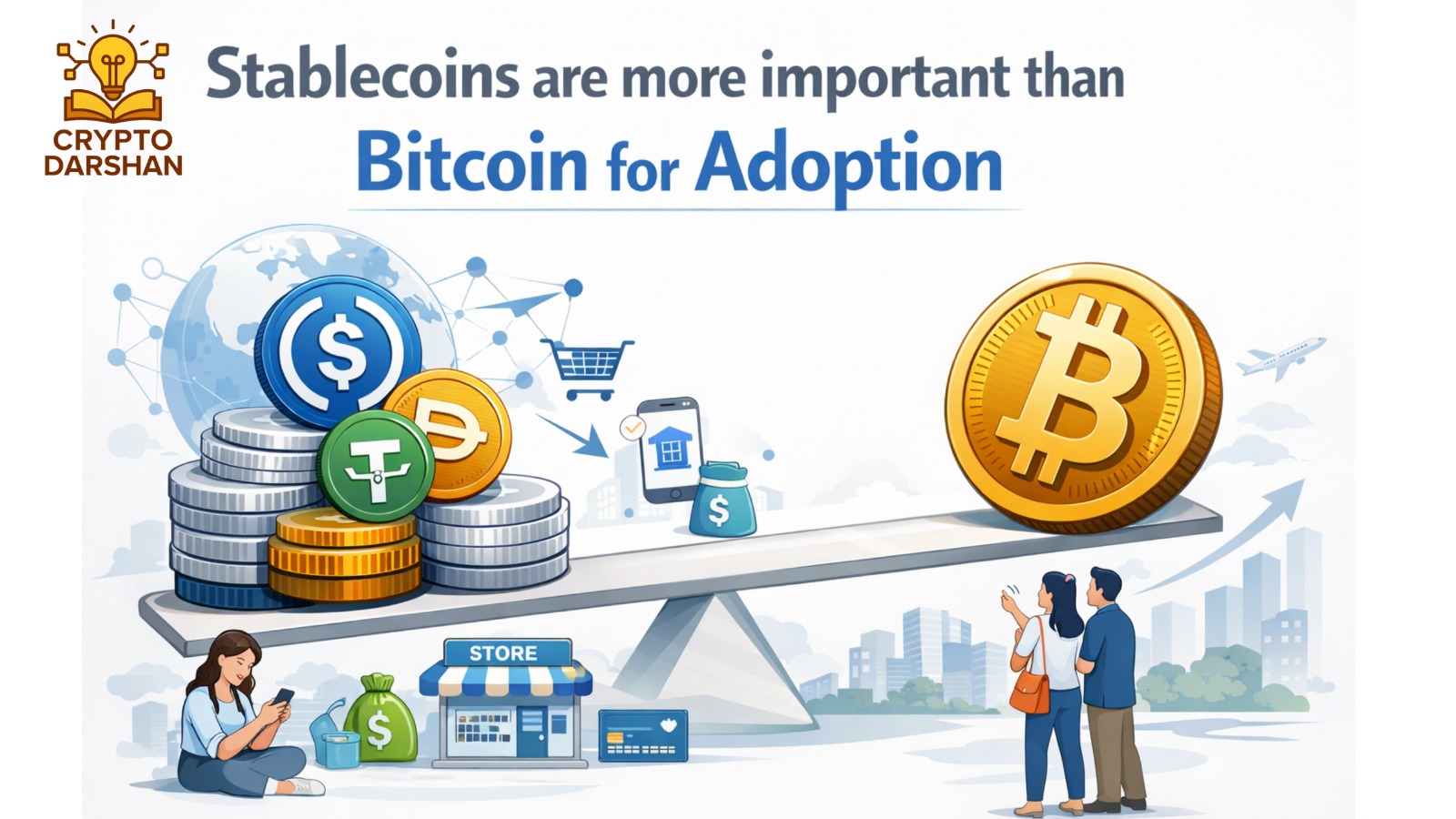
Stablecoins are more important than Bitcoin due to price stability, enabling seamless global payments, remittances, and DeFi without volatility risks. Since Bitcoin’s creation in 2009, it has been hailed as the future of money, a decentralized, borderless, and censorship-resistant currency. Yet, more than a decade later, Bitcoin remains primarily a store of value rather than a medium of exchange. While it has proven its worth as “digital gold,” its volatility and scalability challenges have limited its use in everyday transactions.
Enter stablecoins digital currencies designed to maintain a stable value, usually pegged to fiat currencies like the U.S. dollar. Stablecoins bridge the gap between traditional finance and the crypto world, offering the stability of fiat with the efficiency of blockchain technology. They are becoming the backbone of crypto adoption, powering payments, remittances, decentralized finance (DeFi), and even central bank digital currency (CBDC) experiments.
This article explores why stablecoins are more important than Bitcoin for mainstream adoption, how they are transforming global finance, and what the future holds for this rapidly growing sector.
Understanding Bitcoin and Stablecoins

What Is Bitcoin?
Bitcoin is the first and most well-known cryptocurrency. It operates on a decentralized network called the blockchain, where transactions are verified by miners and recorded publicly. Bitcoin’s supply is capped at 21 million coins, making it scarce and resistant to inflation.
Bitcoin’s main strengths include:
- Decentralization: No central authority controls it.
- Security: Its blockchain is one of the most secure networks in the world.
- Scarcity: Limited supply gives it value similar to gold.
However, Bitcoin’s price volatility makes it difficult to use as a daily currency. Its value can swing by several percentage points in a single day, which discourages people from using it for payments or savings in unstable economies.
What Are Stablecoins?
Stablecoins, which can be found through top crypto exchanges, are designed to bridge the gap between the unpredictability of popular cryptocurrencies like Bitcoin (BTC) and the stability required for everyday financial transactions They achieve this by pegging their price to a reserve asset, such as:
- Fiat currencies (e.g., USD, EUR, GBP)
- Commodities (e.g., gold)
- Other cryptocurrencies (through algorithmic mechanisms)
The most common type is the fiat-backed stablecoin, where each token is backed by an equivalent amount of fiat currency held in reserve. Examples include:
- USDT (Tether)
- USDC (USD Coin)
- BUSD (Binance USD)
- DAI (MakerDAO’s decentralized stablecoin)
Stablecoins combine the best of both worlds: the stability of traditional money and the efficiency of blockchain technology.
For newcomers entering crypto, stability matters more than ideology. This is why stablecoins play a critical role in onboarding first-time users, as explained in our guide on Stablecoins 101: Smart Way to Survive Crypto Volatility, where we break down how stablecoins reduce risk while introducing users to blockchain-based finance.
Why Stablecoins Are More Important for Adoption

1. Stability Encourages Everyday Use
The biggest barrier to Bitcoin’s use as a currency is its volatility. A cup of coffee that costs 0.0002 BTC today might cost 0.00015 BTC tomorrow. This unpredictability makes it impractical for daily transactions.
Stablecoins solve this problem by maintaining a consistent value. A stablecoin pegged to the U.S. dollar will always be worth around $1, making it ideal for:
- Payments and purchases
- Remittances
- Payroll
- E-commerce
This stability encourages both consumers and businesses to adopt digital currencies without worrying about price fluctuations.
2. Easier Integration with Traditional Finance
Stablecoins act as a bridge between traditional finance and crypto. Because they are pegged to fiat currencies, they are easier for banks, payment processors, and regulators to understand and integrate.
For example:
- Businesses can accept stablecoin payments without exposure to crypto volatility.
- Financial institutions can use stablecoins for faster cross-border settlements.
- Regulators can monitor stablecoin transactions more easily than decentralized cryptocurrencies.
This compatibility makes stablecoins a practical tool for mainstream financial adoption.
3. Faster and Cheaper Transactions
Traditional banking systems are slow and expensive, especially for international transfers. Sending money across borders can take days and involve high fees. Stablecoins eliminate these inefficiencies.
With stablecoins:
- Transactions settle in seconds or minutes, not days.
- Fees are a fraction of traditional wire transfers.
- Transfers are borderless, requiring no intermediaries.
For example, sending USDC from the United States to Nigeria or the Philippines can be done instantly, with minimal cost. This makes stablecoins a powerful tool for global commerce and remittances.
4. Powering the DeFi Ecosystem

Decentralized finance (DeFi) relies heavily on stablecoins. They serve as the base currency for lending, borrowing, trading, and yield farming. Without stablecoins, DeFi would be far more volatile and less accessible.
In DeFi platforms like Aave, Compound, and MakerDAO:
- Users deposit stablecoins to earn interest.
- Borrowers use stablecoins as collateral.
- Traders use stablecoins to hedge against market volatility.
Stablecoins provide the liquidity and stability that DeFi needs to function efficiently. Bitcoin, while valuable, is less suited for these applications due to its volatility and slower transaction speeds.
5. Enabling Financial Inclusion
Stablecoins are transforming access to financial services, especially in developing countries. Millions of people lack access to traditional banking but have smartphones and internet connections. Stablecoins allow them to:
- Store value safely without a bank account.
- Send and receive money globally.
- Protect savings from local currency inflation.
In countries like Argentina, Venezuela, and Nigeria, where inflation erodes purchasing power, stablecoins offer a lifeline. People can hold digital dollars instead of unstable local currencies, preserving their wealth and enabling participation in the global economy.
6. Supporting Businesses and E-Commerce
Businesses benefit from stablecoins because they simplify payments and reduce costs. Merchants can accept stablecoins without worrying about volatility or chargebacks. Settlement is instant, and transaction fees are lower than credit card processing fees.
E-commerce platforms and freelancers are increasingly adopting stablecoins for cross-border payments. For example:
- Freelancers in Asia can receive USDC payments from clients in the U.S. instantly.
- Online stores can accept stablecoins as payment without dealing with currency conversion.
This efficiency makes stablecoins a practical solution for global digital commerce.
7. Transparency and Security on the Blockchain
Stablecoins operate on blockchain networks, which means every transaction is transparent, traceable, and secure. Unlike traditional banking systems that rely on intermediaries, blockchain transactions are recorded publicly and verified by the network. This transparency builds trust among users and regulators, while the underlying cryptography ensures security and reduces fraud.
8. Gateway to Broader Crypto Adoption
Stablecoins serve as the entry point for new users into the crypto ecosystem. Because they are easy to understand and less risky than volatile cryptocurrencies, people often start with stablecoins before exploring Bitcoin, Ethereum, or DeFi. They also make it easier for exchanges and wallets to onboard users by offering a familiar, dollar-like digital asset. In this way, stablecoins are the foundation for mass crypto adoption.
Adoption accelerates when crypto feels invisible to users. This aligns with our argument in Crypto as Digital Infrastructure, Not an Asset, where we explain why stablecoins are becoming financial rails rather than speculative instruments.
9. Support for Cross-Border Trade and Remittances
Stablecoins simplify international trade by removing the need for currency conversion and reducing settlement times. Businesses can pay suppliers or partners in stablecoins, avoiding delays and high banking fees. Similarly, migrant workers can send remittances home instantly, ensuring families receive more of the money sent. This efficiency makes stablecoins a practical solution for global commerce and humanitarian aid.
Comparing Bitcoin and Stablecoins

| Feature | Bitcoin (BTC) | Stablecoins (e.g., USDC, USDT) |
| Volatility | High | Low |
| Use Case | Store of value | Medium of exchange |
| Transaction Speed | 10–60 minutes | Seconds to minutes |
| Adoption Barrier | Price fluctuations | Regulatory clarity |
| Integration with Banks | Limited | Easier |
| Ideal For | Investment, savings | Payments, remittances, DeFi |
Bitcoin remains the foundation of the crypto ecosystem, but stablecoins are the gateway to mass adoption. They make blockchain technology usable for everyday people and businesses.
The Role of Stablecoins in the Global Economy

Stablecoins have become a key part of the modern financial system. By combining the stability of fiat currencies with the speed of blockchain, they are changing how money moves and how people access financial services. Their influence now extends beyond crypto, shaping trade, remittances, and even government policy.
1. Cross-Border Payments
Cross-border payments are one of the most promising use cases for stablecoins. Traditional systems like SWIFT are slow, costly, and require multiple intermediaries. Stablecoins simplify this process by enabling direct peer-to-peer transfers.
For example:
- A business in India can pay a supplier in Europe using USDC instantly.
- Migrant workers can send remittances home without paying high fees.
This efficiency benefits both individuals and corporations, making stablecoins a preferred choice for international transactions.
Stablecoins enable instant, low-cost global transfers without relying on correspondent banks or slow settlement systems. This shift is already reshaping global money movement, as explored in our detailed analysis on Cross-Border Payments: Why Banks Are Quietly Copying Crypto, where we explain why stablecoins, not Bitcoin, are becoming the preferred rail for international transactions.
2. Transforming Remittances

Remittances are vital for millions of families, but traditional services charge high fees and take time. Stablecoins allow fast, affordable, and direct transfers to digital wallets, ensuring more money reaches recipients.
Remittances are a lifeline for millions of families worldwide. However, traditional remittance services charge high fees—often 5–10% of the total amount. Stablecoins reduce these costs dramatically.
Organizations are also using stablecoins for humanitarian aid. During crises, stablecoins can deliver funds directly to recipients’ digital wallets, bypassing bureaucratic delays and corruption. This ensures that aid reaches those who need it most, quickly and transparently.
3. Supporting Financial Inclusion
In many developing countries, people lack access to banks but have smartphones. Stablecoins let them store and send money digitally without a bank account. They also protect savings from inflation, giving users a stable way to hold value and participate in the global economy.
4. Enhancing Global Trade and Commerce
Stablecoins simplify international trade by removing currency conversion and banking delays. Businesses can pay suppliers or freelancers instantly, reducing costs and improving cash flow. This makes global e-commerce faster and more accessible for small businesses.
5. Powering the DeFi Ecosystem
Stablecoins are the foundation of decentralized finance (DeFi). They provide the stability needed for lending, borrowing, and trading on blockchain platforms. Without them, DeFi would be too volatile for most users, limiting its growth and accessibility.
6. Facilitating Tokenization of Assets
It support the tokenization of real-world assets like real estate or stocks. They act as a stable medium of exchange for buying and selling tokenized assets, enabling fractional ownership and faster settlement. This innovation is making global investing more inclusive.
7. Inspiring Central Bank Digital Currencies (CBDCs)

Stablecoins have inspired governments to explore central bank digital currencies (CBDCs). These are digital versions of national currencies issued by central banks. While CBDCs are not the same as stablecoins, they share similar goals faster payments, lower costs, and financial inclusion.
Countries like China (with the digital yuan), the European Union (digital euro), and the United States are studying or piloting CBDCs. Stablecoins have effectively paved the way for this new era of digital money.
8. Improving Transparency and Efficiency
Stablecoins operate on public blockchains, making transactions transparent and traceable. This reduces fraud and improves accountability. For businesses and regulators, it means faster audits, better compliance, and lower operational costs.
9. Providing a Hedge Against Inflation
In countries with unstable currencies, stablecoins offer a safe alternative. People can hold digital dollars instead of devalued local money, protecting their savings and maintaining purchasing power. This makes stablecoins a lifeline in inflation-hit economies.
10. Enabling Programmable Money
Stablecoins can be used with smart contracts to create programmable money. Payments can be automated for salaries, subscriptions, or trade settlements. This reduces errors, increases trust, and improves efficiency in global transactions.
11. Strengthening Financial Infrastructure
Stablecoins enable 24/7, borderless payments, unlike traditional banking systems that operate within limited hours. This constant availability supports global trade and makes financial networks more resilient and efficient.
Challenges Facing Stablecoins

1. Regulatory Uncertainty
While regulation is improving, uncertainty remains. Some governments fear that stablecoins could undermine national currencies or monetary policy. Striking a balance between innovation and control is a major challenge.
2. Centralization Risks
Most stablecoins are issued by centralized entities that hold fiat reserves. This introduces counterparty risk if the issuer fails or mismanages funds, users could lose confidence. Decentralized alternatives like DAI aim to solve this, but they face scalability and complexity issues.
3. Reserve Transparency
Trust in stablecoins depends on the transparency of their reserves. Some issuers have faced criticism for not providing regular audits or clear information about their holdings. Greater transparency is essential for long-term credibility.
4. Competition from CBDCs
As central banks develop their own digital currencies, stablecoins may face competition. However, private stablecoins could still coexist with CBDCs by offering more flexibility, innovation, and global reach.
The Future of Stablecoins

1. Integration with Everyday Finance
Stablecoins are likely to become part of everyday financial life. Banks, fintech companies, and payment processors are already integrating stablecoin support. In the near future, people may use stablecoins for:
- Paying salaries
- Shopping online
- Settling invoices
- Investing in tokenized assets
2. Growth in Emerging Markets
Emerging markets will drive the next wave of stablecoin adoption. In regions with unstable currencies or limited banking access, stablecoins offer a reliable alternative. They empower individuals to save, transact, and invest globally.
3. Institutional Adoption
Large corporations and financial institutions are beginning to use stablecoins for treasury management and settlements. Companies like Visa and PayPal have integrated stablecoin payments, signaling mainstream acceptance.
4. Technological Advancements
Future stablecoins will benefit from innovations like:
- Layer 2 scaling solutions for faster transactions
- Cross-chain interoperability for seamless transfers between blockchains
- Programmable money through smart contracts
These advancements will make stablecoins even more efficient and versatile.
Why Bitcoin Still Matters
While stablecoins are crucial for adoption, Bitcoin remains the foundation of the crypto ecosystem. It serves as:
- A store of value and hedge against inflation
- A decentralized alternative to government-controlled money
- A reserve asset for the broader crypto economy
Bitcoin’s role is similar to gold in the traditional financial system it underpins trust and value. Stablecoins, on the other hand, function like cash used for transactions and liquidity. Both are essential, but stablecoins are the gateway that brings people into the digital economy.
FAQ: Stablecoins Are More Important Than Bitcoin for Adoption

1. Why are stablecoins considered more important than Bitcoin for adoption?
Stablecoins offer price stability, making them practical for everyday use like payments, remittances, and savings. Bitcoin’s volatility limits its usability for daily transactions, while stablecoins behave more like digital cash.
2. How do stablecoins help onboard new crypto users?
Stablecoins remove the fear of sudden price swings. New users can enter crypto without market risk, making them ideal as a first step into wallets, exchanges, and DeFi platforms.
3. Can stablecoins be used for daily payments?
Yes. Stablecoins are widely used for merchant payments, salaries, subscriptions, and cross-border transfers because their value remains stable, unlike Bitcoin.
4. Does this mean Bitcoin is no longer important?
No. Bitcoin remains crucial as a store of value and censorship-resistant asset. Stablecoins complement Bitcoin by handling everyday financial activity, while Bitcoin anchors long-term trust in crypto.
5. Why do businesses prefer stablecoins over Bitcoin?
Businesses need predictable pricing. Stablecoins allow companies to price goods, manage cash flow, and reduce FX risk, which is difficult with Bitcoin’s volatility.
6. Are stablecoins safer than Bitcoin?
Stablecoins are less volatile but come with issuer and regulatory risks. Bitcoin is decentralized and trust-minimized, but its price fluctuations make it less practical for short-term use.
7. How do stablecoins impact global adoption?
Stablecoins enable crypto usage in regions with inflation, weak banking systems, or high remittance costs, making crypto useful even for non-technical users.
8. Are stablecoins replacing traditional banks?
Not replacing, but competing with and complementing them. Stablecoins replicate core banking functions payments, savings, transfers on blockchain rails.
9. Do stablecoins rely on Bitcoin’s infrastructure?
Indirectly. While most stablecoins run on other blockchains, Bitcoin’s success established trust, security principles, and the crypto ecosystem that stablecoins build upon.
10. What does the future of crypto adoption look like?
Mass adoption is likely to be stablecoin-led, with users transacting in stable assets while Bitcoin functions as the reserve asset of the crypto economy.
Conclusion
Bitcoin started the revolution, but stablecoins are driving adoption. Their stability, speed, and compatibility with traditional finance make them the most practical tool for everyday use. From remittances and e-commerce to DeFi and global payments, stablecoins are reshaping how money moves around the world.
As regulation matures and technology advances, stablecoins will continue to bridge the gap between the old and new financial systems. They are not just a stepping stone to crypto adoption they are the foundation of the next generation of digital finance.
In the long run, Bitcoin may remain the ultimate store of value, but stablecoins will power the real-world adoption that brings blockchain technology into daily life.