Introduction: Why Crypto Volatility Scares Investors
Cryptocurrency markets are famous for their extreme price swings. Bitcoin can rise or fall thousands of dollars in a single day, and altcoins often move even faster. While volatility creates opportunities for traders, it also brings risk, stress, and uncertainty especially for beginners and long-term investors.
Stablecoins offer a practical solution to crypto volatility by combining the stability of traditional money with the speed and flexibility of blockchain technology. They allow users to stay inside the crypto ecosystem without being exposed to wild price fluctuations.
In this guide, you’ll learn everything you need to know about stablecoins, how they work, why they matter, and how they help investors, traders, and businesses survive crypto volatility smartly—not emotionally.
What Are Stablecoins?

Stablecoins are a form of digital currency designed to maintain a stable value by being pegged to a reserve asset, typically a fiat currency like the US dollar or the euro. Unlike cryptocurrencies such as Bitcoin or Ethereum, whose prices fluctuate, stablecoins aim to provide price predictability while preserving the benefits of blockchain technology namely, fast, global, and programmable transactions. so, the stablecoins are cryptocurrencies designed to maintain a stable value, usually pegged to a real-world asset like:
- The US dollar (USD)
- Other fiat currencies (EUR, GBP)
- Commodities (gold)
- Or algorithmic mechanisms
Simple Example
1 stablecoin like USDC = $1 USD
Even if Bitcoin crashes or pumps, USDC remains close to $1.
This stability makes stablecoins useful for:
- Trading
- Saving value
- Payments
- Remittances
- Business transactions
When choosing which stablecoins to use for trading, payments, or savings, it’s helpful to look at the top stablecoins to buy in 2026. This guide breaks down the most trusted and widely adopted options, helping users select coins that combine liquidity, stability, and regulatory compliance.
Why Stablecoins Exist?

Cryptocurrencies like Bitcoin and Ethereum were created to be decentralized and borderless, but they come with one major challenge: high price volatility. A coin can lose or gain significant value within hours, making it difficult to use crypto for everyday payments, savings, or business transactions. Stablecoins exist to solve this problem.
Their main purpose is to provide a stable digital currency that works on blockchain networks without suffering from extreme price fluctuations. By being pegged to stable assets like the US dollar, stablecoins keep their value predictable while still offering the benefits of crypto technology.
Before stablecoins, users had only two choices during market downturns:
- Hold volatile cryptocurrencies and risk losses
- Convert crypto into fiat money and rely on slow, traditional banks
Stablecoins introduced a third option: stay inside the crypto ecosystem while protecting value.
They allow users to move funds quickly between cryptocurrencies, store value safely during market uncertainty, and make fast digital payments without worrying about sudden price drops. For traders, stablecoins act as a safe exit during crypto volatility. For businesses, they provide a reliable payment method. For individuals, they offer an easier way to send and receive money globally.
In simple terms, stablecoins exist to combine the stability of traditional money with the efficiency of blockchain technology. They make cryptocurrencies more practical, usable, and accessible for real-world applications not just speculation.
Types of Stablecoins Explained
Not all stablecoins work the same way. Understanding their structure helps you assess risk and trust.
1. Fiat-Backed Stablecoins
These are the most popular and widely used stablecoins.
They are backed by real fiat currency held in reserves by an issuing company.
Examples:
- USDT (Tether)
- USDC (USD Coin)
- BUSD (discontinued in many regions)
How they work:
- 1 stablecoin is backed by 1 USD (or equivalent)
- Issuers hold cash or short-term assets as reserves.
- Users can redeem stablecoins for fiat (in theory)
Pros:
- High liquidity.
- Easy to understand.
- Widely accepted.
Cons:
- Centralized.
- Requires trust in issues.
- Regulatory risk.
2. Crypto-Backed Stablecoins
These stablecoins are backed by other cryptocurrencies, usually over-collateralized.
Example:
- DAI
How they work:
- Users lock crypto (like ETH) as collateral.
- Smart contracts mint stablecoins.
- Extra collateral protects against price drops.
Pros:
- Decentralized
- Transparent on-chain
- No single issuer
Cons:
- Complex mechanism
- Vulnerable during extreme crashes
- Lower adoption than fiat-backed coins
3. Algorithmic Stablecoins (High Risk)
These stablecoins rely on algorithms and market incentives instead of direct backing.
How they work:
- Supply increases or decreases to maintain the price
- Often paired with a secondary token
Reality check:
Many algorithmic stablecoins have failed catastrophically, causing massive losses.
Verdict:
⚠️ Not recommended for beginners or businesses
Stablecoins vs Traditional Fiat Money

| Feature | Stablecoins | Bank Money |
| Settlement speed | Minutes | Days |
| Availability | 24/7 | Limited hours |
| Cross-border | Easy | Expensive |
| Intermediaries | Minimal | Multiple |
| Transparency | On-chain | Opaque |
Stablecoins don’t replace banks—but they outperform them in speed and accessibility.
How Stablecoins Are Used in Real Life

1. Crypto Trading & Investing
- Safe entry and exit
- Portfolio balancing
- Yield strategies
2. Business Payments
- Accepting customer payments
- Paying suppliers
- International settlements
Stablecoins aren’t just for traders they are increasingly being used by companies around the world. Learn more about how businesses are accepting stablecoins today and how these digital assets simplify payments, reduce fees, and improve cross-border transactions.
3. Freelancing & Remote Work

- Faster global payments
- No currency conversion loss
- No bank delays.
4. Remittances
- Lower fees than money transfer services
- Instant cross-border transfers
5. DeFi (Decentralized Finance)
- Lending
- Borrowing
- Yield farming
- Liquidity pools
Are Stablecoins Really Safe?
Stablecoins are safer than most cryptocurrencies because their value is designed to remain stable, usually pegged to the US dollar or another asset. However, “safe” doesn’t mean risk-free. Here’s what you need to know:
1. Centralization Risk
Many stablecoins, especially fiat-backed ones like USDT or USDC, are controlled by a central company. This means the issuer can:
- Freeze funds
- Restrict transactions
- Face legal issues
Centralization adds trust but also introduces a point of failure.
2. Regulatory Risk
Stablecoins operate under evolving regulations. Governments may:
- Limit their use
- Impose compliance requirements
- Require detailed reporting
Regulatory changes can affect usability or accessibility, especially for businesses and investors.
3. Reserve Transparency
The safety of a stablecoin depends on its backing reserves. Not all stablecoins regularly publish audited reserves. Without transparency, there’s a risk the coin may not maintain its peg during market stress.
4. Market Risk
Crypto-backed stablecoins, like DAI, depend on the value of collateral. If the market crashes sharply, the collateral could lose value, putting the stablecoin’s peg at risk.
5. Technical or Smart Contract Risk
Decentralized stablecoins rely on smart contracts. Bugs or vulnerabilities in the code could result in loss of funds or temporary instability.
How to Choose a Safe Stablecoin

1. Check Transparency and Audits
A safe stablecoin should provide regular proof of reserves. Reputable issuers publish audits and updates to show that each stablecoin is backed 1:1 by real assets. Transparency ensures the coin is trustworthy and reduces the risk of sudden collapses.
2. Look for Regulatory Compliance
Stablecoins that comply with regulations are safer. Compliance indicates that the issuer operates legally, follows anti-money laundering rules, and meets financial oversight standards, which adds credibility and stability.
3. Evaluate Liquidity and Adoption
High liquidity and wide adoption are key indicators of a stablecoin’s safety. Coins like USDT, USDC, and DAI are widely accepted across exchanges, wallets, and payment platforms, making them easier to trade or use for payments without losing value.
4. Understand the Backing Mechanism
Know what supports the stablecoin’s value:
- Fiat-backed: Pegged to USD or another fiat currency
- Crypto-backed: Collateralized by other cryptocurrencies
- Algorithmic: Uses supply and demand mechanisms
Understanding the mechanism helps you gauge risk exposure during market turbulence.
5. Check Historical Stability
Review how consistently the stablecoin has maintained its peg. Stablecoins with a strong track record of holding value through market swings are generally safer for beginners and businesses.
6. Consider the Issuer’s Reputation
Reputable issuers inspire confidence. Look for coins backed by companies with a history of transparency, regulatory adherence, and reliable operations.
7. Diversify Your Stablecoins
Holding multiple stablecoins reduces dependency on a single coin. This can protect you if one stablecoin temporarily loses its peg or faces regulatory issues.
8. Start Small and Monitor
Before committing large amounts, start with a small portion of funds to understand how the coin works, how transactions occur, and how fees apply. Monitoring helps you identify potential issues early.
Popular Stablecoins Compared
USDT (Tether)
- Highest liquidity.
- Widely accepted.
- Less transparent historically.
USDC (USD Coin)
- Strong compliance.
- Regular audits.
- Preferred by institutions.
DAI
- Decentralized.
- Transparent.
- Depends on crypto collateral.
Choosing a safe stablecoin is critical for preserving value. Our detailed comparison of USDT vs USDC in 2026 explains which coin offers better security, transparency, and regulatory compliance for both individual investors and businesses
Stablecoins and Regulation
Regulation is increasing worldwide.
Governments aim to:
- Protect consumers.
- Prevent money laundering.
- Control systemic risk.
While regulation may reduce anonymity, it also:
- Builds trust.
- Encourages adoption.
- Enables institutional use.
The Role of Stablecoins in the Future of Finance

Stablecoins are evolving from trading tools to financial infrastructure.
Future use cases include:
- CBDC bridges
- Tokenized assets
- Payroll systems
- E-commerce payments
They are becoming the digital cash layer of the internet.
Common Myths About Stablecoins

1. Stablecoins are boring.
Reality: Stability is a feature, not a flaw. While they don’t offer huge speculative gains like Bitcoin, stablecoins are designed to protect value, enable payments, and provide liquidity all essential functions in crypto.
2. Stablecoins can’t fail.
Reality: No stablecoin is completely risk-free. Pegs can temporarily break due to market stress, poor reserve management, or technical failures. Choosing well-established, audited stablecoins reduces this risk.
3. Stablecoins replace Bitcoin or other cryptocurrencies.

Reality: Stablecoins serve a different purpose. While Bitcoin and altcoins are for investment and speculation, stablecoins are for stability, trading, payments, and preserving value. They complement, rather than replace, other cryptocurrencies.
4. All stablecoins are centralized.
Reality: While many fiat-backed stablecoins are centralized, crypto-backed and decentralized stablecoins like DAI are governed by smart contracts without a central authority. Understanding the type of stablecoin helps you know how control and risk are managed.
5. Stablecoins are only for traders.
Reality: Stablecoins are useful for everyone beginners, businesses, freelancers, and investors. They make global payments faster, reduce transaction fees, and act as a safe store of value during volatility.
6. Stablecoins are risk-free in all markets.
Reality: Even trusted stablecoins can face regulatory risks, technical risks, or liquidity problems. Users should stay informed, diversify, and use stablecoins responsibly.
Stablecoins for Beginners: Best Practices

1. Choose Trusted Stablecoins Only
Beginners should stick to well-established stablecoins like USDT, USDC, or DAI. These have higher liquidity, wider adoption, and a stronger track record compared to newer or experimental stablecoins.
2. Avoid High-Risk Algorithmic Stablecoins
Algorithmic stablecoins rely on complex mechanisms to maintain their value and have failed in the past. Beginners should avoid them until they fully understand the risks involved.
3. Understand What Backs the Stablecoin
Always check how a stablecoin maintains its peg. Fiat-backed stablecoins rely on cash or reserves, while crypto-backed ones use over-collateralization. Knowing this helps you assess safety and risk.
4. Use Secure Wallets
Store stablecoins in trusted wallets, preferably non-custodial wallets where you control the private keys. Avoid keeping large amounts on exchanges for long periods.
5. Don’t Chase High Yields Blindly
Many platforms offer high interest on stablecoins, but higher returns often mean higher risk. Beginners should avoid unknown platforms and understand the risks before locking funds for yield.
6. Keep Track of Network Fees
Stablecoins operate on different blockchains, each with its own transaction fees. Choose networks with lower fees, when possible, to avoid unnecessary costs, especially for small transfers.
7. Stay Updated on Regulations
Crypto regulations change over time. Beginners should stay informed about local laws related to stablecoins, taxes, and crypto payments to avoid legal or compliance issues.
8. Diversify Instead of Relying on One Stablecoin
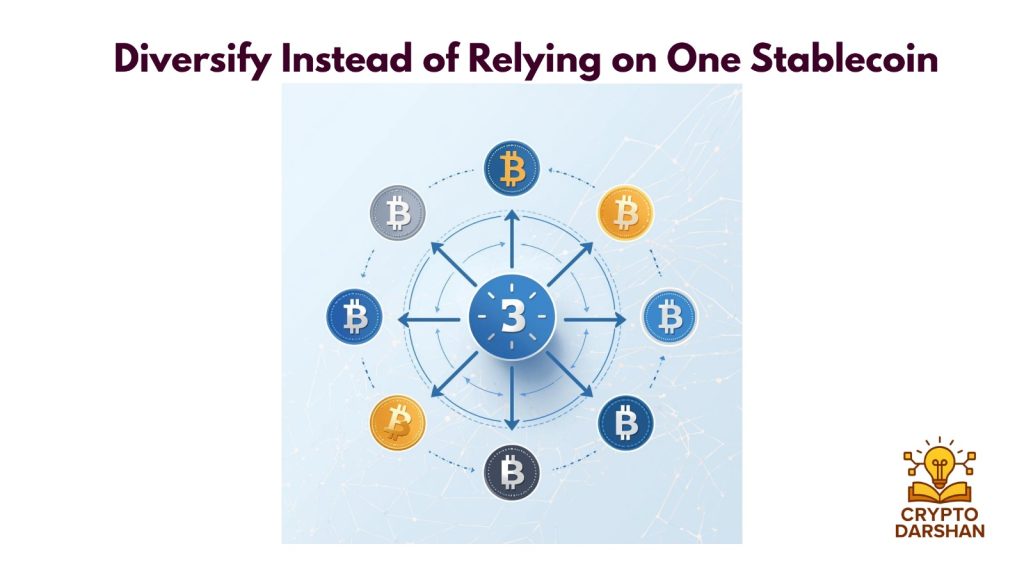
Holding more than one stablecoin can reduce risk if one temporarily loses its peg or faces regulatory issues. Diversification adds an extra layer of safety.
9. Test with Small Amounts First
Before using stablecoins for trading, payments, or transfers, start with small amounts. This helps you learn how wallets, networks, and fees work without risking large funds.
10. Treat Stablecoins as a Tool, not an investment.
Stablecoins are designed for stability, not price growth. Use them for protection, payments, and liquidity management not for long-term profit expectations.
Why Stablecoins Are the Smart Way to Survive Crypto Volatility

1. Protect Capital During Market Crashes
Crypto prices can drop suddenly and without warning. Stablecoins allow users to move their funds out of volatile cryptocurrencies and lock in value. This helps protect capital during sharp market downturns instead of suffering heavy losses.
2. Stay Inside the Crypto Ecosystem
Before stablecoins, avoiding volatility meant converting crypto into fiat money and relying on banks. Stablecoins let users stay fully on-chain, making it easy to switch back into cryptocurrencies when the market stabilizes.
3. Fast and 24/7 Transactions
Stablecoin transactions are processed on blockchain networks, meaning they are fast and available at any time. Unlike traditional banking systems, there are no delays caused by weekends, holidays, or working hours.
4. Better Emotional Control
Market volatility often leads to panic selling and emotional decisions. Stablecoins reduce stress by giving users a stable option to pause, analyze the market, and make informed choices instead of reacting out of fear.
5. Efficient Trading and Liquidity
Most crypto exchanges use stablecoins as base trading pairs. This makes it easier for traders to move between assets quickly without being exposed to constant price fluctuations, improving liquidity and trading efficiency.
6. Reliable Option for Businesses
For businesses, price stability is essential. Stablecoins enable companies to accept crypto payments, pay suppliers, and manage cash flow without worrying about sudden price fluctuations that could affect profits.
7. Safer Entry Point for Beginners
New users often struggle with crypto volatility. Stablecoins offer a low-risk way to explore crypto trading, payments, and blockchain technology while minimizing exposure to crypto volatility.
8. Support Long-Term Crypto Adoption
By reducing volatility risks, stablecoins make crypto more usable for real-world applications. This stability encourages wider adoption among individuals, businesses, and institutions.
Stablecoins play a key role in growing the cryptocurrency ecosystem. Explore how stablecoins are powering global crypto adoption and why these stable digital currencies are becoming essential tools for investors, businesses, and cross-border transactions.
Final Thoughts: Are Stablecoins Worth Using?

Yes, stablecoins are worth using if they are used correctly and with proper understanding.
Stablecoins are not designed to make users rich overnight. Instead, they play a crucial role in helping people manage risk, protect value, and move money efficiently within the crypto ecosystem. In a market known for extreme price swings, stability itself becomes a powerful advantage.
For beginners, stablecoins provide a safer entry point into crypto without the stress of constant volatility. For traders, they offer liquidity and flexibility. For businesses, they enable faster, more predictable payments. And for long-term users, stablecoins act as a reliable bridge between traditional finance and digital assets.
Conclusion
Stablecoins are the smart bridge between traditional finance and crypto innovation.
They help users navigate volatility, protect capital, and stay flexible in a fast-moving market.
Whether you’re a trader, investor, freelancer, or business owner, understanding stablecoins is no longer optional; it’s essential. As crypto adoption grows, stablecoins will continue to play a central role in shaping the future of digital finance.