
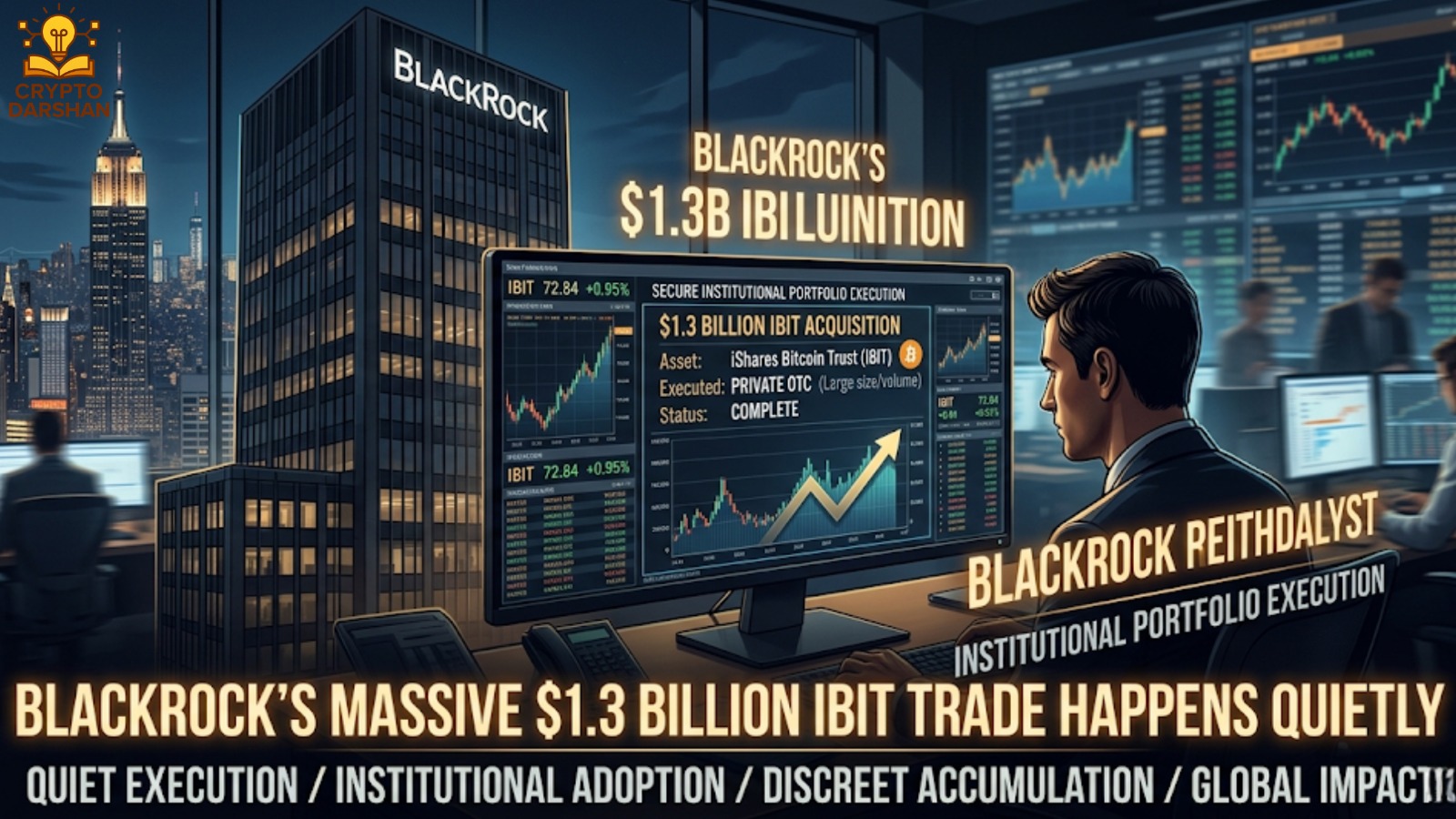
On Monday morning, something extraordinary happened in the world of Bitcoin investing. A staggering $1.29 billion worth of BlackRock’s iShares Bitcoin Trust (IBIT) changed hands in what’s called a “dark pool” trade, one of the largest single institutional transactions since the ETF launched in early 2024.
What makes this news especially interesting is that despite the enormous size of the trade, Bitcoin’s price barely budged. This is exactly what dark pools are designed to do, but it’s still remarkable to see it play out at this scale.
What Is a Dark Pool Trade?

Before we dive deeper, let’s break down what “dark pool” actually means. A dark pool is a private trading venue where large institutional investors can buy and sell securities without showing their orders to the public market first. Think of it as a backroom deal for big players.
Normally, if someone tried to sell $1.3 billion worth of an asset on the regular stock exchange, it would create a ripple effect. The sudden surge in supply would likely crash the price. But in a dark pool, the trade happens off the public radar, so there’s minimal price impact.
The IBIT trade executed 29 million shares at around 10:30 AM Eastern Time, valued at approximately $1.3 billion.
Bitcoin’s Price Reaction: Surprisingly Calm

Here’s where things get interesting. Despite this massive block sale, Bitcoin didn’t experience the dramatic crash you might expect. According to market data, the single dark-pool sale saw BTCUSD drop only about 1.5% in 10 minutes, sliding from $77,875 to $76,720, before hitting an intraday low near $75,600 (a 2.8% daily decline).
By comparison, when large sells happen on public exchanges, price drops can be much more severe. This demonstrates that dark pools are working exactly as intended, allowing institutions to move massive positions without triggering panic selling or market volatility.
Why Institutions Love Dark Pools

Large institutional investors like pension funds, hedge funds, and asset managers use dark pools for several key reasons:
- Privacy: No one knows they’re buying or selling until after the trade completes
- Less Market Impact: Avoids triggering automated trading algorithms that chase price movements
- Better Execution Prices: Without public order books showing theirintentions, they get fairer prices
- Reduced Slippage: The difference between expected and actual execution price stays minimal
BlackRock’s IBIT has become a favorite among institutional investors precisely because it offers regulated, transparent access to Bitcoin exposure without requiring them to hold actual cryptocurrency.
As large investors enter the market, understanding risks becomes even more important, which is why Blockchain Security Risks Every Investor Should Know in 2026 is worth exploring.
What This Means for Bitcoin Investors

For regular retail investors and even smaller institutional players, this dark pool trade sends a few important messages:
- Institutions Are Still Active: The fact that someone wanted to move $1.3 billion worth of IBIT shows that institutional interest in Bitcoin remains strong, even during market uncertainty
- Market Maturation: The crypto market is maturing. The infrastructure now exists to handle massive institutional flows without the extreme volatility we saw in earlier years
- Don’t Panic Over Single Trades: One large trade doesn’t necessarily signal a trend. Bitcoin dropped 2.8% for the day, but this was also influenced by an eight-day ETF outflow streak and geopolitical tensions
- Liquidity Is Deep: The market absorbed a $1.3 billion trade without collapsing, which shows Bitcoin’s liquidity has improved dramatically
The Bigger Picture: IBIT’s Role in Crypto

BlackRock’s iShares Bitcoin Trust has transformed since its 2024 launch. It’s now one of the most-watched Bitcoin investment vehicles globally, allowing traditional investors to gain Bitcoin exposure through their regular brokerage accounts.
The existence of dark pool trading for IBIT shares is a sign that crypto has entered mainstream finance. What was once considered an alternative, fringe asset class now has the same trading infrastructure as Stocks like Apple or Microsoft.
What to Watch Next

The key question now is whether Bitcoin can reclaim and hold levels above the 200-day moving average, which currently sits near $82,000. Bullish analysts point to improving macro conditions, persistent ETF demand, and tightening supply as factors that could eventually push Bitcoin back toward $100,000 and beyond.
For now, the $1.3 billion dark pool trade serves as a reminder that big money is still moving in crypto, it’s just doing so more quietly and strategically than before.
Whether you’re a long-term Bitcoin holder or a casual observer, understanding how institutional trading works helps you make better sense of price movements and market news. Dark pools aren’t hiding anything nefarious; they’re simply a tool that makes large-scale investing more efficient for everyone.