
The decentralized prediction market landscape has reached a new milestone in 2026, as Polymarket Open Interest hits an all-time high (ATH). Once a niche platform for crypto enthusiasts and political analysts, Polymarket has evolved into a global hub for forecasting real-world events using blockchain technology. The surge in Polymarket Open Interest reflects not only the growing popularity of decentralized betting but also the increasing trust in blockchain-based prediction systems.
In the aftermath of the 2024 elections, Polymarket has become a focal point for traders, analysts, and institutions seeking to understand public sentiment and market-driven probabilities. The record-breaking Polymarket Open Interest in 2026 demonstrates how decentralized prediction markets are reshaping the way people engage with politics, finance, and global events.
This article explores the rise of Polymarket Open Interest, its connection to the 2024 elections, the technology behind its success, and how it is redefining the future of crypto-based forecasting.
Understanding Polymarket and Open Interest

What Is Polymarket?
Polymarket is a decentralized prediction market platform built on blockchain technology. Unlike traditional betting sites, Polymarket does not act as a bookmaker. Instead, it allows you to directly trade shares that represent the future outcome of real-world events with other users. In other words, you trade peer-to-peer on whether an event will happen in a certain way or not.
Instead of relying on centralized bookmakers, Polymarket uses smart contracts to ensure transparency, fairness, and immutability.
Each market on Polymarket represents a question with multiple possible outcomes. Traders buy and sell shares representing their belief in a particular outcome. The price of each share reflects the market’s collective probability of that outcome occurring.
What Is Open Interest?
In trading terms, open interest refers to the total number of outstanding contracts or positions that have not yet been settled. In the context of Polymarket, Polymarket Open Interest measures the total value of active bets across all markets. It indicates how much capital is currently locked in prediction contracts.
A high Polymarket Open Interest means that more participants are actively trading and that the platform is experiencing strong engagement. It also reflects the level of confidence and liquidity within the ecosystem.
The Rise of Polymarket Open Interest in 2026

Breaking Records
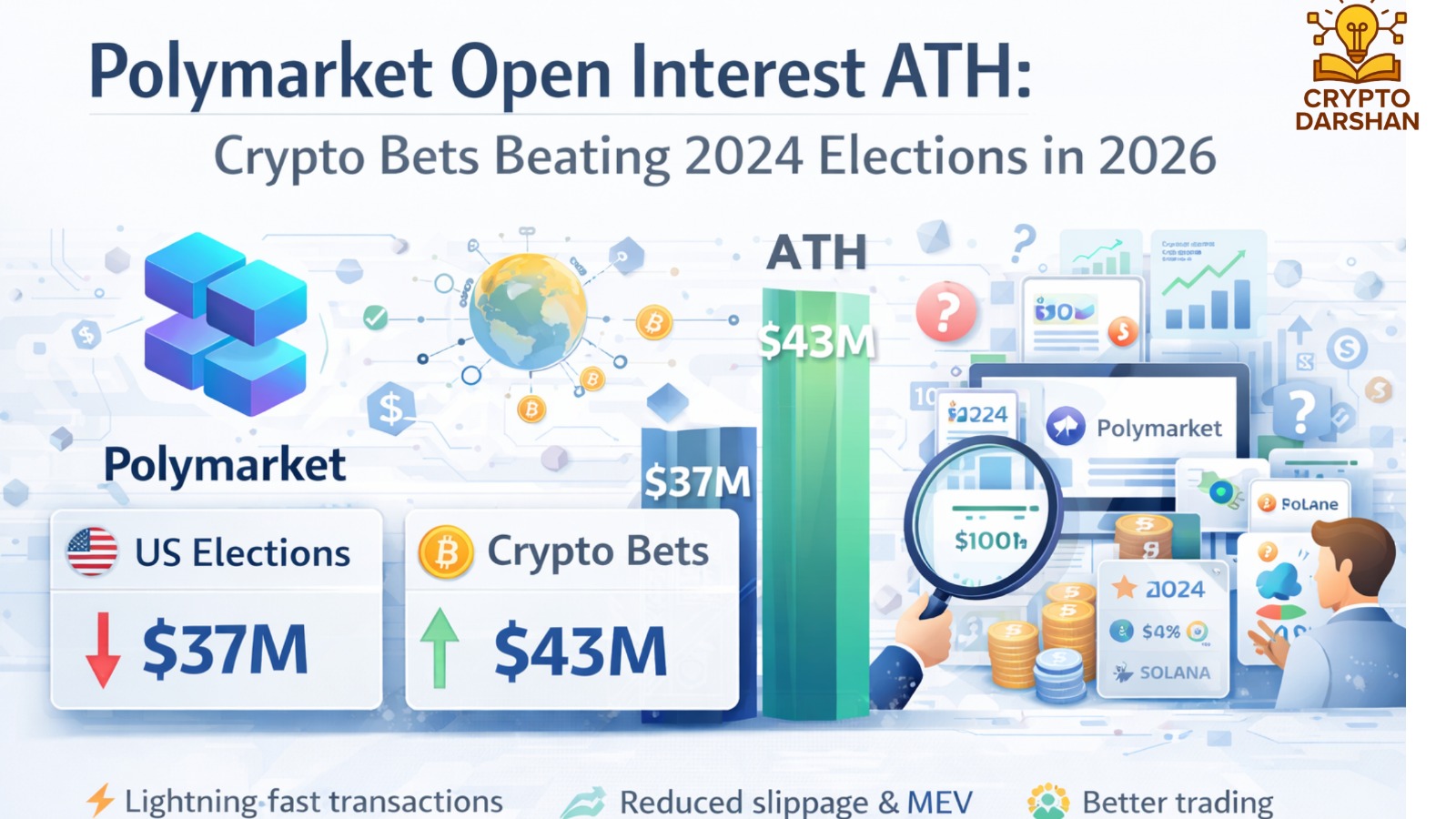
In early 2026, Polymarket Open Interest reached an all-time high, surpassing previous records set during the 2024 U.S. elections. The surge was driven by renewed interest in political forecasting, global economic uncertainty, and the growing integration of decentralized finance (DeFi) tools with prediction markets.
According to on-chain data, Polymarket Open Interest exceeded $500 million in active positions, marking a 300% increase compared to the previous year. This growth highlights the platform’s expanding user base and its role as a trusted source for real-time event forecasting.
Factors Driving the Surge
- Post-Election Momentum: The 2024 elections brought massive attention to Polymarket as users bet on political outcomes. The aftermath of those events continued to fuel engagement.
- Mainstream Adoption: More retail and institutional investors are participating in decentralized prediction markets.
- Improved User Experience: Upgrades to the Polymarket interface and faster transaction speeds have made trading more accessible.
- Integration with DeFi: Users can now leverage DeFi tools to hedge, stake, or earn yield on their prediction market positions.
- Global Events: From economic policy shifts to sports tournaments, global uncertainty has driven traders to seek market-based insights.
How Polymarket Works

The Role of Smart Contracts
Polymarket operates on blockchain technology, using smart contracts to manage trades, payouts, and market resolutions. These contracts ensure that all transactions are transparent and tamper-proof. When an event concludes, the smart contract automatically distributes winnings based on verified outcomes.
Market Creation and Resolution
Anyone can create a market on Polymarket by posing a question and defining possible outcomes. For example:
- “Will Bitcoin surpass $100,000 by December 2026?”
- “Will the next U.S. president be from the Democratic Party?”
Once the event occurs, an oracle verifies the result and updates the smart contract. The Polymarket Open Interest in that market is then settled, and traders receive payouts accordingly.
Trading Mechanism
Polymarket uses an automated market maker (AMM) model similar to decentralized exchanges. Prices adjust dynamically based on supply and demand. If more traders buy “Yes” shares, the price of “Yes” increases while “No” decreases. This mechanism ensures continuous liquidity and fair pricing.
The Connection Between Polymarket Open Interest and the 2024 Elections

Political Forecasting on the Blockchain
The 2024 elections were a turning point for Polymarket. Millions of users participated in markets predicting the outcomes of presidential races, congressional seats, and policy decisions. The Polymarket Open Interest during that period reached unprecedented levels, signaling a shift in how people engage with political forecasting.
Unlike traditional polling, which relies on surveys and statistical models, Polymarket reflects real-time market sentiment. Traders put their money where their beliefs are, creating a more accurate and dynamic prediction model.
Accuracy and Market Wisdom
Studies comparing Polymarket predictions with traditional polls found that Polymarket Open Interest often correlated with more accurate outcomes. The collective intelligence of thousands of traders, combined with financial incentives, produced forecasts that outperformed many expert analyses.
Post-Election Growth
After the 2024 elections, Polymarket continued to grow. Users who initially joined to bet on political outcomes stayed to trade on other events, from inflation rates to tech innovations. This sustained engagement contributed to the record-breaking Polymarket Open Interest in 2026.
Why Polymarket Open Interest Matters

Indicator of Market Confidence
A rising Polymarket Open Interest signals growing confidence in decentralized prediction markets. It shows that users trust the platform’s integrity, liquidity, and accuracy.
Liquidity and Participation
High Polymarket Open Interest means more liquidity, which leads to tighter spreads and better pricing. This attracts even more traders, creating a positive feedback loop that strengthens the ecosystem.
Institutional Involvement
Institutions are beginning to view Polymarket Open Interest as a valuable data source for sentiment analysis. Hedge funds and research firms use Polymarket data to gauge public expectations about elections, economic policies, and global events.
Indicates Liquidity and Participation
High Polymarket Open Interest reflects active participation and deep liquidity. This ensures smoother trading, tighter spreads, and more reliable price discovery across all markets.
Reveals Collective Market Sentiment
The level of Polymarket Open Interest helps analysts gauge public sentiment on major events like elections, economic policies, or global trends. It acts as a real-time indicator of what the market collectively believes will happen.
Drives the Growth of Decentralized Finance (DeFi)
Rising Polymarket Open Interest strengthens the link between prediction markets and DeFi. It boosts liquidity, encourages innovation, and demonstrates how blockchain-based systems can outperform traditional financial and betting models.
The Technology Behind Polymarket Open Interest

Blockchain Infrastructure
Polymarket is built on the Polygon network, a layer-2 scaling solution for Ethereum. This allows for fast, low-cost transactions while maintaining the security of the Ethereum ecosystem. The Polymarket Open Interest data is stored on-chain, ensuring transparency and verifiability.
Oracles and Data Verification
To resolve markets accurately, Polymarket relies on decentralized oracles such as UMA and Chainlink. These oracles fetch real-world data and feed it into smart contracts. This ensures that Polymarket Open Interest reflects legitimate, verifiable outcomes.
Decentralized Governance
Polymarket’s governance model allows token holders to propose and vote on platform upgrades. This decentralized approach ensures that the community has a voice in shaping the future of Polymarket Open Interest and market operations.
what are Crypto Bets Beating 2024 Elections in 2026

“Crypto Bets Beating 2024 Elections in 2026” refers to how decentralized prediction markets—especially platforms like Polymarket,have become more influential and accurate than traditional political forecasting methods after the 2024 elections.
In simple terms, it means that by 2026, crypto-based prediction markets are outperforming traditional election analysis, polls, and betting platforms in predicting political outcomes and public sentiment. These “crypto bets” are not just about gambling,they represent a new form of data-driven forecasting powered by blockchain technology.
Here’s what it means in detail:
1. Crypto Bets as Prediction Markets
Crypto bets are trades made on decentralized platforms like Polymarket, where users buy and sell shares representing possible outcomes of real-world events.
For example:
- “Will the Democratic Party win the 2024 U.S. Presidential Election?”
- “Will inflation drop below 3% by mid-2026?”
Each share’s price reflects the market’s collective belief in that outcome. If a share trades at $0.70, the market estimates a 70% chance of that event happening.
2. Beating Traditional Election Forecasts
During and after the 2024 elections, crypto prediction markets often proved more accurate than polls or expert forecasts.
Why? Because:
- Traders risk real money, so they have strong incentives to be right.
- Markets update in real time as new information emerges.
- Blockchain transparency prevents manipulation or bias.
By 2026, these markets have become trusted indicators of political trends, outperforming traditional polling models.
3. Polymarket’s Role
Polymarket became the leading platform for these crypto bets. Its open interest—the total value of active positions—hit record highs in 2026.
This surge shows how much capital and attention are flowing into decentralized forecasting. Traders are betting on everything from election outcomes to policy decisions, using blockchain-based systems that settle automatically and transparently.
The Role of DeFi in Polymarket’s Growth

Integration with Decentralized Finance
The fusion of DeFi and prediction markets has been a major catalyst for the rise in Polymarket Open Interest. Users can now use DeFi tools to manage risk, earn yield, and leverage their positions.
Yield Farming and Staking
Polymarket introduced staking mechanisms that reward users for providing liquidity. Traders can stake tokens in specific markets to earn fees, increasing Polymarket Open Interest while enhancing liquidity.
Collateralization and Hedging
DeFi protocols allow users to collateralize their Polymarket positions. This enables traders to hedge against losses or amplify their exposure to specific outcomes, further boosting Polymarket Open Interest.
Real-World Applications of Polymarket Open Interest

Political Forecasting
Governments, journalists, and analysts use Polymarket Open Interest as a real-time indicator of political sentiment. It provides insights into voter expectations and policy outcomes.
Economic Predictions
Markets predicting inflation rates, interest rate changes, and GDP growth attract significant Polymarket Open Interest. These forecasts often serve as early indicators for macroeconomic trends.
Sports and Entertainment
Beyond politics and finance, Polymarket hosts markets on sports events, award shows, and cultural phenomena. The growing diversity of topics contributes to the platform’s expanding Polymarket Open Interest.
Corporate Decision-Making
Businesses use Polymarket data to assess market sentiment around product launches, mergers, and regulatory developments. The aggregated Polymarket Open Interest serves as a predictive analytics tool.
Comparing Polymarket Open Interest to Traditional Betting Platforms

| Feature | Polymarket | Traditional Betting Sites |
| Transparency | Fully on-chain | Centralized and opaque |
| Fees | Minimal | High |
| Accessibility | Global | Region-restricted |
| Settlement | Automated via smart contracts | Manual and delayed |
| Data Integrity | Verifiable on blockchain | Controlled by operators |
The decentralized nature of Polymarket gives it a clear advantage. The record-breaking Polymarket Open Interest in 2026 underscores the growing preference for transparent, blockchain-based systems over traditional betting platforms. As prediction markets grow, automation is playing a bigger role—explore this trend in Decentralized AI Chatbots 2026: How They’re Automating DeFi Customer Service.
Challenges Facing Polymarket

Regulatory Uncertainty
Prediction markets often face regulatory scrutiny due to their resemblance to gambling platforms. The Polymarket Open Interest surge has drawn attention from regulators seeking to define legal frameworks for decentralized betting.
Market Manipulation Risks
While blockchain transparency reduces fraud, large traders could still influence market prices. Polymarket is addressing this by implementing anti-manipulation mechanisms and decentralized governance oversight.
Oracle Reliability
The accuracy of Polymarket Open Interest depends on reliable oracles. Any failure or delay in data reporting could impact market outcomes. Continuous improvements in Oracle technology are mitigating these risks.
The Future of Polymarket Open Interest

Expansion into New Markets
Polymarket plans to expand beyond politics and finance into areas like climate forecasting, technology adoption, and global health. Each new category adds depth to Polymarket Open Interest and attracts diverse participants.
Institutional Integration
As institutions recognize the predictive power of Polymarket Open Interest, partnerships with financial data providers and analytics firms are expected to grow. This will further legitimize decentralized prediction markets.
AI and Machine Learning Integration
Future upgrades may incorporate AI-driven analytics to interpret Polymarket Open Interest trends. Machine learning models could identify patterns and provide predictive insights for traders and researchers.
Cross-Chain Expansion
Polymarket aims to become a multi-chain platform, integrating with networks like Solana and Avalanche. This will enhance scalability and accessibility, driving even higher Polymarket Open Interest.
Economic and Social Impact
Democratizing Information
By allowing anyone to participate, Polymarket democratizes access to forecasting tools. The growing Polymarket Open Interest reflects a shift toward collective intelligence and decentralized truth-seeking.
Financial Inclusion
Users from around the world can participate in markets without intermediaries. The low entry barriers of Polymarket Open Interest promote financial inclusion and global participation.
Data-Driven Decision Making
Governments, media outlets, and corporations are increasingly using Polymarket Open Interest data to inform decisions. This marks a transition from opinion-based forecasting to market-driven insights.
Case Studies: Polymarket in Action

The 2024 U.S. Elections
During the 2024 elections, Polymarket Open Interest reached record levels as millions of users traded on political outcomes. The platform’s predictions closely matched actual results, proving the accuracy of decentralized forecasting.
Inflation and Interest Rate Markets
In 2025, markets predicting inflation trends attracted massive Polymarket Open Interest. Traders accurately forecasted central bank decisions months before official announcements.
Global Sports Events
Major sports tournaments in 2026, including the World Cup qualifiers, saw a surge in Polymarket Open Interest. Fans and analysts used the platform to trade predictions in real time.
FAQ

1. What is Polymarket?
Polymarket is a decentralized prediction market platform where users can place bets on real-world events like politics, crypto prices, and global news outcomes using blockchain technology.
2. What does “open interest” mean in prediction markets?
Open interest refers to the total amount of money currently locked in active bets on the platform. A new all-time high (ATH) indicates strong user participation and growing confidence in the market.
3. Why is Polymarket’s open interest hitting ATH in 2026?
The surge is driven by increased interest in crypto markets, global events, and speculative trading. Improved user experience and broader adoption of decentralized platforms also play a role.
4. How are crypto bets outperforming 2024 election markets?
Crypto-related prediction markets tend to have higher volatility and more frequent price movements, attracting traders looking for short-term opportunities compared to slower-moving political bets.
5. Is Polymarket legal to use?
Legality depends on your country’s regulations. Some regions restrict or ban prediction markets, so users should always check local laws before participating.
6. How do users make money on Polymarket?
Users earn profits by correctly predicting outcomes. They can also trade positions before events conclude, similar to trading assets in financial markets.
7. What risks are involved in prediction markets?
- Losing your entire stake if predictions are wrong
- Market manipulation risks
- Regulatory uncertainty
- Liquidity issues in smaller markets
8. How does blockchain improve prediction markets like Polymarket?
Blockchain ensures transparency, immutability, and trustless transactions, reducing reliance on centralized intermediaries.
Conclusion
The record-breaking Polymarket Open Interest in 2026 marks a defining moment for decentralized prediction markets. What began as a niche experiment has evolved into a global forecasting powerhouse, blending blockchain transparency with market-driven intelligence. The surge in Polymarket Open Interest reflects growing trust in decentralized systems, the integration of DeFi tools, and the power of collective wisdom.
As Polymarket continues to expand, its influence will extend beyond crypto trading into politics, economics, and global decision-making. The platform’s success demonstrates that the future of forecasting lies not in polls or pundits, but in the transparent, data-driven world of decentralized prediction markets. In 2026 and beyond, Polymarket Open Interest stands as a symbol of how blockchain technology is transforming the way humanity predicts, invests, and understands the world.