The “Mined in America Act” is a new bill in the United States that aims to bring more Bitcoin mining home and turn Bitcoin into a strategic national asset. Backed by Senators Bill Cassidy and Cynthia Lummis, the proposal focuses on three big goals: boosting domestic mining, cutting reliance on foreign hardware, and formally creating a Strategic Bitcoin Reserve under the U.S. Treasury. For anyone following crypto and policy, this bill shows how closely Bitcoin is now linked to energy, security, and geopolitics.
What Is the Mined in America Act?

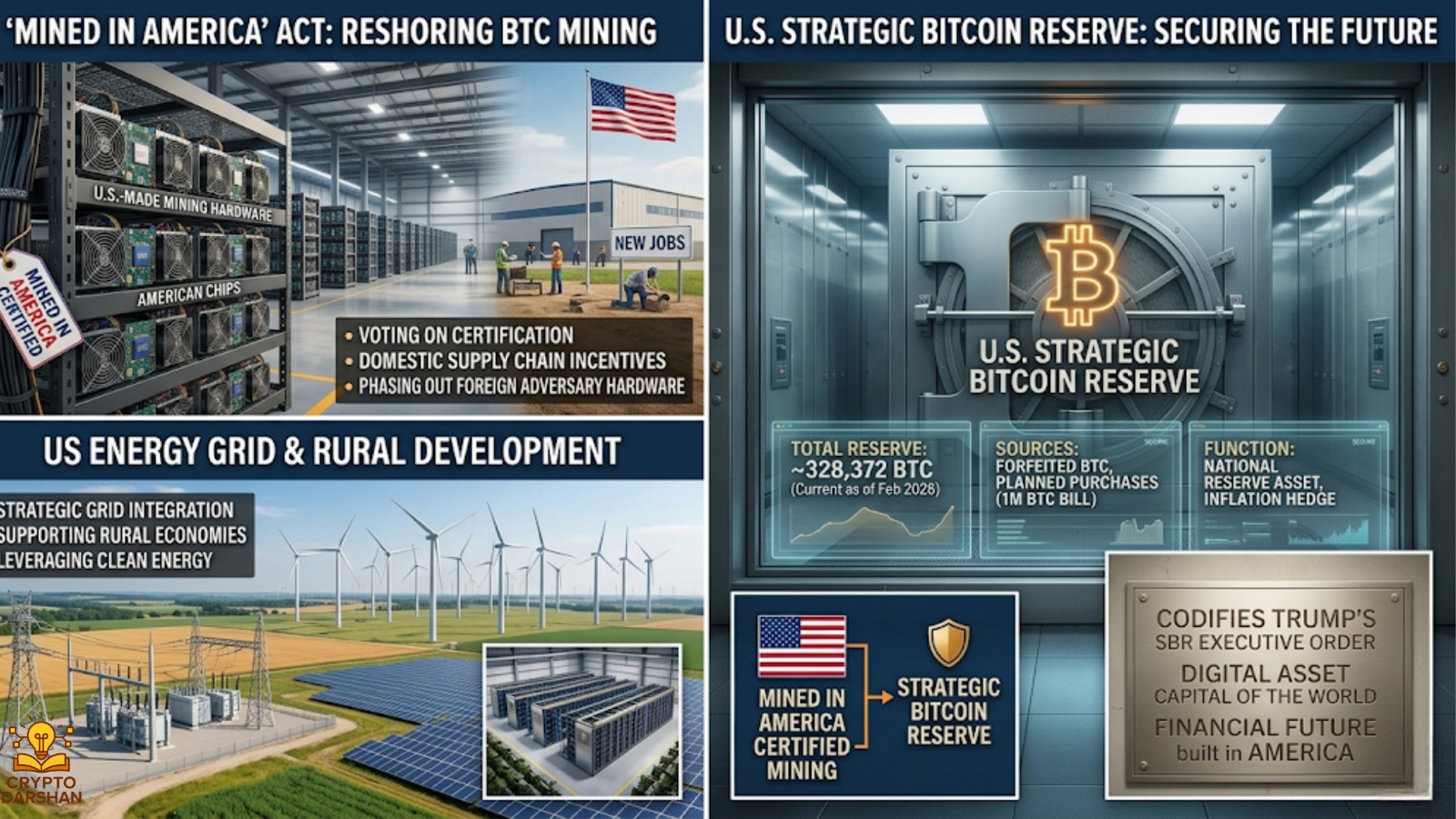
The Mined in America Act is a draft law designed to reshape how and where Bitcoin is mined in the U.S. The bill would direct the Department of Commerce to set up a voluntary “Mined in America” certification program for mining companies that meet specific U.S. standards. At the same time, it would write President Donald Trump’s earlier executive order on a Strategic Bitcoin Reserve into federal law, giving it a more permanent foundation.
This push comes as the U.S. already accounts for roughly 38% of global Bitcoin hash rate, but depends heavily on foreign-made mining machines. Lawmakers say that imbalance is a risk, especially because around 97% of specialized mining hardware still comes from Chinese manufacturers like Bitmain and MicroBT. By reshoring more of the mining and the supply chain, the bill’s sponsors argue that the U.S. can cut security risks while capturing more of the economic upside from Bitcoin.
How the Certification Program Would Work

A core feature of the bill is the “Mined in America” certification for domestic mining facilities and pools. This label would be voluntary but valuable: only operators that meet sourcing, security, and energy standards would qualify. Certified miners would need to move away from hardware tied to “foreign adversaries” over a phased timeline, with a target of full compliance by the end of the decade.
This shift also ties into the growing trend of sustainable mining, where Bitcoin farms are increasingly powered by renewable energy sources.
The bill also calls on agencies like the National Institute of Standards and Technology and the Manufacturing Extension Partnership to help U.S. firms build more efficient mining gear. That support could include guidance on energy-efficient designs and best practices for grid stability.
For miners, the upside is potential access to tax benefits and government-linked demand if they align with the new rules. However, smaller operators may face higher short-term costs as they replace older, foreign-sourced equipment with compliant alternatives.
The Strategic Bitcoin Reserve Idea

The most eye‑catching part of the bill is its plan to formalize a Strategic Bitcoin Reserve under the U.S. Treasury. The United States already holds a large amount of Bitcoin through law‑enforcement seizures, but these holdings have been managed on a case‑by‑case basis. The new framework would shift from one‑off auctions to a structured, long‑term accumulation strategy.
Earlier proposals around a U.S. Bitcoin reserve floated targets like acquiring 200,000 BTC per year for five years to reach one million BTC, about 5% of total supply. Under the newer approach, the reserve is meant to be “budget‑neutral,” growing mainly through existing crypto assets and related revenue streams. Profits from staking rewards and airdrops on seized digital assets would be redirected into Bitcoin purchases, turning other tokens into a strategic BTC position over time.
Another key piece of the Mined in America Act is how miners interact with the reserve. Certified domestic miners could sell newly mined Bitcoin directly to the government in exchange for capital-gains tax exemptions. To better understand this policy shift, it’s important to first explore how Bitcoin mining works and why it plays a critical role in network security. That creates an incentive for miners to feed part of their production into the reserve at attractive terms while giving the Treasury a predictable source of new BTC.
Why Lawmakers Say It Matters
Supporters frame the bill as both an economic and security measure. Their argument is that if Bitcoin is going to be a major global asset, the U.S. should not depend on foreign rivals for the hardware and infrastructure that secure the network. By building domestic capacity, they hope to “break dependency” on foreign supply chains and ensure that adversaries do not control critical parts of the mining stack.
They also see Bitcoin as a potential tool for economic resilience. A Strategic Bitcoin Reserve, they argue, could complement traditional reserves like gold and foreign currencies, offering a hedge in a world where digital assets are increasingly relevant.
What This Could Mean for Crypto and Policy

If the Mined in America Act advances, it could mark a turning point in how the U.S. treats Bitcoin mining and reserves. For miners, the bill offers a mix of new compliance pressure and potential tax and demand benefits, especially for those willing to shift to domestically sourced, energy‑efficient hardware. For policymakers, it is a test case for using Bitcoin as part of a broader national strategy rather than treating it only as a speculative asset.
For everyday crypto users and investors, the Mined in America Act is another sign that Bitcoin is moving deeper into the mainstream policy conversation. Whether or not the bill passes in its current form, its focus on mining standards, supply-chain control, and a strategic reserve will likely shape future debates around digital asset regulation in the United States.