
In the fast-evolving world of digital assets, Crypto Narratives have become the invisible force shaping markets, communities, and innovation. What begins as a meme, a tweet, or a viral idea can quickly transform into a global movement that drives billions in market capitalization. These narratives are not just stories; they are the emotional and psychological frameworks that guide investor behavior, influence technological development, and define the cultural identity of the crypto ecosystem.
Understanding how Crypto Narratives are born, spread, and evolve is essential for anyone seeking to navigate the volatile world of blockchain and digital currencies. This article explores the anatomy of these narratives, their origins in memes and online culture, and how they evolve into powerful movements that shape the future of finance and technology.
The Power of Storytelling in Crypto

Every major technological revolution has been driven by compelling stories. The internet had its “information superhighway.” Artificial intelligence has its “machines that think.” In crypto, the stories are even more potent because they are decentralized, community-driven, and often born from memes.
Crypto Narratives serve as the emotional glue that binds communities together. They give meaning to complex technologies and abstract financial systems. Without narratives, blockchain would remain a technical curiosity. With them, it becomes a movement.
Why Narratives Matter
- Simplification of Complexity
Blockchain technology is inherently complex. Narratives simplify it into digestible ideas that anyone can understand. “Digital gold” for Bitcoin or “the world computer” for Ethereum are examples of how narratives make technology relatable. - Emotional Connection
Narratives evoke emotion. They inspire belief, loyalty, and participation. When people believe in a story, they become advocates, not just investors. - Market Influence
Narratives drive capital flows. When a new Crypto Narrative emerges—like DeFi, NFTs, or AI tokens—it attracts attention, liquidity, and innovation. - Cultural Identity
Narratives create tribes. Bitcoin maximalists, Ethereum developers, Solana builders—all are united by shared stories and values.
The Birth of a Crypto Narrative

1. The Meme Stage
Every Crypto Narrative begins as a meme. A meme is a unit of cultural information that spreads rapidly through imitation. In crypto, memes are not just jokes—they are vehicles of ideology and belief.
For example, the phrase “HODL” started as a typo in a Bitcoin forum post. It evolved into a rallying cry for long-term holders, symbolizing resilience and conviction. Similarly, “WAGMI” (We’re All Gonna Make It) became a unifying slogan for crypto communities during bull markets.
Memes are powerful because they are simple, repeatable, and emotionally charged. They spread faster than whitepapers and resonate deeper than technical explanations.
2. The Community Stage
Once a meme gains traction, it attracts a community. This is where the Crypto Narrative begins to take shape. Communities form around shared beliefs, goals, and humor. They create content, organize events, and amplify the message.
Online platforms like Twitter, Reddit, and Discord serve as incubators for these narratives. Influencers, developers, and investors contribute to the story, adding layers of meaning and legitimacy.
3. The Market Stage
When a narrative gains enough momentum, it starts influencing markets. Tokens associated with the narrative experience price surges. Venture capital flows into related projects. Media coverage amplifies the story further.
For instance, the “DeFi Summer” of 2020 was driven by the narrative of decentralized finance replacing traditional banking. Similarly, the NFT boom of 2021 was fueled by the idea of digital ownership and creator empowerment.
4. The Institutional Stage
As the narrative matures, institutions take notice. Analysts, funds, and corporations begin to adopt the language and logic of the movement. This legitimizes the narrative and extends its lifespan.
Bitcoin’s transformation from a fringe internet currency to “digital gold” is a prime example. Once institutions like MicroStrategy and Tesla adopted Bitcoin, the narrative shifted from rebellion to respectability.
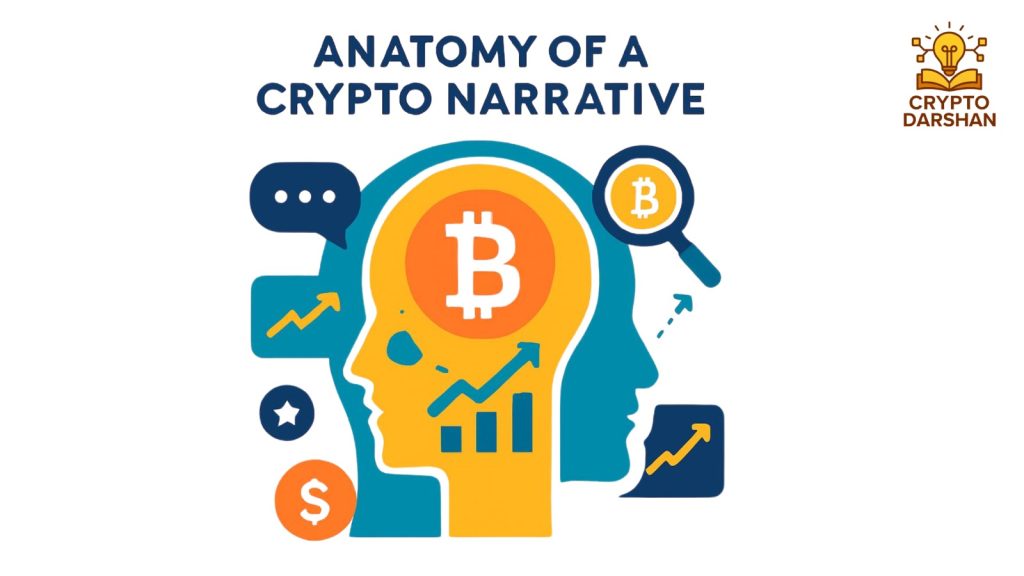
Anatomy of a Crypto Narrative
1. A Simple Core Idea
The most effective Crypto Narratives are incredibly easy to explain. If you cannot summarize the value proposition in a single sentence, it will struggle to gain mass adoption. For example, “Bitcoin is digital gold” or “Ethereum is the world computer” are powerful because they provide an immediate mental shortcut. They strip away technical jargon, allowing investors and users to grasp the “why” behind the technology instantly.
2. A Problem and a Promise
Every compelling story needs conflict and resolution. A narrative must first identify a clear pain point—such as the inefficiency of traditional banking, the lack of transparency in supply chains, or the censorship of centralized platforms. It then offers a bold promise: a decentralized, trustless, or more efficient future. This contrast between the “old world” and the “new world” creates the urgency that drives people to support the project.
3. A Symbol or Meme
Visual language is often more potent than written text. Symbols like the Bitcoin logo, the “laser eyes” trend, or specific mascot memes act as cultural shorthand. They allow community members to signal their affiliation and belief without saying a word. These symbols are highly shareable, making them the primary vehicles for spreading the Crypto Narrative across social media platforms with short attention spans.
4. A Community of Believers
A narrative is nothing without a tribe to carry it forward. In the crypto space, communities are the engine of growth. They form on platforms like Discord, Telegram, and X (formerly Twitter), where they create content, defend the project against critics, and onboard new members. When a community adopts a narrative as part of its identity, it becomes an evangelist, ensuring the story survives market volatility and technical setbacks.
5. A Catalyst Event
Narratives rarely grow in a straight line; they often need a “spark” to accelerate. This could be a major price rally, a high-profile partnership, a regulatory breakthrough, or even a significant hack that forces the community to rally around a solution. These events serve as milestones that validate the narrative, proving to the outside world that the story is not just theoretical but is actively shaping reality.
6. Media Amplification
Finally, a narrative needs a megaphone. This is where influencers, podcasts, newsletters, and mainstream media outlets come into play. Once a story gains enough traction, these channels amplify the message to a broader audience. This stage is critical because it moves the Crypto Narrative out of the “echo chamber” of early adopters and into the mainstream, attracting the institutional capital and public interest required for long-term sustainability.
The Evolution of Crypto Narratives

Early Narratives: The Cypherpunk Dream
The earliest Crypto Narratives were rooted in the cypherpunk movement of the 1990s. These pioneers believed in privacy, decentralization, and freedom from government control. Bitcoin emerged as the embodiment of this ideology, a peer-to-peer electronic cash system that operated outside traditional finance.
This narrative attracted libertarians, technologists, and early adopters who saw Bitcoin as a tool for financial sovereignty. The story of “freedom money” remains one of the most enduring narratives in crypto.
The Rise of Ethereum: Programmable Money
Ethereum introduced a new Crypto Narrative—programmable money. It expanded the blockchain’s potential beyond currency to include smart contracts and decentralized applications. The idea of a “world computer” captured the imagination of developers and investors alike.
This narrative gave birth to entire sub-narratives: DeFi, NFTs, DAOs, and more. Each represented a new chapter in the evolving story of blockchain innovation. Not every viral crypto trend survives in the long run, which is why understanding Why Some Crypto Ecosystems Grow While Others Quietly Die is essential for evaluating emerging narratives.
DeFi: The Future of Finance
Decentralized Finance (DeFi) became a dominant Crypto Narrative in 2020. It promised to rebuild the financial system without intermediaries. Lending, borrowing, trading, and yield farming—all powered by smart contracts, became the new frontier.
The DeFi narrative resonated because it combined ideology (financial freedom) with tangible utility (earning yield). It attracted billions in capital and inspired a wave of innovation.
NFTs: The Creator Economy
In 2021, Non-Fungible Tokens (NFTs) exploded into mainstream consciousness. The Crypto Narrative shifted from finance to culture. NFTs represented digital ownership, creativity, and community.
Artists, musicians, and brands embraced NFTs as a new medium of expression and monetization. The narrative of “owning digital art” became a cultural phenomenon, bridging the gap between crypto and pop culture.
The Metaverse and Beyond
The next wave of Crypto Narratives centered around the metaverse—a digital universe powered by blockchain. The idea of virtual worlds, digital identities, and interoperable assets captured global attention.
Projects like Decentraland, The Sandbox, and others built on this narrative, blending gaming, social interaction, and economics into a single ecosystem.
How Crypto Narratives Spread

1. Social Media Virality
Platforms like Twitter and TikTok are the breeding grounds for Crypto Narratives. Influencers, traders, and meme creators amplify ideas through viral content. Hashtags, memes, and short videos make complex ideas accessible to millions.
2. Influencer Endorsement
Influencers play a pivotal role in legitimizing narratives. A single tweet from a prominent figure can ignite a movement. Elon Musk’s tweets about Dogecoin turned a meme coin into a global sensation.
3. Community Engagement
Communities sustain narratives through constant engagement. They create memes, host AMAs, and organize events. The stronger the community, the longer the narrative lasts.
4. Media Coverage
Mainstream media often lags behind crypto communities but eventually amplifies successful narratives. Once a story hits major outlets, it reaches new audiences and attracts institutional interest.
5. Market Feedback Loops
Price action reinforces belief. When token prices rise, confidence grows, attracting more participants. This feedback loop strengthens the Crypto Narrative until it reaches a tipping point. Before becoming mainstream movements, many crypto trends struggle to prove their real-world value, a challenge highlighted in Product-Market Fit in Crypto: The Biggest Challenge for Web3 Builders.
The Psychology Behind Crypto Narratives

Belief and Identity
People invest not just in assets but in identities. Owning Bitcoin is not just a financial decision—it’s a statement of belief in decentralization and freedom. Narratives give investors a sense of belonging and purpose.
FOMO and Herd Behavior
Fear of missing out (FOMO) drives participation in emerging narratives. When people see others profiting from a new trend, they rush to join, amplifying the narrative further.
Confirmation Bias
Once people adopt a narrative, they seek information that confirms their beliefs and ignore contradictory evidence. This psychological bias reinforces the strength of Crypto Narratives.
Tribalism
Crypto communities often resemble tribes. They have symbols, rituals, and shared enemies. This tribalism strengthens group cohesion but can also lead to echo chambers.
The Lifecycle of a Crypto Narrative
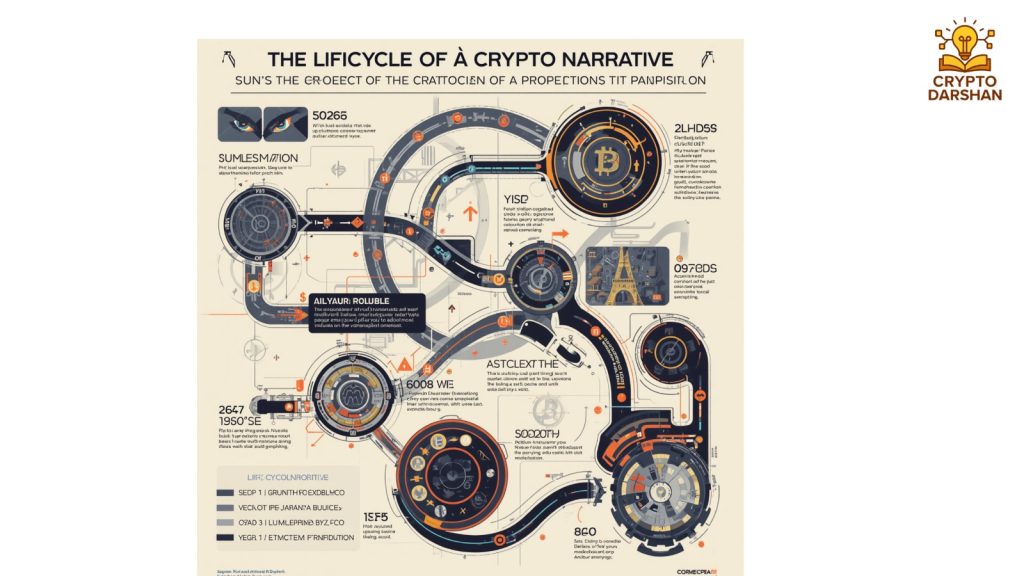
- Emergence – A new idea or meme captures attention.
- Adoption – Early believers form a community and spread the message.
- Acceleration – Media coverage and price action amplify the narrative.
- Maturity – Institutions and mainstream audiences join in.
- Decline – The narrative loses novelty or faces challenges.
- Rebirth – Elements of the old narrative evolve into new ones.
For example, the ICO boom of 2017 collapsed under regulatory pressure, but its core idea—tokenized fundraising—evolved into the DeFi and DAO movements.
Case Studies of Iconic Crypto Narratives

Bitcoin: Digital Gold
Bitcoin’s transformation from “peer-to-peer cash” to “digital gold” is one of the most successful Crypto Narratives in history. The shift occurred as scalability issues made everyday transactions impractical, but the store-of-value narrative gained traction.
This narrative appealed to investors seeking an inflation hedge and positioned Bitcoin as a legitimate asset class.
Dogecoin: The Power of Memes
Dogecoin began as a joke but became a cultural phenomenon. Its Crypto Narrative—fun, community-driven, and inclusive—resonated with millions. The coin’s success demonstrated that emotional connection can be more powerful than utility.
Ethereum: The World Computer
Ethereum’s narrative of a decentralized world computer inspired developers to build thousands of applications. It became the foundation for DeFi, NFTs, and DAOs, proving that narratives can drive real technological progress.
Solana: Speed and Scalability
Solana’s Crypto Narrative focused on performance—fast, cheap, and scalable transactions. This attracted developers and investors seeking alternatives to Ethereum’s high fees. The narrative positioned Solana as the blockchain for mass adoption.
The Role of Memes in Sustaining Narratives
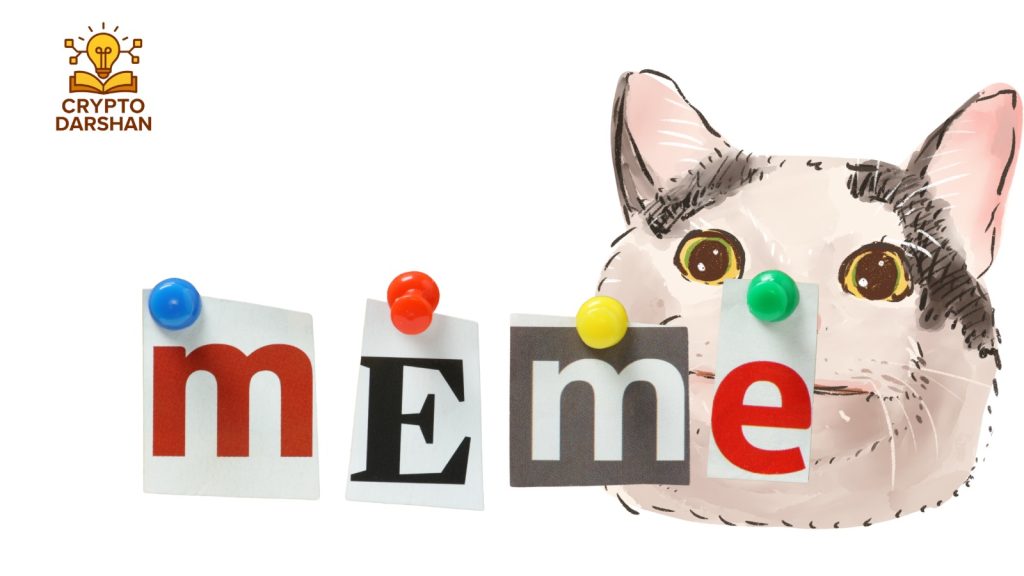
Memes are the lifeblood of Crypto Narratives. They distill complex ideas into simple, shareable formats. A single meme can capture the essence of a movement and spread it globally within hours.
Memes also serve as cultural markers. They signal belonging and reinforce group identity. In crypto, memes are not just entertainment—they are tools of persuasion and cohesion.
The Dark Side of Crypto Narratives
While Crypto Narratives can inspire innovation, they can also lead to irrational exuberance and misinformation.
Hype and Speculation
Narratives can inflate bubbles. When belief outpaces reality, markets become unsustainable. The ICO craze and certain meme coin rallies are examples of narratives gone wild.
Manipulation
Bad actors can exploit narratives to pump and dump tokens. By crafting persuasive stories, they lure investors into speculative traps.
Disillusionment
When narratives collapse, communities can experience collective disillusionment. Trust erodes, and participants exit the market, leaving behind skepticism.
How to Identify Emerging Crypto Narratives

- Monitor Social Media Trends
Track hashtags, memes, and discussions on platforms like Twitter and Reddit. - Follow Developer Activity
New narratives often emerge from technological breakthroughs or new protocols. - Watch for Influencer Signals
Influencers often spot trends early and amplify them to larger audiences. - Analyze Market Data
Sudden spikes in trading volume or token creation can indicate a new narrative forming. - Engage with Communities
Join Discord servers and Telegram groups to sense the mood and direction of emerging movements.
The Future of Crypto Narratives

As the crypto industry matures, Crypto Narratives will continue to evolve. Future narratives may focus on:
- AI and Blockchain Integration – The fusion of artificial intelligence and decentralized systems.
- Real-World Assets (RWA) – Tokenizing physical assets like real estate and commodities.
- Decentralized Identity (DID) – Empowering users with control over their digital identities.
- Green Crypto – Narratives centered on sustainability and energy efficiency.
- Interoperability – The story of a connected, multi-chain future.
Each new narrative will build upon the lessons of the past, blending technology, culture, and belief into the next wave of innovation.
FAQ: From Meme to Movement: How Crypto Narratives Are Born

1. What is a crypto narrative?
A crypto narrative is a compelling story or theme that captures the attention of investors, developers, and communities. It helps explain why a project, sector, or trend matters and often drives market interest.
2. How do crypto narratives begin?
Crypto narratives often start with a new idea, technological breakthrough, market trend, cultural movement, or viral meme. As more people discuss and support the concept, the narrative gains momentum.
3. Why are memes important in cryptocurrency?
Memes make complex crypto concepts easier to understand and share. They help build community engagement, attract new users, and can sometimes transform a small project into a widely recognized movement.
4. Can a meme coin become a serious crypto project?
Yes. Some meme-based projects evolve by developing real-world utilities, strong communities, and long-term roadmaps. A successful transition requires more than hype—it needs sustainable value.
5. What role does social media play in shaping crypto narratives?
Platforms such as X (formerly Twitter), Reddit, Telegram, and Discord help spread ideas quickly. Influencers, developers, and community members can amplify narratives and attract broader attention.
6. How do communities contribute to crypto movements?
Communities are often the driving force behind crypto narratives. Their discussions, content creation, advocacy, and participation help maintain momentum and encourage adoption.
7. Why do some crypto narratives fail?
Many narratives fade because they lack real utility, strong leadership, active communities, or long-term development. Hype alone is rarely enough to sustain interest over time.
8. What are some examples of major crypto narratives?
Examples include decentralized finance (DeFi), non-fungible tokens (NFTs), the metaverse, meme coins, artificial intelligence (AI) tokens, and real-world asset (RWA) tokenization.
9. How can investors identify a growing crypto narrative?
Investors can monitor community engagement, developer activity, social media discussions, ecosystem growth, and emerging market trends to spot narratives before they become mainstream.
10. Are crypto narratives always based on technology?
No. While technology often plays a role, many narratives are driven by culture, community sentiment, economic trends, or broader social movements within the crypto industry.
Conclusion
From memes to movements, Crypto Narratives are the heartbeat of the blockchain world. They transform abstract code into collective belief, turning ideas into billion-dollar ecosystems. Understanding how these narratives are born, spread, and evolve is key to navigating the ever-changing landscape of crypto.
In the end, crypto is not just about technology or finance—it’s about stories. Stories that inspire, unite, and drive progress. The next great Crypto Narrative is already being written somewhere online, waiting to capture the imagination of the world once again.