

Financial freedom ≠ financial literacy because crypto markets reward bold conviction and long-term holding over textbook knowledge, as Bitcoin’s decade-long bull runs prove. In the world of cryptocurrency, the terms financial freedom and financial literacy are often used interchangeably. Many believe that owning Bitcoin, trading altcoins, or earning through decentralized finance (DeFi) automatically leads to financial freedom. However, this assumption is misleading.
Financial literacy in crypto means understanding how blockchain, tokens, wallets, and markets work. Financial freedom, on the other hand, is the ability to live independently through wealth generated from crypto investments or passive income streams. One is about knowledge, the other about application.
This article explores why financial freedom and financial literacy are not the same in the crypto world, how they connect, and what it takes to achieve both in a rapidly evolving digital economy.
Understanding Financial Literacy in Crypto

What Is Crypto Financial Literacy?
Crypto financial literacy is the ability to understand and use digital assets effectively. It involves knowing how cryptocurrencies work, how to store them safely, and how to make informed investment decisions.
Key components include:
- Blockchain Basics: Understanding how decentralized networks operate.
- Wallet Management: Knowing how to secure private keys and use hardware or software wallets.
- Market Knowledge: Learning how exchanges, liquidity, and price movements work.
- Risk Management: Recognizing scams, volatility, and portfolio diversification.
- DeFi and Web3 Awareness: Understanding staking, yield farming, NFTs, and decentralized applications.
Without crypto literacy, even the most promising investments can lead to losses.
Why Crypto Financial Literacy Matters
The crypto market is fast-moving and largely unregulated. Without proper knowledge, investors can fall victim to scams, hacks, or emotional trading. Crypto literacy helps users:
- Avoid rug pulls and fraudulent projects.
- Understand tokenomics and project fundamentals.
- Manage risk in volatile markets.
- Use decentralized tools safely.
- Build long-term wealth instead of chasing hype.
In short, crypto literacy is the foundation of sustainable success in the digital asset space.
Understanding Financial Freedom in Crypto

What Is Financial Freedom And Crypto Financial Freedom?
First, Financial freedom usually means having enough savings, financial investments, and cash on hand to afford the kind of life we desire for ourselves and our families. It means growing savings that enable us to retire or pursue the career we want without being driven by earning a set salary each year. Financial freedom means our money is working for us rather than the other way around.
Crypto financial freedom means having enough digital assets or passive income from crypto to live independently. It’s the ability to cover expenses and maintain a lifestyle without relying on traditional jobs or centralized financial systems.
This freedom can come from:
- Long-term crypto investments (HODLing).
- Passive income through staking or yield farming.
- Running validator nodes or mining operations.
- Earning in crypto through freelancing or Web3 projects.
Crypto financial freedom is about control—owning assets directly, without banks or intermediaries.
Levels of Crypto Financial Freedom
- Crypto Stability: Holding assets safely and managing volatility.
- Crypto Security: Building a diversified portfolio and emergency reserves.
- Crypto Independence: Earning enough passive income from staking, DeFi, or NFTs to cover expenses.
- Crypto Abundance: Having surplus wealth to reinvest, donate, or fund new blockchain ventures.
Each level requires both knowledge and discipline.
Why Crypto Financial Freedom Matters
Crypto financial freedom represents more than wealth; it’s about sovereignty. It allows individuals to: financial freedom ≠ and financial literacy. Crypto financial freedom represents more than wealth, it’s about sovereignty. It allows individuals to:
- Escape inflation and currency devaluation.
- Transact globally without restrictions.
- Participate in decentralized economies.
- Build wealth outside traditional banking systems.
It’s the ultimate goal of the crypto revolution: empowering individuals to control their own financial destiny.
As crypto becomes embedded in everyday payments, users are exposed to new responsibilities around fees, custody, and settlement. These challenges are already visible in How Crypto Is Powering the Future of Online Payment, where adoption moves faster than user education.
Financial Freedom ≠ crypto financial literacy

While both financial freedom and financial literacy are essential in the crypto world, they are not the same. Many people enter the crypto space hoping to achieve financial independence but overlook the importance of understanding how digital assets work. Others study blockchain deeply but never take the steps needed to build wealth. Below are the key differences between the two concepts, explained in detail.
1. Knowledge vs. Wealth
Crypto financial literacy is about understanding how digital assets, blockchain networks, and decentralized systems function. It involves learning how to use wallets, secure private keys, analyze projects, and manage risk. Financial freedom, however, is about using that knowledge to build wealth and independence.
A person may know how staking, yield farming, or trading works but never apply that knowledge effectively. Another might achieve wealth through early Bitcoin investments or NFT sales without truly understanding the technology behind them. Knowledge provides the foundation, but wealth comes from consistent action and smart decision-making. In crypto, literacy without execution leads to stagnation, while wealth without literacy leads to loss.
2. Learning vs. Earning
Crypto literacy is a learning journey studying blockchain concepts, understanding tokenomics, and exploring decentralized finance (DeFi). It’s about gaining the skills to navigate the crypto ecosystem safely. Financial freedom, on the other hand, is about earning through the application of that knowledge, investing, staking, trading, or building crypto-based businesses.
Many people spend years learning about crypto but never take the leap to invest or participate in DeFi. Others jump into the market without learning and rely on luck. True success comes when learning and earning work together when knowledge is applied strategically to generate sustainable income.
3. Theory vs. Practice
Crypto literacy is theoretical; it teaches what should be done to manage and grow digital assets. Financial freedom is practical; it shows what has been done successfully to achieve independence. Reading about blockchain, tokenomics, or decentralized exchanges is literacy; using that knowledge to build a profitable portfolio or earn passive income is freedom.
For example, someone might understand how liquidity pools work but never provide liquidity due to fear of loss. Another might experiment with DeFi protocols, learn from mistakes, and eventually earn consistent returns. In crypto, theory builds awareness, but practice builds results.
4. Accessibility vs. Achievement
Crypto literacy is accessible to everyone. Anyone with an internet connection can learn about blockchain, wallets, and trading strategies. Countless free resources, tutorials, and communities make it easy to gain knowledge. Financial freedom, however, is an achievement that requires discipline, patience, and execution.
Not everyone who learns about crypto becomes financially free. Market volatility, emotional decisions, and lack of long-term planning often prevent people from reaching their goals. Literacy opens the door, but achievement comes from walking the path—investing wisely, managing risk, and staying consistent through market cycles.
5. Short-Term Knowledge vs. Long-Term Strategy

Crypto literacy often focuses on short-term knowledge understanding how to trade, use wallets, or identify trends. Financial freedom requires a long-term strategy, building a portfolio that grows over time, compounding returns, and surviving bear markets.
A literate investor might know how to buy and sell tokens but lacks a plan for long-term wealth creation. A financially free investor, however, understands the importance of holding quality assets, diversifying investments, and reinvesting profits. In crypto, short-term knowledge helps you start, but long-term strategy ensures you stay.
6. Mindset vs. Lifestyle
Crypto literacy shapes a person’s mindset on how they think about money, risk, and decentralization. It encourages curiosity, caution, and continuous learning. Financial freedom defines a lifestyle of living independently, earning passively, and having control over one’s time and choices.
A literate investor might still depend on traditional income sources while using crypto as a side investment. A financially free investor, however, lives fully within the crypto economy—earning, spending, and saving in digital assets. Literacy changes how you think; freedom changes how you live.
7. Education vs. Execution

Crypto literacy is about education, learning blockchain principles, understanding smart contracts, and studying market behavior. Financial freedom is about execution, putting that education into action through real investments, staking, or building projects.
Many people attend crypto webinars, read whitepapers, and follow influencers but never take action. Others experiment, fail, and learn through experience. Execution is what transforms theory into tangible results. In crypto, education gives direction, but execution creates outcomes.
8. Control vs. Independence
Crypto literacy gives the ability to manage wallets, secure assets, and make informed decisions. Financial freedom gives independence, the ability to live without relying on centralized systems or traditional income.
A literate investor knows how to protect their private keys and avoid scams. A financially free investor uses that control to build a life powered by crypto earning through staking, DeFi, or Web3 projects. Control is the first step; independence is the destination.
9. Awareness vs. Application
Crypto literacy builds awareness, understanding how markets move, how projects operate, and how to identify opportunities. Financial freedom is about applying that awareness to make profitable decisions and create sustainable income.
For instance, knowing that Bitcoin halvings affect price is awareness. Investing strategically before a halving and holding through volatility is application. Awareness helps you see opportunities; application helps you seize them.
10. Potential vs. Reality
Crypto literacy represents the potential the possibility of success through knowledge. Financial freedom represents reality, the tangible results of applying that knowledge effectively.
A literate person has the potential to build wealth but may never act on it. A financially free person has turned potential into reality through consistent effort, smart investments, and emotional discipline. In crypto, potential is abundant, but only those who act turn it into lasting freedom.
Why Crypto Literacy Alone Isn’t Enough?

Many crypto enthusiasts understand blockchain, but fail to achieve financial freedom because they:
- Don’t apply their knowledge consistently.
- Panic sells during market dips.
- Chase hype instead of fundamentals.
- Ignore risk management.
Crypto literacy is the foundation, but discipline and strategy turn it into freedom.
Why Crypto Freedom Without Literacy Is Dangerous?
Achieving financial freedom through crypto can feel empowering, but without proper understanding, it can also be risky. Many people gain wealth through luck or hype but lose it because they lack the knowledge to protect and manage it. Crypto freedom without literacy creates a false sense of security here’s why it’s dangerous.
1. Poor Security Practices
Without crypto literacy, users often neglect basic security. They store assets on exchanges, use weak passwords, or fall for phishing scams. In crypto, there’s no bank to recover lost funds—once stolen, it’s gone. Understanding wallets, private keys, and cold storage is essential to keep assets safe.
2. Falling for Scams and Hype
The crypto space is full of fake projects and “get-rich-quick” schemes. Without literacy, investors can’t tell legitimate opportunities from scams. Many lose money to rug pulls or meme coins driven by hype. Financial literacy helps identify real value and avoid emotional decisions.
3. Mismanaging Volatility
Crypto markets are unpredictable. Without understanding risk management, investors often buy during peaks and sell during crashes. Literacy teaches how to diversify, set limits, and stay calm during market swings turning volatility into opportunity instead of disaster.
4. Overconfidence and Emotional Trading
Quick profits can lead to overconfidence. Many start trading impulsively, ignoring research or risk. This emotional behavior often ends in losses. Crypto literacy builds discipline, helping investors make rational, data-driven decisions instead of emotional ones.
5. Dependence on Centralized Platforms
Some users claim financial freedom but still rely on centralized exchanges or custodial wallets. If these platforms freeze withdrawals or get hacked, assets can vanish. True crypto freedom means self-custody—owning and controlling your private keys.
6. No Long-Term Strategy
Without literacy, investors chase short-term gains and ignore long-term planning. They don’t take profits, diversify, or prepare for bear markets. Financial literacy teaches how to build sustainable wealth through patience, planning, and consistent action.
Building Both: The Path to True Crypto Success

To thrive in crypto, one must balance education and execution. Knowledge builds confidence; action builds results.
Here’s how to achieve both.
1. Learn Continuously
Crypto evolves fast. Stay updated on blockchain trends, DeFi protocols, and security practices. Follow credible sources, read whitepapers, and join educational communities.
2. Secure Digital Assets
Security is the foundation of crypto freedom. Use hardware wallets, enable two-factor authentication, and never share private keys. A literate investor knows that self-custody equals control.
3. Diversify Investments
Avoid putting all funds into one token or project. Diversify across Bitcoin, Ethereum, stablecoins, and DeFi protocols. Diversification reduces risk and builds long-term stability.
4. Manage Risk
Crypto markets are volatile. Set stop-losses, avoid over-leverage, and invest only what can be afforded to lose. Risk management separates educated investors from gamblers.
5. Build Passive Income Streams
Use staking, liquidity pools, or yield farming to earn passive income. These tools turn literacy into freedom by generating consistent returns.
6. Understand Tokenomics
Before investing, study a project’s tokenomics supply, utility, and distribution. Financial literacy helps identify sustainable projects and avoid pump-and-dump schemes.
7. Plan for the Long Term
Crypto freedom comes from patience. Focus on long-term value rather than short-term speculation. Hold quality assets and reinvest profits strategically.
8. Stay Emotionally Disciplined
Emotions drive poor decisions. Avoid FOMO (fear of missing out) and panic selling. A literate investor follows logic, not hype.
9. Use DeFi Responsibly
DeFi offers opportunities but also risks. Understand smart contract vulnerabilities, impermanent loss, and protocol security before investing.
10. Give Back to the Community
True crypto freedom includes contributing to the ecosystem educating others, supporting open-source projects, or funding innovation. Giving back strengthens the decentralized future.
Common Myths About Crypto Freedom and Literacy

Myth 1: Owning Bitcoin Equals Financial Freedom
Holding Bitcoin doesn’t guarantee freedom. Without understanding market cycles, security, and portfolio management, wealth can disappear quickly.
Myth 2: Crypto Literacy Is Only for Developers
Anyone can learn crypto basics. Understanding wallets, exchanges, and DeFi tools is enough to start building literacy.
Myth 3: Trading Is the Only Path to Freedom
Trading can be profitable but risky. Long-term investing, staking, and building in Web3 often lead to more sustainable freedom.
Myth 4: Crypto Freedom Means No Work
Financial freedom doesn’t mean doing nothing—it means having the choice to work on meaningful projects without financial pressure.
The Role of Mindset in Crypto Success

Mindset determines success in crypto. A growth mindset encourages learning, patience, and adaptability.
Key mindset traits include:
- Long-term vision: Seeing beyond short-term volatility.
- Resilience: Learning from losses and mistakes.
- Curiosity: Continuously exploring new technologies.
Crypto rewards those who think strategically, not emotionally.
FAQ: Financial Freedom ≠ , crypto financial literacy , The Crypto Perspective

1. What does “financial freedom” mean in crypto?
In crypto, financial freedom usually refers to permissionless access the ability to hold, send, and receive money without banks, borders, or intermediaries controlling your funds.
2. What is financial literacy, and how is it different?
Financial literacy is the knowledge and skills needed to manage money responsibly understanding risk, fees, volatility, security, and long-term planning. Freedom gives access; literacy determines outcomes.
3. Why doesn’t crypto automatically make users financially literate?
Crypto removes gatekeepers but not responsibility. Without understanding wallets, private keys, scams, or market cycles, users can lose funds just as easily as they can gain access.
4. Can someone have financial freedom but still lose money?
Yes. Many users experience freedom without literacy self-custody without security, trading without risk management, or investing without understanding fundamentals often leading to losses.
5. How does crypto expose gaps in financial literacy?
Crypto is transparent and unforgiving. Mistakes like sending funds to the wrong address or falling for phishing scams cannot be reversed, making financial knowledge essential.
6. Do stablecoins improve financial literacy?
Stablecoins improve usability and reduce volatility, but they don’t teach users about issuer risk, regulation, or custody. Education is still required to use them safely.
7. Is Bitcoin better for freedom than literacy?
Bitcoin maximizes financial freedom through decentralization and censorship resistance, but it demands high literacy—users must understand self-custody, fees, and long-term volatility.
8. How can crypto education close the gap?
Clear onboarding, better wallet design, transparent risk disclosures, and real-world use cases help users learn by doing, turning access into understanding over time.
The Future of Financial Literacy and Freedom in Crypto

As blockchain adoption grows, financial education becomes essential. Web3, NFTs, and decentralized finance are creating new opportunities but also new risks.
Future financial freedom will depend on digital literacy understanding how to manage assets across multiple blockchains, use decentralized identities, and interact with smart contracts safely.
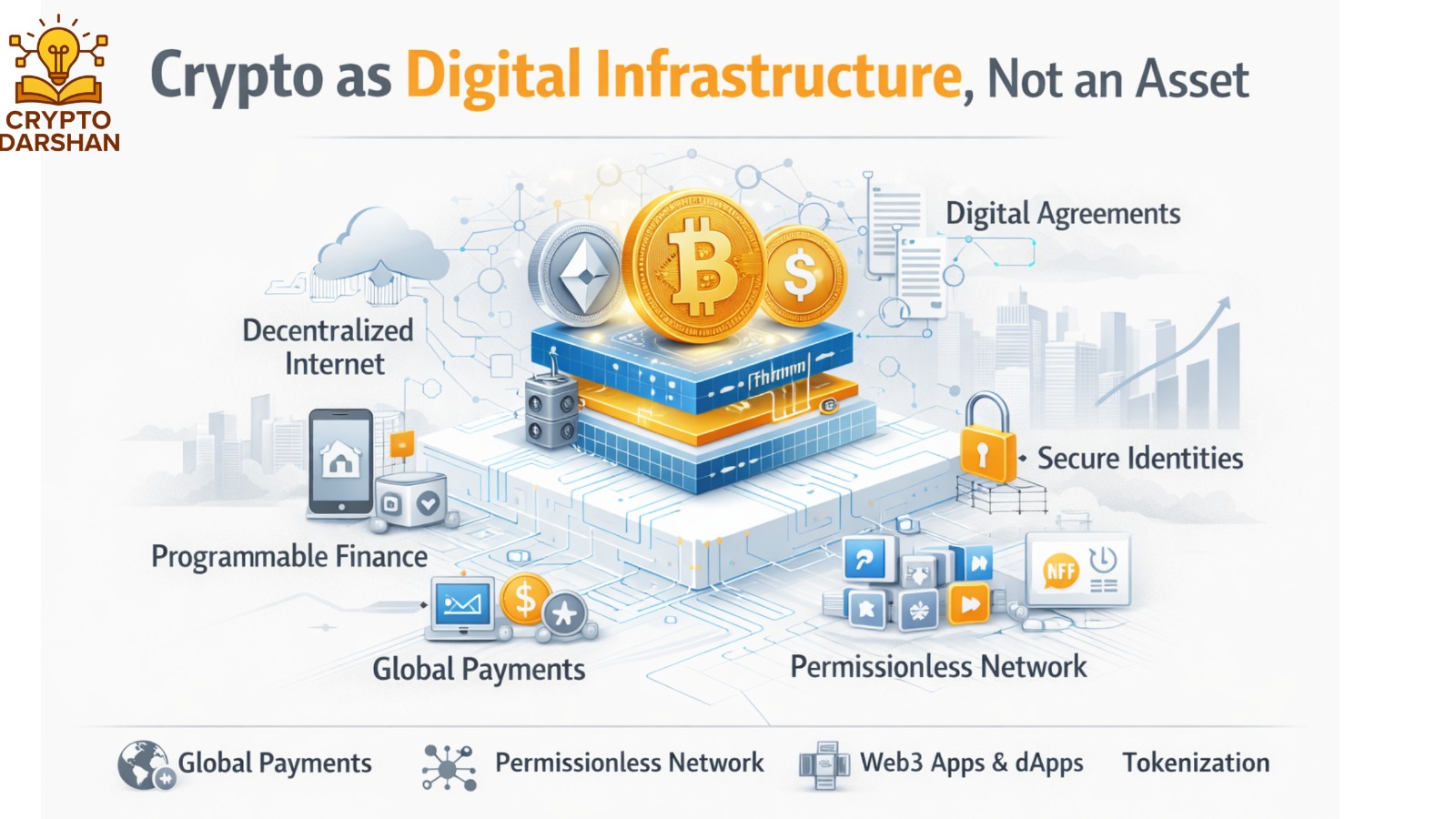
As crypto matures, the goal is not just financial freedom but informed participation. This shift is central to Crypto as Digital Infrastructure, Not an Asset, where we argue that true adoption depends on users’ understanding the systems they rely on.
Governments, schools, and organizations are beginning to include crypto education in financial literacy programs, recognizing that the future of money is digital.
Conclusion
In crypto, financial freedom and financial literacy are deeply connected but not equal. Financial literacy is the knowledge of how blockchain and digital assets work. Financial freedom is the result of applying that knowledge to build wealth and independence.
One without the other is incomplete. Knowledge without action leads to missed opportunities, while wealth without understanding leads to loss.
To achieve lasting success in crypto, focus on both—learn continuously, act wisely, and secure assets responsibly. When literacy meets execution, crypto becomes not just a tool for profit, but a path to true financial independence in the decentralized future.