The European Central Bank says the proposed digital euro could offer privacy protections similar to cash, especially when users make offline payments. The claim comes as European lawmakers and regulators continue working on the legislation needed to create a central bank digital currency for the euro area.
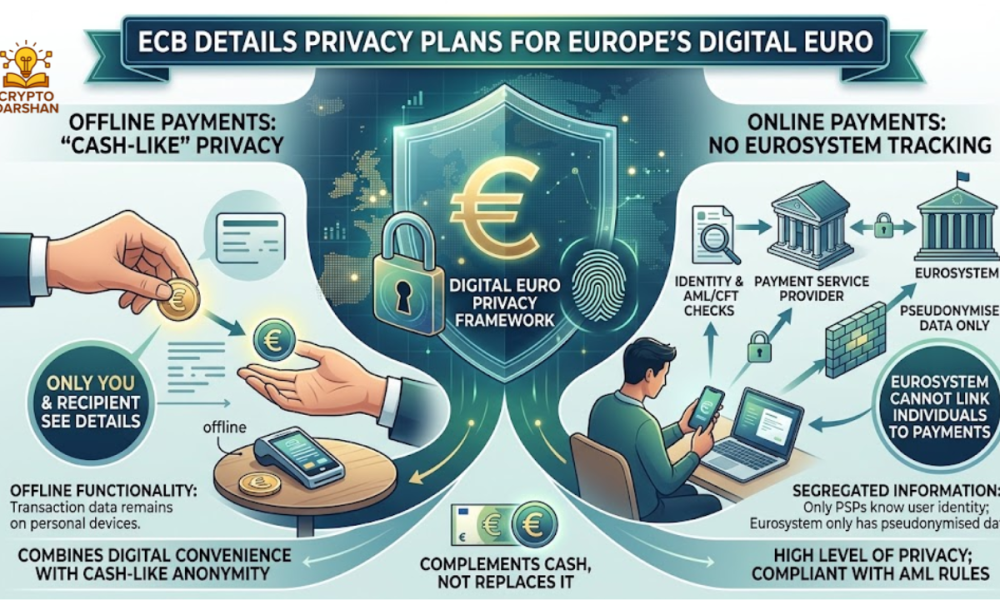
ECB Executive Board member Piero Cipollone said the Eurosystem would not be able to directly connect individual users with specific digital euro payments. However, banks and other payment providers would still need to identify customers during online transactions to meet anti-money-laundering requirements.
The proposed system has attracted strong interest from financial institutions, technology companies and digital rights groups. Supporters view it as a way to strengthen Europe’s payments system, while critics fear it could increase government oversight of everyday spending.
ECB Says Digital Euro Will Protect Privacy
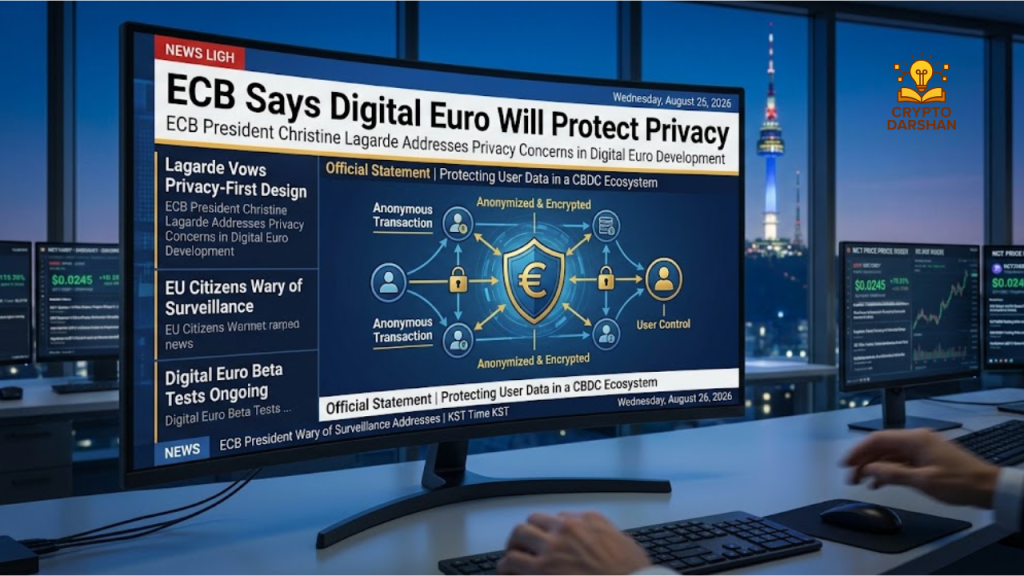
Cipollone argued that the digital euro could offer more privacy than many conventional electronic payment methods. Under the proposed design, the Eurosystem would receive pseudonymized settlement information rather than data that directly identifies individual users.
“The digital euro guarantees the maximum level of privacy that current technology can offer,” Cipollone said, according to the report.
This does not mean every digital euro transaction would be completely anonymous. When users make online payments through a bank or another payment service provider, that institution would still know the customer’s identity. Providers must perform customer verification and anti-money-laundering checks under existing financial rules.
The ECB would operate the central settlement platform, while banks and other providers would manage customer-facing services. The digital euro would therefore use a centralized infrastructure rather than a public blockchain.
Offline Payments Could Work Like Cash
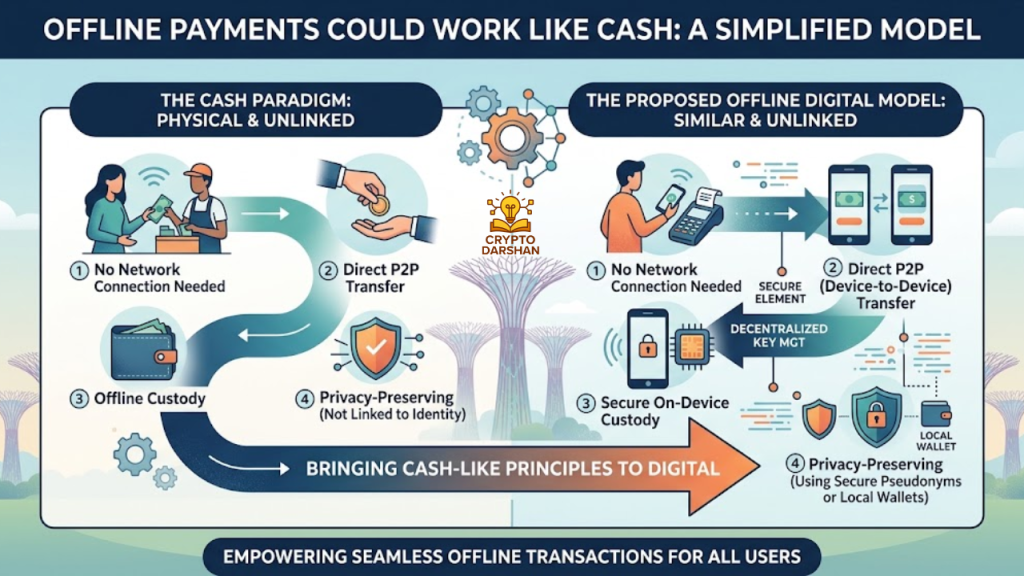
One of the main privacy features would be offline functionality. Users could make certain payments directly between devices, such as smartphones or payment cards, without an active internet connection.
The ECB says transaction details in these offline payments would be visible only to the payer and the recipient. That design is intended to make small digital payments resemble the privacy of physical cash.
Offline payments could also help users during network outages or temporary service disruptions. However, users would need to add funds to their offline wallet in advance. Spending would be limited to the amount stored locally on the device.
Anti-money-laundering checks would apply when users transferred funds into or out of an offline wallet. The ECB compares this process with the checks that financial institutions may apply when customers deposit or withdraw cash.
This approach could give users more flexibility, but it would also require strong security controls. If an offline device were lost, stolen or compromised, users could face financial and privacy risks. The final rules will need to explain how offline balances are protected and how disputes are handled.
Privacy Groups Raise Concerns
Digital rights organizations have welcomed the discussion around privacy but remain cautious about the ECB’s assurances. Austrian digital rights group epicenter.works and partner organizations argue that privacy should not depend only on statements from institutions.
The organizations want stronger technical protections, clear legal limits and public documentation explaining how the system works. They have also supported the use of technologies such as zero-knowledge proofs, threshold cryptography and authenticated encryption.
Zero-knowledge systems can allow one party to confirm that a transaction meets certain conditions without revealing all the underlying information. For a digital euro, this could potentially help verify payment rules while limiting unnecessary access to personal data.
Privacy advocates say technical safeguards may be more reliable than institutional promises alone. Laws can change, policies can be reinterpreted and future authorities may make different decisions about data access. By contrast, well-designed technical controls can limit what information a system is capable of collecting or exposing.
Digital Euro Would Not Replace Cash
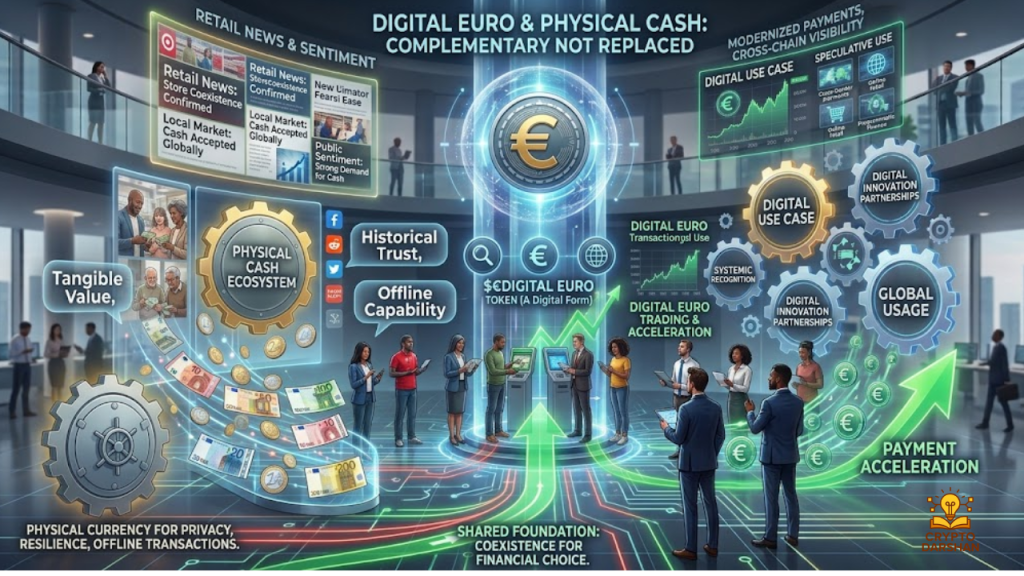
Cipollone also rejected the idea that the digital euro would eliminate physical money. He pointed to the ECB’s work on redesigned euro banknotes as evidence that cash and digital payments are expected to coexist.
The digital euro would be designed as another payment option rather than a mandatory replacement for notes and coins. Users could potentially choose between cash, bank payments, cards and a central bank digital currency depending on their needs.
This point is politically important because cash remains a major concern in debates about central bank digital currencies. Many people value cash because it does not require a bank account, smartphone, internet connection or third-party payment network.
The digital euro’s success may depend partly on whether users believe it offers clear benefits without weakening their financial freedom.
EU Lawmakers Still Need to Agree
The European Parliament has not yet approved the final digital euro regulation. In July 2026, lawmakers authorized negotiations with the Council after adopting Parliament’s negotiating position on July 9. The Council had already adopted its own position in December 2025.
The two institutions must agree on a common legal text before the regulation can move forward. The final legislation will determine important details, including privacy rules, offline payment limits, supervision and the role of payment service providers.
Parliament’s position includes privacy-by-design measures and offline payments. Lawmakers have also proposed using zero-knowledge technology for some types of transaction verification.
Possible Launch Could Come in 2029

The ECB says a potential first issuance could take place in 2029 if lawmakers approve the required legislation by the end of 2026. Even then, the ECB’s Governing Council would need to make a separate decision on whether to proceed.
Before any launch, the ECB plans a 12-month pilot during the second half of 2027. The pilot is expected to test online transfers, offline payments, merchant transactions and the overall user experience. The ECB has selected 36 payment providers, including banks and non-bank companies, to participate in the testing phase.
The pilot will be closely watched by policymakers and privacy experts. Its results could reveal whether the digital euro can deliver convenient payments while limiting unnecessary data collection.
For now, the ECB’s privacy promise remains part of a proposed framework rather than a completed product. The final outcome will depend on legislation, technical testing and the safeguards included in the system before any launch decision is made.