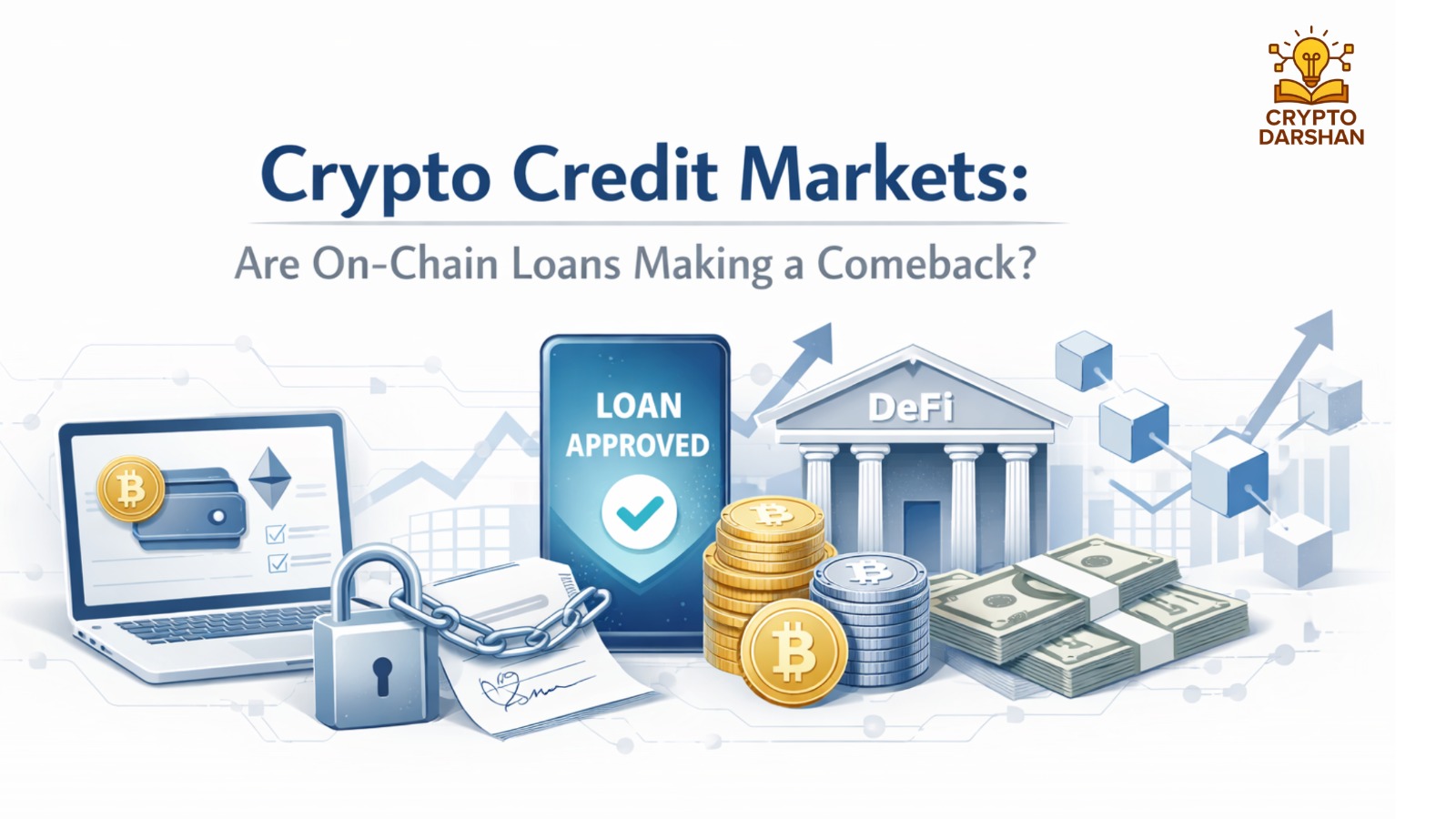
The world of digital finance is evolving rapidly, and one of the most intriguing developments in recent years has been the rise, fall, and potential resurgence of crypto credit markets. These markets, which allow users to borrow and lend digital assets directly on the blockchain, have transformed how liquidity flows within the crypto ecosystem. After a turbulent period marked by liquidations, bankruptcies, and regulatory scrutiny, on-chain loans are once again gaining traction. The question now is whether crypto credit markets are truly making a comeback and, if so, what this means for the future of decentralized finance (DeFi).
This article explores the evolution, challenges, and revival of crypto credit markets, analyzing how on-chain lending protocols are reshaping the financial landscape. It also examines the role of regulation, technology, and investor sentiment in driving this renewed interest.
The Evolution of Crypto Credit Markets

Early Beginnings
The concept of credit markets is not new. Traditional finance has long relied on credit systems to facilitate borrowing and lending. However, the introduction of blockchain technology brought a new dimension to this concept. Early crypto credit markets emerged around 2017–2018, with platforms like MakerDAO, Compound, and Aave pioneering decentralized lending.
These platforms allowed users to deposit cryptocurrencies as collateral and borrow other assets without intermediaries. The transparency and automation provided by smart contracts made crypto credit markets appealing to both retail and institutional investors.
The Boom of DeFi Lending
By 2020, the DeFi boom had propelled crypto credit markets into the spotlight. Billions of dollars flowed into lending protocols, and yield farming became a dominant trend. Users could earn interest on their crypto holdings or borrow against them to leverage trading positions. The growth of credit markets in crypto was fueled by high yields, easy access, and the promise of decentralization.
However, this rapid expansion also introduced risks. Over-leveraging, poor risk management, and reliance on volatile collateral led to instability. When the broader crypto market corrected in 2022, many crypto credit markets faced severe liquidity crises.
The Collapse and Its Aftermath

The 2022 Credit Crunch
The collapse of major centralized lenders like Celsius, Voyager, and BlockFi sent shockwaves through the industry. These platforms had operated as hybrid entities centralized companies offering crypto loans but often without the transparency of on-chain protocols. Their downfall exposed the fragility of crypto credit markets that lacked proper risk controls.
DeFi protocols were not immune either. Liquidations surged as collateral values plummeted, and many users lost significant funds. The once-booming credit markets suddenly faced a crisis of confidence.
Lessons Learned
The crash forced the industry to confront its weaknesses. Key lessons emerged:
- Transparency is essential: On-chain data allows real-time monitoring of loans and collateral.
- Over-collateralization is necessary: Most DeFi lending protocols require borrowers to post more collateral than the loan value.
- Smart contract audits are critical: Security vulnerabilities can lead to catastrophic losses.
- Risk diversification matters: Relying on a single asset or borrower type increases systemic risk.
These lessons have shaped the next generation of crypto credit markets, emphasizing sustainability over speculation.
The Resurgence of On-Chain Loans
Renewed Interest in Decentralized Lending
In 2024 and beyond, crypto credit markets began showing signs of recovery. On-chain lending protocols like Aave, Compound, and MakerDAO regained momentum as users sought transparent and trustless alternatives to centralized lenders. The total value locked (TVL) in DeFi lending platforms started to climb again, signaling renewed confidence.
This resurgence is driven by several factors:
- Improved risk management: Protocols now use advanced algorithms to assess collateral and liquidation thresholds.
- Stablecoin integration: The rise of stablecoins like USDC and DAI has reduced volatility risks.
- Institutional participation: Hedge funds and crypto-native institutions are exploring on-chain credit as a new asset class.
The Role of Real-World Assets (RWAs)
One of the most significant developments in modern crypto credit markets is the integration of real-world assets. Platforms are tokenizing assets such as treasury bills, real estate, and invoices, allowing them to be used as collateral for on-chain loans. This bridges the gap between traditional finance and DeFi, expanding the scope of credit markets beyond purely digital assets.
For example, MakerDAO’s RWA initiatives have introduced tokenized bonds and loans, providing stable yield opportunities while maintaining blockchain transparency. For a deeper look at how real-world assets are moving on-chain, read our breakdown of Real-World Assets (RWA) on Blockchain Explained
How On-Chain Loans Work

On-chain loans are a core part of decentralized finance (DeFi), allowing users to borrow and lend digital assets directly on the blockchain without intermediaries. The process is automated through smart contracts, ensuring transparency and security. As explained in Rollup-as-a-Service (RaaS): The Shopify Moment for Blockchains, scalable Layer 2 infrastructure is making on-chain lending faster and more capital-efficient.Below are five key points that explain how on-chain loans work:
1. Collateral Deposit
Borrowers begin by depositing cryptocurrency as collateral into a lending protocol. This collateral acts as security for the loan. For example, a user might deposit Ethereum (ETH) to borrow a stablecoin like USDC. The collateral is locked in a smart contract, ensuring that the borrower cannot withdraw it until the loan is repaid. This step protects lenders from default risk.
2. Loan Issuance
Once the collateral is deposited, the borrower can take out a loan in another cryptocurrency, usually a stablecoin. The amount they can borrow depends on the collateral ratio set by the protocol. For instance, if the collateral ratio is 150%, a user must deposit $150 worth of ETH to borrow $100 in USDC. The loan is issued instantly through the smart contract, without the need for credit checks or intermediaries.
3. Interest Accrual
Borrowers pay interest on the borrowed amount, while lenders earn interest on the assets they supply to the protocol. Interest rates are determined algorithmically based on supply and demand. When more users borrow, interest rates rise; when more users lend, rates fall. This dynamic model keeps the lending pool balanced and ensures fair returns for participants.
4. Liquidation Mechanism
If the value of the borrower’s collateral falls below a certain threshold, the loan becomes under-collateralized. To protect lenders, the protocol automatically triggers a liquidation process. The smart contract sells part or all of the collateral to repay the loan. This ensures that the system remains solvent and that lenders do not lose their funds due to market volatility.
5. Repayment and Collateral Release
When the borrower repays the loan along with the accrued interest, the smart contract releases the locked collateral back to the borrower’s wallet. This process is fully automated and transparent. Borrowers can repay at any time, and once the debt is cleared, they regain full control of their assets.
The Role of Stablecoins in Credit Markets

Stablecoins play a crucial role in the functioning of crypto credit markets. They provide a stable medium of exchange and reduce exposure to volatility. Borrowers often prefer to take loans in stablecoins like USDC, USDT, or DAI, as these maintain a 1:1 peg to fiat currencies.
Stablecoins also enable cross-border lending and borrowing without the friction of traditional banking systems. As a result, they have become the backbone of on-chain credit markets, facilitating liquidity and stability.
Institutional Adoption of Crypto Credit Markets
The Entry of Traditional Finance
Institutional investors are increasingly exploring crypto credit markets as a new frontier for yield generation. The transparency, efficiency, and programmability of blockchain-based lending appeal to asset managers seeking diversification.
Major financial institutions are experimenting with tokenized bonds, blockchain-based repo markets, and on-chain collateral management. These initiatives signal a growing convergence between traditional credit systems and decentralized credit markets.
Regulatory Clarity and Compliance
Regulatory frameworks are evolving to accommodate the growth of crypto credit markets. Jurisdictions like the European Union, Singapore, and the United States are developing guidelines for digital asset lending and tokenization. Compliance with Know Your Customer (KYC) and Anti-Money Laundering (AML) standards is becoming standard practice for institutional-grade DeFi platforms.
This regulatory clarity is fostering trust and encouraging more participants to engage with credit markets on-chain.
The Technology Behind Modern Credit Markets

Smart Contracts and Automation
Smart contracts are digital contracts stored on a blockchain that are automatically executed when predetermined terms and conditions are met. Smart contracts are the foundation of crypto credit markets. They automate loan issuance, interest payments, and liquidations, eliminating the need for intermediaries. This automation reduces costs and increases efficiency.
Advanced protocols now incorporate modular smart contracts, allowing for customizable lending terms and risk parameters. This flexibility enhances the resilience of credit markets and supports diverse use cases.
Oracles and Data Feeds
Accurate pricing data is essential for maintaining the integrity of crypto credit markets. Oracles like Chainlink provide real-time asset prices to ensure fair collateral valuations. Without reliable oracles, lending protocols would be vulnerable to manipulation and liquidation errors.
Layer-2 Scaling Solutions
As blockchain networks face scalability challenges, Layer-2 solutions such as Arbitrum, Optimism, and zkSync are improving transaction speeds and reducing costs. These innovations make crypto credit markets more accessible and efficient, enabling microloans and high-frequency lending.
The Rise of Algorithmic Credit Markets

Algorithmic credit markets represent the next major evolution in decentralized finance (DeFi). They combine blockchain technology with data-driven algorithms to create smarter, more efficient lending systems. Unlike traditional or even early DeFi lending platforms that rely solely on collateral, algorithmic credit markets use advanced analytics, reputation systems, and automation to assess risk and manage loans dynamically.
Below are the key aspects that define the rise of algorithmic credit markets:
1. Data-Driven Risk Assessment
Traditional DeFi lending protocols depend on over-collateralization — borrowers must deposit more value than they borrow. Algorithmic credit markets aim to change this by using on-chain data to evaluate borrower behavior and creditworthiness. These systems analyze wallet history, transaction patterns, repayment records, and even social reputation to determine risk levels. This approach allows for more flexible lending terms and the possibility of under-collateralized or unsecured loans.
2. Automation Through Smart Contracts
Smart contracts remain the backbone of algorithmic credit markets. They automatically execute loan agreements, interest payments, and liquidations based on predefined conditions. However, in algorithmic systems, these contracts are enhanced with adaptive logic that can adjust interest rates or collateral requirements in real time. This automation reduces human error, increases efficiency, and ensures that credit markets remain stable even during volatile market conditions.
3. Dynamic Interest Rate Models
In algorithmic credit markets, interest rates are not fixed. Instead, they fluctuate based on real-time market data, borrower risk profiles, and liquidity conditions. Machine learning algorithms continuously analyze supply and demand to set optimal rates. This ensures that lenders receive fair returns while borrowers pay rates that reflect their actual risk level. The result is a more balanced and sustainable credit ecosystem.
4. Decentralized Identity and Reputation Systems
A major innovation driving algorithmic credit markets is the integration of decentralized identity (DID) and reputation scoring. Borrowers can build on-chain credit profiles that reflect their financial behavior across multiple platforms. These profiles allow lenders to assess trustworthiness without relying on traditional credit bureaus. Over time, users with strong repayment histories can access better loan terms, creating a self-sustaining credit reputation system within the blockchain ecosystem.
5. Global Accessibility and Financial Inclusion
Algorithmic credit markets have the potential to expand financial access worldwide. By removing intermediaries and using transparent, data-driven systems, they enable anyone with an internet connection to borrow or lend. This democratization of credit can empower individuals and small businesses in regions underserved by traditional banks. It also fosters a more inclusive global economy where credit decisions are based on verifiable data rather than centralized institutions.
Challenges Facing Crypto Credit Markets

Volatility and Liquidation Risks
Despite improvements, crypto credit markets remain vulnerable to price volatility. Sharp market downturns can trigger mass liquidations, leading to cascading losses. Managing these risks requires robust collateral management and diversified asset pools.
Smart Contract Vulnerabilities
Even audited smart contracts can contain bugs or vulnerabilities. Exploits and hacks have cost DeFi users billions of dollars. Continuous security audits and bug bounty programs are essential to maintaining trust in credit markets.
Regulatory Uncertainty
While regulation is improving, uncertainty still looms over crypto credit markets. Different jurisdictions have varying definitions of digital assets, securities, and lending activities. This patchwork of rules can hinder global adoption and innovation.
Liquidity Fragmentation
Liquidity in crypto credit markets is often spread across multiple blockchains and protocols. This fragmentation limits efficiency and increases transaction costs. Cross-chain interoperability solutions are being developed to address this issue.
The Future of Crypto Credit Markets

Integration with Traditional Finance
The future of crypto credit markets lies in seamless integration with traditional financial systems. Tokenized assets, digital bonds, and blockchain-based credit scoring will bridge the gap between DeFi and conventional banking. This hybrid model could create a global, transparent, and efficient credit ecosystem.
Expansion of Real-World Collateral
As tokenization expands, more real-world assets will enter crypto credit markets. From real estate to carbon credits, these assets will diversify collateral pools and reduce volatility. This evolution will make on-chain lending more stable and attractive to institutional investors.
Decentralized Identity and Credit Scoring
Decentralized identity (DID) systems will enable reputation-based lending in crypto credit markets. Borrowers will be able to build on-chain credit profiles, allowing for under-collateralized loans. This innovation could democratize access to credit globally.
Sustainable Yield Models
The next generation of credit markets will focus on sustainable yields rather than speculative returns. Protocols will prioritize long-term stability, risk-adjusted returns, and real-world utility.
Case Studies: Leading Protocols in Crypto Credit Markets

Aave
Aave remains one of the most influential players in crypto credit markets. Its innovative features, such as flash loans and variable interest rates, have set industry standards. Aave’s expansion into institutional-grade products demonstrates the growing maturity of DeFi lending.
MakerDAO
MakerDAO’s DAI stablecoin and RWA initiatives have positioned it as a cornerstone of credit markets. By integrating tokenized assets, MakerDAO is bridging DeFi with traditional finance, offering stable yields backed by real-world collateral.
Compound
Compound introduced algorithmic interest rate models that automatically adjust based on supply and demand. This innovation has made crypto credit markets more efficient and responsive to market conditions.
Maple Finance
Maple Finance focuses on institutional lending, offering under-collateralized loans to vetted borrowers. Its model demonstrates how credit markets can evolve beyond retail users to serve professional investors.
The Global Impact of Crypto Credit Markets

Financial Inclusion
Crypto credit markets have the potential to revolutionize financial inclusion. By removing intermediaries and enabling borderless lending, they provide access to credit for individuals and businesses in underserved regions. Anyone with an internet connection can participate, democratizing global finance.
Economic Efficiency
Blockchain-based credit markets reduce transaction costs, eliminate delays, and increase transparency. This efficiency benefits both borrowers and lenders, fostering a more resilient financial system.
Innovation and Competition
The rise of crypto credit markets has spurred innovation across the financial sector. Traditional banks are now exploring blockchain technology to remain competitive, leading to a more dynamic and interconnected global economy.
FAQ – Crypto Credit Markets: Are On-Chain Loans Making a Comeback?

1. What are crypto credit markets?
Crypto credit markets are platforms that allow users to lend and borrow digital assets directly on blockchain networks through smart contracts. These markets eliminate traditional intermediaries like banks and operate transparently on-chain.
2. What are on-chain loans?
On-chain loans are crypto-backed loans issued via decentralized finance (DeFi) protocols. Borrowers deposit crypto as collateral and receive loans automatically through smart contracts without credit checks.
3. Why did crypto lending collapse in 2022–2023?
The previous downturn was triggered by over-leveraged centralized lenders, poor risk management, and major failures like Celsius Network, BlockFi, and the collapse of FTX. These failures exposed counterparty risk in off-chain and centralized credit systems.
4. How are on-chain credit markets different in 2026?
The 2026 revival focuses on:
- Transparent collateral ratios
- Real-time liquidation mechanisms
- Overcollateralized lending models
- Reduced reliance on centralized custody
- More conservative risk frameworks
Protocols are prioritizing sustainability over aggressive yield farming.
5. Which DeFi platforms dominate on-chain lending today?
Major on-chain lending protocols include:
- Aave
- Compound
- MakerDAO
These platforms allow users to supply liquidity and earn interest or borrow against crypto collateral.
6. Are on-chain loans safer than centralized crypto lending?
On-chain loans remove custodial risk but still carry smart contract risk and liquidation risk. While transparency improves security, volatility can still trigger forced liquidations during market downturns.
7. What role do real-world assets (RWAs) play in crypto credit markets?
RWAs such as tokenized treasury bills and real estate are being integrated into DeFi lending to reduce volatility and diversify collateral pools. This trend is helping stabilize yields and attract institutional capital.
8. Is institutional money returning to crypto lending?
Yes, institutional players are cautiously re-entering the space, but they prefer:
- Regulated on-chain platforms
- Collateralized lending structures
- Risk-adjusted yield strategies
Institutional participation is more selective compared to the 2021 bull cycle.
Conclusion
Crypto credit markets are at a pivotal moment. After enduring a period of turbulence and skepticism, they are emerging stronger, more transparent, and more resilient. The resurgence of on-chain loans reflects a broader shift toward decentralized, programmable finance that prioritizes trust and efficiency.
As technology advances and regulation matures, credit markets will continue to evolve, integrating real-world assets, decentralized identities, and algorithmic risk models. The result will be a global credit ecosystem that is open, inclusive, and sustainable.
The comeback of crypto credit markets is not just a return to form — it is the beginning of a new era in digital finance, where on-chain lending becomes a cornerstone of the global economy.