
The cryptocurrency industry has matured from a niche financial experiment into a global economic powerhouse. As digital assets become mainstream, governments, institutions, and investors are demanding stronger oversight, transparency, and accountability. This shift has created a surge in job roles that ensure blockchain companies, exchanges, and financial institutions operate within legal and ethical boundaries.
In 2026, Crypto Compliance has become one of the fastest-growing career fields in the fintech and blockchain sectors. Professionals with expertise in regulation, risk management, and blockchain technology are in high demand. This comprehensive guide explores the rise of Crypto Compliance jobs, the skills required, the industries hiring, and how this field is shaping the future of digital finance.
Understanding Crypto Compliance

Crypto Compliance refers to the set of policies, procedures, and practices that ensure cryptocurrency businesses adhere to legal and regulatory standards. Crypto Compliance particularly focuses on wallets – virtual wallets in the form of apps used for storing and conducting transactions with cryptocurrencies like Bitcoin. A major problem with crypto transactions is their difficult controllability, which makes them susceptible to abusive activities.
As cryptocurrencies gain global adoption, regulators are tightening their oversight. Governments are introducing frameworks to combat illicit activities such as fraud, tax evasion, and terrorist financing. This has made Crypto Compliance a critical function for every organization operating in the blockchain ecosystem.
The goal of Crypto Compliance is not just to meet legal requirements but also to build trust among users, investors, and regulators. A strong compliance framework enhances credibility, reduces risk, and fosters sustainable growth in the crypto industry.
The Evolution of Crypto Compliance

1. Early Days: Minimal Oversight
In the early years of cryptocurrency, compliance was almost nonexistent. Bitcoin and other digital assets operated in a decentralized environment with little to no regulation. This lack of oversight attracted both innovators and bad actors, leading to issues such as fraud, scams, and money laundering.
2. Regulatory Awakening (2017–2021)
As the crypto market grew, governments began to recognize the need for regulation. The introduction of Know Your Customer (KYC) and Anti-Money Laundering (AML) requirements marked the beginning of formal Crypto Compliance. Exchanges were required to verify user identities and report suspicious transactions.
3. Institutional Adoption (2022–2024)
The entry of institutional investors and traditional financial institutions into the crypto space accelerated the demand for compliance. Companies began hiring dedicated Crypto Compliance officers to navigate complex regulatory landscapes. As crypto compliance roles expand, understanding institutional inflows and ETF developments on Ethereum provides valuable context for risk and regulatory monitoring.
4. Global Standardization (2025–2026)
By 2026, international organizations such as the Financial Action Task Force (FATF) and the International Monetary Fund (IMF) have established global standards for Crypto Compliance. Countries are aligning their regulations, creating a more unified and transparent crypto ecosystem.
Why Crypto Compliance Matters in 2026

The importance of Crypto Compliance cannot be overstated. As digital assets become integrated into mainstream finance, compliance ensures the stability and legitimacy of the entire ecosystem.
1. Preventing Financial Crimes
IT helps prevent money laundering, terrorist financing, and fraud. By implementing KYC and AML protocols, companies can identify suspicious activities and report them to authorities.
2. Building Investor Confidence
Investors are more likely to trust platforms that prioritize Compliance. Transparent operations and adherence to regulations attract institutional investors and long-term capital.
3. Ensuring Market Stability
Compliance frameworks reduce market manipulation and protect consumers from scams. This contributes to a more stable and sustainable crypto market.
4. Facilitating Global Expansion
Companies that comply with international regulations can operate across borders more easily. Crypto Compliance enables global scalability by ensuring adherence to multiple jurisdictions.
5. Enhancing Reputation and Credibility
A strong Compliance program enhances a company’s reputation. It signals to regulators and customers that the organization operates ethically and responsibly.
The Growing Demand for Crypto Compliance Professionals

1. Expanding Global Regulations
As governments around the world introduce stricter cryptocurrency laws, the need for Crypto Compliance professionals has surged. Regulators are enforcing Anti-Money Laundering (AML) and Know Your Customer (KYC) requirements to prevent illicit activities. This has created a strong demand for experts who can interpret and implement these complex regulations across multiple jurisdictions.
2. Institutional Adoption of Crypto
Banks, hedge funds, and payment companies are increasingly entering the crypto space. These institutions must comply with both traditional financial regulations and new digital asset laws. As a result, they are hiring officers to manage risk, ensure transparency, and maintain trust with regulators and investors.
3. Rise of DeFi and Web3 Platforms
Decentralized finance (DeFi) and Web3 projects are growing rapidly, but they operate in a regulatory gray area. To gain legitimacy and attract institutional investors, these platforms are integrating compliance frameworks. This shift has created new opportunities for specialists who understand both blockchain technology and regulatory requirements.
4. Increased Focus on Risk Management
With the rise in crypto-related fraud, hacks, and scams, companies are prioritizing risk management more than ever. Crypto Compliance professionals play a key role in identifying suspicious transactions, conducting audits, and ensuring that internal controls meet global standards. Their expertise helps protect both users and organizations from financial and reputational damage.
5. High Demand and Competitive Salaries
The shortage of qualified experts has made these roles some of the most sought-after in the fintech industry. Companies are offering competitive salaries, remote work options, and career growth opportunities to attract top talent
Key Roles in Crypto Compliance

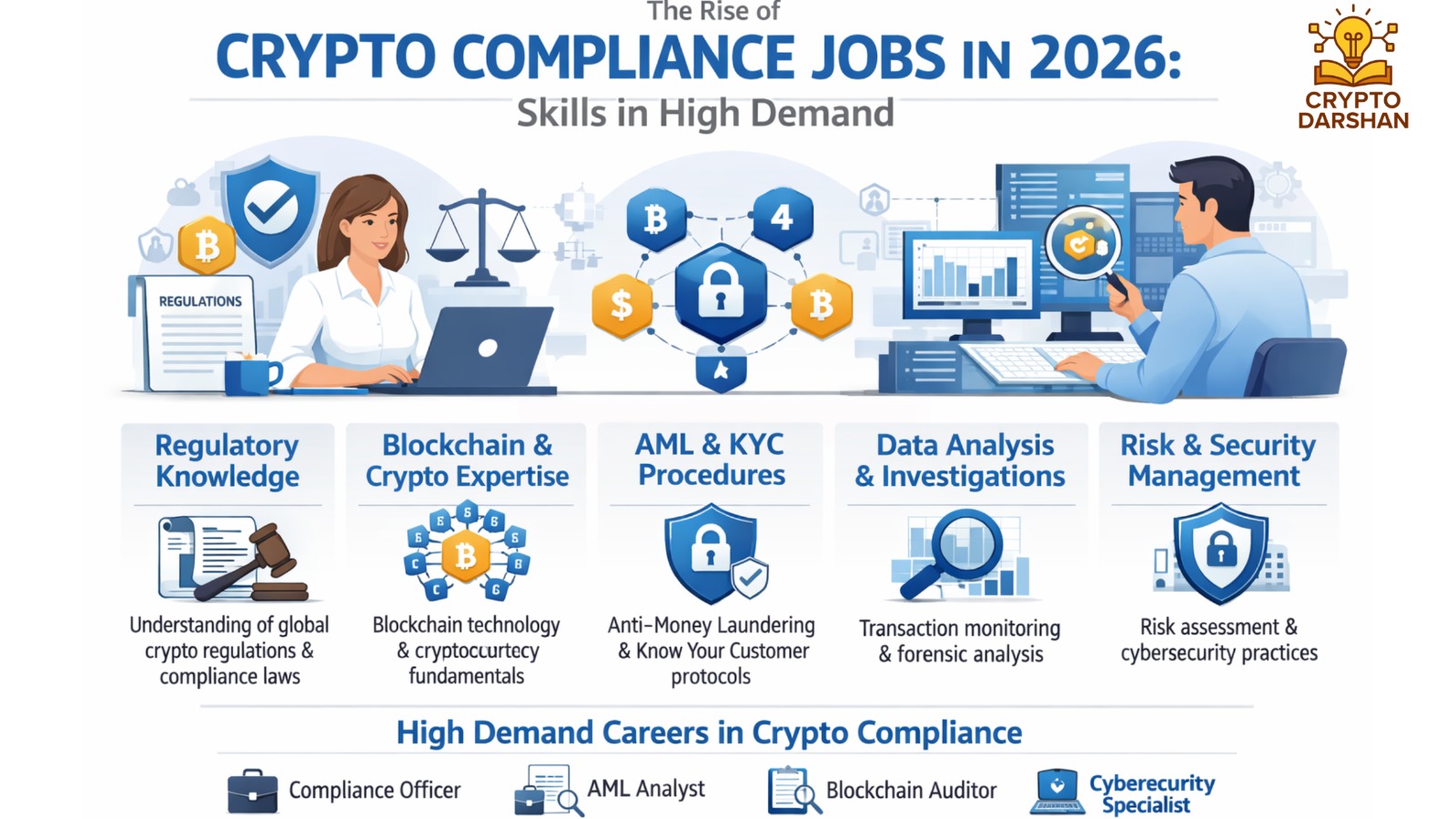
1. Crypto Compliance Officer
Responsible for developing and implementing compliance programs, monitoring transactions, and ensuring adherence to regulations.
2. AML/KYC Analyst
Focuses on verifying customer identities, detecting suspicious activities, and maintaining compliance with anti-money laundering laws.
3. Regulatory Affairs Specialist
Acts as a liaison between the company and regulatory authorities, ensuring that all operations meet legal requirements.
4. Blockchain Forensics Analyst
Uses blockchain analytics tools to trace transactions, identify illicit activities, and support investigations.
5. Risk and Audit Manager
Assesses compliance risks, conducts internal audits, and ensures that the company’s policies align with regulatory standards.
Each of these roles contributes to the broader goal of maintaining Compliance and protecting the integrity of the digital asset ecosystem.
Essential Skills for Crypto Compliance Professionals

1. Regulatory Knowledge
Understanding global crypto regulations is fundamental. Professionals must stay updated on laws from organizations like FATF, SEC, and the European Union.
2. Blockchain and Cryptocurrency Expertise
A deep understanding of blockchain technology, smart contracts, and decentralized finance (DeFi) is essential for effective Crypto Compliance.
3. Analytical and Investigative Skills
Compliance professionals must analyze large volumes of transaction data to detect anomalies and potential risks.
4. Risk Management
Identifying, assessing, and mitigating compliance risks is a core responsibility in Crypto Compliance roles.
5. Communication and Reporting
Clear communication with regulators, management, and stakeholders is crucial. Compliance officers must prepare detailed reports and policy documents.
6. Technical Proficiency
Familiarity with blockchain analytics tools such as Chainalysis, Elliptic, and TRM Labs enhances the ability to monitor and trace transactions.
7. Ethical Judgment
Integrity and ethical decision-making are vital in maintaining trust and transparency in Crypto Compliance operations.
Industries Hiring Professionals

1. Cryptocurrency Exchanges
Exchanges are at the forefront of Crypto Compliance. They must verify user identities, monitor transactions, and report suspicious activities.
2. DeFi Platforms
Decentralized finance platforms are integrating compliance mechanisms to meet regulatory expectations while maintaining decentralization.
3. Traditional Financial Institutions
Banks and investment firms entering the crypto space are hiring Crypto Compliance experts to manage digital asset operations.
4. Blockchain Startups
Startups developing blockchain solutions need compliance officers to ensure their products meet legal standards.
5. Government and Regulatory Agencies
Governments are building internal Crypto Compliance teams to monitor the industry and enforce regulations.
6. Consulting and Legal Firms
Law firms and consultancies specializing in blockchain are expanding their Crypto Compliance divisions to advise clients.
Tools and Technologies in Crypto Compliance

1. Blockchain Analytics Platforms
Tools like Chainalysis, Elliptic, and CipherTrace help track transactions and identify suspicious patterns.
2. KYC/AML Software
Automated systems verify customer identities and screen them against global watchlists.
3. Smart Contract Auditing Tools
Auditing tools ensure that smart contracts comply with legal and security standards.
4. RegTech Solutions
Regulatory technology (RegTech) automates compliance processes, reducing manual workload and human error.
5. Artificial Intelligence and Machine Learning
AI enhances Crypto Compliance by detecting anomalies, predicting risks, and improving transaction monitoring accuracy.
Global Regulations Shaping Compliance

1. United States
The U.S. Securities and Exchange Commission (SEC) and the Financial Crimes Enforcement Network (FinCEN) have introduced strict guidelines for crypto businesses.
2. European Union
The EU’s Markets in Crypto-Assets (MiCA) regulation provides a unified framework for Crypto Compliance across member states.
3. Asia-Pacific
Countries like Singapore, Japan, and South Korea have established progressive crypto regulations, encouraged innovation while maintained oversight.
4. Middle East and Africa
Emerging markets are adopting Crypto Compliance frameworks to attract investment and prevent financial crimes.
5. Global Cooperation
International organizations like FATF are promoting global standards for Crypto Compliance, ensuring consistency across borders.
How to Start a Career in Crypto Compliance

Starting a career in Crypto Compliance requires a combination of education, technical knowledge, and an understanding of global financial regulations. As the crypto industry continues to expand, compliance professionals are becoming essential for ensuring transparency, security, and legal integrity. Here’s a clear roadmap to help you begin a successful career in Crypto Compliance.
1. Build a Strong Educational Foundation
A solid academic background is the first step. Degrees in finance, law, economics, business administration, or computer science provide a strong base for understanding both the financial and technical aspects of cryptocurrencies. Courses in blockchain technology, financial regulation, and risk management are particularly valuable.
2. Gain Knowledge of Blockchain and Cryptocurrency
To work in Crypto Compliance, you must understand how blockchain technology and digital assets function. Learn about how transactions are recorded, how wallets and exchanges operate, and how decentralized finance (DeFi) platforms differ from traditional financial systems.
3. Understand Global Regulatory Frameworks
Compliance professionals must stay updated on international crypto regulations. Study the policies of major regulatory bodies such as the Financial Action Task Force (FATF), the U.S. Securities and Exchange Commission (SEC), and the European Union’s Markets in Crypto-Assets (MiCA) framework. Understanding Anti-Money Laundering (AML) and Know Your Customer (KYC) laws is essential.
4. Earn Professional Certifications
Certifications can significantly boost your credibility and job prospects. Programs like Certified Anti-Money Laundering Specialist (CAMS), Certified Blockchain Professional (CBP), or Certified Cryptocurrency Investigator (CCI) are highly respected in the industry. These certifications demonstrate your expertise in compliance, risk management, and blockchain technology.
5. Develop Analytical and Technical Skills
Modern Crypto Compliance relies heavily on data analysis and technology. Learn to use blockchain analytics tools such as Chainalysis, Elliptic, or TRM Labs to trace transactions and detect suspicious activity. Basic programming knowledge in Python or SQL can also be useful for analyzing blockchain data. Strong analytical skills will help you identify patterns, assess risks, and make informed compliance decisions.
6. Gain Practical Experience
Experience is crucial in building a career in Crypto Compliance. Start with internships or entry-level roles in compliance, risk management, or financial auditing. Many crypto exchanges, fintech startups, and consulting firms offer opportunities for beginners.
Challenges in Crypto Compliance

1. Regulatory Fragmentation
One of the biggest challenges in Crypto Compliance is the lack of consistent global regulations. Each country has its own rules for cryptocurrencies—some treat them as securities, others as commodities, and some ban them entirely. This inconsistency makes it difficult for crypto companies to operate across borders. Compliance teams must constantly adapt to different legal frameworks, increasing complexity and operational costs.
2. Rapid Technological Change
Blockchain technology evolves faster than most regulatory systems can keep up with. Innovations like DeFi, NFTs, and DAOs introduce unique compliance challenges that traditional laws don’t address. Crypto Compliance professionals must continuously learn and adapt to these changes, ensuring that new technologies meet legal and ethical standards without stifling innovation.
3. Data Privacy vs. Transparency
Blockchain’s transparency is both an advantage and a challenge. While it allows for traceable transactions, it can conflict with privacy laws such as the GDPR. Once data is recorded on a blockchain, it cannot be easily deleted, creating tension between transparency and user privacy. Crypto Compliance teams must find ways to balance these opposing needs through privacy-preserving technologies and careful data management.
4. Talent Shortage
The demand for skilled Crypto Compliance professionals far exceeds supply. The field requires a mix of legal, financial, and technical expertise, which few professionals possess. This shortage makes it difficult for companies to build strong compliance teams, leading to higher recruitment costs and slower implementation of compliance frameworks.
5. Cybersecurity and Fraud Risks
The crypto industry remains a prime target for hackers and fraudsters. Phishing attacks, smart contract exploits, and exchange hacks are common threats. Crypto Compliance teams must work closely with cybersecurity experts to detect suspicious activities, secure digital assets, and ensure compliance with anti-money laundering (AML) and know-your-customer (KYC) regulations.
The Future of Crypto Compliance Jobs

1. Integration with Artificial Intelligence
AI will play a major role in automating compliance tasks, improving accuracy, and reducing costs.
2. Rise of Decentralized Compliance Models
Decentralized autonomous organizations (DAOs) are exploring self-regulating compliance systems powered by smart contracts.
3. Cross-Border Collaboration
As crypto becomes global, Crypto Compliance professionals will work across jurisdictions to harmonize regulations.
4. Increased Demand for Education and Certification
Universities and training institutions are launching specialized programs in Crypto Compliance to meet industry demand.
5. Ethical and Sustainable Compliance
Future compliance frameworks will focus on ethical practices, sustainability, and social responsibility.
FAQ: The Rise of Crypto Compliance Jobs in 2026

1. Why are crypto compliance jobs growing rapidly in 2026?
Crypto compliance roles are expanding due to increasing global regulations, stricter AML (Anti-Money Laundering) rules, KYC requirements, and government oversight of exchanges, DeFi platforms, and stablecoin issuers. As the industry matures, companies must ensure regulatory alignment to operate legally across jurisdictions.
2. What skills are most in demand for crypto compliance roles?
The most sought-after skills include:
- AML and KYC expertise
- Blockchain analytics proficiency
- Knowledge of global crypto regulations
- Risk assessment and transaction monitoring
- Understanding of DeFi protocols
- Smart contract awareness
- Regulatory reporting and documentation
Technical literacy combined with legal knowledge is highly valued.
3. Do you need a legal background to work in crypto compliance?
Not necessarily. While legal and regulatory experience is beneficial, many compliance professionals come from finance, cybersecurity, auditing, and risk management backgrounds. Certifications in AML or blockchain analytics can significantly improve job prospects.
4. What certifications help in landing a crypto compliance job?
Popular certifications include:
- CAMS (Certified Anti-Money Laundering Specialist)
- Certified Blockchain Professional (CBP)
- Chainalysis Reactor Certification
- ACAMS crypto-focused programs
These credentials demonstrate expertise in regulatory and investigative frameworks.
5. Are crypto compliance jobs high-paying in 2026?
Yes. Due to the talent shortage and regulatory pressure, crypto compliance professionals often command competitive salaries, especially in senior roles such as Compliance Officer, AML Director, or Head of Regulatory Affairs.
6. Which companies are hiring crypto compliance professionals?
Hiring demand is strong among:
- Centralized exchanges (CEXs)
- Decentralized finance (DeFi) platforms
- Stablecoin issuers
- Crypto payment providers
- Blockchain startups
- Traditional financial institutions entering Web3
7. Is crypto compliance limited to centralized exchanges?
No. DeFi protocols, NFT platforms, token issuers, and even DAO structures increasingly require compliance frameworks, especially as regulators tighten oversight on decentralized ecosystems.
Conclusion
The rise of Crypto Compliance jobs in 2026 reflects the maturation of the cryptocurrency industry. As digital assets become integral to global finance, compliance professionals play a vital role in ensuring transparency, security, and trust.
Crypto Compliance is no longer a niche function—it is a strategic necessity. Professionals who combine regulatory expertise with technical knowledge will find abundant opportunities in this rapidly growing field.
The future of Crypto Compliance lies in innovation, collaboration, and ethical responsibility. As blockchain technology continues to evolve, compliance will remain the foundation of a secure and sustainable digital economy.
In 2026 and beyond, Crypto Compliance is not just about following rules—it’s about shaping the future of finance with integrity, accountability, and vision.