
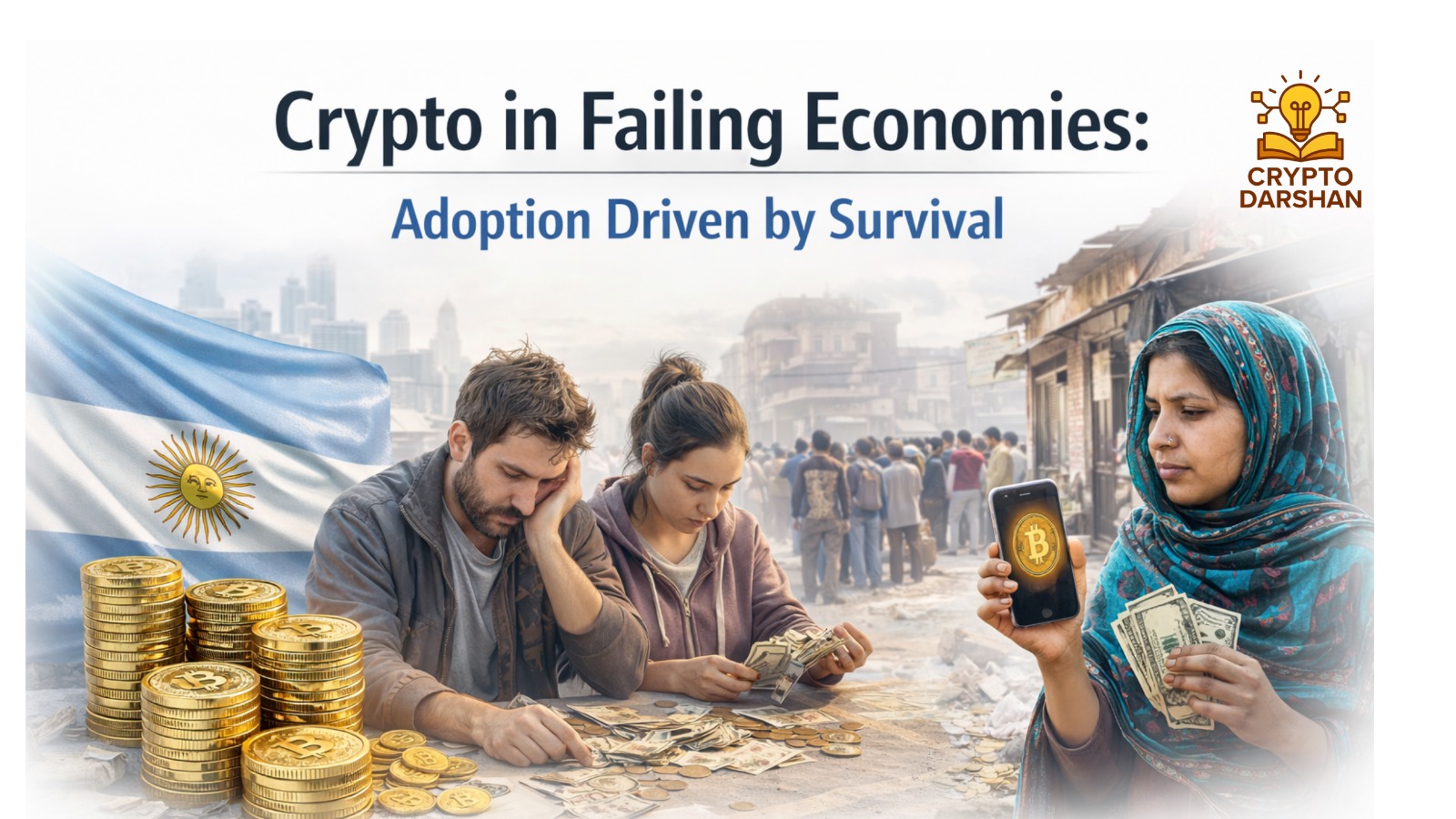
In many parts of the world, cryptocurrency adoption is not driven by speculation or investment opportunities; it is driven by necessity. While people in developed economies often view crypto as a new asset class or a technological innovation, in failing economies, it has become a lifeline. Hyperinflation, currency devaluation, capital controls, and political instability have forced millions to seek alternatives to their collapsing financial systems.
Cryptocurrencies like Bitcoin, stablecoins, and decentralized finance (DeFi) platforms are providing access to financial freedom where traditional systems have failed. From Venezuela to Nigeria, from Argentina to Lebanon, crypto adoption is rising not because of hype, but because it offers survival in the face of economic collapse.
This article explores how and why crypto adoption is accelerating in failing economies, the challenges people face, and what this trend means for the future of global finance.
Understanding Economic Collapse
1. What Defines a Failing Economy?
A failing economy is one where the national currency loses value rapidly, inflation spirals out of control, and citizens lose trust in financial institutions. Common symptoms include:
- Hyperinflation: Prices of goods and services rise uncontrollably.
- Currency Devaluation: The local currency loses purchasing power against foreign currencies.
- Capital Controls: Governments restrict access to foreign exchange or limit withdrawals.
- Banking Instability: Banks become insolvent or restrict access to deposits.
- Political Corruption: Mismanagement and corruption erode economic confidence.
When these conditions persist, people look for alternative ways to store value, transact, and protect their wealth.
2. The Human Cost of Economic Failure
Economic collapse affects every aspect of daily life. Savings evaporate overnight, salaries lose value before payday, and basic goods become unaffordable. In such conditions, citizens often turn to the black market or foreign currencies like the U.S. dollar. However, access to dollars is limited, and governments frequently impose strict controls.
This is where cryptocurrencies step in, offering a decentralized, borderless, and censorship-resistant alternative.
Why Crypto Becomes a Lifeline?

1. Protection Against Inflation
In countries suffering from hyperinflation, local currencies can lose value by the hour. Cryptocurrencies, especially Bitcoin and stablecoins, provide a hedge against this devaluation.
Example:
In Venezuela, inflation reached over 1,000,000% in 2018. Citizens began converting their bolivars into Bitcoin or stablecoins like USDT to preserve purchasing power.
Impact:
- Crypto acts as a digital store of value.
- People can protect their savings from government mismanagement.
- Stablecoins provide stability in volatile markets.
2. Access to Global Markets
Traditional banking systems in failing economies often isolate citizens from the global financial system. Crypto breaks these barriers. With a smartphone and internet connection, anyone can send, receive, and store value globally.
Example:
In Nigeria, strict foreign exchange controls make it difficult to buy dollars or send money abroad. Crypto allows Nigerians to bypass these restrictions and engage in global commerce.
Impact:
- Enables cross-border trade and remittances.
- Empowers freelancers and entrepreneurs to receive payments internationally.
- Reduces dependency on unstable local banks.
3. Financial Inclusion
In many failing economies, large portions of the population are unbanked. Crypto wallets provide an accessible alternative to traditional banking.
Example:
In sub-Saharan Africa, over 60% of adults lack access to formal banking. However, mobile phone penetration is high, allowing people to use crypto wallets for savings and payments.
Impact:
- Expands access to financial services.
- Reduces reliance on corrupt or inefficient banking systems.
- Encourages economic participation among marginalized groups.
4. Censorship Resistance
Governments in failing economies often impose capital controls, freeze bank accounts, or confiscate assets. Cryptocurrencies operate outside government control, allowing individuals to retain financial autonomy.
Example:
During political unrest in Lebanon, banks froze withdrawals and limited access to foreign currency. Citizens turned to Bitcoin to move money freely and protect their assets.
Impact:
- Ensures financial freedom.
- Protects citizens from government overreach.
- Enables safe transfer of wealth across borders.
Case Studies: Crypto Adoption in Failing Economies.

1. Venezuela: Bitcoin as a Survival Tool.
Venezuela’s economic collapse is one of the most severe in modern history. Hyperinflation, corruption, and U.S. sanctions have crippled the economy. The bolivar has become nearly worthless, and citizens have turned to crypto as a means of survival.
Key Trends:
- Bitcoin mining became popular due to subsidized electricity.
- Stablecoins like USDT are used for everyday transactions.
- Platforms like Binance P2P and LocalBitcoins facilitate peer-to-peer trading.
Impact:
Crypto has become a parallel economy, allowing Venezuelans to buy food, pay rent, and receive remittances from abroad.
2. Argentina: Stablecoins as a Hedge.
Argentina has faced chronic inflation for decades. The government frequently imposes currency controls, limiting access to U.S. dollars. As a result, Argentinians have turned to stablecoins like USDT and USDC to protect their savings.
Key Trends:
- Crypto exchanges like Lemon Cash and Ripio have seen massive growth.
- Businesses accept stablecoins for goods and services.
- Citizens use DeFi platforms to earn yield on their holdings.
Impact:
Stablecoins have become a digital version of the U.S. dollar, offering stability in an unstable economy.
3. Nigeria: Crypto as a Gateway to Global Finance.
Nigeria has one of the highest crypto adoption rates in the world. Economic instability, currency devaluation, and limited access to foreign exchange have driven citizens toward digital assets.
Key Trends:
- Peer-to-peer (P2P) trading dominates the market.
- Young entrepreneurs use crypto for international payments.
- The government’s ban on crypto transactions through banks only increased P2P activity.
Impact:
Crypto has empowered a new generation of Nigerians to participate in the global economy, bypassing traditional financial barriers.
4. Lebanon: Escaping Banking Collapse.
Lebanon’s financial system collapsed in 2019, wiping out savings and freezing bank accounts. The Lebanese pound lost over 90% of its value. Citizens turned to Bitcoin and stablecoins to preserve wealth and conduct transactions.
Key Trends:
- Bitcoin ATMs and P2P trading networks emerged.
- Businesses began accepting crypto payments.
- Citizens used crypto to receive remittances from abroad.
Impact:
Crypto provided a financial lifeline when the traditional banking system failed.
5. Turkey: Crypto as a Safe Haven.
Turkey’s currency, the lira, has suffered from rapid devaluation due to inflation and political instability. Citizens increasingly use crypto to protect their savings.
Key Trends:
- Turkey ranks among the top countries in crypto trading volume.
- Stablecoins like USDT are widely used for savings.
- Crypto exchanges such as Paribu and BtcTurk have millions of users.
Impact:
Crypto has become a mainstream financial tool for ordinary citizens seeking stability.
The Role of Stablecoins in Failing Economies.

1. What Are Stablecoins?
Stablecoins are cryptocurrencies pegged to stable assets like the U.S. dollar or euro. They combine the speed and transparency of crypto with the stability of fiat currencies.
2. Why Stablecoins Are Popular
In failing economies, volatility is a major concern. While Bitcoin is seen as a store of value, its price fluctuations make it less practical for daily use. Stablecoins solve this problem by maintaining a consistent value.
Benefits:
- Protection against inflation
- Easy conversion to local currencies
- Ideal for remittances and savings
3. Real-World Usage
- Remittances: Families receive stablecoins from relatives abroad instantly and at low cost.
- Savings: Citizens store wealth in stablecoins to avoid currency devaluation.
- Commerce: Businesses accept stablecoins for goods and services.
Example:
In Argentina and Venezuela, stablecoins like USDT and USDC are used more frequently than Bitcoin for everyday transactions.
The Role of DeFi and P2P Platforms

1. Decentralized Finance (DeFi)
Decentralized finance (DeFi) is an emerging financial system using blockchain and cryptocurrencies to enable direct transactions between individuals and businesses. DeFi platforms allow users to lend, borrow, and earn interest without intermediaries. In failing economies, DeFi provides access to financial services that local banks cannot offer.
Example:
Users in Nigeria and Argentina use DeFi protocols like Aave and Compound to earn yield on stablecoins, generating passive income in hard times.
The Role of DeFi Platforms
- Access to Financial Services:
DeFi (Decentralized Finance) platforms allow users to borrow, lend, trade, and earn interest without relying on traditional banks, giving people in failing economies access to essential financial tools. - Earning Passive Income:
Users can deposit stablecoins or cryptocurrencies into DeFi protocols like Aave or Compound to earn yield, helping them generate income even when local economies collapse. - Transparency and Security:
All transactions on DeFi platforms are recorded on public blockchains, ensuring transparency, and reducing the risk of corruption or manipulation. - No Middlemen:
DeFi eliminates intermediaries, allowing users to interact directly with smart contracts, which reduces costs and increases efficiency. - Global Participation:
Anyone with an internet connection can use DeFi, enabling people in unstable economies to participate in global financial markets and protect their wealth.
2. Peer-to-Peer (P2P) Trading

P2P platforms enable direct transactions between buyers and sellers without relying on banks. This is crucial in countries where governments restrict crypto trading.
Example:
Binance P2P and LocalBitcoins are widely used in Venezuela and Nigeria, allowing users to trade crypto using local payment methods.
The Role of P2P Platforms
- Direct Trading:
Peer-to-peer (P2P) platforms enable users to buy and sell crypto directly with each other, bypassing banks and centralized exchanges. - Bypassing Restrictions:
In countries where governments restrict crypto trading, P2P platforms like Binance P2P and LocalBitcoins allow users to continue transacting freely. - Local Payment Options:
P2P platforms support local payment methods, making it easier for users to convert crypto into local currency or vice versa. - Financial Inclusion:
P2P trading empowers unbanked individuals to access digital assets and participate in the global economy without needing a bank account. - Community-Driven Liquidity:
P2P markets rely on users to provide liquidity, creating decentralized ecosystems that thrive even when traditional financial systems fail.
Challenges of Crypto Adoption in Failing Economies
1. Volatility
While stablecoins mitigate volatility, cryptocurrencies like Bitcoin and Ethereum can fluctuate significantly, posing risks for users who rely on them for daily needs.
2. Regulatory Crackdowns
Governments often respond to crypto adoption with bans or restrictions, fearing loss of control over monetary policy. However, these measures usually push adoption underground.
3. Limited Internet Access
Crypto requires internet connectivity, which can be unreliable or expensive in developing regions. Offline solutions and mobile-based wallets are helping bridge this gap.
4. Scams and Fraud
Lack of education and regulation makes users vulnerable to scams and Ponzi schemes. Education and awareness are essential for safe adoption.
5. Infrastructure Gaps
While crypto offers financial freedom, converting digital assets into local currency can be challenging in areas with limited exchange infrastructure.
The Social and Economic Impact of Crypto Adoption

1. Empowerment of Individuals
Crypto gives people control over their money, independent of corrupt governments or failing banks. It restores financial sovereignty and dignity.
2. Growth of Digital Economies
Freelancers, small businesses, and entrepreneurs can now operate globally, receiving payments in crypto and avoiding traditional barriers.
3. Remittance Revolution
Crypto remittances are faster and cheaper than traditional methods, helping families survive economic crises.
4. Political Resistance
In some cases, crypto adoption becomes a form of peaceful protest against authoritarian regimes and economic mismanagement.
The Future of Crypto in Failing Economies

1. Increasing Stablecoin Adoption
Stablecoins will continue to dominate in unstable economies due to their reliability and ease of use.
2. Integration with Local Businesses
More merchants and service providers will accept crypto payments, creating parallel economies independent of government control.
3. Government-Issued Digital Currencies
Some governments may respond by launching Central Bank Digital Currencies (CBDCs) to regain control, but citizens may still prefer decentralized alternatives.
4. Education and Awareness
As crypto literacy improves, users will adopt safer practices and explore advanced tools like DeFi and NFTs for income generation.
5. Global Policy Shifts
International organizations may eventually recognize crypto as a legitimate tool for financial inclusion and economic recovery.
Frequently Asked Questions (FAQs)

Why are people in failing economies turning to crypto?
In collapsing economies, local currencies lose value rapidly and banking systems become unreliable. Crypto offers an alternative store of value and a way to move money without depending on failing institutions.
In fragile economies, crypto is not treated as an investment; it is used as digital infrastructure for payments, savings, and remittances. This supports the broader shift toward crypto as digital infrastructure, not an asset, where utility matters more than price speculation.
Is crypto adoption in these countries driven by speculation?
Mostly no. In failing economies, crypto adoption is need-based, not speculative. People use crypto to preserve savings, receive remittances, and make everyday payments when traditional systems stop working.
Which economic conditions accelerate crypto adoption?
High inflation, capital controls, currency devaluation, banking restrictions, and frozen accounts are the main triggers that push people toward crypto as a financial survival tool.
What role do stablecoins play in failing economies?
Stablecoins are often more popular than volatile assets like Bitcoin because they provide price stability while still offering censorship resistance and easy cross-border transfers.
How does crypto help with remittances in fragile economies?
Crypto allows families to receive money instantly and cheaply from abroad, avoiding high fees, delays, and restrictions imposed by traditional remittance services.
Is crypto legal in most failing economies?
Legality varies. Some governments restrict or ban crypto, while others tolerate it quietly. Even in restrictive environments, peer-to-peer crypto usage often continues due to necessity
Does crypto replace local currency in these regions?
Not fully. Crypto usually acts as a parallel financial system, used for savings, transfers, and inflation protection while local currency is still used for daily expenses.
What risks do users face when Crypto adopting crypto for survival?
Risks include price volatility, scams, limited internet access, lack of education, and government crackdowns. Despite this, many users accept these risks as better than holding rapidly devaluing cash.
Conclusion
In failing economies, cryptocurrency adoption is not a trend. It is a survival strategy. When national currencies collapse, banks fail, and governments impose restrictions, crypto offers hope. It provides stability, access, and freedom in places where traditional systems have broken down.
From Venezuela’s hyperinflation to Nigeria’s currency crisis, millions are turning to Bitcoin, stablecoins, and DeFi not for profit, but for survival. As economic instability continues to spread globally, crypto’s role as a lifeline will only grow stronger.
The story of crypto in failing economies is not about speculation it’s about resilience, innovation, and the human drive to adapt in the face of adversity.