
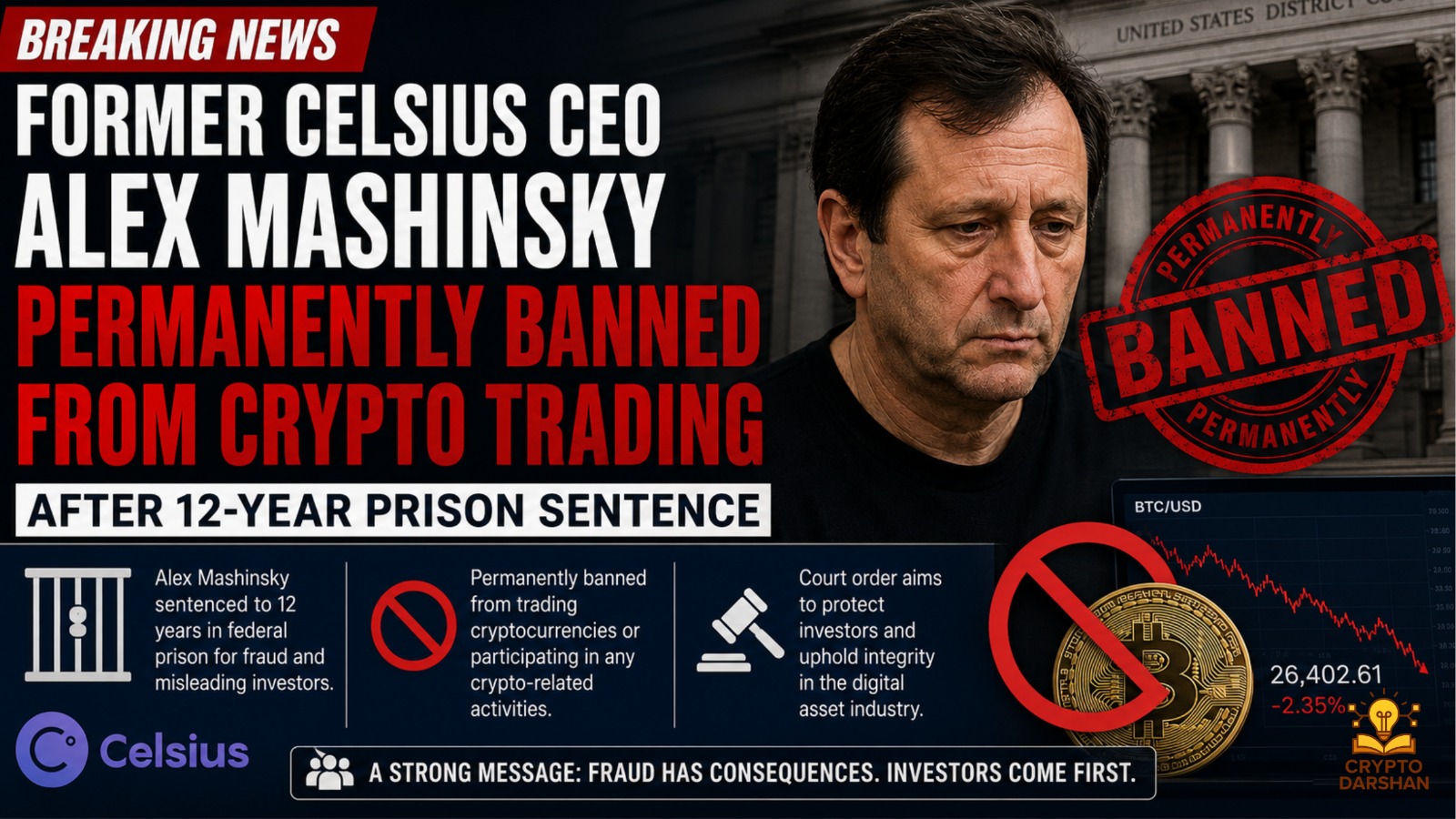
The U.S. Commodity Futures Trading Commission (CFTC) has officially closed its decade-long case against Alex Mashinsky, the imprisoned founder of collapsed crypto lender Celsius Network. A New York federal court entered a consent order on Thursday permanently banning Mashinsky from trading commodities and registering with the agency, marking the regulator’s first completed case against a digital asset lending platform.
What the Permanent Ban Means

The consent order imposes two critical restrictions on Mashinsky going forward:
- Permanent trading ban: He cannot trade any markets regulated by the CFTC, including commodities futures and options
- Permanent registration ban: He’s barred from ever registering with the CFTC again or working in the cryptocurrency ecosystem
In practical terms, the ban prevents Mashinsky from ever participating in the crypto industry again, even after he potentially completes his prison sentence. The order resolves the CFTC’s original 2023 enforcement action that charged him alongside Celsius Network.
The Fraud Behind the Ban

Mashinsky’s downfall stems from one of the largest crypto frauds in history. The Securities and Exchange Commission originally charged him in July 2023 for orchestrating a massive scheme that deceived customers about their funds’ safety.
if you are new to cryptodarsh, read our blog based on Rug pulls in cryptocurrency, Crypto fraud prevention tips
Key Fraudulent Activities:
Earn Interest Program Lie: From 2018 to June 2022, Celsius offered investors an “Earn Interest Program” promising safe returns. Customers deposited crypto assets expecting interest payments, but no registration was filed for what was actually a securities offering.
False Financial Claims: Mashinsky continually lied about Celsius’s business model, financial health, trading strategies, and the safety of customer assets. The company was never profitable, but investors were told their investments were low-risk.
CEL Token Manipulation: Starting in 2020, Mashinsky and Celsius artificially inflated the price of their native CEL token through manipulative buybacks far exceeding publicly disclosed purchases. As the largest CEL holder besides Celsius, Mashinsky structured the scheme to induce others to buy while secretly selling his own tokens at inflated prices.
The 12-Year Prison Sentence

In December 2024, the 59-year-old Mashinsky pleaded guilty to two counts of commodities and securities fraud in a Manhattan court. His guilty plea resulted in:
- 12 years in prison: Sentenced in May 2025 for commodities fraud and securities fraud
- $49 million forfeiture: Consented to give up over $49 million in earnings from fraudulent activities
- Disgorgement and penalties: The CFTC continues seeking restitution and civil monetary penalties
U.S. Attorney Damian Williams called it “one of the largest frauds in the crypto sector,” noting that Mashinsky enticed ordinary retail investors to commit billions with deceptive assurances.
The $4.7 Billion Customer Loss

At Celsius’s peak in 2021, the platform managed approximately $25 billion in assets. When the company filed for bankruptcy in June 2022:
- $4.7 billion locked: Hundreds of thousands of customers had cryptocurrency stuck on the platform
- Access delayed: Funds weren’t accessible until January 2024 when bankruptcy distributions began
- 60% recovery rate: Customers have only recovered 60% of their initial losses through bankruptcy proceedings
The fraud was exposed when market turbulence combined with Mashinsky’s risky investments caused the platform to collapse, leaving customers unable to access their funds.
Multiple Agencies Joined the Fight

Mashinsky’s case involved coordination across several federal agencies:
This multi-agency approach marked the first time major federal regulators simultaneously pursued a crypto lending platform collapse.
Why This Case Matters for Crypto

The CFTC’s completion of its case against Mashinsky signals a turning point in crypto regulation. This was the regulator’s first case against a digital asset lending platform, and closing it with a permanent ban demonstrates agencies are willing to pursue criminal penalties and industry exclusions.
The permanent ban essentially eliminates Mashinsky from ever participating in finance again, even after prison. It sets a precedent that crypto fraudsters face lifetime industry exclusions, not just financial penalties.
For investors, the Celsius collapse remains a cautionary tale. The platform promised “safe, low-risk” returns while actually engaging in risky ventures and manipulating token prices. Customers lost billions, recovering only 60% through bankruptcy.
What Happens Next

The CFTC order is immediately effective. Mashinsky remains in federal prison serving his 12-year sentence, with the permanent ban extending well beyond his incarceration.
The case also marks the end of the CFTC’s initial crypto lending platform enforcement. Regulators are now moving toward broader oversight of stablecoins and other digital assets, as seen in recent customer verification proposals for stablecoin issuers.
For the crypto industry, the Mashinsky case represents regulatory maturity. Agencies are no longer just issuing warnings—they’re securing prison sentences, permanent bans, and multi-billion dollar recoveries for defrauded investors.