

Cardano (ADA) has become one of the most closely watched cryptocurrencies in the blockchain industry. Known for its academic foundation, peer-reviewed research, and focus on sustainability, Cardano has built a reputation as a scientifically driven blockchain platform. As the crypto market continues to evolve, investors and analysts are once again asking: Can Cardano (ADA) reach $10 by the end of the year?
This comprehensive analysis explores Cardano’s fundamentals, market trends, technical indicators, and macroeconomic factors to determine whether ADA has the potential to hit the $10 mark. It also includes expert opinions, historical performance, and future projections to provide a complete view of ADA’s price outlook.
What Is Cardano (ADA)?
Cardano (ADA) is a decentralized Proof-of-Stake (PoS) blockchain platform designed for global use by developers. As a third-generation blockchain, it aims to solve the scalability, interoperability, and sustainability challenges faced by earlier networks like Bitcoin and Ethereum. Founded by Charles Hoskinson, one of Ethereum’s co-founders, Cardano was launched in 2017 with the vision of creating a more secure and scalable blockchain ecosystem.
The native cryptocurrency of the Cardano network is ADA, named after Ada Lovelace, a 19th-century mathematician often regarded as the first computer programmer. ADA is used for transactions, staking, and governance within the Cardano ecosystem.
Cardano’s development is guided by a research-driven approach, with all updates and improvements undergoing peer review before implementation. This ensures that the network evolves with scientific rigor and long-term sustainability in mind.
The Technology Behind Cardano

Cardano’s architecture is built on a layered design that separates the settlement layer from the computation layer.
Cardano Settlement Layer (CSL):
Handles ADA transactions, ensuring fast and secure transfers between users.
Cardano Computation Layer (CCL):
Supports smart contracts and decentralized applications (dApps). It allows developers to build complex applications while maintaining network efficiency.
Cardano uses the Ouroboros Proof-of-Stake (PoS) consensus mechanism, which is energy-efficient compared to Bitcoin’s Proof-of-Work (PoW). Ouroboros divides time into epochs and slots, allowing validators (stake pool operators) to produce blocks in a predictable and secure manner.
The network’s focus on formal verification and mathematical proofs enhances its security and reliability, making it a preferred choice for developers seeking a stable blockchain environment.
Cardano’s Ecosystem Growth
Cardano’s ecosystem has expanded significantly since the launch of smart contracts in 2021 through the Alonzo upgrade. The network now supports a wide range of decentralized applications, including decentralized finance (DeFi) platforms, non-fungible tokens (NFTs), and decentralized exchanges (DEXs).
Key ecosystem developments include:
- DeFi Expansion: Cardano-based DeFi projects like Minswap, SundaeSwap, and Indigo Protocol have gained traction, increasing total value locked (TVL) on the network.
- NFT Marketplaces: NFT platforms such as JPG Store have become popular within the Cardano community, driving user engagement and transaction volume.
- Partnerships and Collaborations: Cardano has partnered with governments, educational institutions, and enterprises to promote blockchain adoption, particularly in developing regions like Africa.
- Hydra Scaling Solution: Hydra, Cardano’s layer-2 scaling protocol, aims to increase transaction throughput to millions per second, addressing scalability concerns.
These developments strengthen Cardano’s position as a leading blockchain platform and contribute to ADA’s long-term value proposition. As blockchain ecosystems grow, interoperability between networks is becoming increasingly important. Solutions discussed in Cross-Chain Bridges Fixed? Multichain Wallets That Won’t Get Hacked highlight how secure asset transfers between chains could boost overall crypto ecosystem growth.
Historical Price Performance of ADA
Understanding ADA’s historical price movements provides context for future predictions.
- 2017–2018: ADA launched in late 2017 and quickly gained attention, reaching an all-time high of around $1.33 in January 2018 before the broader crypto market crash.
- 2019–2020: ADA traded mostly below $0.10 during the bear market, as development continued behind the scenes.
- 2021 Bull Run: ADA surged to an all-time high of $3.10 in September 2021, driven by the Alonzo upgrade and overall market optimism.
- 2022–2023 Bear Market: ADA’s price declined significantly, falling below $0.30 amid global economic uncertainty and crypto market corrections.
- 2024 Recovery: With renewed interest in blockchain innovation and staking, ADA began to recover, trading between $0.40 and $0.70 for much of the year.
This historical pattern shows that ADA’s price tends to follow broader market cycles but also responds strongly to network upgrades and ecosystem growth.
Factors Influencing Cardano’s Price

Several factors determine ADA’s price trajectory.
1. Market Sentiment
Crypto prices are heavily influenced by investor sentiment. Positive news about Cardano’s development, partnerships, or adoption can drive demand, while negative sentiment can lead to sell-offs.
2. Network Upgrades
Cardano’s roadmap includes continuous upgrades that enhance scalability, interoperability, and governance. Each successful upgrade tends to boost investor confidence and attract new users.
3. Adoption and Use Cases
The more ADA is used for staking, transactions, and dApps, the higher its utility and demand. Real-world adoption, especially in DeFi and enterprise solutions, can significantly impact price.
4. Competition
Cardano competes with other smart contract platforms like Ethereum, Solana, and Polkadot. Its ability to differentiate through scalability and security will influence its market share and valuation.
5. Macroeconomic Conditions
Global economic trends, inflation rates, and monetary policies affect investor appetite for risk assets like cryptocurrencies. A favorable macro environment can support ADA’s growth.
6. Regulatory Developments
Regulatory clarity can either boost or hinder ADA’s price. Positive regulations that encourage blockchain innovation can attract institutional investors, while restrictive policies may slow growth.
Technical Analysis: ADA Price Trends

Technical analysis helps identify potential price movements based on historical data and chart patterns.
Support and Resistance Levels
- Support: $0.40, $0.55, $0.70
- Resistance: $1.00, $1.50, $2.00
If ADA breaks above the $1.00 resistance level with strong volume, it could signal the start of a bullish trend toward higher targets.
Moving Averages
The 50-day and 200-day moving averages are key indicators. A “golden cross” (when the 50-day MA crosses above the 200-day MA) often signals a bullish reversal.
Relative Strength Index (RSI)
An RSI above 70 indicates overbought conditions, while below 30 suggests oversold conditions. ADA’s RSI hovering around 50–60 suggests moderate momentum with room for growth.
Fibonacci Retracement Levels
Using Fibonacci retracement from the 2021 high to the 2022 low, key levels to watch are $1.20 (38.2%), $1.80 (50%), and $2.50 (61.8%). Breaking these levels could confirm a long-term uptrend.
Fundamental Analysis: Cardano’s Strengths

Cardano’s fundamentals remain strong due to its scientific foundation, active development, and growing ecosystem.
- Strong Development Team: Led by IOHK, Cardano’s development is guided by academic research and peer-reviewed methodologies.
- Sustainability: The PoS mechanism ensures energy efficiency and long-term viability.
- Governance Model: Cardano’s Voltaire era will introduce decentralized governance, allowing ADA holders to vote on network proposals.
- Interoperability: Cardano aims to connect with other blockchains, enhancing its utility across ecosystems.
- Community Support: A large and active community contributes to Cardano’s resilience and adoption.
Expert Opinions on ADA’s Future

Industry experts and analysts have shared varying opinions on ADA’s potential.
- Optimistic View: Some analysts believe ADA could reach $5–$10 if the crypto market enters a strong bull phase and Cardano’s ecosystem continues to expand.
- Moderate View: Others predict ADA will trade between $2–$4, citing gradual adoption and competition from other blockchains.
- Conservative View: A few experts remain cautious, expecting ADA to stay below $2 due to market volatility and regulatory uncertainty.
While predictions vary, most agree that Cardano’s long-term potential remains promising due to its strong fundamentals and innovative technology.
Cardano’s Roadmap and Future Upgrades
Cardano’s roadmap is divided into five eras: Byron, Shelley, Goguen, Basho, and Voltaire.
- Byron: Foundation and initial launch.
- Shelley: Decentralization and staking.
- Goguen: Smart contracts and dApp development.
- Basho: Scalability and performance improvements.
- Voltaire: Governance and self-sustainability.
The upcoming Basho and Voltaire phases are expected to enhance scalability and governance, making Cardano more efficient and community-driven.
Institutional Interest in Cardano

Institutional investors are increasingly exploring Cardano due to its sustainability and staking rewards. ADA’s inclusion in major crypto funds and exchanges has improved liquidity and accessibility.
Staking ADA offers passive income opportunities, attracting both retail and institutional participants. As more institutions adopt environmentally friendly assets, Cardano’s PoS model positions it as a strong contender.
Cardano in the DeFi and NFT Space
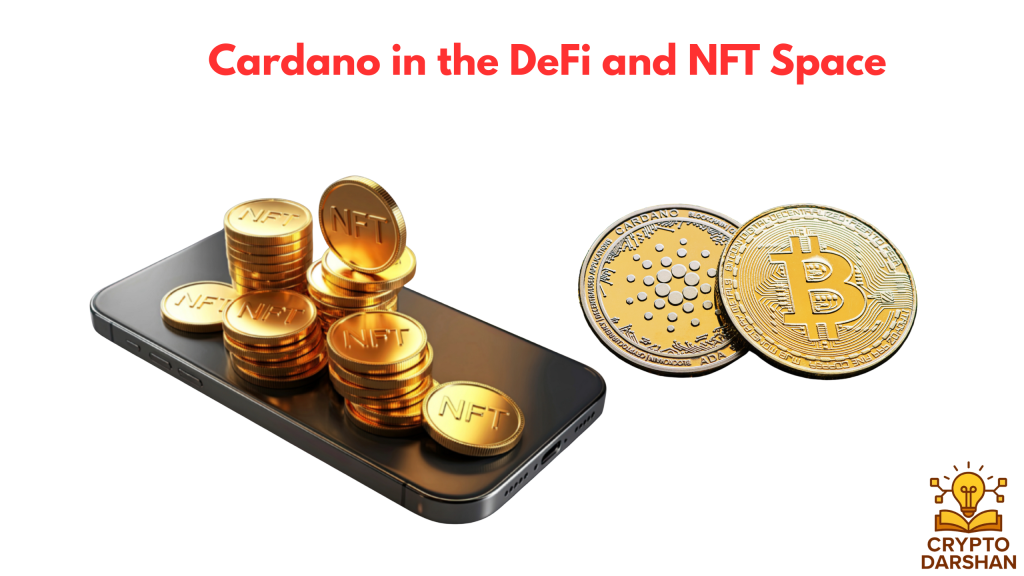
Cardano’s entry into DeFi and NFTs has been gradual but steady. The network’s low fees and high security make it an attractive alternative to Ethereum-based platforms.
- DeFi: Protocols like Minswap and Indigo are driving liquidity and yield farming opportunities.
- NFTs: Cardano’s NFT ecosystem is growing, with artists and collectors embracing its efficient minting process.
As these sectors mature, ADA’s utility and demand are expected to rise.
Global Adoption and Real-World Use Cases

Cardano’s partnerships in Africa and other developing regions highlight its commitment to real-world impact. Projects like Atala PRISM aim to provide digital identity solutions, while collaborations with governments focus on supply chain transparency and education.
These initiatives demonstrate Cardano’s potential beyond speculation, positioning it as a blockchain for social and economic transformation.
Challenges Facing Cardano

Despite its strengths, Cardano faces several challenges:
- Competition: Ethereum, Solana, and Avalanche continue to dominate the smart contract space.
- Adoption Pace: Cardano’s development process, while thorough, can be slower than competitors.
- Market Volatility: Crypto markets remain unpredictable, affecting ADA’s short-term price movements.
- Regulatory Risks: Unclear regulations could impact Cardano’s global adoption.
Addressing these challenges will be crucial for ADA’s long-term success.
Price Prediction Scenarios for ADA
Bullish Scenario: $10 Target
If Cardano achieves significant adoption, completes major upgrades, and benefits from a strong bull market, ADA could potentially reach $10. This would require a market capitalization exceeding $350 billion, placing it among the top cryptocurrencies.
Key drivers for this scenario include:
- Successful Hydra implementation.
- Increased DeFi and NFT adoption.
- Institutional investment growth.
- Positive global regulatory environment.
Moderate Scenario: $3–$5 Range
In a moderate growth scenario, ADA could trade between $3 and $5 by year-end. This assumes steady ecosystem expansion and moderate market optimism.
Bearish Scenario: Below $2
If market conditions worsen or adoption slows, ADA may remain below $2. Factors such as regulatory crackdowns or macroeconomic downturns could contribute to this outcome.
Market sentiment and trader expectations often influence price predictions. Prediction platforms like Polymarket highlight how market participants bet on future crypto outcomes, as explored in our article Polymarket Crypto Bets 2026: Top Bitcoin Price Predictions with 95% Odds.
Long-Term Outlook for Cardano
Cardano’s long-term outlook remains positive due to its strong fundamentals, active development, and growing ecosystem. As blockchain adoption increases globally, Cardano’s focus on scalability, security, and sustainability positions it well for future growth.
Over the next five years, ADA could benefit from:
- Broader institutional adoption.
- Expansion of DeFi and NFT ecosystems.
- Integration with real-world applications.
- Enhanced governance through the Voltaire era.
If these trends continue, ADA could become one of the leading digital assets in the next decade.
Cardano’s Role in the Future of Web3

Cardano’s architecture aligns with the principles of Web3 decentralization, user ownership, and transparency. Its focus on interoperability and governance makes it a strong candidate for powering decentralized identity systems, supply chains, and digital economies.
As Web3 adoption grows, Cardano’s infrastructure could support decentralized social networks, gaming platforms, and enterprise-grade applications. The network’s ability to handle large-scale transactions efficiently will be key to its success in this space.
Environmental Sustainability and Cardano’s Green Advantage
Cardano’s Proof-of-Stake model consumes far less energy than Proof-of-Work blockchains like Bitcoin. This eco-friendly approach appeals to environmentally conscious investors and institutions seeking sustainable blockchain solutions.
With global attention on reducing carbon footprints, Cardano’s energy efficiency could become a major competitive advantage. As ESG (Environmental, Social, and Governance) investing gains traction, ADA’s green credentials may attract more institutional capital.
Cardano’s Community and Developer Ecosystem
Cardano’s community is one of the most active in the crypto space. Thousands of developers, stake pool operators, and enthusiasts contribute to its growth through open-source projects, educational initiatives, and community governance.
The Project Catalyst program funds community-driven proposals, encouraging innovation and participation. This decentralized funding model ensures that Cardano evolves based on collective input rather than centralized control.
The Role of Staking in ADA’s Value
Staking is central to Cardano’s ecosystem. ADA holders can delegate their tokens to stake pools and earn rewards, promoting network security and decentralization.
As staking participation increases, the circulating supply of ADA decreases, potentially creating upward price pressure. The consistent staking rewards also make ADA attractive for long-term holders seeking passive income.
Cardano’s Competitive Landscape
Cardano competes with several major blockchain platforms:
- Ethereum: The dominant smart contract platform, but faces scalability and gas fee challenges.
- Solana: Known for high throughput but criticized for occasional network outages.
- Polkadot: Focuses on interoperability but has slower ecosystem growth.
- Avalanche: Offers fast transactions but lacks Cardano’s academic rigor.
Cardano’s unique combination of security, scalability, and sustainability gives it a distinct edge, especially as the market matures and users demand reliability over hype.
The Impact of Global Economic Trends on ADA
Macroeconomic factors such as inflation, interest rates, and global liquidity influence crypto markets. When traditional markets face uncertainty, investors often turn to digital assets as alternative investments.
If global economies stabilize and institutional adoption of crypto accelerates, ADA could benefit from increased capital inflows. Conversely, economic tightening or regulatory crackdowns could limit short-term growth.
Cardano’s Potential in Emerging Markets
Cardano’s partnerships in Africa and other developing regions highlight its mission to bring financial inclusion through blockchain technology. By providing digital identity, supply chain transparency, and educational tools, Cardano aims to empower millions of unbanked individuals.
These real-world applications could drive long-term adoption and establish Cardano as a leader in blockchain-based social impact initiatives.
The Role of AI and Machine Learning in Cardano’s Future
As artificial intelligence and blockchain technologies converge, Cardano could integrate AI-driven analytics for governance, fraud detection, and smart contract optimization. Machine learning models could enhance network efficiency and security, paving the way for intelligent decentralized systems.
This integration could position Cardano as a next-generation blockchain capable of supporting advanced applications in finance, healthcare, and logistics.
Investor Strategies for ADA
Investors considering ADA should evaluate both short-term trading opportunities and long-term holding strategies.
- Short-Term Traders: Focus on technical indicators, market sentiment, and news catalysts.
- Long-Term Holders: Benefit from staking rewards, ecosystem growth, and network upgrades.
- Diversified Portfolios: Combine ADA with other assets to manage risk and maximize returns.
Risk management remains essential, as crypto markets are inherently volatile.
Could Cardano Reach $10 by Year-End?
Reaching $10 would require a significant increase in market capitalization and investor demand. While ambitious, it’s not impossible if several conditions align:
- A strong bull market across the crypto sector.
- Successful implementation of Hydra and other scalability solutions.
- Increased institutional adoption and staking participation.
- Positive regulatory developments supporting blockchain innovation.
If these factors converge, ADA could experience exponential growth. However, investors should remain realistic and consider both bullish and bearish scenarios.
FAQ

1. What is Cardano (ADA)?
Cardano (ADA) is a proof-of-stake blockchain platform designed to support decentralized applications, smart contracts, and digital assets. It was founded by Charles Hoskinson, one of the co-founders of Ethereum, and focuses on scalability, sustainability, and academic research-driven development.
2. What is the current price outlook for ADA?
Market forecasts suggest moderate growth for ADA in the near term. Some prediction models estimate prices between about $0.26 and $0.47 in the coming year, depending on market conditions and ecosystem adoption.
3. Can Cardano (ADA) realistically reach $10 by the end of the year?
Reaching $10 within a single year is considered highly unlikely by most analysts. For ADA to hit that level, the token would need to increase several thousand percent from its current valuation, which would require massive market demand and a huge increase in overall crypto market capitalization.
4. What price levels are more realistic for ADA in the short term?
Many analysts believe ADA could reach $1–$3 during a strong bull market cycle, especially if network upgrades, DeFi growth, and institutional interest continue to expand across the Cardano ecosystem.
5. When could Cardano potentially reach $10?
Some bullish projections suggest that $10 may be possible between 2027 and 2030, but only if the network achieves widespread adoption, major DeFi expansion, and favorable market conditions.
6. What factors could drive ADA’s price higher?
Key drivers include:
- Growth of DeFi and NFTs on Cardano
- Institutional investment and partnerships
- Network upgrades improving scalability
- Increased adoption of smart contracts and decentralized apps
7. What risks could prevent ADA from reaching $10?
Several challenges could slow price growth, including:
- Competition from other blockchains like Solana and Ethereum
- Slow ecosystem adoption
- Regulatory uncertainty
- Overall crypto market downturns
8. Is Cardano still a good long-term investment?
Many investors view ADA as a long-term project due to its strong research-based development approach and active community. However, like all cryptocurrencies, it remains highly volatile and speculative, so investors should conduct their own research before investing.
Conclusion
Cardano (ADA) stands at a critical juncture in its evolution. With a strong technological foundation, expanding ecosystem, and growing community, it has the potential to achieve significant price appreciation. Reaching $10 by year-end would require a combination of favorable market conditions, successful upgrades, and widespread adoption.
Even if ADA does not reach $10 this year, its long-term prospects remain bright. Cardano’s commitment to innovation, sustainability, and inclusivity continues to make it one of the most promising projects in the blockchain space.
As the world moves toward decentralized systems and digital transformation, Cardano’s vision of a secure, scalable, and equitable blockchain future positions it as a cornerstone of the next generation of financial and technological infrastructure.